• To chevron_right

      FrostWire Returns to Google Play Store After Music Industry Takedown

      news.movim.eu / TorrentFreak • 15 January 2024 • 4 minutes • 10 visibility

    FrostWire logo dark Back in 2004, when LimeWire was the file-sharing client of choice for millions of users, FrostWire appeared as the new kid on the block.

    The application began life as a LimeWire fork but underwent several changes over the years. In 2016, it added support for torrents and, five years later, it completely dropped its Gnutella base in favor of BitTorrent.

    Today, FrostWire is a well-established torrent client that’s available across the most popular platforms, including Windows, macOS, Linux, and Android. While it’s not the most used torrent client, it has built an impressive userbase of 10 million installs and nearly a quarter million reviews in the Google Play Store alone.

    The application is content-neutral and nothing is stored in the client. However, that doesn’t mean that it’s immune to complaints from rightsholders. These are relatively rare but when they arrive they can do a lot of damage, as was illustrated recently.

    Play Store Takes Down FrostWire

    At the end of November last year, Google informed the FrostWire team that its app had been suspended from Google Play due to alleged copyright infringement. While the software doesn’t host or feature infringing content, the Indian Music Industry ( IMI ) reached a different conclusion.

    frostwire suspend

    IMI represents the interests of local music companies and record labels, including familiar names such as Universal Music India, Warner Music Group, and Sony Music India. According to the takedown notice, FrostWire infringed the rights of the song “Genda Phool,” released by Indian rapper Badshah.

    The YouTube clip of the track went viral around the globe, which was good news for the artists and the label, Sony Music India. This naturally meant that some people were trying to pirate it, which triggered IMI to send takedown notices.

    IMI’s actions make sense as far as they apply to sites that host or link to pirated copies of the track. However, FrostWire sees itself as a content-neutral app, more akin to a web browser.

    Counternotice

    After Google suspended the app on November 27, FrostWire developer Angel Leon swiftly sent a reinstatement request along the following lines;

    “It’s important to clarify that our app functions as a BitTorrent client, providing a platform for users to share and download legal content.

    We unequivocally condemn copyright infringement. Our platform is designed to respect and uphold the rights of content creators while promoting open and legal digital sharing. We believe that the recent copyright claim against our application stems from a misunderstanding of its purpose and functionality.”

    If developers file a counternotice, rightsholders have 10 days to respond with a formal legal complaint. In the event non arrive, the app should in theory be restored. According to FrostWire’s developer, that didn’t happen here.

    “Then we didn’t hear back from anyone until December 28th, when the app changed status from ‘Suspended’ to ‘Removed’, and we had to follow a process of reinstatement that was absolutely retarded,” Leon says.

    Google flagged several issues that weren’t linked to copyright infringement but required multiple code updates. This included changes to old installers that no longer affected newer versions.

    Reinstated After More than a Month

    After submitting multiple new updates, Google eventually gave the green light to add the app back into the Play Store .

    frostwire google

    The question remains whether IMI’s takedown notice was indeed a misunderstanding, or if the music group has a real problem with the software. We approached the group for a comment and further context but have yet to hear back.

    For now, FrostWire is happy to move on and has just released an update which celebrates its rise from the ashes.

    “This update is particularly special as it comes just after FrostWire’s reinstatement on the Google Play Store. It’s not just an update; it’s a celebration of persistence, innovation, and community spirit.”

    Troubled Past, Uncertain Future

    Interestingly, this isn’t the first time that FrostWire has been booted from the Play Store. A similar incident happened several years ago. At the time, Google initially refused to reinstate the app, which was a major setback.

    Most of FrostWire’s users are on Android and in a dramatic move, the torrent client decided to call it quits . The decision was eventually reversed after Google changed course and reinstated the app.

    This time, FrostWire didn’t make any drastic decisions, but the removal still had a significant impact on its operation.

    While all is good for now, there’s no certainty that the app will remain safe. Another rightsholder could come along and ask for it to be removed, which will start the same process all over again.

    Ideally, FrostWire would like to see repercussions for inaccurate takedowns, as every time this happens, the app loses some users.

    “Both times this happened, we lost a lot of our active userbase, lost subscribers, and revenue, and as you can imagine it can happen again. All it takes is an accusation from anybody and they don’t have any repercussions for doing so,” Leon tells us.

    While this is a grim outlook, FrostWire seems to have a fighting spirit these days. In a recent blog post, it likens itself to an “Ice Phoenix”.

    “As we celebrate this rebirth, imagine an ‘Ice Phoenix’ rising majestically from a frosty terrain. This mythical creature, with its crystalline feathers and a shimmering aura, soars upwards amidst swirling snowflakes.

    “This Ice Phoenix is not just a fantasy; it embodies the spirit of FrostWire – ever resilient, ever evolving.”

    From: TF , for the latest news on copyright battles, piracy and more.
    • To chevron_right

      FrostWire Returns to Google Play Store After Music Industry Takedown

      news.movim.eu / TorrentFreak • 15 January 2024 • 4 minutes • 10 visibility

    FrostWire logo dark Back in 2004, when LimeWire was the file-sharing client of choice for millions of users, FrostWire appeared as the new kid on the block.

    The application began life as a LimeWire fork but underwent several changes over the years. In 2016, it added support for torrents and, five years later, it completely dropped its Gnutella base in favor of BitTorrent.

    Today, FrostWire is a well-established torrent client that’s available across the most popular platforms, including Windows, macOS, Linux, and Android. While it’s not the most used torrent client, it has built an impressive userbase of 10 million installs and nearly a quarter million reviews in the Google Play Store alone.

    The application is content-neutral and nothing is stored in the client. However, that doesn’t mean that it’s immune to complaints from rightsholders. These are relatively rare but when they arrive they can do a lot of damage, as was illustrated recently.

    Play Store Takes Down FrostWire

    At the end of November last year, Google informed the FrostWire team that its app had been suspended from Google Play due to alleged copyright infringement. While the software doesn’t host or feature infringing content, the Indian Music Industry ( IMI ) reached a different conclusion.

    frostwire suspend

    IMI represents the interests of local music companies and record labels, including familiar names such as Universal Music India, Warner Music Group, and Sony Music India. According to the takedown notice, FrostWire infringed the rights of the song “Genda Phool,” released by Indian rapper Badshah.

    The YouTube clip of the track went viral around the globe, which was good news for the artists and the label, Sony Music India. This naturally meant that some people were trying to pirate it, which triggered IMI to send takedown notices.

    IMI’s actions make sense as far as they apply to sites that host or link to pirated copies of the track. However, FrostWire sees itself as a content-neutral app, more akin to a web browser.

    Counternotice

    After Google suspended the app on November 27, FrostWire developer Angel Leon swiftly sent a reinstatement request along the following lines;

    “It’s important to clarify that our app functions as a BitTorrent client, providing a platform for users to share and download legal content.

    We unequivocally condemn copyright infringement. Our platform is designed to respect and uphold the rights of content creators while promoting open and legal digital sharing. We believe that the recent copyright claim against our application stems from a misunderstanding of its purpose and functionality.”

    If developers file a counternotice, rightsholders have 10 days to respond with a formal legal complaint. In the event non arrive, the app should in theory be restored. According to FrostWire’s developer, that didn’t happen here.

    “Then we didn’t hear back from anyone until December 28th, when the app changed status from ‘Suspended’ to ‘Removed’, and we had to follow a process of reinstatement that was absolutely retarded,” Leon says.

    Google flagged several issues that weren’t linked to copyright infringement but required multiple code updates. This included changes to old installers that no longer affected newer versions.

    Reinstated After More than a Month

    After submitting multiple new updates, Google eventually gave the green light to add the app back into the Play Store .

    frostwire google

    The question remains whether IMI’s takedown notice was indeed a misunderstanding, or if the music group has a real problem with the software. We approached the group for a comment and further context but have yet to hear back.

    For now, FrostWire is happy to move on and has just released an update which celebrates its rise from the ashes.

    “This update is particularly special as it comes just after FrostWire’s reinstatement on the Google Play Store. It’s not just an update; it’s a celebration of persistence, innovation, and community spirit.”

    Troubled Past, Uncertain Future

    Interestingly, this isn’t the first time that FrostWire has been booted from the Play Store. A similar incident happened several years ago. At the time, Google initially refused to reinstate the app, which was a major setback.

    Most of FrostWire’s users are on Android and in a dramatic move, the torrent client decided to call it quits . The decision was eventually reversed after Google changed course and reinstated the app.

    This time, FrostWire didn’t make any drastic decisions, but the removal still had a significant impact on its operation.

    While all is good for now, there’s no certainty that the app will remain safe. Another rightsholder could come along and ask for it to be removed, which will start the same process all over again.

    Ideally, FrostWire would like to see repercussions for inaccurate takedowns, as every time this happens, the app loses some users.

    “Both times this happened, we lost a lot of our active userbase, lost subscribers, and revenue, and as you can imagine it can happen again. All it takes is an accusation from anybody and they don’t have any repercussions for doing so,” Leon tells us.

    While this is a grim outlook, FrostWire seems to have a fighting spirit these days. In a recent blog post, it likens itself to an “Ice Phoenix”.

    “As we celebrate this rebirth, imagine an ‘Ice Phoenix’ rising majestically from a frosty terrain. This mythical creature, with its crystalline feathers and a shimmering aura, soars upwards amidst swirling snowflakes.

    “This Ice Phoenix is not just a fantasy; it embodies the spirit of FrostWire – ever resilient, ever evolving.”

    From: TF , for the latest news on copyright battles, piracy and more.

    • To chevron_right

      FrostWire Returns to Google Play Store After Music Industry Takedown

      news.movim.eu / TorrentFreak • 15 January 2024 • 4 minutes • 10 visibility

    FrostWire logo dark Back in 2004, when LimeWire was the file-sharing client of choice for millions of users, FrostWire appeared as the new kid on the block.

    The application began life as a LimeWire fork but underwent several changes over the years. In 2016, it added support for torrents and, five years later, it completely dropped its Gnutella base in favor of BitTorrent.

    Today, FrostWire is a well-established torrent client that’s available across the most popular platforms, including Windows, macOS, Linux, and Android. While it’s not the most used torrent client, it has built an impressive userbase of 10 million installs and nearly a quarter million reviews in the Google Play Store alone.

    The application is content-neutral and nothing is stored in the client. However, that doesn’t mean that it’s immune to complaints from rightsholders. These are relatively rare but when they arrive they can do a lot of damage, as was illustrated recently.

    Play Store Takes Down FrostWire

    At the end of November last year, Google informed the FrostWire team that its app had been suspended from Google Play due to alleged copyright infringement. While the software doesn’t host or feature infringing content, the Indian Music Industry ( IMI ) reached a different conclusion.

    frostwire suspend

    IMI represents the interests of local music companies and record labels, including familiar names such as Universal Music India, Warner Music Group, and Sony Music India. According to the takedown notice, FrostWire infringed the rights of the song “Genda Phool,” released by Indian rapper Badshah.

    The YouTube clip of the track went viral around the globe, which was good news for the artists and the label, Sony Music India. This naturally meant that some people were trying to pirate it, which triggered IMI to send takedown notices.

    IMI’s actions make sense as far as they apply to sites that host or link to pirated copies of the track. However, FrostWire sees itself as a content-neutral app, more akin to a web browser.

    Counternotice

    After Google suspended the app on November 27, FrostWire developer Angel Leon swiftly sent a reinstatement request along the following lines;

    “It’s important to clarify that our app functions as a BitTorrent client, providing a platform for users to share and download legal content.

    We unequivocally condemn copyright infringement. Our platform is designed to respect and uphold the rights of content creators while promoting open and legal digital sharing. We believe that the recent copyright claim against our application stems from a misunderstanding of its purpose and functionality.”

    If developers file a counternotice, rightsholders have 10 days to respond with a formal legal complaint. In the event non arrive, the app should in theory be restored. According to FrostWire’s developer, that didn’t happen here.

    “Then we didn’t hear back from anyone until December 28th, when the app changed status from ‘Suspended’ to ‘Removed’, and we had to follow a process of reinstatement that was absolutely retarded,” Leon says.

    Google flagged several issues that weren’t linked to copyright infringement but required multiple code updates. This included changes to old installers that no longer affected newer versions.

    Reinstated After More than a Month

    After submitting multiple new updates, Google eventually gave the green light to add the app back into the Play Store .

    frostwire google

    The question remains whether IMI’s takedown notice was indeed a misunderstanding, or if the music group has a real problem with the software. We approached the group for a comment and further context but have yet to hear back.

    For now, FrostWire is happy to move on and has just released an update which celebrates its rise from the ashes.

    “This update is particularly special as it comes just after FrostWire’s reinstatement on the Google Play Store. It’s not just an update; it’s a celebration of persistence, innovation, and community spirit.”

    Troubled Past, Uncertain Future

    Interestingly, this isn’t the first time that FrostWire has been booted from the Play Store. A similar incident happened several years ago. At the time, Google initially refused to reinstate the app, which was a major setback.

    Most of FrostWire’s users are on Android and in a dramatic move, the torrent client decided to call it quits . The decision was eventually reversed after Google changed course and reinstated the app.

    This time, FrostWire didn’t make any drastic decisions, but the removal still had a significant impact on its operation.

    While all is good for now, there’s no certainty that the app will remain safe. Another rightsholder could come along and ask for it to be removed, which will start the same process all over again.

    Ideally, FrostWire would like to see repercussions for inaccurate takedowns, as every time this happens, the app loses some users.

    “Both times this happened, we lost a lot of our active userbase, lost subscribers, and revenue, and as you can imagine it can happen again. All it takes is an accusation from anybody and they don’t have any repercussions for doing so,” Leon tells us.

    While this is a grim outlook, FrostWire seems to have a fighting spirit these days. In a recent blog post, it likens itself to an “Ice Phoenix”.

    “As we celebrate this rebirth, imagine an ‘Ice Phoenix’ rising majestically from a frosty terrain. This mythical creature, with its crystalline feathers and a shimmering aura, soars upwards amidst swirling snowflakes.

    “This Ice Phoenix is not just a fantasy; it embodies the spirit of FrostWire – ever resilient, ever evolving.”

    From: TF , for the latest news on copyright battles, piracy and more.

    • To chevron_right

      ‘£1m’ Pirate TV Box Seller Avoids Prison Due to Private Prosecution Delays

      news.movim.eu / TorrentFreak • 15 January 2024 • 5 minutes

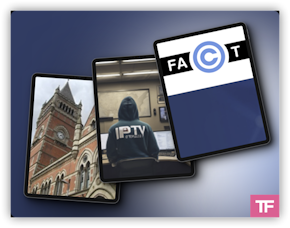
    fact-iptv-court TV drama ‘Mr Bates vs The Post Office’ tells the story of the Post Office ‘Horizon’ scandal and the lives torn apart by 700 “successful” private prosecutions of entirely innocent self-employed subpostmasters.

    After the miniseries was seen by millions earlier this month, private prosecutions – which allow alleged victims of crime to prosecute their own criminal cases – are now a topic of national debate. As a result, the government is under pressure to act against what some believe is an emerging two-tier justice system.

    Where the state lacks prosecution resources, capability, or both, and in fraud cases in particular, those with significant financial resources can obtain justice privately. Regular citizens, on the other hand, can not.

    Private prosecutions are known for their high conviction rates; cases brought by the Federation Against Copyright Theft, the Premier League, and those involving Sky, are certainly no exception. While still controversial, Post Office-style scandals are largely avoided due to the nature of the cases; that doesn’t mean they always go to plan, however.

    Serial ‘Entrepreneur’ Tests Out Piracy Market

    A MEN report claims that 42-year-old Jordan Longbottom ran a ‘successful’ business selling pirate TV devices from his static caravan in Wales. By the time the case got to court, exactly how successful his venture had been was met with a significant difference of opinion.

    A private prosecution brought by the Federation Against Copyright Theft alleged that Longbottom’s operation ran from August 2015 to May 2017. Using Facebook to attract customers, it was claimed he sold pirate TV boxes to “thousands” of customers at prices ranging from £100 to £175 each. At Manchester’s Minshull Street Crown Court, the prosecution claimed that Longbottom’s venture brought in up to £1 million; he disputed that with his own estimate of roughly £300,000.

    Caravan Static, Longbottom On the Move

    Officers from Greater Manchester Police raided Longbottom’s caravan in January 2017, but the entrepreneur wasn’t home, or even in the UK. The Brit was on holiday in Florida and didn’t return to the UK for another three months. When his plane touched down in March 2017, police welcomed him back onto British soil by placing him under arrest.

    Successful private prosecutions in piracy cases are often reported in the tabloid media partly as a deterrent. Whether he read the stories, read them but didn’t believe them, or was simply indifferent, Longbottom’s March 2017 arrest had no effect on his pirate TV sales. With assistance from others that allowed him to take more of a back seat, sales continued until at least May 2017.

    Guilty Plea, Plea For Leniency

    Whether Longbottom’s business scheme generated £1 million or £300,000 or not; private prosecutions brought by FACT, including those involving in the Premier League, have seen people go to prison for much less than that. According to the defense, Longbottom was ‘terrified’ at the prospect of prison, but all things considered, this wasn’t actually the most serious of cases in the current climate, his lawyer argued.

    Just as police funding cutbacks and a failure to invest in fraud-specific training has led to a rapid rise in fraud and a rise in private prosecutions , failure to invest means Britain’s prisons are full. As a result, prisoners are being released early and courts are being advised to only hand down immediate custodial sentences in the “most serious of cases.”

    The judge’s comments suggest that he believed the conditions had still been met for a custodial sentence, but another factor tipped fortune in Longbottom’s favor. Having been arrested in 2017, it would be another five years before Longbottom was eventually summoned in June 2022.

    The explanation for the “significant delay” was partly down to the “small legal team” behind the FACT prosecution having other casework, the court heard. The judge concluded that Longbottom would likely have been sentenced to prison if the case had been brought in a “more timely fashion” but that wasn’t the case here.

    After pleading guilty to two offenses under the Copyright, Designs and Patents Act, and one offense under the Fraud Act, Longbottom was sentenced to 22 months in prison, suspended for 24 months, a Rehabilitation Activity Requirement (RAR) of 15 days under the Offender Rehabilitation Act, and 150 hours of unpaid work.

    Reality Check

    For a reality check, the Daily Mail’s latest scare story , part of a campaign that’s produced a series of stories since early December, claims that those who simply use illegal streaming platforms “could even face time behind bars.”

    Citing Section 11 of the Fraud Act 2006 which covers ‘obtaining services dishonestly’, a conviction could mean 12 months in prison, the article warns, adding that if the offense “is a serious one”, those involved “could face a maximum sentence of five years.”

    Scare Story? Yes. But Consider the Big Picture

    Surprisingly, the Daily Mail is correct; that’s exactly what the law says, and it could happen, at least in theory. In practice, there’s some terminology to review first.

    A ‘serious’ offense isn’t enough to warrant prison under the current advice, since only “the most serious” of cases qualify. Interestingly the judge had already noted that whether Longbottom had generated £1 million or £300K, the amount wouldn’t have made any difference to the sentence handed down.

    It would be extremely foolish to replicate in a real-life scenario, but the standard set here is surprising. Apparently, it’s possible to sell thousands of pirate boxes and generate up to a million, get arrested but carry on for another three months regardless, hope for a delay on the prosecution side, and then just stay out of trouble for a while.

    That being said, staying on the straight and narrow can be a challenge for some people.

    New Beginning, New Piracy

    In March 2017, the same month Longbottom was arrested, the self-professed entrepreneur launched a brand-new company. Companies House records reveal that Sat Tech UK (NW) Ltd was born on March 14, 2017, but just three months later was renamed to Smarterbuyz Ltd. After no accounts were ever filed for the company, it was dissolved via compulsory strike-off in April 2019 but not without controversy.

    Longbottom’s new venture saw him enter the retro-gaming market, selling video game consoles pre-loaded with up to 50,000 ROMs containing games from Nintendo, Sega, and Sony, among others, under the brand Pi Retro Gaming . According to Trust Pilot reviews , it’s reasonable to conclude that some expectations were not met.

    From: TF , for the latest news on copyright battles, piracy and more.

    • To chevron_right

      ‘£1m’ Pirate TV Box Seller Avoids Prison Due to Private Prosecution Delays

      news.movim.eu / TorrentFreak • 15 January 2024 • 5 minutes

    fact-iptv-court TV drama ‘Mr Bates vs The Post Office’ tells the story of the Post Office ‘Horizon’ scandal and the lives torn apart by 700 “successful” private prosecutions of entirely innocent self-employed subpostmasters.

    After the miniseries was seen by millions earlier this month, private prosecutions – which allow alleged victims of crime to prosecute their own criminal cases – are now a topic of national debate. As a result, the government is under pressure to act against what some believe is an emerging two-tier justice system.

    Where the state lacks prosecution resources, capability, or both, and in fraud cases in particular, those with significant financial resources can obtain justice privately. Regular citizens, on the other hand, can not.

    Private prosecutions are known for their high conviction rates; cases brought by the Federation Against Copyright Theft, the Premier League, and those involving Sky, are certainly no exception. While still controversial, Post Office-style scandals are largely avoided due to the nature of the cases; that doesn’t mean they always go to plan, however.

    Serial ‘Entrepreneur’ Tests Out Piracy Market

    A MEN report claims that 42-year-old Jordan Longbottom ran a ‘successful’ business selling pirate TV devices from his static caravan in Wales. By the time the case got to court, exactly how successful his venture had been was met with a significant difference of opinion.

    A private prosecution brought by the Federation Against Copyright Theft alleged that Longbottom’s operation ran from August 2015 to May 2017. Using Facebook to attract customers, it was claimed he sold pirate TV boxes to “thousands” of customers at prices ranging from £100 to £175 each. At Manchester’s Minshull Street Crown Court, the prosecution claimed that Longbottom’s venture brought in up to £1 million; he disputed that with his own estimate of roughly £300,000.

    Caravan Static, Longbottom On the Move

    Officers from Greater Manchester Police raided Longbottom’s caravan in January 2017, but the entrepreneur wasn’t home, or even in the UK. The Brit was on holiday in Florida and didn’t return to the UK for another three months. When his plane touched down in March 2017, police welcomed him back onto British soil by placing him under arrest.

    Successful private prosecutions in piracy cases are often reported in the tabloid media partly as a deterrent. Whether he read the stories, read them but didn’t believe them, or was simply indifferent, Longbottom’s March 2017 arrest had no effect on his pirate TV sales. With assistance from others that allowed him to take more of a back seat, sales continued until at least May 2017.

    Guilty Plea, Plea For Leniency

    Whether Longbottom’s business scheme generated £1 million or £300,000 or not; private prosecutions brought by FACT, including those involving in the Premier League, have seen people go to prison for much less than that. According to the defense, Longbottom was ‘terrified’ at the prospect of prison, but all things considered, this wasn’t actually the most serious of cases in the current climate, his lawyer argued.

    Just as police funding cutbacks and a failure to invest in fraud-specific training has led to a rapid rise in fraud and a rise in private prosecutions , failure to invest means Britain’s prisons are full. As a result, prisoners are being released early and courts are being advised to only hand down immediate custodial sentences in the “most serious of cases.”

    The judge’s comments suggest that he believed the conditions had still been met for a custodial sentence, but another factor tipped fortune in Longbottom’s favor. Having been arrested in 2017, it would be another five years before Longbottom was eventually summoned in June 2022.

    The explanation for the “significant delay” was partly down to the “small legal team” behind the FACT prosecution having other casework, the court heard. The judge concluded that Longbottom would likely have been sentenced to prison if the case had been brought in a “more timely fashion” but that wasn’t the case here.

    After pleading guilty to two offenses under the Copyright, Designs and Patents Act, and one offense under the Fraud Act, Longbottom was sentenced to 22 months in prison, suspended for 24 months, a Rehabilitation Activity Requirement (RAR) of 15 days under the Offender Rehabilitation Act, and 150 hours of unpaid work.

    Reality Check

    For a reality check, the Daily Mail’s latest scare story , part of a campaign that’s produced a series of stories since early December, claims that those who simply use illegal streaming platforms “could even face time behind bars.”

    Citing Section 11 of the Fraud Act 2006 which covers ‘obtaining services dishonestly’, a conviction could mean 12 months in prison, the article warns, adding that if the offense “is a serious one”, those involved “could face a maximum sentence of five years.”

    Scare Story? Yes. But Consider the Big Picture

    Surprisingly, the Daily Mail is correct; that’s exactly what the law says, and it could happen, at least in theory. In practice, there’s some terminology to review first.

    A ‘serious’ offense isn’t enough to warrant prison under the current advice, since only “the most serious” of cases qualify. Interestingly the judge had already noted that whether Longbottom had generated £1 million or £300K, the amount wouldn’t have made any difference to the sentence handed down.

    It would be extremely foolish to replicate in a real-life scenario, but the standard set here is surprising. Apparently, it’s possible to sell thousands of pirate boxes and generate up to a million, get arrested but carry on for another three months regardless, hope for a delay on the prosecution side, and then just stay out of trouble for a while.

    That being said, staying on the straight and narrow can be a challenge for some people.

    New Beginning, New Piracy

    In March 2017, the same month Longbottom was arrested, the self-professed entrepreneur launched a brand-new company. Companies House records reveal that Sat Tech UK (NW) Ltd was born on March 14, 2017, but just three months later was renamed to Smarterbuyz Ltd. After no accounts were ever filed for the company, it was dissolved via compulsory strike-off in April 2019 but not without controversy.

    Longbottom’s new venture saw him enter the retro-gaming market, selling video game consoles pre-loaded with up to 50,000 ROMs containing games from Nintendo, Sega, and Sony, among others, under the brand Pi Retro Gaming . According to Trust Pilot reviews , it’s reasonable to conclude that some expectations were not met.

    From: TF , for the latest news on copyright battles, piracy and more.

    • To chevron_right

      ‘£1m’ Pirate TV Box Seller Avoids Prison Due to Private Prosecution Delays

      news.movim.eu / TorrentFreak • 15 January 2024 • 5 minutes

    fact-iptv-court TV drama ‘Mr Bates vs The Post Office’ tells the story of the Post Office ‘Horizon’ scandal and the lives torn apart by 700 “successful” private prosecutions of entirely innocent self-employed subpostmasters.

    After the miniseries was seen by millions earlier this month, private prosecutions – which allow alleged victims of crime to prosecute their own criminal cases – are now a topic of national debate. As a result, the government is under pressure to act against what some believe is an emerging two-tier justice system.

    Where the state lacks prosecution resources, capability, or both, and in fraud cases in particular, those with significant financial resources can obtain justice privately. Regular citizens, on the other hand, can not.

    Private prosecutions are known for their high conviction rates; cases brought by the Federation Against Copyright Theft, the Premier League, and those involving Sky, are certainly no exception. While still controversial, Post Office-style scandals are largely avoided due to the nature of the cases; that doesn’t mean they always go to plan, however.

    Serial ‘Entrepreneur’ Tests Out Piracy Market

    A MEN report claims that 42-year-old Jordan Longbottom ran a ‘successful’ business selling pirate TV devices from his static caravan in Wales. By the time the case got to court, exactly how successful his venture had been was met with a significant difference of opinion.

    A private prosecution brought by the Federation Against Copyright Theft alleged that Longbottom’s operation ran from August 2015 to May 2017. Using Facebook to attract customers, it was claimed he sold pirate TV boxes to “thousands” of customers at prices ranging from £100 to £175 each. At Manchester’s Minshull Street Crown Court, the prosecution claimed that Longbottom’s venture brought in up to £1 million; he disputed that with his own estimate of roughly £300,000.

    Caravan Static, Longbottom On the Move

    Officers from Greater Manchester Police raided Longbottom’s caravan in January 2017, but the entrepreneur wasn’t home, or even in the UK. The Brit was on holiday in Florida and didn’t return to the UK for another three months. When his plane touched down in March 2017, police welcomed him back onto British soil by placing him under arrest.

    Successful private prosecutions in piracy cases are often reported in the tabloid media partly as a deterrent. Whether he read the stories, read them but didn’t believe them, or was simply indifferent, Longbottom’s March 2017 arrest had no effect on his pirate TV sales. With assistance from others that allowed him to take more of a back seat, sales continued until at least May 2017.

    Guilty Plea, Plea For Leniency

    Whether Longbottom’s business scheme generated £1 million or £300,000 or not; private prosecutions brought by FACT, including those involving in the Premier League, have seen people go to prison for much less than that. According to the defense, Longbottom was ‘terrified’ at the prospect of prison, but all things considered, this wasn’t actually the most serious of cases in the current climate, his lawyer argued.

    Just as police funding cutbacks and a failure to invest in fraud-specific training has led to a rapid rise in fraud and a rise in private prosecutions , failure to invest means Britain’s prisons are full. As a result, prisoners are being released early and courts are being advised to only hand down immediate custodial sentences in the “most serious of cases.”

    The judge’s comments suggest that he believed the conditions had still been met for a custodial sentence, but another factor tipped fortune in Longbottom’s favor. Having been arrested in 2017, it would be another five years before Longbottom was eventually summoned in June 2022.

    The explanation for the “significant delay” was partly down to the “small legal team” behind the FACT prosecution having other casework, the court heard. The judge concluded that Longbottom would likely have been sentenced to prison if the case had been brought in a “more timely fashion” but that wasn’t the case here.

    After pleading guilty to two offenses under the Copyright, Designs and Patents Act, and one offense under the Fraud Act, Longbottom was sentenced to 22 months in prison, suspended for 24 months, a Rehabilitation Activity Requirement (RAR) of 15 days under the Offender Rehabilitation Act, and 150 hours of unpaid work.

    Reality Check

    For a reality check, the Daily Mail’s latest scare story , part of a campaign that’s produced a series of stories since early December, claims that those who simply use illegal streaming platforms “could even face time behind bars.”

    Citing Section 11 of the Fraud Act 2006 which covers ‘obtaining services dishonestly’, a conviction could mean 12 months in prison, the article warns, adding that if the offense “is a serious one”, those involved “could face a maximum sentence of five years.”

    Scare Story? Yes. But Consider the Big Picture

    Surprisingly, the Daily Mail is correct; that’s exactly what the law says, and it could happen, at least in theory. In practice, there’s some terminology to review first.

    A ‘serious’ offense isn’t enough to warrant prison under the current advice, since only “the most serious” of cases qualify. Interestingly the judge had already noted that whether Longbottom had generated £1 million or £300K, the amount wouldn’t have made any difference to the sentence handed down.

    It would be extremely foolish to replicate in a real-life scenario, but the standard set here is surprising. Apparently, it’s possible to sell thousands of pirate boxes and generate up to a million, get arrested but carry on for another three months regardless, hope for a delay on the prosecution side, and then just stay out of trouble for a while.

    That being said, staying on the straight and narrow can be a challenge for some people.

    New Beginning, New Piracy

    In March 2017, the same month Longbottom was arrested, the self-professed entrepreneur launched a brand-new company. Companies House records reveal that Sat Tech UK (NW) Ltd was born on March 14, 2017, but just three months later was renamed to Smarterbuyz Ltd. After no accounts were ever filed for the company, it was dissolved via compulsory strike-off in April 2019 but not without controversy.

    Longbottom’s new venture saw him enter the retro-gaming market, selling video game consoles pre-loaded with up to 50,000 ROMs containing games from Nintendo, Sega, and Sony, among others, under the brand Pi Retro Gaming . According to Trust Pilot reviews , it’s reasonable to conclude that some expectations were not met.

    From: TF , for the latest news on copyright battles, piracy and more.

    • To chevron_right

      Share With Care: 2,217 Domains Blocked, The Majority For Circumvention

      news.movim.eu / TorrentFreak • 14 January 2024 • 5 minutes

    sharewithcare At the height of the online file-sharing boom, the phrase ‘Sharing is Caring’ was a reminder that peer-to-peer file-sharing systems lived or died on the availability of upload bandwidth. Its presentation allowed it to be about much more than that.

    The ‘give to get’ philosophy forms part of the BitTorrent protocol even today, but Sharing is Caring was a phrase that could influence human behavior, to the benefit of the wider file-sharing movement, with no suggestion of pressure.

    Sharing is Caring implied that by freely sharing whatever content file-sharers had at their disposal, downloaders would know that otherwise anonymous uploaders actually cared about them . If everyone felt that way, everyone could show that they cared too . It was simply a case of sharing the content other people had shared with them , with others in need of the same content ; karma and piracy in perfect harmony.

    Counterargument: Sharing Isn’t Caring

    While that may have been an unlikely piece of utopia for as long as it lasted, rightsholders viewed sharing rather differently. Well known for his work at the Swedish Anti-Piracy Bureau, Antipiratbyrån, Henrik Pontén – who sadly passed away in 2020 – often signed off emails to TorrentFreak with, “Remember, Sharing is Caring.”

    In the context of what was said in the body of those emails, the real message was clear: people should care about creators too.

    In much the same way that Antipiratbyrån had its name reappropriated by rival group Piratbyrån (The Pirate Bureau), the phrase ‘Sharing is Caring’ would later be repurposed by Danish anti-piracy group RettighedsAlliancen (Rights Alliance).

    Share With Care

    Around 2012, agreements between rightsholders and YouTube, which allowed the former to more easily remove infringing content from the latter, prompted discussions in Denmark on how similar arrangements with other service providers could help to fight piracy.

    Facilitated by Denmark’s Ministry of Culture, a series of meetings attended by Rights Alliance, various rightsholders, ISPs, Google, Microsoft, and payment providers, concluded with the signing of a Code of Conduct.

    Signatories committed to making the internet a safer, better place, based on respect for copyright and the promotion of legal products. In September 2014, members of the Telecommunications Industry Association in Denmark (TI) signed a Code of Conduct that ensured pirate site blocking applications, filed by Rights Alliance against a single ISP, would be implemented voluntarily by all ISP members of TI.

    To this background and following development work by the Rights Alliance, the Danish Ministry of Culture, the Danish Consumer Council, and ISPs, a new anti-piracy education campaign was born. To find out what Share With Care had to offer, members of the public simply needed to visit a blocked pirate domain and let their ISP handle the rest.

    The image above is a translated version of the anti-piracy splash screen that still greets customers of Danish ISP DKTV a decade later.

    In general terms, little seems to have changed over the years. It’s still possible to search for movies and TV shows on a platform called FilmFinder which informs visitors where content can be watched or purchased legally. The same applies to eBooks and Denmark-focused new outlets but for less obvious reasons, items of genuine furniture .

    A Decade of Share With Care

    In a statement this week, Rights Alliance director Maria Fredenslund said that much has changed since the launch of Share With Care a decade ago.

    “The 10 years with Share With Care show how far we have come today in the vision of a regulated internet, where we can block illegal content and guide users along the way,” Fredenslund said.

    “With the collaboration around blocking and behavioral regulation measures such as FilmFinder, we in Denmark have shown the way to protect content through measures that regulate both content and consumption. With the permanent extension of Share With Care, we look forward to taking the effect of the collaboration to new heights in the coming years.”

    A Decade of Blocking Statistics

    Rights Alliance also released a small amount of data related to the pirate site blocking measures carried out by the country’s ISPs over the last decade.

    “Over the years, the Share With Care collaboration has resulted in 2,217 blocked websites,” Rights Alliance notes.

    As far as we can determine, blocked websites seems more likely to mean blocked domains in this instance.

    The blue section above represents websites subject to court-ordered blocking measures, around 250 according to the chart. The much larger green section represents mirror sites, proxies and other platforms that appeared after court-ordered blocking of a specific domain, to circumvent blocking measures.

    Since these domains are blocked by ISPs voluntarily, we can conclude that the vast majority of domains blocked in Denmark for copyright reasons, are handled on an administrative, company-to-company basis.

    Current State of Blocking

    No other blocking data was made available this week but TorrentFreak was able to review the latest blocking list issued to ISPs. At the time of writing it contains 892 domains, the majority of which do indeed appear related to circumvention efforts.

    For example, the list contains four basic domains for YTS, probably the most visited torrent site in the world right now. The site’s main domain, yts.mx, is obviously a target and the same goes for the other three. Four other domains, including yts.movie and yts.pm, appear to be non-functional, while another 30 refer to sub-domains on unblocking portals such as Unblocklit, Proxybit, and Unblockproject.

    Other sites for which circumvention domains also dominate include The Pirate Bay, TorrentDownloads, Torlock, and well, the list goes on. Two unexpected domains on the list include konsumenttestargruppen.com, which according to reports was used for scams , and a very long URL that allows users to access The Pirate Bay’s onion domain, without having to install Tor.

    While Rights Alliance is certainly in favor of site blocking, some believe that meddling with DNS is a step too far. Others believe that nobody should have the right to dictate which sites are available, and which ones are not.

    Whether intentional, accidental, or simply a quirk of translating Danish to English, isn’t entirely clear. Whatever the reason, local ISP DTKV operates its blocking page on a sub-domain of its main site (dktv.dk) using the Danish word ‘censur’ or ‘censorship’ in English.

    From: TF , for the latest news on copyright battles, piracy and more.

    • To chevron_right

      Share With Care: 2,217 Domains Blocked, The Majority For Circumvention

      news.movim.eu / TorrentFreak • 14 January 2024 • 5 minutes

    sharewithcare At the height of the online file-sharing boom, the phrase ‘Sharing is Caring’ was a reminder that peer-to-peer file-sharing systems lived or died on the availability of upload bandwidth. Its presentation allowed it to be about much more than that.

    The ‘give to get’ philosophy forms part of the BitTorrent protocol even today, but Sharing is Caring was a phrase that could influence human behavior, to the benefit of the wider file-sharing movement, with no suggestion of pressure.

    Sharing is Caring implied that by freely sharing whatever content file-sharers had at their disposal, downloaders would know that otherwise anonymous uploaders actually cared about them . If everyone felt that way, everyone could show that they cared too . It was simply a case of sharing the content other people had shared with them , with others in need of the same content ; karma and piracy in perfect harmony.

    Counterargument: Sharing Isn’t Caring

    While that may have been an unlikely piece of utopia for as long as it lasted, rightsholders viewed sharing rather differently. Well known for his work at the Swedish Anti-Piracy Bureau, Antipiratbyrån, Henrik Pontén – who sadly passed away in 2020 – often signed off emails to TorrentFreak with, “Remember, Sharing is Caring.”

    In the context of what was said in the body of those emails, the real message was clear: people should care about creators too.

    In much the same way that Antipiratbyrån had its name reappropriated by rival group Piratbyrån (The Pirate Bureau), the phrase ‘Sharing is Caring’ would later be repurposed by Danish anti-piracy group RettighedsAlliancen (Rights Alliance).

    Share With Care

    Around 2012, agreements between rightsholders and YouTube, which allowed the former to more easily remove infringing content from the latter, prompted discussions in Denmark on how similar arrangements with other service providers could help to fight piracy.

    Facilitated by Denmark’s Ministry of Culture, a series of meetings attended by Rights Alliance, various rightsholders, ISPs, Google, Microsoft, and payment providers, concluded with the signing of a Code of Conduct.

    Signatories committed to making the internet a safer, better place, based on respect for copyright and the promotion of legal products. In September 2014, members of the Telecommunications Industry Association in Denmark (TI) signed a Code of Conduct that ensured pirate site blocking applications, filed by Rights Alliance against a single ISP, would be implemented voluntarily by all ISP members of TI.

    To this background and following development work by the Rights Alliance, the Danish Ministry of Culture, the Danish Consumer Council, and ISPs, a new anti-piracy education campaign was born. To find out what Share With Care had to offer, members of the public simply needed to visit a blocked pirate domain and let their ISP handle the rest.

    The image above is a translated version of the anti-piracy splash screen that still greets customers of Danish ISP DKTV a decade later.

    In general terms, little seems to have changed over the years. It’s still possible to search for movies and TV shows on a platform called FilmFinder which informs visitors where content can be watched or purchased legally. The same applies to eBooks and Denmark-focused new outlets but for less obvious reasons, items of genuine furniture .

    A Decade of Share With Care

    In a statement this week, Rights Alliance director Maria Fredenslund said that much has changed since the launch of Share With Care a decade ago.

    “The 10 years with Share With Care show how far we have come today in the vision of a regulated internet, where we can block illegal content and guide users along the way,” Fredenslund said.

    “With the collaboration around blocking and behavioral regulation measures such as FilmFinder, we in Denmark have shown the way to protect content through measures that regulate both content and consumption. With the permanent extension of Share With Care, we look forward to taking the effect of the collaboration to new heights in the coming years.”

    A Decade of Blocking Statistics

    Rights Alliance also released a small amount of data related to the pirate site blocking measures carried out by the country’s ISPs over the last decade.

    “Over the years, the Share With Care collaboration has resulted in 2,217 blocked websites,” Rights Alliance notes.

    As far as we can determine, blocked websites seems more likely to mean blocked domains in this instance.

    The blue section above represents websites subject to court-ordered blocking measures, around 250 according to the chart. The much larger green section represents mirror sites, proxies and other platforms that appeared after court-ordered blocking of a specific domain, to circumvent blocking measures.

    Since these domains are blocked by ISPs voluntarily, we can conclude that the vast majority of domains blocked in Denmark for copyright reasons, are handled on an administrative, company-to-company basis.

    Current State of Blocking

    No other blocking data was made available this week but TorrentFreak was able to review the latest blocking list issued to ISPs. At the time of writing it contains 892 domains, the majority of which do indeed appear related to circumvention efforts.

    For example, the list contains four basic domains for YTS, probably the most visited torrent site in the world right now. The site’s main domain, yts.mx, is obviously a target and the same goes for the other three. Four other domains, including yts.movie and yts.pm, appear to be non-functional, while another 30 refer to sub-domains on unblocking portals such as Unblocklit, Proxybit, and Unblockproject.

    Other sites for which circumvention domains also dominate include The Pirate Bay, TorrentDownloads, Torlock, and well, the list goes on. Two unexpected domains on the list include konsumenttestargruppen.com, which according to reports was used for scams , and a very long URL that allows users to access The Pirate Bay’s onion domain, without having to install Tor.

    While Rights Alliance is certainly in favor of site blocking, some believe that meddling with DNS is a step too far. Others believe that nobody should have the right to dictate which sites are available, and which ones are not.

    Whether intentional, accidental, or simply a quirk of translating Danish to English, isn’t entirely clear. Whatever the reason, local ISP DTKV operates its blocking page on a sub-domain of its main site (dktv.dk) using the Danish word ‘censur’ or ‘censorship’ in English.

    From: TF , for the latest news on copyright battles, piracy and more.

    • To chevron_right

      Share With Care: 2,217 Domains Blocked, The Majority For Circumvention

      news.movim.eu / TorrentFreak • 14 January 2024 • 5 minutes

    sharewithcare At the height of the online file-sharing boom, the phrase ‘Sharing is Caring’ was a reminder that peer-to-peer file-sharing systems lived or died on the availability of upload bandwidth. Its presentation allowed it to be about much more than that.

    The ‘give to get’ philosophy forms part of the BitTorrent protocol even today, but Sharing is Caring was a phrase that could influence human behavior, to the benefit of the wider file-sharing movement, with no suggestion of pressure.

    Sharing is Caring implied that by freely sharing whatever content file-sharers had at their disposal, downloaders would know that otherwise anonymous uploaders actually cared about them . If everyone felt that way, everyone could show that they cared too . It was simply a case of sharing the content other people had shared with them , with others in need of the same content ; karma and piracy in perfect harmony.

    Counterargument: Sharing Isn’t Caring

    While that may have been an unlikely piece of utopia for as long as it lasted, rightsholders viewed sharing rather differently. Well known for his work at the Swedish Anti-Piracy Bureau, Antipiratbyrån, Henrik Pontén – who sadly passed away in 2020 – often signed off emails to TorrentFreak with, “Remember, Sharing is Caring.”

    In the context of what was said in the body of those emails, the real message was clear: people should care about creators too.

    In much the same way that Antipiratbyrån had its name reappropriated by rival group Piratbyrån (The Pirate Bureau), the phrase ‘Sharing is Caring’ would later be repurposed by Danish anti-piracy group RettighedsAlliancen (Rights Alliance).

    Share With Care

    Around 2012, agreements between rightsholders and YouTube, which allowed the former to more easily remove infringing content from the latter, prompted discussions in Denmark on how similar arrangements with other service providers could help to fight piracy.

    Facilitated by Denmark’s Ministry of Culture, a series of meetings attended by Rights Alliance, various rightsholders, ISPs, Google, Microsoft, and payment providers, concluded with the signing of a Code of Conduct.

    Signatories committed to making the internet a safer, better place, based on respect for copyright and the promotion of legal products. In September 2014, members of the Telecommunications Industry Association in Denmark (TI) signed a Code of Conduct that ensured pirate site blocking applications, filed by Rights Alliance against a single ISP, would be implemented voluntarily by all ISP members of TI.

    To this background and following development work by the Rights Alliance, the Danish Ministry of Culture, the Danish Consumer Council, and ISPs, a new anti-piracy education campaign was born. To find out what Share With Care had to offer, members of the public simply needed to visit a blocked pirate domain and let their ISP handle the rest.

    The image above is a translated version of the anti-piracy splash screen that still greets customers of Danish ISP DKTV a decade later.

    In general terms, little seems to have changed over the years. It’s still possible to search for movies and TV shows on a platform called FilmFinder which informs visitors where content can be watched or purchased legally. The same applies to eBooks and Denmark-focused new outlets but for less obvious reasons, items of genuine furniture .

    A Decade of Share With Care

    In a statement this week, Rights Alliance director Maria Fredenslund said that much has changed since the launch of Share With Care a decade ago.

    “The 10 years with Share With Care show how far we have come today in the vision of a regulated internet, where we can block illegal content and guide users along the way,” Fredenslund said.

    “With the collaboration around blocking and behavioral regulation measures such as FilmFinder, we in Denmark have shown the way to protect content through measures that regulate both content and consumption. With the permanent extension of Share With Care, we look forward to taking the effect of the collaboration to new heights in the coming years.”

    A Decade of Blocking Statistics

    Rights Alliance also released a small amount of data related to the pirate site blocking measures carried out by the country’s ISPs over the last decade.

    “Over the years, the Share With Care collaboration has resulted in 2,217 blocked websites,” Rights Alliance notes.

    As far as we can determine, blocked websites seems more likely to mean blocked domains in this instance.

    The blue section above represents websites subject to court-ordered blocking measures, around 250 according to the chart. The much larger green section represents mirror sites, proxies and other platforms that appeared after court-ordered blocking of a specific domain, to circumvent blocking measures.

    Since these domains are blocked by ISPs voluntarily, we can conclude that the vast majority of domains blocked in Denmark for copyright reasons, are handled on an administrative, company-to-company basis.

    Current State of Blocking

    No other blocking data was made available this week but TorrentFreak was able to review the latest blocking list issued to ISPs. At the time of writing it contains 892 domains, the majority of which do indeed appear related to circumvention efforts.

    For example, the list contains four basic domains for YTS, probably the most visited torrent site in the world right now. The site’s main domain, yts.mx, is obviously a target and the same goes for the other three. Four other domains, including yts.movie and yts.pm, appear to be non-functional, while another 30 refer to sub-domains on unblocking portals such as Unblocklit, Proxybit, and Unblockproject.

    Other sites for which circumvention domains also dominate include The Pirate Bay, TorrentDownloads, Torlock, and well, the list goes on. Two unexpected domains on the list include konsumenttestargruppen.com, which according to reports was used for scams , and a very long URL that allows users to access The Pirate Bay’s onion domain, without having to install Tor.

    While Rights Alliance is certainly in favor of site blocking, some believe that meddling with DNS is a step too far. Others believe that nobody should have the right to dictate which sites are available, and which ones are not.

    Whether intentional, accidental, or simply a quirk of translating Danish to English, isn’t entirely clear. Whatever the reason, local ISP DTKV operates its blocking page on a sub-domain of its main site (dktv.dk) using the Danish word ‘censur’ or ‘censorship’ in English.

    From: TF , for the latest news on copyright battles, piracy and more.