• To chevron_right

      Tachiyomi Manga Reader: Threats Motivate Pirates & Boost Engagement (Update)

      news.movim.eu / TorrentFreak • 13 January 2024 • 7 minutes

    tachiyomi For those not fully engaged in the global manga/webtoon phenomenon, the scale and depth can be a little bewildering.

    Fans are knowledgeable, passionate, and growing in numbers, with many older enthusiasts having been introduced to the content via pirate sites, at a time when content was impossible to buy legally.

    Availability is much improved today but old habits die hard; pirate sites haven’t gone away either, a major challenge for content owners everywhere, in every content category.

    One of the companies attempting to reduce piracy of its ‘webtoon’ content is South Korea-based Kakao Entertainment. Unlike other large copyright holders that have coupled strong anti-piracy responses with generally moderate public profiles, Kakao prefers a different approach. The company’s anti-piracy team constantly engages with the public on social media, often with controversial results.

    Of course, Kakao is entitled to these freedoms. The company owns the content it seeks to protect and since almost all anti-piracy strategies fail to a greater or lesser extent, trying something different could inject new life and lead to fresh ideas.

    That being said, the history books show that some scenarios should be approached with caution; when certain ingredients are combined, there’s a heightened risk of unpredictable results.

    Open Source Manga Reader ‘Tachiyomi’ Receives Legal Threats

    For the last ten days or so, open source software ‘Tachiyomi’ has found itself under the spotlight following an approach by Kakao’s anti-piracy team. But first, what does the software do? A manga aficionado familiar with the software informed TorrentFreak as follows:

    “Tachiyomi is probably the ultimate Android-based manga/webtoon reader with plenty of features and extensibility. The development team behind it has been hard at work for close to 9 years since 2015, and has tirelessly iterated upon it, to create possibly the best kind of reader there is today.”

    Tachiyomi is free to use, with the added bonus of being completely open source. In common with similar tools, such as web browsers or torrent clients, Tachiyomi contains no third-party content and makes no attempt to lock users into specific sources.

    However, through various extensions, users are free to choose their own, including unofficial sources from where it’s possible to download content, including pirated content, without ever paying a penny.

    We’re informed that on January 2, 2024, project contributors received communication from Kakao’s representatives who made several demands in respect of this functionality.

    A source familiar with events informs TorrentFreak that the main developer of Tachiyomi was instructed to terminate the nine-year-old project by deleting all versions of the app, including those on GitHub.

    He was further ordered to delete any comics uploaded to the app, despite the app carrying no third-party content, period. A further demand sought the immediate removal of all Tachiyomi forks on GitHub.

    Tachiyomi Begins Removing Extensions

    We understand that later on January 2, Tachiyomi’s main developer advised Kakao that the best way to take actual content down would be to file DMCA notices at problematic sites, over which the project has no control. He also offered to help, advising the company that he was willing to remove individual sources from Tachiyomi’s separate extension repo if those were considered an issue.

    Three days later, Kakao reportedly presented a spreadsheet that listed allegedly infringing content available from five third-party sites. For one of those sites, Tachiyomi had no extension; for the remaining four, the Tachiyomi team would soon take appropriate action.

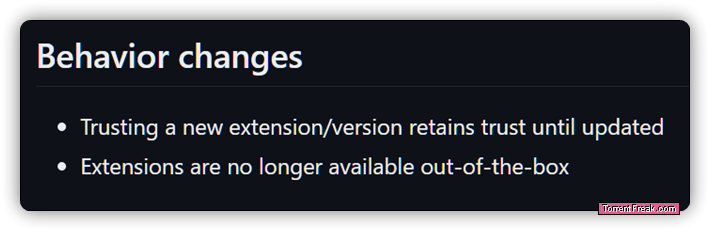
    New versions of Tachiyomi were released between January 6 and January 8 without a list of extensions being preloaded. Moving forward, those who download Tachiyomi will find that extensions are no longer part of the ‘out-of-the-box’ experience.
    January 9: Official Announcement

    An announcement on tachiyomi.org dated January 9 spoke of “extenuating circumstances” and a decision to purge extensions to “ensure the long-term sustainability of Tachiyomi.”

    “As of now, Tachiyomi is transitioning to a fully bring-your-own-content model. What this means is that you can still enjoy Tachiyomi for manga reading, but you’ll need to source and add your own content,” the statement added.

    24 Hours Earlier

    As detailed above, the Tachiyomi team responded to Kakao’s complaints quickly and went on to take significant action. Arguably the new versions of the app could’ve been pushed even sooner absent a 48-hour delay to determine certain details.

    However, what appeared to be an amicable solution triggered an unexpected Twitter post by Kakao’s anti-piracy team. It implied that installing Tachiyomi carries a risk of viruses.

    The post has now received 59K views and to quickly summarize the first few dozen responses, people didn’t especially appreciate a long-established open source app being described as a virus risk. One of the more polite responses can be seen below.

    For reasons that can vary from person to person and sometimes between communities, people often feel protective of open source projects. In some respects, their open nature seems to provide a small oasis of trust and when that’s surrounded by free, open source software, any perceived threat risks an unpredictable response.

    It appears two can play that game.

    January 10: Kakao Threatens Tachiyomi Forks

    Having obtained compliance from the Tachiyomi team without a struggle, and then declaring the software a virus risk regardless, on Wednesday Kakao’s anti-piracy team took to Twitter once again, this time to threaten people who forked the Tachiyomi repo.

    kakao v forks

    With over 154K views, this post reached a considerably larger audience and prompted almost 500 comments. If any weren’t critical, we apologize for missing them; they aren’t particularly easy to find. The same can’t be said about the Community Notes panel featuring user responses to the claims in the original post.

    Kakao is a huge company overall so it’s possible that communications policies vary from unit to unit. Anti-piracy issues may even be completely exempt or considered fair game, but it would be interesting to see how the negative results so far dovetail with a report published earlier this month.

    According to The Korea Times , reform measures are being prepared to “reverse the negative public sentiment” toward the company in general, not necessarily Kakao Entertainment in its own right, but nothing exists in a vacuum.

    At Least Things Didn’t Get Any Worse….Did They?

    When any type of site, service, or application is subjected to legal threats, the possibility of unintended consequences or mere fallout is something worth keeping an eye on. From basic DMCA notices through informal discussions to full-blown demands, the overall aim is usually evident from the nature of the requests.

    In this case, it appears that a complete end to Tachiyomi or an effective end due to limited functionality, would both amount to the same thing; a massive loss of interest in the software and ultimately, game over. However, while Tachiyomi no longer supports any third-party extensions, it does support third-party repositories, suggesting that extension development and functionality is now the responsibility of others.

    Meanwhile, Tachiyomi’s popularity appears to be trending up, not down as intended.

    ‘GitHub Trending’ is a daily report that features repos trending in popularity on a particular day. Via RSS feeds, trending repos arrive here on a daily basis; this week the Tachiyomi repo has featured in the list, along with at least two others, one of which may have even appeared twice, at least from memory.

    Trending Up…. repos

    But at least things didn’t get any worse from here, surely? Well….

    There are many mechanisms to measure an app’s popularity on GitHub, with some more accessible than others by default. Since receiving a gold star on GitHub is universally considered a positive for most projects, another project on GitHub offers a great way to quickly visualize current and historical star data for a given project.

    The image below shows that between December 14 and December 29, Tachiyomi received an average of 15.87 stars each day. In the two weeks that followed, during which Tachiyomi found itself under threat, the daily average more than doubled to 43.92 stars each day.
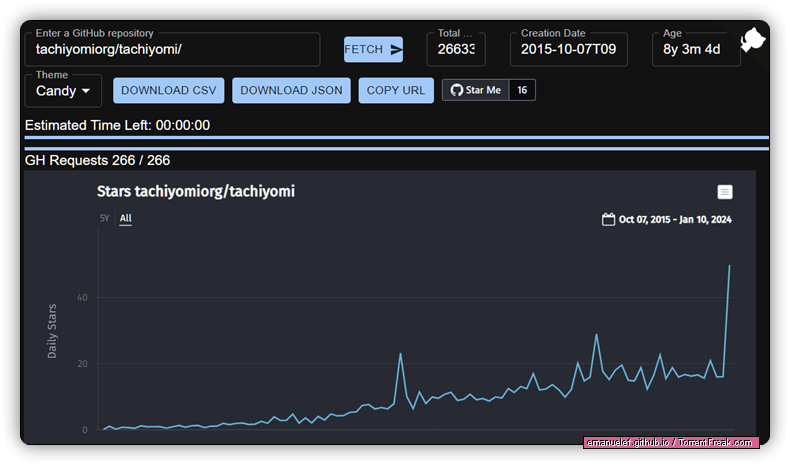
    Despite the efforts to shut the project down and the imposition of decreased out-of-the-box functionality, it appears that support for the software actually increased. While somewhat counterintuitive, targeting open source software always risks unpredictable result.

    Update January 13 : There’s a new statement on tachiyomi.org suggesting that the software will no longer be actively developed.

    “Tachiyomi will no longer be actively developed. It may continue to work for you for the foreseeable future but there will be no support for it nor the official extensions,” it reads .

    From: TF , for the latest news on copyright battles, piracy and more.
    • To chevron_right

      Tachiyomi Manga Reader: Threats Motivate Pirates & Boost Engagement (Update)

      news.movim.eu / TorrentFreak • 13 January 2024 • 7 minutes

    tachiyomi For those not fully engaged in the global manga/webtoon phenomenon, the scale and depth can be a little bewildering.

    Fans are knowledgeable, passionate, and growing in numbers, with many older enthusiasts having been introduced to the content via pirate sites, at a time when content was impossible to buy legally.

    Availability is much improved today but old habits die hard; pirate sites haven’t gone away either, a major challenge for content owners everywhere, in every content category.

    One of the companies attempting to reduce piracy of its ‘webtoon’ content is South Korea-based Kakao Entertainment. Unlike other large copyright holders that have coupled strong anti-piracy responses with generally moderate public profiles, Kakao prefers a different approach. The company’s anti-piracy team constantly engages with the public on social media, often with controversial results.

    Of course, Kakao is entitled to these freedoms. The company owns the content it seeks to protect and since almost all anti-piracy strategies fail to a greater or lesser extent, trying something different could inject new life and lead to fresh ideas.

    That being said, the history books show that some scenarios should be approached with caution; when certain ingredients are combined, there’s a heightened risk of unpredictable results.

    Open Source Manga Reader ‘Tachiyomi’ Receives Legal Threats

    For the last ten days or so, open source software ‘Tachiyomi’ has found itself under the spotlight following an approach by Kakao’s anti-piracy team. But first, what does the software do? A manga aficionado familiar with the software informed TorrentFreak as follows:

    “Tachiyomi is probably the ultimate Android-based manga/webtoon reader with plenty of features and extensibility. The development team behind it has been hard at work for close to 9 years since 2015, and has tirelessly iterated upon it, to create possibly the best kind of reader there is today.”

    Tachiyomi is free to use, with the added bonus of being completely open source. In common with similar tools, such as web browsers or torrent clients, Tachiyomi contains no third-party content and makes no attempt to lock users into specific sources.

    However, through various extensions, users are free to choose their own, including unofficial sources from where it’s possible to download content, including pirated content, without ever paying a penny.

    We’re informed that on January 2, 2024, project contributors received communication from Kakao’s representatives who made several demands in respect of this functionality.

    A source familiar with events informs TorrentFreak that the main developer of Tachiyomi was instructed to terminate the nine-year-old project by deleting all versions of the app, including those on GitHub.

    He was further ordered to delete any comics uploaded to the app, despite the app carrying no third-party content, period. A further demand sought the immediate removal of all Tachiyomi forks on GitHub.

    Tachiyomi Begins Removing Extensions

    We understand that later on January 2, Tachiyomi’s main developer advised Kakao that the best way to take actual content down would be to file DMCA notices at problematic sites, over which the project has no control. He also offered to help, advising the company that he was willing to remove individual sources from Tachiyomi’s separate extension repo if those were considered an issue.

    Three days later, Kakao reportedly presented a spreadsheet that listed allegedly infringing content available from five third-party sites. For one of those sites, Tachiyomi had no extension; for the remaining four, the Tachiyomi team would soon take appropriate action.

    New versions of Tachiyomi were released between January 6 and January 8 without a list of extensions being preloaded. Moving forward, those who download Tachiyomi will find that extensions are no longer part of the ‘out-of-the-box’ experience.

    January 9: Official Announcement

    An announcement on tachiyomi.org dated January 9 spoke of “extenuating circumstances” and a decision to purge extensions to “ensure the long-term sustainability of Tachiyomi.”

    “As of now, Tachiyomi is transitioning to a fully bring-your-own-content model. What this means is that you can still enjoy Tachiyomi for manga reading, but you’ll need to source and add your own content,” the statement added.

    24 Hours Earlier

    As detailed above, the Tachiyomi team responded to Kakao’s complaints quickly and went on to take significant action. Arguably the new versions of the app could’ve been pushed even sooner absent a 48-hour delay to determine certain details.

    However, what appeared to be an amicable solution triggered an unexpected Twitter post by Kakao’s anti-piracy team. It implied that installing Tachiyomi carries a risk of viruses.

    The post has now received 59K views and to quickly summarize the first few dozen responses, people didn’t especially appreciate a long-established open source app being described as a virus risk. One of the more polite responses can be seen below.

    For reasons that can vary from person to person and sometimes between communities, people often feel protective of open source projects. In some respects, their open nature seems to provide a small oasis of trust and when that’s surrounded by free, open source software, any perceived threat risks an unpredictable response.

    It appears two can play that game.

    January 10: Kakao Threatens Tachiyomi Forks

    Having obtained compliance from the Tachiyomi team without a struggle, and then declaring the software a virus risk regardless, on Wednesday Kakao’s anti-piracy team took to Twitter once again, this time to threaten people who forked the Tachiyomi repo.

    kakao v forks

    With over 154K views, this post reached a considerably larger audience and prompted almost 500 comments. If any weren’t critical, we apologize for missing them; they aren’t particularly easy to find. The same can’t be said about the Community Notes panel featuring user responses to the claims in the original post.

    Kakao is a huge company overall so it’s possible that communications policies vary from unit to unit. Anti-piracy issues may even be completely exempt or considered fair game, but it would be interesting to see how the negative results so far dovetail with a report published earlier this month.

    According to The Korea Times , reform measures are being prepared to “reverse the negative public sentiment” toward the company in general, not necessarily Kakao Entertainment in its own right, but nothing exists in a vacuum.

    At Least Things Didn’t Get Any Worse….Did They?

    When any type of site, service, or application is subjected to legal threats, the possibility of unintended consequences or mere fallout is something worth keeping an eye on. From basic DMCA notices through informal discussions to full-blown demands, the overall aim is usually evident from the nature of the requests.

    In this case, it appears that a complete end to Tachiyomi or an effective end due to limited functionality, would both amount to the same thing; a massive loss of interest in the software and ultimately, game over. However, while Tachiyomi no longer supports any third-party extensions, it does support third-party repositories, suggesting that extension development and functionality is now the responsibility of others.

    Meanwhile, Tachiyomi’s popularity appears to be trending up, not down as intended.

    ‘GitHub Trending’ is a daily report that features repos trending in popularity on a particular day. Via RSS feeds, trending repos arrive here on a daily basis; this week the Tachiyomi repo has featured in the list, along with at least two others, one of which may have even appeared twice, at least from memory.

    Trending Up…. repos

    But at least things didn’t get any worse from here, surely? Well….

    There are many mechanisms to measure an app’s popularity on GitHub, with some more accessible than others by default. Since receiving a gold star on GitHub is universally considered a positive for most projects, another project on GitHub offers a great way to quickly visualize current and historical star data for a given project.

    The image below shows that between December 14 and December 29, Tachiyomi received an average of 15.87 stars each day. In the two weeks that followed, during which Tachiyomi found itself under threat, the daily average more than doubled to 43.92 stars each day.

    Despite the efforts to shut the project down and the imposition of decreased out-of-the-box functionality, it appears that support for the software actually increased. While somewhat counterintuitive, targeting open source software always risks unpredictable result.

    Update January 13 : There’s a new statement on tachiyomi.org suggesting that the software will no longer be actively developed.

    “Tachiyomi will no longer be actively developed. It may continue to work for you for the foreseeable future but there will be no support for it nor the official extensions,” it reads .

    From: TF , for the latest news on copyright battles, piracy and more.

    • To chevron_right

      Tachiyomi Manga Reader: Threats Motivate Pirates & Boost Engagement (Update)

      news.movim.eu / TorrentFreak • 13 January 2024 • 7 minutes

    tachiyomi For those not fully engaged in the global manga/webtoon phenomenon, the scale and depth can be a little bewildering.

    Fans are knowledgeable, passionate, and growing in numbers, with many older enthusiasts having been introduced to the content via pirate sites, at a time when content was impossible to buy legally.

    Availability is much improved today but old habits die hard; pirate sites haven’t gone away either, a major challenge for content owners everywhere, in every content category.

    One of the companies attempting to reduce piracy of its ‘webtoon’ content is South Korea-based Kakao Entertainment. Unlike other large copyright holders that have coupled strong anti-piracy responses with generally moderate public profiles, Kakao prefers a different approach. The company’s anti-piracy team constantly engages with the public on social media, often with controversial results.

    Of course, Kakao is entitled to these freedoms. The company owns the content it seeks to protect and since almost all anti-piracy strategies fail to a greater or lesser extent, trying something different could inject new life and lead to fresh ideas.

    That being said, the history books show that some scenarios should be approached with caution; when certain ingredients are combined, there’s a heightened risk of unpredictable results.

    Open Source Manga Reader ‘Tachiyomi’ Receives Legal Threats

    For the last ten days or so, open source software ‘Tachiyomi’ has found itself under the spotlight following an approach by Kakao’s anti-piracy team. But first, what does the software do? A manga aficionado familiar with the software informed TorrentFreak as follows:

    “Tachiyomi is probably the ultimate Android-based manga/webtoon reader with plenty of features and extensibility. The development team behind it has been hard at work for close to 9 years since 2015, and has tirelessly iterated upon it, to create possibly the best kind of reader there is today.”

    Tachiyomi is free to use, with the added bonus of being completely open source. In common with similar tools, such as web browsers or torrent clients, Tachiyomi contains no third-party content and makes no attempt to lock users into specific sources.

    However, through various extensions, users are free to choose their own, including unofficial sources from where it’s possible to download content, including pirated content, without ever paying a penny.

    We’re informed that on January 2, 2024, project contributors received communication from Kakao’s representatives who made several demands in respect of this functionality.

    A source familiar with events informs TorrentFreak that the main developer of Tachiyomi was instructed to terminate the nine-year-old project by deleting all versions of the app, including those on GitHub.

    He was further ordered to delete any comics uploaded to the app, despite the app carrying no third-party content, period. A further demand sought the immediate removal of all Tachiyomi forks on GitHub.

    Tachiyomi Begins Removing Extensions

    We understand that later on January 2, Tachiyomi’s main developer advised Kakao that the best way to take actual content down would be to file DMCA notices at problematic sites, over which the project has no control. He also offered to help, advising the company that he was willing to remove individual sources from Tachiyomi’s separate extension repo if those were considered an issue.

    Three days later, Kakao reportedly presented a spreadsheet that listed allegedly infringing content available from five third-party sites. For one of those sites, Tachiyomi had no extension; for the remaining four, the Tachiyomi team would soon take appropriate action.

    New versions of Tachiyomi were released between January 6 and January 8 without a list of extensions being preloaded. Moving forward, those who download Tachiyomi will find that extensions are no longer part of the ‘out-of-the-box’ experience.

    January 9: Official Announcement

    An announcement on tachiyomi.org dated January 9 spoke of “extenuating circumstances” and a decision to purge extensions to “ensure the long-term sustainability of Tachiyomi.”

    “As of now, Tachiyomi is transitioning to a fully bring-your-own-content model. What this means is that you can still enjoy Tachiyomi for manga reading, but you’ll need to source and add your own content,” the statement added.

    24 Hours Earlier

    As detailed above, the Tachiyomi team responded to Kakao’s complaints quickly and went on to take significant action. Arguably the new versions of the app could’ve been pushed even sooner absent a 48-hour delay to determine certain details.

    However, what appeared to be an amicable solution triggered an unexpected Twitter post by Kakao’s anti-piracy team. It implied that installing Tachiyomi carries a risk of viruses.

    The post has now received 59K views and to quickly summarize the first few dozen responses, people didn’t especially appreciate a long-established open source app being described as a virus risk. One of the more polite responses can be seen below.

    For reasons that can vary from person to person and sometimes between communities, people often feel protective of open source projects. In some respects, their open nature seems to provide a small oasis of trust and when that’s surrounded by free, open source software, any perceived threat risks an unpredictable response.

    It appears two can play that game.

    January 10: Kakao Threatens Tachiyomi Forks

    Having obtained compliance from the Tachiyomi team without a struggle, and then declaring the software a virus risk regardless, on Wednesday Kakao’s anti-piracy team took to Twitter once again, this time to threaten people who forked the Tachiyomi repo.

    kakao v forks

    With over 154K views, this post reached a considerably larger audience and prompted almost 500 comments. If any weren’t critical, we apologize for missing them; they aren’t particularly easy to find. The same can’t be said about the Community Notes panel featuring user responses to the claims in the original post.

    Kakao is a huge company overall so it’s possible that communications policies vary from unit to unit. Anti-piracy issues may even be completely exempt or considered fair game, but it would be interesting to see how the negative results so far dovetail with a report published earlier this month.

    According to The Korea Times , reform measures are being prepared to “reverse the negative public sentiment” toward the company in general, not necessarily Kakao Entertainment in its own right, but nothing exists in a vacuum.

    At Least Things Didn’t Get Any Worse….Did They?

    When any type of site, service, or application is subjected to legal threats, the possibility of unintended consequences or mere fallout is something worth keeping an eye on. From basic DMCA notices through informal discussions to full-blown demands, the overall aim is usually evident from the nature of the requests.

    In this case, it appears that a complete end to Tachiyomi or an effective end due to limited functionality, would both amount to the same thing; a massive loss of interest in the software and ultimately, game over. However, while Tachiyomi no longer supports any third-party extensions, it does support third-party repositories, suggesting that extension development and functionality is now the responsibility of others.

    Meanwhile, Tachiyomi’s popularity appears to be trending up, not down as intended.

    ‘GitHub Trending’ is a daily report that features repos trending in popularity on a particular day. Via RSS feeds, trending repos arrive here on a daily basis; this week the Tachiyomi repo has featured in the list, along with at least two others, one of which may have even appeared twice, at least from memory.

    Trending Up…. repos

    But at least things didn’t get any worse from here, surely? Well….

    There are many mechanisms to measure an app’s popularity on GitHub, with some more accessible than others by default. Since receiving a gold star on GitHub is universally considered a positive for most projects, another project on GitHub offers a great way to quickly visualize current and historical star data for a given project.

    The image below shows that between December 14 and December 29, Tachiyomi received an average of 15.87 stars each day. In the two weeks that followed, during which Tachiyomi found itself under threat, the daily average more than doubled to 43.92 stars each day.

    Despite the efforts to shut the project down and the imposition of decreased out-of-the-box functionality, it appears that support for the software actually increased. While somewhat counterintuitive, targeting open source software always risks unpredictable result.

    Update January 13 : There’s a new statement on tachiyomi.org suggesting that the software will no longer be actively developed.

    “Tachiyomi will no longer be actively developed. It may continue to work for you for the foreseeable future but there will be no support for it nor the official extensions,” it reads .

    From: TF , for the latest news on copyright battles, piracy and more.

    • To chevron_right

      Yandex Yanked The Pirate Bay From its Search Results?

      news.movim.eu / TorrentFreak • 13 January 2024 • 2 minutes

    yandex The Pirate Bay and search engines are not a happy marriage recently. On the contrary.

    For example, we previously reported on Google’s decision to remove thepiratebay.org from its search results in countries where ISPs are required to block the site.

    Searching for The Pirate Bay

    This type of deindexing is not unique to Google. As highlighted in the past, Bing has effectively wiped all Pirate Bay URLs from its index until only the main homepage was left. That move sunsequently forced DuckDuckGo and other Microsoft-powered search engines to do the same.

    Today, there are still some more exotic search engines that are capable of finding Pirate Bay links easily, including non-infringing ones. However, Russia’s Yandex can be scrapped from that list.

    Founded in 1997, Yandex is one of the oldest search engines on the web. The service is used around the world but is particularly popular in Russia where it has a majority market share.

    It’s known that Russia requires search engines, including foreign ones, to remove results linked to pirate sites . This also applies to Yandex, but these measures don’t typically expand globally.

    Today, it’s not hard to find most popular pirate sites on Yandex internationally. This applies to YTS, Fmoviesz, Aniwave, and even the Russian torrent site Rutor. For some reason, however, The Pirate Bay’s official domain appears to have vanished.

    The Pirate Bay Vanished

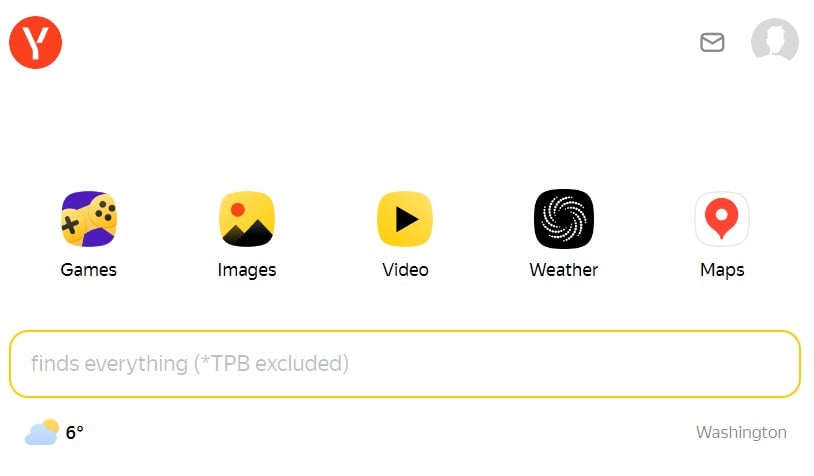
    A basic search for “The Pirate Bay” brings up plenty of results but these link to proxies, the Wikipedia page, and other related entries. In the locations we searched from, however, thepiratebay.org is nowhere to be found.

    yandex pirate bay

    Finding the official domain isn’t rocket science as it’s mentioned on the Wikipedia page that’s linked in the information panel on the right. However, a ‘site: search’, that typically lists all pages from a specified domain name, returns no results at all in our tests.

    no urls

    Interestingly, the same site-specific command does return plenty of links for other pirate sites, so The Pirate Bay appears to be in a league of its own.

    Update: After finishing this article the site: search started to show some results for thepiratebay.org again in our tests. It’s still not featured in any of the top results for “ The Pirate Bay “. It’s possible that Yandex changed something and the outcome may also depend on people’s location, so results may vary.

    Why Yandex has taken this decision is unknown. We requested a comment from the company, hoping to get an explanation, but that inquiry remains unanswered.

    At this point, The Pirate Bay probably no longer cares about yet another ‘blocking’ effort. The site’s traffic has been hurt by similar measures over the past years, but plenty of loyal users still manage to find their way to it.

    Note: For those who are wondering; China’s top search engine Baidu can no longer find Thepiratebay.org either.

    From: TF , for the latest news on copyright battles, piracy and more.

    • To chevron_right

      Yandex Yanked The Pirate Bay From its Search Results?

      news.movim.eu / TorrentFreak • 13 January 2024 • 2 minutes

    yandex The Pirate Bay and search engines are not a happy marriage recently. On the contrary.

    For example, we previously reported on Google’s decision to remove thepiratebay.org from its search results in countries where ISPs are required to block the site.

    Searching for The Pirate Bay

    This type of deindexing is not unique to Google. As highlighted in the past, Bing has effectively wiped all Pirate Bay URLs from its index until only the main homepage was left. That move sunsequently forced DuckDuckGo and other Microsoft-powered search engines to do the same.

    Today, there are still some more exotic search engines that are capable of finding Pirate Bay links easily, including non-infringing ones. However, Russia’s Yandex can be scrapped from that list.

    Founded in 1997, Yandex is one of the oldest search engines on the web. The service is used around the world but is particularly popular in Russia where it has a majority market share.

    It’s known that Russia requires search engines, including foreign ones, to remove results linked to pirate sites . This also applies to Yandex, but these measures don’t typically expand globally.

    Today, it’s not hard to find most popular pirate sites on Yandex internationally. This applies to YTS, Fmoviesz, Aniwave, and even the Russian torrent site Rutor. For some reason, however, The Pirate Bay’s official domain appears to have vanished.

    The Pirate Bay Vanished

    A basic search for “The Pirate Bay” brings up plenty of results but these link to proxies, the Wikipedia page, and other related entries. In the locations we searched from, however, thepiratebay.org is nowhere to be found.

    yandex pirate bay

    Finding the official domain isn’t rocket science as it’s mentioned on the Wikipedia page that’s linked in the information panel on the right. However, a ‘site: search’, that typically lists all pages from a specified domain name, returns no results at all in our tests.

    no urls

    Interestingly, the same site-specific command does return plenty of links for other pirate sites, so The Pirate Bay appears to be in a league of its own.

    Update: After finishing this article the site: search started to show some results for thepiratebay.org again in our tests. It’s still not featured in any of the top results for “ The Pirate Bay “. It’s possible that Yandex changed something and the outcome may also depend on people’s location, so results may vary.

    Why Yandex has taken this decision is unknown. We requested a comment from the company, hoping to get an explanation, but that inquiry remains unanswered.

    At this point, The Pirate Bay probably no longer cares about yet another ‘blocking’ effort. The site’s traffic has been hurt by similar measures over the past years, but plenty of loyal users still manage to find their way to it.

    Note: For those who are wondering; China’s top search engine Baidu can no longer find Thepiratebay.org either.

    From: TF , for the latest news on copyright battles, piracy and more.

    • To chevron_right

      Yandex Yanked The Pirate Bay From its Search Results?

      news.movim.eu / TorrentFreak • 13 January 2024 • 2 minutes

    yandex The Pirate Bay and search engines are not a happy marriage recently. On the contrary.

    For example, we previously reported on Google’s decision to remove thepiratebay.org from its search results in countries where ISPs are required to block the site.

    Searching for The Pirate Bay

    This type of deindexing is not unique to Google. As highlighted in the past, Bing has effectively wiped all Pirate Bay URLs from its index until only the main homepage was left. That move sunsequently forced DuckDuckGo and other Microsoft-powered search engines to do the same.

    Today, there are still some more exotic search engines that are capable of finding Pirate Bay links easily, including non-infringing ones. However, Russia’s Yandex can be scrapped from that list.

    Founded in 1997, Yandex is one of the oldest search engines on the web. The service is used around the world but is particularly popular in Russia where it has a majority market share.

    It’s known that Russia requires search engines, including foreign ones, to remove results linked to pirate sites . This also applies to Yandex, but these measures don’t typically expand globally.

    Today, it’s not hard to find most popular pirate sites on Yandex internationally. This applies to YTS, Fmoviesz, Aniwave, and even the Russian torrent site Rutor. For some reason, however, The Pirate Bay’s official domain appears to have vanished.

    The Pirate Bay Vanished

    A basic search for “The Pirate Bay” brings up plenty of results but these link to proxies, the Wikipedia page, and other related entries. In the locations we searched from, however, thepiratebay.org is nowhere to be found.

    yandex pirate bay

    Finding the official domain isn’t rocket science as it’s mentioned on the Wikipedia page that’s linked in the information panel on the right. However, a ‘site: search’, that typically lists all pages from a specified domain name, returns no results at all in our tests.

    no urls

    Interestingly, the same site-specific command does return plenty of links for other pirate sites, so The Pirate Bay appears to be in a league of its own.

    Update: After finishing this article the site: search started to show some results for thepiratebay.org again in our tests. It’s still not featured in any of the top results for “ The Pirate Bay “. It’s possible that Yandex changed something and the outcome may also depend on people’s location, so results may vary.

    Why Yandex has taken this decision is unknown. We requested a comment from the company, hoping to get an explanation, but that inquiry remains unanswered.

    At this point, The Pirate Bay probably no longer cares about yet another ‘blocking’ effort. The site’s traffic has been hurt by similar measures over the past years, but plenty of loyal users still manage to find their way to it.

    Note: For those who are wondering; China’s top search engine Baidu can no longer find Thepiratebay.org either.

    From: TF , for the latest news on copyright battles, piracy and more.

    • To chevron_right

      Domain & IP Seizures in UK’s Criminal Justice Bill Could Apply to Pirate Sites

      news.movim.eu / TorrentFreak • 12 January 2024 • 5 minutes

    domainseized The UK government’s Criminal Justice Bill had its first reading in the House of Commons on November 14, 2023, followed by its second reading on November 28.

    A Public Bill Committee is now in the process of scrutinizing the Bill “line by line” and if all goes to plan, the Committee will report back to the House by January 30 , in advance of the Bill’s third reading.

    The purpose of the Bill is to amend criminal law and, in many respects, it signals positive change. New criminal offenses to prohibit devices used in serious crime, theft, and fraud, such as 3D printer firearms templates, tablet presses, encapsulators, and vehicle concealment compartments, have been reasonably well-received.

    Measures against universally despised, SMS spam-and-fraud-enabling SIM farm devices are long overdue, but some believe that criminalizing the homeless for “nuisance” rough sleeping isn’t the type of change Britain needs right now. However, with prison sentences of up to a month on the table, such nuisances can be completely eliminated, in theory for up to a month.

    Preventing Online Crime

    During the debate on November 28, Home Secretary James Cleverly spoke about the need to tackle fraud in its various forms. Published in June 2023, the government’s fraud strategy revealed that fraud now accounts for over 40% of all reported crime in the UK, with police dedicating just 1% of overall resources to tackle the problem.

    “The Criminal Justice Bill contains several new measures to tackle fraudsters and the perpetrators of other serious crimes. We are prohibiting the possession and supply of SIM farms that have no legitimate purpose,” Cleverly said .

    On the disparity between police resources deployed and the sheer scale of the fraud problem, Cleverly responded that it’s “not quite as simple as mapping the proportion of crime to the proportion of police officers,” since there’s a need to “upskill investigators so that they can focus on those crime types.”

    The Home Secretary added that new tools to fight fraud are also part of the Bill.

    “Law enforcement agencies will have extended powers to suspend domain names and IP addresses used for fraudulent purposes or other serious crimes,” Cleverly said.

    Are Pirate Sites Among the Targets?

    The Bill sees domain and IP suspensions as a mechanism to fight fraud and other crime that has an online component. Pirate sites aren’t mentioned specifically, but the same also applies to many other illegal operations that currently exist, or might exist in the future.

    According to the Bill, investigative agencies would be given new power to apply to the court for a suspension order. These would compel third-party entities, involved in the provision of IP addresses or domain names, to suspend or deny access to them for up to a year.

    According to the Bill’s explanatory notes, law enforcement agencies and entities responsible for assigning domain names or IP addresses currently operate under voluntary agreements. These rely on alleged fraudsters violating the terms of service laid down by their providers, at which point domains and/or IP addresses can be suspended for those breaches.

    While that works in the UK, overseas providers “do not always recognize” informal requests and demand court orders before any suspensions can take place. The Bill addresses this with the introduction of two new orders, one to suspend IP addresses and one to suspend domain names, to be served against “Regional Internet Registries, Local Internet Registries, or Internet Service Providers.”

    According to the government, these orders “can be served internationally, to ensure that any threat originating from outside the UK can be effectively tackled.”

    Suspension Orders Target ‘Serious Crime’

    The Bill says that an “appropriate officer” may apply for an IP address suspension order. The definition covers police officers, NCA officers, HM Revenue and Customs officers, members of staff of the Financial Conduct Authority, and enforcement officers in the Gambling Commission.

    Before a court issues an IP address suspension order, certain conditions must be met. For example, an IP address can only be suspended when it is being used for serious crime.

    Crime is defined as conduct which constitutes one or more criminal offenses, or corresponds to conduct which, if it all took place in the United Kingdom, would constitute one or more criminal offenses. The threshold for serious crime is when the offense(s), committed by a person over 18 (or 21 in Scotland and Northern Ireland) with no previous convictions, could reasonably be expected to be sentenced to prison for three years or more.

    The majority of the defendants in the recent prosecution of Flawless IPTV had no previous convictions. In 2023, five defendants were sentenced to over 30 years in prison for offenses including conspiracy to defraud and money laundering. Over the last ten years, City of London Police has sent letters to pirate site operators ordering them to shut down or face potential prosecution under the Fraud Act and Serious Crime Act.

    Relationship Between IP Address and UK

    To show a relationship between the alleged serious crime, an IP address, and the UK, one of several conditions must apply. Most center on the definition of a ‘UK Person’ which broadly covers a person with British citizenship, a person living in the UK, a body incorporated under UK law, or an unincorporated association formed under UK law.

    A relationship to the UK is established when a UK Person uses an IP address to commit serious crime, or becomes a victim of serious crime for which the IP address has been used. A relationship can also be established when an IP address is used for crime in connection with unlicensed gambling, or when an IP address is allocated to a device located in the UK.

    Using the Flawless case as an example, more than one person used an IP address to commit serious crime, while a UK Person (Premier League) was the victim. Even if the defendants had been located overseas, a relationship could still be established due to the victim’s status as a UK Person.

    Reactive and Proactive Suspensions

    In respect of domain names, the measures are similar but also include a significant proactive element.

    “The domain name conditions also cover instances in which domain names could be used for criminality in the future,” the Bill’s explanatory notes read.

    “This is due to the criminal use of domain generation algorithms (DGA) to aid their operations. Once the relevant law enforcement agencies understand the DGA, they can identify domains which could be associated with criminal activity in the future and suspend them before they can be used.”

    As previously reported , UK broadcaster Sky is fighting DGAs deployed by IPTV providers who are attempting to circumvent a High Court blocking injunction. While that is a matter under civil law, case law establishes that Sky is a victim of fraud, and a UK Person as defined by the Criminal Justice Bill.

    Whether companies like Sky and the Premier League will make use of the provisions in the Bill when it enters into law is unknown. What isn’t in doubt is their determination to use any tool that has the potential to reduce the piracy problem.

    From: TF , for the latest news on copyright battles, piracy and more.

    • To chevron_right

      Domain & IP Seizures in UK’s Criminal Justice Bill Could Apply to Pirate Sites

      news.movim.eu / TorrentFreak • 12 January 2024 • 5 minutes

    domainseized The UK government’s Criminal Justice Bill had its first reading in the House of Commons on November 14, 2023, followed by its second reading on November 28.

    A Public Bill Committee is now in the process of scrutinizing the Bill “line by line” and if all goes to plan, the Committee will report back to the House by January 30 , in advance of the Bill’s third reading.

    The purpose of the Bill is to amend criminal law and, in many respects, it signals positive change. New criminal offenses to prohibit devices used in serious crime, theft, and fraud, such as 3D printer firearms templates, tablet presses, encapsulators, and vehicle concealment compartments, have been reasonably well-received.

    Measures against universally despised, SMS spam-and-fraud-enabling SIM farm devices are long overdue, but some believe that criminalizing the homeless for “nuisance” rough sleeping isn’t the type of change Britain needs right now. However, with prison sentences of up to a month on the table, such nuisances can be completely eliminated, in theory for up to a month.

    Preventing Online Crime

    During the debate on November 28, Home Secretary James Cleverly spoke about the need to tackle fraud in its various forms. Published in June 2023, the government’s fraud strategy revealed that fraud now accounts for over 40% of all reported crime in the UK, with police dedicating just 1% of overall resources to tackle the problem.

    “The Criminal Justice Bill contains several new measures to tackle fraudsters and the perpetrators of other serious crimes. We are prohibiting the possession and supply of SIM farms that have no legitimate purpose,” Cleverly said .

    On the disparity between police resources deployed and the sheer scale of the fraud problem, Cleverly responded that it’s “not quite as simple as mapping the proportion of crime to the proportion of police officers,” since there’s a need to “upskill investigators so that they can focus on those crime types.”

    The Home Secretary added that new tools to fight fraud are also part of the Bill.

    “Law enforcement agencies will have extended powers to suspend domain names and IP addresses used for fraudulent purposes or other serious crimes,” Cleverly said.

    Are Pirate Sites Among the Targets?

    The Bill sees domain and IP suspensions as a mechanism to fight fraud and other crime that has an online component. Pirate sites aren’t mentioned specifically, but the same also applies to many other illegal operations that currently exist, or might exist in the future.

    According to the Bill, investigative agencies would be given new power to apply to the court for a suspension order. These would compel third-party entities, involved in the provision of IP addresses or domain names, to suspend or deny access to them for up to a year.

    According to the Bill’s explanatory notes, law enforcement agencies and entities responsible for assigning domain names or IP addresses currently operate under voluntary agreements. These rely on alleged fraudsters violating the terms of service laid down by their providers, at which point domains and/or IP addresses can be suspended for those breaches.

    While that works in the UK, overseas providers “do not always recognize” informal requests and demand court orders before any suspensions can take place. The Bill addresses this with the introduction of two new orders, one to suspend IP addresses and one to suspend domain names, to be served against “Regional Internet Registries, Local Internet Registries, or Internet Service Providers.”

    According to the government, these orders “can be served internationally, to ensure that any threat originating from outside the UK can be effectively tackled.”

    Suspension Orders Target ‘Serious Crime’

    The Bill says that an “appropriate officer” may apply for an IP address suspension order. The definition covers police officers, NCA officers, HM Revenue and Customs officers, members of staff of the Financial Conduct Authority, and enforcement officers in the Gambling Commission.

    Before a court issues an IP address suspension order, certain conditions must be met. For example, an IP address can only be suspended when it is being used for serious crime.

    Crime is defined as conduct which constitutes one or more criminal offenses, or corresponds to conduct which, if it all took place in the United Kingdom, would constitute one or more criminal offenses. The threshold for serious crime is when the offense(s), committed by a person over 18 (or 21 in Scotland and Northern Ireland) with no previous convictions, could reasonably be expected to be sentenced to prison for three years or more.

    The majority of the defendants in the recent prosecution of Flawless IPTV had no previous convictions. In 2023, five defendants were sentenced to over 30 years in prison for offenses including conspiracy to defraud and money laundering. Over the last ten years, City of London Police has sent letters to pirate site operators ordering them to shut down or face potential prosecution under the Fraud Act and Serious Crime Act.

    Relationship Between IP Address and UK

    To show a relationship between the alleged serious crime, an IP address, and the UK, one of several conditions must apply. Most center on the definition of a ‘UK Person’ which broadly covers a person with British citizenship, a person living in the UK, a body incorporated under UK law, or an unincorporated association formed under UK law.

    A relationship to the UK is established when a UK Person uses an IP address to commit serious crime, or becomes a victim of serious crime for which the IP address has been used. A relationship can also be established when an IP address is used for crime in connection with unlicensed gambling, or when an IP address is allocated to a device located in the UK.

    Using the Flawless case as an example, more than one person used an IP address to commit serious crime, while a UK Person (Premier League) was the victim. Even if the defendants had been located overseas, a relationship could still be established due to the victim’s status as a UK Person.

    Reactive and Proactive Suspensions

    In respect of domain names, the measures are similar but also include a significant proactive element.

    “The domain name conditions also cover instances in which domain names could be used for criminality in the future,” the Bill’s explanatory notes read.

    “This is due to the criminal use of domain generation algorithms (DGA) to aid their operations. Once the relevant law enforcement agencies understand the DGA, they can identify domains which could be associated with criminal activity in the future and suspend them before they can be used.”

    As previously reported , UK broadcaster Sky is fighting DGAs deployed by IPTV providers who are attempting to circumvent a High Court blocking injunction. While that is a matter under civil law, case law establishes that Sky is a victim of fraud, and a UK Person as defined by the Criminal Justice Bill.

    Whether companies like Sky and the Premier League will make use of the provisions in the Bill when it enters into law is unknown. What isn’t in doubt is their determination to use any tool that has the potential to reduce the piracy problem.

    From: TF , for the latest news on copyright battles, piracy and more.

    • To chevron_right

      Domain & IP Seizures in UK’s Criminal Justice Bill Could Apply to Pirate Sites

      news.movim.eu / TorrentFreak • 12 January 2024 • 5 minutes

    domainseized The UK government’s Criminal Justice Bill had its first reading in the House of Commons on November 14, 2023, followed by its second reading on November 28.

    A Public Bill Committee is now in the process of scrutinizing the Bill “line by line” and if all goes to plan, the Committee will report back to the House by January 30 , in advance of the Bill’s third reading.

    The purpose of the Bill is to amend criminal law and, in many respects, it signals positive change. New criminal offenses to prohibit devices used in serious crime, theft, and fraud, such as 3D printer firearms templates, tablet presses, encapsulators, and vehicle concealment compartments, have been reasonably well-received.

    Measures against universally despised, SMS spam-and-fraud-enabling SIM farm devices are long overdue, but some believe that criminalizing the homeless for “nuisance” rough sleeping isn’t the type of change Britain needs right now. However, with prison sentences of up to a month on the table, such nuisances can be completely eliminated, in theory for up to a month.

    Preventing Online Crime

    During the debate on November 28, Home Secretary James Cleverly spoke about the need to tackle fraud in its various forms. Published in June 2023, the government’s fraud strategy revealed that fraud now accounts for over 40% of all reported crime in the UK, with police dedicating just 1% of overall resources to tackle the problem.

    “The Criminal Justice Bill contains several new measures to tackle fraudsters and the perpetrators of other serious crimes. We are prohibiting the possession and supply of SIM farms that have no legitimate purpose,” Cleverly said .

    On the disparity between police resources deployed and the sheer scale of the fraud problem, Cleverly responded that it’s “not quite as simple as mapping the proportion of crime to the proportion of police officers,” since there’s a need to “upskill investigators so that they can focus on those crime types.”

    The Home Secretary added that new tools to fight fraud are also part of the Bill.

    “Law enforcement agencies will have extended powers to suspend domain names and IP addresses used for fraudulent purposes or other serious crimes,” Cleverly said.

    Are Pirate Sites Among the Targets?

    The Bill sees domain and IP suspensions as a mechanism to fight fraud and other crime that has an online component. Pirate sites aren’t mentioned specifically, but the same also applies to many other illegal operations that currently exist, or might exist in the future.

    According to the Bill, investigative agencies would be given new power to apply to the court for a suspension order. These would compel third-party entities, involved in the provision of IP addresses or domain names, to suspend or deny access to them for up to a year.

    According to the Bill’s explanatory notes, law enforcement agencies and entities responsible for assigning domain names or IP addresses currently operate under voluntary agreements. These rely on alleged fraudsters violating the terms of service laid down by their providers, at which point domains and/or IP addresses can be suspended for those breaches.

    While that works in the UK, overseas providers “do not always recognize” informal requests and demand court orders before any suspensions can take place. The Bill addresses this with the introduction of two new orders, one to suspend IP addresses and one to suspend domain names, to be served against “Regional Internet Registries, Local Internet Registries, or Internet Service Providers.”

    According to the government, these orders “can be served internationally, to ensure that any threat originating from outside the UK can be effectively tackled.”

    Suspension Orders Target ‘Serious Crime’

    The Bill says that an “appropriate officer” may apply for an IP address suspension order. The definition covers police officers, NCA officers, HM Revenue and Customs officers, members of staff of the Financial Conduct Authority, and enforcement officers in the Gambling Commission.

    Before a court issues an IP address suspension order, certain conditions must be met. For example, an IP address can only be suspended when it is being used for serious crime.

    Crime is defined as conduct which constitutes one or more criminal offenses, or corresponds to conduct which, if it all took place in the United Kingdom, would constitute one or more criminal offenses. The threshold for serious crime is when the offense(s), committed by a person over 18 (or 21 in Scotland and Northern Ireland) with no previous convictions, could reasonably be expected to be sentenced to prison for three years or more.

    The majority of the defendants in the recent prosecution of Flawless IPTV had no previous convictions. In 2023, five defendants were sentenced to over 30 years in prison for offenses including conspiracy to defraud and money laundering. Over the last ten years, City of London Police has sent letters to pirate site operators ordering them to shut down or face potential prosecution under the Fraud Act and Serious Crime Act.

    Relationship Between IP Address and UK

    To show a relationship between the alleged serious crime, an IP address, and the UK, one of several conditions must apply. Most center on the definition of a ‘UK Person’ which broadly covers a person with British citizenship, a person living in the UK, a body incorporated under UK law, or an unincorporated association formed under UK law.

    A relationship to the UK is established when a UK Person uses an IP address to commit serious crime, or becomes a victim of serious crime for which the IP address has been used. A relationship can also be established when an IP address is used for crime in connection with unlicensed gambling, or when an IP address is allocated to a device located in the UK.

    Using the Flawless case as an example, more than one person used an IP address to commit serious crime, while a UK Person (Premier League) was the victim. Even if the defendants had been located overseas, a relationship could still be established due to the victim’s status as a UK Person.

    Reactive and Proactive Suspensions

    In respect of domain names, the measures are similar but also include a significant proactive element.

    “The domain name conditions also cover instances in which domain names could be used for criminality in the future,” the Bill’s explanatory notes read.

    “This is due to the criminal use of domain generation algorithms (DGA) to aid their operations. Once the relevant law enforcement agencies understand the DGA, they can identify domains which could be associated with criminal activity in the future and suspend them before they can be used.”

    As previously reported , UK broadcaster Sky is fighting DGAs deployed by IPTV providers who are attempting to circumvent a High Court blocking injunction. While that is a matter under civil law, case law establishes that Sky is a victim of fraud, and a UK Person as defined by the Criminal Justice Bill.

    Whether companies like Sky and the Premier League will make use of the provisions in the Bill when it enters into law is unknown. What isn’t in doubt is their determination to use any tool that has the potential to reduce the piracy problem.

    From: TF , for the latest news on copyright battles, piracy and more.