• To chevron_right

      Anti-Piracy Chief: Google’s Gambling Ad Liability Should Be Adopted For Piracy

      news.movim.eu / TorrentFreak • 23 May 2024 • 4 minutes

    pirate-gamblers When it comes to digital policy and efforts to regulate online behavior, no topic comes close to the scale of the global content moderation drive.

    Tracking carried out by Digital Policy from 2020 currently shows 593 policy changes around the world, with the closely-linked platform intermediary / user-generated content category at 497. Policy changes related to user speech, on the other hand, fade into the distance with less than 50.

    Italy’s Gambling Ad Ban

    Friction between what citizens believe they have a right to say, do, or see online, and what their governments believe is appropriate, is rarely a product of negotiation between the parties. By focusing on perceived societal ills, at least in the first instance, regulators are able to step in and inform citizens what’s in everyone’s best interests moving forward.

    Given that online platforms are regularly seen as best placed to control user behavior, in many cases they’re required to do just that, or face retribution from various authorities as they see fit.

    In Italy, it was decided that strict legislation was required to protect 3% of the population considered problem gamblers. In 2019, advertising that promoted games with cash prizes was outlawed on TV, radio, in print, on social media, and all other internet platforms. This doesn’t amount to a total ban, though; lotteries appear to be acceptable and in other cases it depends on the circumstances .

    For example, it appears that in some situations, gambling companies are allowed to show their names and domain names. That has enabled 1XBET to continue its sponsorship of top-tier football league Serie A.

    When an investigation found over 40 Italian players, including many in Serie A, were involved in illegal betting, that probably wasn’t the result Serie A, 1XBET, or AGCOM had in mind. In the meantime, with much less room for maneuver, tech companies haven’t been doing well at all.

    Fines For Tech Company Violators

    In the years since the introduction of the near-total ban, YouTube, Twitch, Google, and more recently X, have been found in breach of the rules and together fined millions of euros.

    AGCOM’s first sanction against Google in October 2020, related to a breach of the regulations through Google Ads. Monitoring carried out by AGCOM over a 48-hour period in November 2019 noted the appearance of an ad for a casino, stating: ‘Join Now The Brand New Italian Online Casino. Play Over 400 Games Now – Sign Up Now & Register In Less Than 30 Seconds! No downloads. Safe and Secure.’

    Since this was a paid advertisement, which only appeared because the monitoring involved typing ‘online casino’ into Google search, AGCOM obtained an injunction against Google and fined the company 100,000 euros, 50,000 for each day monitored. Not unexpectedly, Google filed an appeal.

    The regional court of Lazio (TAR) subsequently ruled in Google’s favor, noting jurisprudence concerning the concept of ‘active’ and ‘passive’ online services. Italy’s transposition of the e-commerce directive into national law generally offers more protection to the latter, and since the advertiser placed the ad on an unsupervised ‘self-serve’ basis, that led the TAR to conclude that Google had committed no violations.

    AGCOM Appeals the Decision

    AGCOM subsequently appealed to the Council of State and earlier this month, its decision was handed down.

    In respect of any defense Google may have relied upon under the e-commerce directive or its local equivalent, attention was drawn to the text shown below, which relates to an exclusion that the court determined as encompassing advertising.

    Posting on LinkedIn, AGCOM chief Massimiliano Capitanio says the court noted that a defense under the e-commerce directive or local equivalent wouldn’t have applied anyway. Because, in a nutshell, Google’s advertising service can’t be considered passive.

    Controlled, Active Involvement

    “[T]his advertising service does not see Google as a mere passive hosting provider, since the company carries out, through entrepreneurial management, a service of indexing and promotion of third-party content and therefore does not remain ‘neutral’ with respect to said contents but promoting them on the market and having in this regard its own economic interest in the success of such promotion,” the Council of State’s decision reads.

    “Google, in the aforementioned sense, therefore carries out a ‘control’ of the information published and allows its customers to ‘optimize their online sales’. In light of this, it is therefore found that the conditions required by EU and national jurisprudence are integrated in order to qualify an operator as an active hosting provider.”

    “Same Line Should Be Adopted to Eradicate Piracy”

    For AGCOM, which also has an anti-piracy mandate, the opportunity to tighten its grip on Google’s activities in other areas didn’t take long to come to the surface. For Capitanio, it’s all about the dividing line between passive and active; now he knows exactly where that is, the question of liability comes straight to the front of the queue.

    “Control over content is achieved through a series of activities – such as filtering, organisation, cataloging, etc. defined by community and national jurisprudence as ‘interference indices’, which make hosting move from the qualification of ‘passive’ to that of ‘active hosting’ and, therefore, responsibilty for the contents conveyed,” he writes.

    “This is a historic ruling which marks another point in favor of the fight against illegal content online and which confirms once again that the large online players have the duty not only not to profit from such content, but also to prevent its distribution.

    “The same line should be adopted to eradicate piracy,” he concludes.

    From: TF , for the latest news on copyright battles, piracy and more.

    • To chevron_right

      Anti-Piracy Chief: Google’s Gambling Ad Liability Should Be Adopted For Piracy

      news.movim.eu / TorrentFreak • 23 May 2024 • 4 minutes

    pirate-gamblers When it comes to digital policy and efforts to regulate online behavior, no topic comes close to the scale of the global content moderation drive.

    Tracking carried out by Digital Policy from 2020 currently shows 593 policy changes around the world, with the closely-linked platform intermediary / user-generated content category at 497. Policy changes related to user speech, on the other hand, fade into the distance with less than 50.

    Italy’s Gambling Ad Ban

    Friction between what citizens believe they have a right to say, do, or see online, and what their governments believe is appropriate, is rarely a product of negotiation between the parties. By focusing on perceived societal ills, at least in the first instance, regulators are able to step in and inform citizens what’s in everyone’s best interests moving forward.

    Given that online platforms are regularly seen as best placed to control user behavior, in many cases they’re required to do just that, or face retribution from various authorities as they see fit.

    In Italy, it was decided that strict legislation was required to protect 3% of the population considered problem gamblers. In 2019, advertising that promoted games with cash prizes was outlawed on TV, radio, in print, on social media, and all other internet platforms. This doesn’t amount to a total ban, though; lotteries appear to be acceptable and in other cases it depends on the circumstances .

    For example, it appears that in some situations, gambling companies are allowed to show their names and domain names. That has enabled 1XBET to continue its sponsorship of top-tier football league Serie A.

    When an investigation found over 40 Italian players, including many in Serie A, were involved in illegal betting, that probably wasn’t the result Serie A, 1XBET, or AGCOM had in mind. In the meantime, with much less room for maneuver, tech companies haven’t been doing well at all.

    Fines For Tech Company Violators

    In the years since the introduction of the near-total ban, YouTube, Twitch, Google, and more recently X, have been found in breach of the rules and together fined millions of euros.

    AGCOM’s first sanction against Google in October 2020, related to a breach of the regulations through Google Ads. Monitoring carried out by AGCOM over a 48-hour period in November 2019 noted the appearance of an ad for a casino, stating: ‘Join Now The Brand New Italian Online Casino. Play Over 400 Games Now – Sign Up Now & Register In Less Than 30 Seconds! No downloads. Safe and Secure.’

    Since this was a paid advertisement, which only appeared because the monitoring involved typing ‘online casino’ into Google search, AGCOM obtained an injunction against Google and fined the company 100,000 euros, 50,000 for each day monitored. Not unexpectedly, Google filed an appeal.

    The regional court of Lazio (TAR) subsequently ruled in Google’s favor, noting jurisprudence concerning the concept of ‘active’ and ‘passive’ online services. Italy’s transposition of the e-commerce directive into national law generally offers more protection to the latter, and since the advertiser placed the ad on an unsupervised ‘self-serve’ basis, that led the TAR to conclude that Google had committed no violations.

    AGCOM Appeals the Decision

    AGCOM subsequently appealed to the Council of State and earlier this month, its decision was handed down.

    In respect of any defense Google may have relied upon under the e-commerce directive or its local equivalent, attention was drawn to the text shown below, which relates to an exclusion that the court determined as encompassing advertising.

    Posting on LinkedIn, AGCOM chief Massimiliano Capitanio says the court noted that a defense under the e-commerce directive or local equivalent wouldn’t have applied anyway. Because, in a nutshell, Google’s advertising service can’t be considered passive.

    Controlled, Active Involvement

    “[T]his advertising service does not see Google as a mere passive hosting provider, since the company carries out, through entrepreneurial management, a service of indexing and promotion of third-party content and therefore does not remain ‘neutral’ with respect to said contents but promoting them on the market and having in this regard its own economic interest in the success of such promotion,” the Council of State’s decision reads.

    “Google, in the aforementioned sense, therefore carries out a ‘control’ of the information published and allows its customers to ‘optimize their online sales’. In light of this, it is therefore found that the conditions required by EU and national jurisprudence are integrated in order to qualify an operator as an active hosting provider.”

    “Same Line Should Be Adopted to Eradicate Piracy”

    For AGCOM, which also has an anti-piracy mandate, the opportunity to tighten its grip on Google’s activities in other areas didn’t take long to come to the surface. For Capitanio, it’s all about the dividing line between passive and active; now he knows exactly where that is, the question of liability comes straight to the front of the queue.

    “Control over content is achieved through a series of activities – such as filtering, organisation, cataloging, etc. defined by community and national jurisprudence as ‘interference indices’, which make hosting move from the qualification of ‘passive’ to that of ‘active hosting’ and, therefore, responsibilty for the contents conveyed,” he writes.

    “This is a historic ruling which marks another point in favor of the fight against illegal content online and which confirms once again that the large online players have the duty not only not to profit from such content, but also to prevent its distribution.

    “The same line should be adopted to eradicate piracy,” he concludes.

    From: TF , for the latest news on copyright battles, piracy and more.

    • To chevron_right

      Anti-Piracy Chief: Google’s Gambling Ad Liability Should Be Adopted For Piracy

      news.movim.eu / TorrentFreak • 23 May 2024 • 4 minutes

    pirate-gamblers When it comes to digital policy and efforts to regulate online behavior, no topic comes close to the scale of the global content moderation drive.

    Tracking carried out by Digital Policy from 2020 currently shows 593 policy changes around the world, with the closely-linked platform intermediary / user-generated content category at 497. Policy changes related to user speech, on the other hand, fade into the distance with less than 50.

    Italy’s Gambling Ad Ban

    Friction between what citizens believe they have a right to say, do, or see online, and what their governments believe is appropriate, is rarely a product of negotiation between the parties. By focusing on perceived societal ills, at least in the first instance, regulators are able to step in and inform citizens what’s in everyone’s best interests moving forward.

    Given that online platforms are regularly seen as best placed to control user behavior, in many cases they’re required to do just that, or face retribution from various authorities as they see fit.

    In Italy, it was decided that strict legislation was required to protect 3% of the population considered problem gamblers. In 2019, advertising that promoted games with cash prizes was outlawed on TV, radio, in print, on social media, and all other internet platforms. This doesn’t amount to a total ban, though; lotteries appear to be acceptable and in other cases it depends on the circumstances .

    For example, it appears that in some situations, gambling companies are allowed to show their names and domain names. That has enabled 1XBET to continue its sponsorship of top-tier football league Serie A.

    When an investigation found over 40 Italian players, including many in Serie A, were involved in illegal betting, that probably wasn’t the result Serie A, 1XBET, or AGCOM had in mind. In the meantime, with much less room for maneuver, tech companies haven’t been doing well at all.

    Fines For Tech Company Violators

    In the years since the introduction of the near-total ban, YouTube, Twitch, Google, and more recently X, have been found in breach of the rules and together fined millions of euros.

    AGCOM’s first sanction against Google in October 2020, related to a breach of the regulations through Google Ads. Monitoring carried out by AGCOM over a 48-hour period in November 2019 noted the appearance of an ad for a casino, stating: ‘Join Now The Brand New Italian Online Casino. Play Over 400 Games Now – Sign Up Now & Register In Less Than 30 Seconds! No downloads. Safe and Secure.’

    Since this was a paid advertisement, which only appeared because the monitoring involved typing ‘online casino’ into Google search, AGCOM obtained an injunction against Google and fined the company 100,000 euros, 50,000 for each day monitored. Not unexpectedly, Google filed an appeal.

    The regional court of Lazio (TAR) subsequently ruled in Google’s favor, noting jurisprudence concerning the concept of ‘active’ and ‘passive’ online services. Italy’s transposition of the e-commerce directive into national law generally offers more protection to the latter, and since the advertiser placed the ad on an unsupervised ‘self-serve’ basis, that led the TAR to conclude that Google had committed no violations.

    AGCOM Appeals the Decision

    AGCOM subsequently appealed to the Council of State and earlier this month, its decision was handed down.

    In respect of any defense Google may have relied upon under the e-commerce directive or its local equivalent, attention was drawn to the text shown below, which relates to an exclusion that the court determined as encompassing advertising.

    Posting on LinkedIn, AGCOM chief Massimiliano Capitanio says the court noted that a defense under the e-commerce directive or local equivalent wouldn’t have applied anyway. Because, in a nutshell, Google’s advertising service can’t be considered passive.

    Controlled, Active Involvement

    “[T]his advertising service does not see Google as a mere passive hosting provider, since the company carries out, through entrepreneurial management, a service of indexing and promotion of third-party content and therefore does not remain ‘neutral’ with respect to said contents but promoting them on the market and having in this regard its own economic interest in the success of such promotion,” the Council of State’s decision reads.

    “Google, in the aforementioned sense, therefore carries out a ‘control’ of the information published and allows its customers to ‘optimize their online sales’. In light of this, it is therefore found that the conditions required by EU and national jurisprudence are integrated in order to qualify an operator as an active hosting provider.”

    “Same Line Should Be Adopted to Eradicate Piracy”

    For AGCOM, which also has an anti-piracy mandate, the opportunity to tighten its grip on Google’s activities in other areas didn’t take long to come to the surface. For Capitanio, it’s all about the dividing line between passive and active; now he knows exactly where that is, the question of liability comes straight to the front of the queue.

    “Control over content is achieved through a series of activities – such as filtering, organisation, cataloging, etc. defined by community and national jurisprudence as ‘interference indices’, which make hosting move from the qualification of ‘passive’ to that of ‘active hosting’ and, therefore, responsibilty for the contents conveyed,” he writes.

    “This is a historic ruling which marks another point in favor of the fight against illegal content online and which confirms once again that the large online players have the duty not only not to profit from such content, but also to prevent its distribution.

    “The same line should be adopted to eradicate piracy,” he concludes.

    From: TF , for the latest news on copyright battles, piracy and more.

    • To chevron_right

      Destiny 2 Creator Bungie & Cheat Maker AimJunkies Go Head-To-Head at Trial

      news.movim.eu / TorrentFreak • 22 May 2024 • 4 minutes

    aimjunkies Over the past several years, game companies have pursued legal action against both cheaters and cheat makers.
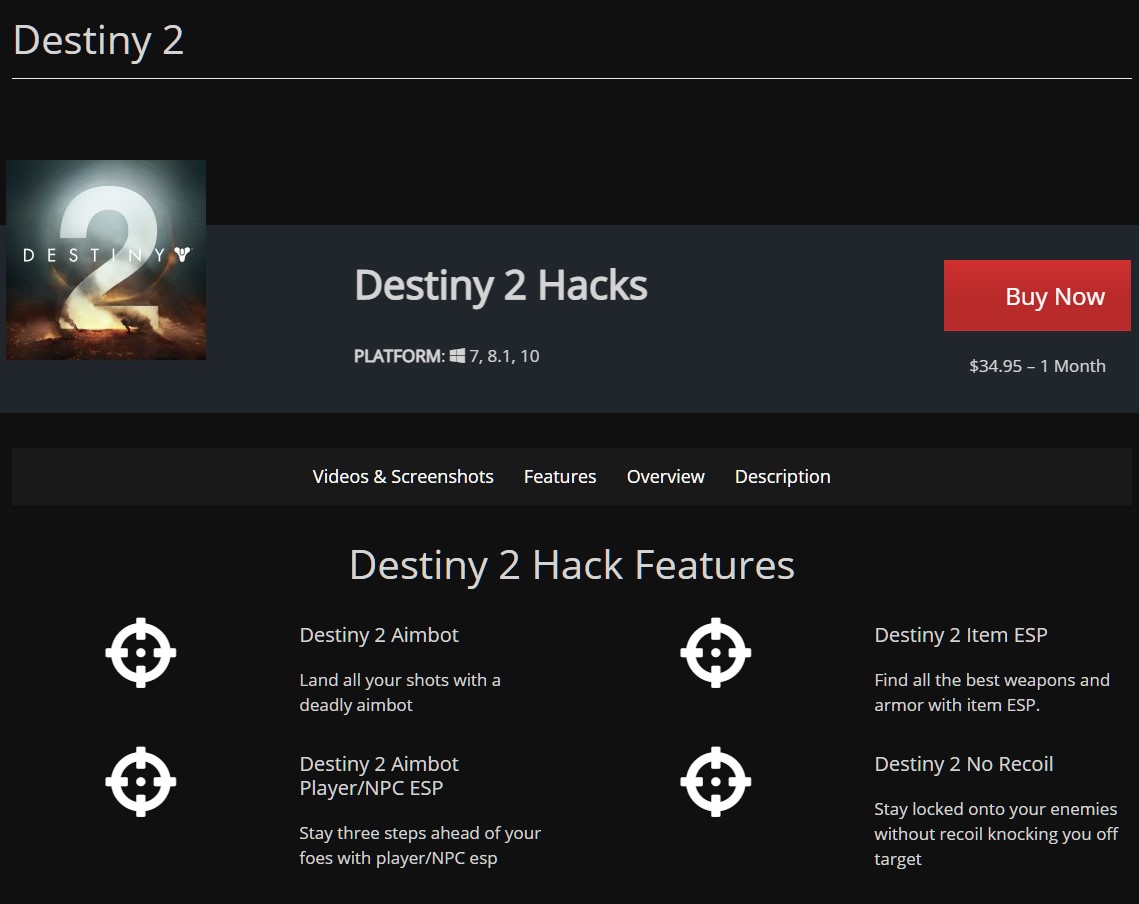
    Rightsholders have mostly emerged from these lawsuits as victors, but until now, none have gone all the way to a full trial.

    The legal dispute between American video game developer Bungie and AimJunkies.com has been fiercely fought, and the long-awaited jury trial is now underway.

    Three years ago, Bungie filed a complaint at a federal court in Seattle, accusing AimJunkies of copyright and trademark infringement, among other things. The same allegations were made against Phoenix Digital Group, the alleged sellers of the Destiny 2 cheating software.

    The case initially seemed set for a quick settlement, but the parties failed to reach an agreement. Instead, Bungie pressed on while AimJunkies went on the defensive, asking the court to dismiss several claims.

    AimJunkies stated that cheating isn’t against the law and refuted the copyright infringement allegations; these lacked substance and were ungrounded because some of the referenced copyrights were registered well after the cheats were first made available, AimJunkies argued.

    Dismissal, Hacking and Arbitration

    In 2022, District Court Judge Thomas Zilly largely sided with AimJunkies . The original complaint failed to provide sufficient evidence for a plausible claim that the ‘Destiny 2 Hacks’ infringed copyright.

    This was bad news for Bungie but the court did offer the company the option to file a new complaint to address these shortcomings, which it did shortly after .

    destiny 2 cheat

    Meanwhile, AimJunkies wasn’t sitting idly by. The cheat seller filed a countersuit , accusing Bungie of hacking when it allegedly accessed a defendant’s computer without permission. This hacking counterclaim was eventually dismissed for AimJunkies, but not for developer James May.

    Bungie scored its first major win last year in an arbitration proceeding. Judge Ronald Cox concluded that the cheaters violated the DMCA’s anti-circumvention provision and related trafficking restrictions, awarding $3.6 million in damages to the game company. This arbitration award is still under appeal.

    At the same time, Bungie continued its copyright and trademark claims. The game company submitted motions for summary judgment to resolve the copyright infringement dispute before trial. However, the court denied these motions, as there is no hard evidence that any game code was copied. Instead, a jury would have to decide.

    Jury Trial

    After several years, the dispute is about to reach its climax in a district court in Seattle, where a jury trial started this week. This is the first time that a case like this has gone before a jury, making it a landmark event.

    While both sides have yet to complete their pleadings, shots were already fired during the first days, as Law360 reports.

    In court, AimJunkies’ attorney Philip P. Mann, of Mann Law Group argued that the developers, who allegedly created the cheats, never had access to Destiny 2’s source code. Instead, the cheat accessed object code , which is the ‘compiled’ output of the source code.

    While this distinction may be quite abstract for the layman, the defense believe it’s crucial for the copyright infringement allegations.

    AimJunkies’ attorney questioned Edward Kaiser, lead engineer of Bungie’s project security team, on the matter, insinuating that the copyright infringement allegations can’t stand if there’s no evidence that the copyrighted code was accessed.

    “Would you agree with me that you can’t copy something that you don’t see or that you don’t have access to?” AimJunkies counsel asked.

    Kaiser responded by characterizing this as an ‘apples and oranges’ comparison. According to Bungie’s witness, the cheat makers might not have accessed the source code, but they “definitely” had access to the object code, which was key in creating the cheat.

    Developer Denies Accusations

    The jury also heard from third party developer James May, who isn’t part of AimJunkies’ main team. The developer allegedly had a key role in creating the Destiny 2 cheat, but refuted this in court.

    May told the jury that, contrary to Bungie’s claims, he did not code the cheat software. May admitted that he tried to reverse engineer the Destiny 2 code, but added that he “didn’t get anywhere.”

    The developer also has an active counterclaim against Bungie, which he accuses of hacking into his computer, violating his privacy. This counterclaim survived the earlier motion to dismiss and remains open for the jury.

    Bungie, meanwhile, presented a spreadsheet with logging data that purport to show May’s “relentless” efforts to reverse engineer the code. He allegedly used more than 80 different accounts to do so, often using the ‘swifty’ alias.

    “Mr. May distinguished himself as someone who kept coming back, time after time,” Kaiser added, during his testimony.

    According to Bungie’s engineer, the game company first noticed the cheat in October 2019, when its internal monitoring systems were triggered. This suggested that players attached reverse engineering tools to explore the game’s memory space, which is often indicative of cheating.

    While it’s clear that AimJunkies sold Destiny 2 cheats at some point, it’s undecided whether the company, its directors, or accomplices, broke any laws doing so. That’s up for the jury to decide.

    These are just a few of the arguments brought up at trial. Hearings are ongoing and both sides still have several hours of pleading time left. The trial is expected to wrap up this week, after which the verdict will follow.

    From: TF , for the latest news on copyright battles, piracy and more.

    • To chevron_right

      Destiny 2 Creator Bungie & Cheat Maker AimJunkies Go Head-To-Head at Trial

      news.movim.eu / TorrentFreak • 22 May 2024 • 4 minutes

    aimjunkies Over the past several years, game companies have pursued legal action against both cheaters and cheat makers.

    Rightsholders have mostly emerged from these lawsuits as victors, but until now, none have gone all the way to a full trial.

    The legal dispute between American video game developer Bungie and AimJunkies.com has been fiercely fought, and the long-awaited jury trial is now underway.

    Three years ago, Bungie filed a complaint at a federal court in Seattle, accusing AimJunkies of copyright and trademark infringement, among other things. The same allegations were made against Phoenix Digital Group, the alleged sellers of the Destiny 2 cheating software.

    The case initially seemed set for a quick settlement, but the parties failed to reach an agreement. Instead, Bungie pressed on while AimJunkies went on the defensive, asking the court to dismiss several claims.

    AimJunkies stated that cheating isn’t against the law and refuted the copyright infringement allegations; these lacked substance and were ungrounded because some of the referenced copyrights were registered well after the cheats were first made available, AimJunkies argued.

    Dismissal, Hacking and Arbitration

    In 2022, District Court Judge Thomas Zilly largely sided with AimJunkies . The original complaint failed to provide sufficient evidence for a plausible claim that the ‘Destiny 2 Hacks’ infringed copyright.

    This was bad news for Bungie but the court did offer the company the option to file a new complaint to address these shortcomings, which it did shortly after .

    destiny 2 cheat

    Meanwhile, AimJunkies wasn’t sitting idly by. The cheat seller filed a countersuit , accusing Bungie of hacking when it allegedly accessed a defendant’s computer without permission. This hacking counterclaim was eventually dismissed for AimJunkies, but not for developer James May.

    Bungie scored its first major win last year in an arbitration proceeding. Judge Ronald Cox concluded that the cheaters violated the DMCA’s anti-circumvention provision and related trafficking restrictions, awarding $3.6 million in damages to the game company. This arbitration award is still under appeal.

    At the same time, Bungie continued its copyright and trademark claims. The game company submitted motions for summary judgment to resolve the copyright infringement dispute before trial. However, the court denied these motions, as there is no hard evidence that any game code was copied. Instead, a jury would have to decide.

    Jury Trial

    After several years, the dispute is about to reach its climax in a district court in Seattle, where a jury trial started this week. This is the first time that a case like this has gone before a jury, making it a landmark event.

    While both sides have yet to complete their pleadings, shots were already fired during the first days, as Law360 reports.

    In court, AimJunkies’ attorney Philip P. Mann, of Mann Law Group argued that the developers, who allegedly created the cheats, never had access to Destiny 2’s source code. Instead, the cheat accessed object code , which is the ‘compiled’ output of the source code.

    While this distinction may be quite abstract for the layman, the defense believe it’s crucial for the copyright infringement allegations.

    AimJunkies’ attorney questioned Edward Kaiser, lead engineer of Bungie’s project security team, on the matter, insinuating that the copyright infringement allegations can’t stand if there’s no evidence that the copyrighted code was accessed.

    “Would you agree with me that you can’t copy something that you don’t see or that you don’t have access to?” AimJunkies counsel asked.

    Kaiser responded by characterizing this as an ‘apples and oranges’ comparison. According to Bungie’s witness, the cheat makers might not have accessed the source code, but they “definitely” had access to the object code, which was key in creating the cheat.

    Developer Denies Accusations

    The jury also heard from third party developer James May, who isn’t part of AimJunkies’ main team. The developer allegedly had a key role in creating the Destiny 2 cheat, but refuted this in court.

    May told the jury that, contrary to Bungie’s claims, he did not code the cheat software. May admitted that he tried to reverse engineer the Destiny 2 code, but added that he “didn’t get anywhere.”

    The developer also has an active counterclaim against Bungie, which he accuses of hacking into his computer, violating his privacy. This counterclaim survived the earlier motion to dismiss and remains open for the jury.

    Bungie, meanwhile, presented a spreadsheet with logging data that purport to show May’s “relentless” efforts to reverse engineer the code. He allegedly used more than 80 different accounts to do so, often using the ‘swifty’ alias.

    “Mr. May distinguished himself as someone who kept coming back, time after time,” Kaiser added, during his testimony.

    According to Bungie’s engineer, the game company first noticed the cheat in October 2019, when its internal monitoring systems were triggered. This suggested that players attached reverse engineering tools to explore the game’s memory space, which is often indicative of cheating.

    While it’s clear that AimJunkies sold Destiny 2 cheats at some point, it’s undecided whether the company, its directors, or accomplices, broke any laws doing so. That’s up for the jury to decide.

    These are just a few of the arguments brought up at trial. Hearings are ongoing and both sides still have several hours of pleading time left. The trial is expected to wrap up this week, after which the verdict will follow.

    From: TF , for the latest news on copyright battles, piracy and more.

    • To chevron_right

      Destiny 2 Creator Bungie & Cheat Maker AimJunkies Go Head-To-Head at Trial

      news.movim.eu / TorrentFreak • 22 May 2024 • 4 minutes

    aimjunkies Over the past several years, game companies have pursued legal action against both cheaters and cheat makers.

    Rightsholders have mostly emerged from these lawsuits as victors, but until now, none have gone all the way to a full trial.

    The legal dispute between American video game developer Bungie and AimJunkies.com has been fiercely fought, and the long-awaited jury trial is now underway.

    Three years ago, Bungie filed a complaint at a federal court in Seattle, accusing AimJunkies of copyright and trademark infringement, among other things. The same allegations were made against Phoenix Digital Group, the alleged sellers of the Destiny 2 cheating software.

    The case initially seemed set for a quick settlement, but the parties failed to reach an agreement. Instead, Bungie pressed on while AimJunkies went on the defensive, asking the court to dismiss several claims.

    AimJunkies stated that cheating isn’t against the law and refuted the copyright infringement allegations; these lacked substance and were ungrounded because some of the referenced copyrights were registered well after the cheats were first made available, AimJunkies argued.

    Dismissal, Hacking and Arbitration

    In 2022, District Court Judge Thomas Zilly largely sided with AimJunkies . The original complaint failed to provide sufficient evidence for a plausible claim that the ‘Destiny 2 Hacks’ infringed copyright.

    This was bad news for Bungie but the court did offer the company the option to file a new complaint to address these shortcomings, which it did shortly after .

    destiny 2 cheat

    Meanwhile, AimJunkies wasn’t sitting idly by. The cheat seller filed a countersuit , accusing Bungie of hacking when it allegedly accessed a defendant’s computer without permission. This hacking counterclaim was eventually dismissed for AimJunkies, but not for developer James May.

    Bungie scored its first major win last year in an arbitration proceeding. Judge Ronald Cox concluded that the cheaters violated the DMCA’s anti-circumvention provision and related trafficking restrictions, awarding $3.6 million in damages to the game company. This arbitration award is still under appeal.

    At the same time, Bungie continued its copyright and trademark claims. The game company submitted motions for summary judgment to resolve the copyright infringement dispute before trial. However, the court denied these motions, as there is no hard evidence that any game code was copied. Instead, a jury would have to decide.

    Jury Trial

    After several years, the dispute is about to reach its climax in a district court in Seattle, where a jury trial started this week. This is the first time that a case like this has gone before a jury, making it a landmark event.

    While both sides have yet to complete their pleadings, shots were already fired during the first days, as Law360 reports.

    In court, AimJunkies’ attorney Philip P. Mann, of Mann Law Group argued that the developers, who allegedly created the cheats, never had access to Destiny 2’s source code. Instead, the cheat accessed object code , which is the ‘compiled’ output of the source code.

    While this distinction may be quite abstract for the layman, the defense believe it’s crucial for the copyright infringement allegations.

    AimJunkies’ attorney questioned Edward Kaiser, lead engineer of Bungie’s project security team, on the matter, insinuating that the copyright infringement allegations can’t stand if there’s no evidence that the copyrighted code was accessed.

    “Would you agree with me that you can’t copy something that you don’t see or that you don’t have access to?” AimJunkies counsel asked.

    Kaiser responded by characterizing this as an ‘apples and oranges’ comparison. According to Bungie’s witness, the cheat makers might not have accessed the source code, but they “definitely” had access to the object code, which was key in creating the cheat.

    Developer Denies Accusations

    The jury also heard from third party developer James May, who isn’t part of AimJunkies’ main team. The developer allegedly had a key role in creating the Destiny 2 cheat, but refuted this in court.

    May told the jury that, contrary to Bungie’s claims, he did not code the cheat software. May admitted that he tried to reverse engineer the Destiny 2 code, but added that he “didn’t get anywhere.”

    The developer also has an active counterclaim against Bungie, which he accuses of hacking into his computer, violating his privacy. This counterclaim survived the earlier motion to dismiss and remains open for the jury.

    Bungie, meanwhile, presented a spreadsheet with logging data that purport to show May’s “relentless” efforts to reverse engineer the code. He allegedly used more than 80 different accounts to do so, often using the ‘swifty’ alias.

    “Mr. May distinguished himself as someone who kept coming back, time after time,” Kaiser added, during his testimony.

    According to Bungie’s engineer, the game company first noticed the cheat in October 2019, when its internal monitoring systems were triggered. This suggested that players attached reverse engineering tools to explore the game’s memory space, which is often indicative of cheating.

    While it’s clear that AimJunkies sold Destiny 2 cheats at some point, it’s undecided whether the company, its directors, or accomplices, broke any laws doing so. That’s up for the jury to decide.

    These are just a few of the arguments brought up at trial. Hearings are ongoing and both sides still have several hours of pleading time left. The trial is expected to wrap up this week, after which the verdict will follow.

    From: TF , for the latest news on copyright battles, piracy and more.

    • To chevron_right

      Court Rejects Law Firm’s Bid to Directly Obtain BitTorrent Users’ Identities

      news.movim.eu / TorrentFreak • 22 May 2024 • 4 minutes

    gavel In many countries around the world there are long-established, well-worn legal processes that allow rightsholders to obtain the personal details of suspected pirates.

    Requirements vary from region to region but when certain conditions are met, few courts deny genuine copyright holders the ability to enforce their rights under relevant law. One of the most fundamental requirements is that the entity making the claim has the necessary rights to do so, yet over the years there has been no shortage of attempts to the contrary, sometimes with disastrous results.

    Law Firm Seeks Rightsholder-Like Rights

    In an application submitted to Finland’s Market Court on March 15, 2024, the law firm Hedman Partners Oy sought a court order to compel an unnamed internet service provider to provide the personal details of an unspecified number of subscribers.

    According to Hedman’s application, all are suspected of sharing copyrighted movies via BitTorrent, without first obtaining permission from two Danish rightsholders; Mis. Label ApS and Scanbox Entertainment A/S.

    Hedman Partners are well known for their work in the piracy settlement business in Scandinavia. The company fully understands the standards required before courts will issue a disclosure order. However, for reasons that aren’t made clear, the law firm would prefer to deal with these cases from a position of greater authority. This application appears to have served as the testing ground to determine whether that’s possible under Finland’s Copyright Act.

    Market Court’s Decision

    “The applicant is a Finnish law firm whose mandate is to manage and represent the copyrights of its clients’ film works in matters involving the distribution of these film works in a peer-to-peer network. The applicant uses the authority to speak for the right holders of the film works that are the subject of the application,” the court’s decision begins.

    “The applicant’s position as a representative of rights holders is established and is based on a long business relationship, in which the applicant has acted as the exclusive representative of rights holders in Finland in matters concerning violations of these rights in the peer-to-peer network. The rights holders have also confirmed in writing their intention to continue this business relationship for the time being.”

    The written statements from the rightsholders are substantially identical; their names are the only detail to set them apart.

    [[Mis. Label ApS] / [Scanbox Entertainment A/S]] declares that Hedman Partners Attorneys Ltd shall exclusively, for the foreseeable future, supervise illegal online distribution of the works, particularly those taking place in peer-to-peer networks. [Hedman] will take actions to identify the owners of the internet connections used in the infringements, to the extent they are related to infringements from Finnish internet connections.

    Hedman’s approach to the court centers on terminology found in Finland’s Copyright Act which, under certain conditions, allows a party other than the main rightsholder to file an application for a disclosure order.

    Copyright Act, Section 60a ( pdf ) finland-section60a

    The Market Court notes that it has consistently interpreted the term ‘representative’ in Section 60a to mean a separate power of attorney, adding that the applicant must have legal authority to file applications such as that filed by Hedman.

    According to its decision, Hedman has no legal authority under Section 60a.

    Market Court’s Reasoning

    The court says that Hedman has not stated that the films’ production companies, Mis. Label, or Scanbox have granted the law firm certain exclusive rights, such as the exclusive right to make the works available to the public via BitTorrent.

    It must therefore determine whether the law firm still has ‘legal authority’ to obtain alleged infringers’ identities “as a representative of the authors of the works” as defined under Section 60a.

    Citing preliminary decisions of the Supreme Court in KKO 2004:18 and KKO 2018:8 , the Market Court notes that there is no general rule on ‘legal authority’ in the judicial process.

    As a result, legal authority in disputes “belongs to the parties to the contested legal relationship, and as a general rule, the parties cannot, by their ordering actions, create a position for a third person in which the third person exercises justice in his own name over the rights of the party in question.”

    The Market Court continues by citing the Supreme Court’s preliminary decision in KKO 2022:39 , as shown below.

    KKO 2022:39, paragraph 13 Finland Supreme Court

    “Taking the above into account, the Market Court considers that the reference to the author’s representative in Section 60a of the Copyright Act is not intended to provide an exception to the so-called process mandate prohibition applicable to the present matter,” the Market Court concludes.

    Benefits Unclear, But Unlikely to Have Benefited Internet Users

    Critics believe that piracy settlement operations that become inseparable from their third-party legal teams are more likely to aggressively push for larger cash settlements, especially as part of a revenue sharing arrangement. In this matter, attempting to transform a law firm into an entity with rightsholder-like powers, may even be unprecedented.

    The benefits aren’t immediately obvious, but whatever they might’ve been, they wouldn’t have helped those targeted by the disclosure order, that much is certain.

    The decision, issued by Market Court Judges Ville Parkkari, Tobias von Schantz, and Liisa Kauramäki, may be appealed to the Supreme Court before June 18, 2024. The disclosure application itself was not examined.

    The Market Court’s decision is available here ( MAO:236/2024 )

    From: TF , for the latest news on copyright battles, piracy and more.

    • To chevron_right

      Court Rejects Law Firm’s Bid to Directly Obtain BitTorrent Users’ Identities

      news.movim.eu / TorrentFreak • 22 May 2024 • 4 minutes

    gavel In many countries around the world there are long-established, well-worn legal processes that allow rightsholders to obtain the personal details of suspected pirates.

    Requirements vary from region to region but when certain conditions are met, few courts deny genuine copyright holders the ability to enforce their rights under relevant law. One of the most fundamental requirements is that the entity making the claim has the necessary rights to do so, yet over the years there has been no shortage of attempts to the contrary, sometimes with disastrous results.

    Law Firm Seeks Rightsholder-Like Rights

    In an application submitted to Finland’s Market Court on March 15, 2024, the law firm Hedman Partners Oy sought a court order to compel an unnamed internet service provider to provide the personal details of an unspecified number of subscribers.

    According to Hedman’s application, all are suspected of sharing copyrighted movies via BitTorrent, without first obtaining permission from two Danish rightsholders; Mis. Label ApS and Scanbox Entertainment A/S.

    Hedman Partners are well known for their work in the piracy settlement business in Scandinavia. The company fully understands the standards required before courts will issue a disclosure order. However, for reasons that aren’t made clear, the law firm would prefer to deal with these cases from a position of greater authority. This application appears to have served as the testing ground to determine whether that’s possible under Finland’s Copyright Act.

    Market Court’s Decision

    “The applicant is a Finnish law firm whose mandate is to manage and represent the copyrights of its clients’ film works in matters involving the distribution of these film works in a peer-to-peer network. The applicant uses the authority to speak for the right holders of the film works that are the subject of the application,” the court’s decision begins.

    “The applicant’s position as a representative of rights holders is established and is based on a long business relationship, in which the applicant has acted as the exclusive representative of rights holders in Finland in matters concerning violations of these rights in the peer-to-peer network. The rights holders have also confirmed in writing their intention to continue this business relationship for the time being.”

    The written statements from the rightsholders are substantially identical; their names are the only detail to set them apart.

    [[Mis. Label ApS] / [Scanbox Entertainment A/S]] declares that Hedman Partners Attorneys Ltd shall exclusively, for the foreseeable future, supervise illegal online distribution of the works, particularly those taking place in peer-to-peer networks. [Hedman] will take actions to identify the owners of the internet connections used in the infringements, to the extent they are related to infringements from Finnish internet connections.

    Hedman’s approach to the court centers on terminology found in Finland’s Copyright Act which, under certain conditions, allows a party other than the main rightsholder to file an application for a disclosure order.

    Copyright Act, Section 60a ( pdf ) finland-section60a

    The Market Court notes that it has consistently interpreted the term ‘representative’ in Section 60a to mean a separate power of attorney, adding that the applicant must have legal authority to file applications such as that filed by Hedman.

    According to its decision, Hedman has no legal authority under Section 60a.

    Market Court’s Reasoning

    The court says that Hedman has not stated that the films’ production companies, Mis. Label, or Scanbox have granted the law firm certain exclusive rights, such as the exclusive right to make the works available to the public via BitTorrent.

    It must therefore determine whether the law firm still has ‘legal authority’ to obtain alleged infringers’ identities “as a representative of the authors of the works” as defined under Section 60a.

    Citing preliminary decisions of the Supreme Court in KKO 2004:18 and KKO 2018:8 , the Market Court notes that there is no general rule on ‘legal authority’ in the judicial process.

    As a result, legal authority in disputes “belongs to the parties to the contested legal relationship, and as a general rule, the parties cannot, by their ordering actions, create a position for a third person in which the third person exercises justice in his own name over the rights of the party in question.”

    The Market Court continues by citing the Supreme Court’s preliminary decision in KKO 2022:39 , as shown below.

    KKO 2022:39, paragraph 13 Finland Supreme Court

    “Taking the above into account, the Market Court considers that the reference to the author’s representative in Section 60a of the Copyright Act is not intended to provide an exception to the so-called process mandate prohibition applicable to the present matter,” the Market Court concludes.

    Benefits Unclear, But Unlikely to Have Benefited Internet Users

    Critics believe that piracy settlement operations that become inseparable from their third-party legal teams are more likely to aggressively push for larger cash settlements, especially as part of a revenue sharing arrangement. In this matter, attempting to transform a law firm into an entity with rightsholder-like powers, may even be unprecedented.

    The benefits aren’t immediately obvious, but whatever they might’ve been, they wouldn’t have helped those targeted by the disclosure order, that much is certain.

    The decision, issued by Market Court Judges Ville Parkkari, Tobias von Schantz, and Liisa Kauramäki, may be appealed to the Supreme Court before June 18, 2024. The disclosure application itself was not examined.

    The Market Court’s decision is available here ( MAO:236/2024 )

    From: TF , for the latest news on copyright battles, piracy and more.

    • To chevron_right

      Court Rejects Law Firm’s Bid to Directly Obtain BitTorrent Users’ Identities

      news.movim.eu / TorrentFreak • 22 May 2024 • 4 minutes

    gavel In many countries around the world there are long-established, well-worn legal processes that allow rightsholders to obtain the personal details of suspected pirates.

    Requirements vary from region to region but when certain conditions are met, few courts deny genuine copyright holders the ability to enforce their rights under relevant law. One of the most fundamental requirements is that the entity making the claim has the necessary rights to do so, yet over the years there has been no shortage of attempts to the contrary, sometimes with disastrous results.

    Law Firm Seeks Rightsholder-Like Rights

    In an application submitted to Finland’s Market Court on March 15, 2024, the law firm Hedman Partners Oy sought a court order to compel an unnamed internet service provider to provide the personal details of an unspecified number of subscribers.

    According to Hedman’s application, all are suspected of sharing copyrighted movies via BitTorrent, without first obtaining permission from two Danish rightsholders; Mis. Label ApS and Scanbox Entertainment A/S.

    Hedman Partners are well known for their work in the piracy settlement business in Scandinavia. The company fully understands the standards required before courts will issue a disclosure order. However, for reasons that aren’t made clear, the law firm would prefer to deal with these cases from a position of greater authority. This application appears to have served as the testing ground to determine whether that’s possible under Finland’s Copyright Act.

    Market Court’s Decision

    “The applicant is a Finnish law firm whose mandate is to manage and represent the copyrights of its clients’ film works in matters involving the distribution of these film works in a peer-to-peer network. The applicant uses the authority to speak for the right holders of the film works that are the subject of the application,” the court’s decision begins.

    “The applicant’s position as a representative of rights holders is established and is based on a long business relationship, in which the applicant has acted as the exclusive representative of rights holders in Finland in matters concerning violations of these rights in the peer-to-peer network. The rights holders have also confirmed in writing their intention to continue this business relationship for the time being.”

    The written statements from the rightsholders are substantially identical; their names are the only detail to set them apart.

    [[Mis. Label ApS] / [Scanbox Entertainment A/S]] declares that Hedman Partners Attorneys Ltd shall exclusively, for the foreseeable future, supervise illegal online distribution of the works, particularly those taking place in peer-to-peer networks. [Hedman] will take actions to identify the owners of the internet connections used in the infringements, to the extent they are related to infringements from Finnish internet connections.

    Hedman’s approach to the court centers on terminology found in Finland’s Copyright Act which, under certain conditions, allows a party other than the main rightsholder to file an application for a disclosure order.

    Copyright Act, Section 60a ( pdf ) finland-section60a

    The Market Court notes that it has consistently interpreted the term ‘representative’ in Section 60a to mean a separate power of attorney, adding that the applicant must have legal authority to file applications such as that filed by Hedman.

    According to its decision, Hedman has no legal authority under Section 60a.

    Market Court’s Reasoning

    The court says that Hedman has not stated that the films’ production companies, Mis. Label, or Scanbox have granted the law firm certain exclusive rights, such as the exclusive right to make the works available to the public via BitTorrent.

    It must therefore determine whether the law firm still has ‘legal authority’ to obtain alleged infringers’ identities “as a representative of the authors of the works” as defined under Section 60a.

    Citing preliminary decisions of the Supreme Court in KKO 2004:18 and KKO 2018:8 , the Market Court notes that there is no general rule on ‘legal authority’ in the judicial process.

    As a result, legal authority in disputes “belongs to the parties to the contested legal relationship, and as a general rule, the parties cannot, by their ordering actions, create a position for a third person in which the third person exercises justice in his own name over the rights of the party in question.”

    The Market Court continues by citing the Supreme Court’s preliminary decision in KKO 2022:39 , as shown below.

    KKO 2022:39, paragraph 13 Finland Supreme Court

    “Taking the above into account, the Market Court considers that the reference to the author’s representative in Section 60a of the Copyright Act is not intended to provide an exception to the so-called process mandate prohibition applicable to the present matter,” the Market Court concludes.

    Benefits Unclear, But Unlikely to Have Benefited Internet Users

    Critics believe that piracy settlement operations that become inseparable from their third-party legal teams are more likely to aggressively push for larger cash settlements, especially as part of a revenue sharing arrangement. In this matter, attempting to transform a law firm into an entity with rightsholder-like powers, may even be unprecedented.

    The benefits aren’t immediately obvious, but whatever they might’ve been, they wouldn’t have helped those targeted by the disclosure order, that much is certain.

    The decision, issued by Market Court Judges Ville Parkkari, Tobias von Schantz, and Liisa Kauramäki, may be appealed to the Supreme Court before June 18, 2024. The disclosure application itself was not examined.

    The Market Court’s decision is available here ( MAO:236/2024 )

    From: TF , for the latest news on copyright battles, piracy and more.