• To chevron_right

      “The Pirate Bay” TV Series Teaser Appears Online

      news.movim.eu / TorrentFreak • 20 August 2024 • 3 minutes
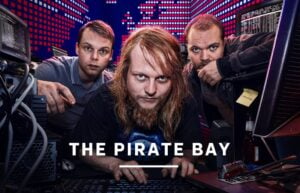
    tpb series The inception and early years of The Pirate Bay are an intriguing chapter of the Internet’s history.

    While most pirate site operators hid in the shadows, Pirate Bay’s founders were public figures who openly taunted the entertainment industries.

    This chapter didn’t end as planned for Fredrik Neij, Peter Sunde, and Gotffrid Svartholm, who were eventually sentenced to prison . By then, however, they had already sparked a digital and political revolution, the impact of which is still felt today.

    Some have argued that without the meteoric rise of the notorious torrent site, the entertainment industries would not have embraced services such as Netflix and Spotify so easily.

    Pirate Bay TV Series

    A few years ago, news broke that The Pirate Bay story was being turned into a TV series . Written by Piotr Marciniak and directed by Jens Sjögren, who also made the “I am Zlatan” documentary, production was in the hands of B-Reel Films, working for the Swedish broadcaster SVT.

    American distribution company Dynamic Television scooped up worldwide rights. As far as we know, international deals have not yet been announced. The Swedish premiere on November 8 is coming closer, however, and a few days ago SVT released an official teaser.

    TPB Teaser

    The founders of The Pirate Bay – Anakata, Brokep and Tiamo – are played by Arvid Swedrup, Simon Greger Carlsson and Willjam Lempling. The teaser doesn’t give away much, but it’s interesting that one of The Pirate Bay’s infamous responses to legal threats features prominently.

    The teaser quotes from Anakata’s response to a letter from DreamWorks, written twenty years ago. The movie company sent a DMCA takedown notice requesting the removal of a torrent for the film Shrek 2, but the reply was not what they had hoped for.

    “As you may or may not be aware, Sweden is not a state in the United States of America. Sweden is a country in northern Europe. Unless you figured it out by now, US law does not apply here,” Anakata wrote.

    “It is the opinion of us and our lawyers that you are ……. morons, and that you should please go sodomize yourself with retractable batons.”

    Anakata’s response to DreamWorks

    dreamworks

    TPB Founders Not Involved

    The response was public information and made it into the series. Whether there will be any new revelations has yet to be seen, however, as none of the site’s founders were actively involved in production.

    Instead, the producers used interviews with other people involved, plus the vast amount of public information available on the Internet. That includes the infamous responses to legal threats.

    Time will tell how the producers and director have decided to tell this story. Production took place in Stockholm, Sweden, but also ventured to other countries, including Chile and Thailand, where Fredrik Neij was arrested and paraded in front of the press in 2014.

    Pirating The Pirate Bay?

    One interesting side story is the fact that the “rights” to the Pirate Bay series are now being ‘sold’. As mentioned earlier, Dynamic Television has the global distribution rights but they have yet to announce any international deals.

    For now, it seems that ‘pirate’ releases may beat the official channels in quite a few countries, as unauthorized copies of the series are likely to surface on The Pirate Bay this fall; if only to make a point.

    This shouldn’t come as a surprise to the makers and rightsholders, of course. We don’t expect many complaints either. After all, The Pirate Bay’s notorious track record is why these rightsholders are generating revenue today. And to bring things full-circle, they’re not sharing any of the money.

    From: TF , for the latest news on copyright battles, piracy and more.

    • To chevron_right

      “The Pirate Bay” TV Series Teaser Appears Online

      news.movim.eu / TorrentFreak • 20 August 2024 • 3 minutes

    tpb series The inception and early years of The Pirate Bay are an intriguing chapter of the Internet’s history.

    While most pirate site operators hid in the shadows, Pirate Bay’s founders were public figures who openly taunted the entertainment industries.

    This chapter didn’t end as planned for Fredrik Neij, Peter Sunde, and Gotffrid Svartholm, who were eventually sentenced to prison . By then, however, they had already sparked a digital and political revolution, the impact of which is still felt today.

    Some have argued that without the meteoric rise of the notorious torrent site, the entertainment industries would not have embraced services such as Netflix and Spotify so easily.

    Pirate Bay TV Series

    A few years ago, news broke that The Pirate Bay story was being turned into a TV series . Written by Piotr Marciniak and directed by Jens Sjögren, who also made the “I am Zlatan” documentary, production was in the hands of B-Reel Films, working for the Swedish broadcaster SVT.

    American distribution company Dynamic Television scooped up worldwide rights. As far as we know, international deals have not yet been announced. The Swedish premiere on November 8 is coming closer, however, and a few days ago SVT released an official teaser.

    TPB Teaser

    The founders of The Pirate Bay – Anakata, Brokep and Tiamo – are played by Arvid Swedrup, Simon Greger Carlsson and Willjam Lempling. The teaser doesn’t give away much, but it’s interesting that one of The Pirate Bay’s infamous responses to legal threats features prominently.

    The teaser quotes from Anakata’s response to a letter from DreamWorks, written twenty years ago. The movie company sent a DMCA takedown notice requesting the removal of a torrent for the film Shrek 2, but the reply was not what they had hoped for.

    “As you may or may not be aware, Sweden is not a state in the United States of America. Sweden is a country in northern Europe. Unless you figured it out by now, US law does not apply here,” Anakata wrote.

    “It is the opinion of us and our lawyers that you are ……. morons, and that you should please go sodomize yourself with retractable batons.”

    Anakata’s response to DreamWorks

    dreamworks

    TPB Founders Not Involved

    The response was public information and made it into the series. Whether there will be any new revelations has yet to be seen, however, as none of the site’s founders were actively involved in production.

    Instead, the producers used interviews with other people involved, plus the vast amount of public information available on the Internet. That includes the infamous responses to legal threats.

    Time will tell how the producers and director have decided to tell this story. Production took place in Stockholm, Sweden, but also ventured to other countries, including Chile and Thailand, where Fredrik Neij was arrested and paraded in front of the press in 2014.

    Pirating The Pirate Bay?

    One interesting side story is the fact that the “rights” to the Pirate Bay series are now being ‘sold’. As mentioned earlier, Dynamic Television has the global distribution rights but they have yet to announce any international deals.

    For now, it seems that ‘pirate’ releases may beat the official channels in quite a few countries, as unauthorized copies of the series are likely to surface on The Pirate Bay this fall; if only to make a point.

    This shouldn’t come as a surprise to the makers and rightsholders, of course. We don’t expect many complaints either. After all, The Pirate Bay’s notorious track record is why these rightsholders are generating revenue today. And to bring things full-circle, they’re not sharing any of the money.

    From: TF , for the latest news on copyright battles, piracy and more.

    • To chevron_right

      “The Pirate Bay” TV Series Teaser Appears Online

      news.movim.eu / TorrentFreak • 20 August 2024 • 3 minutes

    tpb series The inception and early years of The Pirate Bay are an intriguing chapter of the Internet’s history.

    While most pirate site operators hid in the shadows, Pirate Bay’s founders were public figures who openly taunted the entertainment industries.

    This chapter didn’t end as planned for Fredrik Neij, Peter Sunde, and Gotffrid Svartholm, who were eventually sentenced to prison . By then, however, they had already sparked a digital and political revolution, the impact of which is still felt today.

    Some have argued that without the meteoric rise of the notorious torrent site, the entertainment industries would not have embraced services such as Netflix and Spotify so easily.

    Pirate Bay TV Series

    A few years ago, news broke that The Pirate Bay story was being turned into a TV series . Written by Piotr Marciniak and directed by Jens Sjögren, who also made the “I am Zlatan” documentary, production was in the hands of B-Reel Films, working for the Swedish broadcaster SVT.

    American distribution company Dynamic Television scooped up worldwide rights. As far as we know, international deals have not yet been announced. The Swedish premiere on November 8 is coming closer, however, and a few days ago SVT released an official teaser.

    TPB Teaser

    The founders of The Pirate Bay – Anakata, Brokep and Tiamo – are played by Arvid Swedrup, Simon Greger Carlsson and Willjam Lempling. The teaser doesn’t give away much, but it’s interesting that one of The Pirate Bay’s infamous responses to legal threats features prominently.

    The teaser quotes from Anakata’s response to a letter from DreamWorks, written twenty years ago. The movie company sent a DMCA takedown notice requesting the removal of a torrent for the film Shrek 2, but the reply was not what they had hoped for.

    “As you may or may not be aware, Sweden is not a state in the United States of America. Sweden is a country in northern Europe. Unless you figured it out by now, US law does not apply here,” Anakata wrote.

    “It is the opinion of us and our lawyers that you are ……. morons, and that you should please go sodomize yourself with retractable batons.”

    Anakata’s response to DreamWorks

    dreamworks

    TPB Founders Not Involved

    The response was public information and made it into the series. Whether there will be any new revelations has yet to be seen, however, as none of the site’s founders were actively involved in production.

    Instead, the producers used interviews with other people involved, plus the vast amount of public information available on the Internet. That includes the infamous responses to legal threats.

    Time will tell how the producers and director have decided to tell this story. Production took place in Stockholm, Sweden, but also ventured to other countries, including Chile and Thailand, where Fredrik Neij was arrested and paraded in front of the press in 2014.

    Pirating The Pirate Bay?

    One interesting side story is the fact that the “rights” to the Pirate Bay series are now being ‘sold’. As mentioned earlier, Dynamic Television has the global distribution rights but they have yet to announce any international deals.

    For now, it seems that ‘pirate’ releases may beat the official channels in quite a few countries, as unauthorized copies of the series are likely to surface on The Pirate Bay this fall; if only to make a point.

    This shouldn’t come as a surprise to the makers and rightsholders, of course. We don’t expect many complaints either. After all, The Pirate Bay’s notorious track record is why these rightsholders are generating revenue today. And to bring things full-circle, they’re not sharing any of the money.

    From: TF , for the latest news on copyright battles, piracy and more.

    • To chevron_right

      Bypass Paywalls Clean Shut Down For DMCA Anti-Circumvention Violations

      news.movim.eu / TorrentFreak • 20 August 2024 • 4 minutes

    paywall For many traditional newspapers reliant on sales of a physical product, the rise of the internet as an integrated publishing, distribution, and content consumption platform, disrupted almost everything.

    With new opportunities came new challenges. Popularity of free-to-consume digital versions had a tendency to cannibalize print sales. Advertising revenue that once kept digital publications online, later began to diminish. That was partly explained by the rise of browser-based ad blocking software, itself a response to the rise of aggressive and intrusive advertising.

    When publications of all kinds began putting content behind paywalls, accessible only by those with a paid subscription, that helped some publications to survive, even thrive in some cases. For readers unable or unwilling to commit to a subscription, technical solutions were available. Bypass Paywalls Clean (BPC) is probably the most famous of them all.

    Publishers Run Out Of Patience

    Available for Chrome and Firefox, BPC is an easily-installed browser extension that enables users to bypass paywalls and access content without paying for the privilege.

    For publishers hoping to increase revenue where advertising had previously failed, the extension is seen as financially problematic. In April, a takedown notice targeted BPC on developer platform GitLab; the main repo was taken down and never reappeared.

    On Monday, another takedown notice targeted BPC’s repo on GitHub. Unlike the GitLab notice, full details of who sent the complaint and the legal basis cited for BPC’s removal, we made available under GitHub’s transparency policy.

    News Media Alliance (NM/A), an organization that represents the interests of 2,200 publishers of various kinds, initially wrote letters to GitHub. The organization explained that its complaint wasn’t a straightforward copyright infringement matter actionable under Section 512 of the DMCA.

    Credit: News Media Alliance news-media-alliance

    The notification published yesterday signaled the end of that process and explains the basis for NM/A’s complaint.

    “The NM/A represents over 2,200 news, magazine, and digital media publishers in the United States and internationally on all matters affecting the publishers’ ability to provide essential services to their communities,” the notice reads.

    “N/MA’s members publish copyrighted content on websites protected by paywalls which the technology identified below [BPC] circumvents. NM/A submits this notice to further the interest of its members and to inform GitHub that the identified technology violates Section 1201 of the Digital Millennium Copyright Act (DMCA), which prohibits circumvention technology.”

    The N/MA Complaint Against BPC

    N/MA’s correspondence identified a total of four “unlawful products” titled bypass-paywalls-chrome, bypass-paywalls-firefox, bpc_updates, and bypass-paywalls-clean-filters , each in their own repository. While most takedown requests claim that the targeted content is an infringing copy of a copyrighted work, the N/MA complaint centers on software that facilitates access to copyrighted content, by circumventing technological measures.

    “The precise paywall technology deployed by N/MA members differs from member to member, and from site to site, with some using [redacted by GitHub] and others using hard paywalls (where content is not available until such authentication),” N/MA explains.

    “Regardless, N/MA members deploy password-protected sign-in technology to allow subscriber-only access to its protected content, either for all content or after a user has accessed a certain number of articles. These password requirements clearly suffice as technological protection measures within the meaning of the DMCA.”

    N/MA goes on to claim that BPC provides access to paywalled content in one of two ways, depending on paywall type. One method seems to have been redacted while the other is left intact.

    “For hard paywalls, it is our understanding that the identified Bypass Paywalls technology automatically scans web archives for a crawled version of the protected content and displays that content,” N/MA writes.

    “Unlawful Anti-Circumvention Technologies”

    The legislation at the root of the N/MA complaint is also detailed in the takedown notice.

    “The ‘Bypass Paywalls’ technologies that GitHub, Inc. offers on its site are unlawful anti-circumvention technologies under the DMCA. See 17 U.S.C. § 1201(a)(1) . As the DMCA makes clear, any technology or product designed to ‘circumvent a technological measure that effectively controls access to a [copyrighted] work’ is a prohibited anti-circumvention tool,” the notice states.

    Under 17 U.S.C. § 1201(a)(3)(B) , a technological measure “effectively controls access to a work” if the measure, in the ordinary course of its operation, requires the application of information, or a process or a treatment, with the authority of the copyright owner, to gain access to the work.

    “The ‘Bypass Paywalls’ technology, by its own terms, is a technology created to ‘bypass’ our members’ paywalls. The technology, moreover, falls within the precise category of technologies that motivated the enactment of anti circumvention provisions in the first place.”

    Anti-Circumvention Claim Taken as Valid

    When rightsholders allege violations of the DMCA’s anti-circumvention provisions, GitHub carefully reviews those claims and where appropriate, provides repository owners with a time-limited opportunity to make changes to ensure compliance with the law.

    While that included the owner of the four repositories mentioned earlier, GitHub determined that a total of 3,879 repositories were affected by the same claims.

    In the absence of changes being made, GitHub processed the takedown notice against the entire network, which disabled 3,879 repositories, inclusive of the parent repository.

    While this means there’s unlikely to be a future for BPC on GitHub, its future in general is unknown. Some projects can continue on other platforms but since BPC requires maintenance to function at its best, that may limit its options moving forward.

    From: TF , for the latest news on copyright battles, piracy and more.

    • To chevron_right

      Bypass Paywalls Clean Shut Down For DMCA Anti-Circumvention Violations

      news.movim.eu / TorrentFreak • 20 August 2024 • 4 minutes

    paywall For many traditional newspapers reliant on sales of a physical product, the rise of the internet as an integrated publishing, distribution, and content consumption platform, disrupted almost everything.

    With new opportunities came new challenges. Popularity of free-to-consume digital versions had a tendency to cannibalize print sales. Advertising revenue that once kept digital publications online, later began to diminish. That was partly explained by the rise of browser-based ad blocking software, itself a response to the rise of aggressive and intrusive advertising.

    When publications of all kinds began putting content behind paywalls, accessible only by those with a paid subscription, that helped some publications to survive, even thrive in some cases. For readers unable or unwilling to commit to a subscription, technical solutions were available. Bypass Paywalls Clean (BPC) is probably the most famous of them all.

    Publishers Run Out Of Patience

    Available for Chrome and Firefox, BPC is an easily-installed browser extension that enables users to bypass paywalls and access content without paying for the privilege.

    For publishers hoping to increase revenue where advertising had previously failed, the extension is seen as financially problematic. In April, a takedown notice targeted BPC on developer platform GitLab; the main repo was taken down and never reappeared.

    On Monday, another takedown notice targeted BPC’s repo on GitHub. Unlike the GitLab notice, full details of who sent the complaint and the legal basis cited for BPC’s removal, we made available under GitHub’s transparency policy.

    News Media Alliance (NM/A), an organization that represents the interests of 2,200 publishers of various kinds, initially wrote letters to GitHub. The organization explained that its complaint wasn’t a straightforward copyright infringement matter actionable under Section 512 of the DMCA.

    Credit: News Media Alliance news-media-alliance

    The notification published yesterday signaled the end of that process and explains the basis for NM/A’s complaint.

    “The NM/A represents over 2,200 news, magazine, and digital media publishers in the United States and internationally on all matters affecting the publishers’ ability to provide essential services to their communities,” the notice reads.

    “N/MA’s members publish copyrighted content on websites protected by paywalls which the technology identified below [BPC] circumvents. NM/A submits this notice to further the interest of its members and to inform GitHub that the identified technology violates Section 1201 of the Digital Millennium Copyright Act (DMCA), which prohibits circumvention technology.”

    The N/MA Complaint Against BPC

    N/MA’s correspondence identified a total of four “unlawful products” titled bypass-paywalls-chrome, bypass-paywalls-firefox, bpc_updates, and bypass-paywalls-clean-filters , each in their own repository. While most takedown requests claim that the targeted content is an infringing copy of a copyrighted work, the N/MA complaint centers on software that facilitates access to copyrighted content, by circumventing technological measures.

    “The precise paywall technology deployed by N/MA members differs from member to member, and from site to site, with some using [redacted by GitHub] and others using hard paywalls (where content is not available until such authentication),” N/MA explains.

    “Regardless, N/MA members deploy password-protected sign-in technology to allow subscriber-only access to its protected content, either for all content or after a user has accessed a certain number of articles. These password requirements clearly suffice as technological protection measures within the meaning of the DMCA.”

    N/MA goes on to claim that BPC provides access to paywalled content in one of two ways, depending on paywall type. One method seems to have been redacted while the other is left intact.

    “For hard paywalls, it is our understanding that the identified Bypass Paywalls technology automatically scans web archives for a crawled version of the protected content and displays that content,” N/MA writes.

    “Unlawful Anti-Circumvention Technologies”

    The legislation at the root of the N/MA complaint is also detailed in the takedown notice.

    “The ‘Bypass Paywalls’ technologies that GitHub, Inc. offers on its site are unlawful anti-circumvention technologies under the DMCA. See 17 U.S.C. § 1201(a)(1) . As the DMCA makes clear, any technology or product designed to ‘circumvent a technological measure that effectively controls access to a [copyrighted] work’ is a prohibited anti-circumvention tool,” the notice states.

    Under 17 U.S.C. § 1201(a)(3)(B) , a technological measure “effectively controls access to a work” if the measure, in the ordinary course of its operation, requires the application of information, or a process or a treatment, with the authority of the copyright owner, to gain access to the work.

    “The ‘Bypass Paywalls’ technology, by its own terms, is a technology created to ‘bypass’ our members’ paywalls. The technology, moreover, falls within the precise category of technologies that motivated the enactment of anti circumvention provisions in the first place.”

    Anti-Circumvention Claim Taken as Valid

    When rightsholders allege violations of the DMCA’s anti-circumvention provisions, GitHub carefully reviews those claims and where appropriate, provides repository owners with a time-limited opportunity to make changes to ensure compliance with the law.

    While that included the owner of the four repositories mentioned earlier, GitHub determined that a total of 3,879 repositories were affected by the same claims.

    In the absence of changes being made, GitHub processed the takedown notice against the entire network, which disabled 3,879 repositories, inclusive of the parent repository.

    While this means there’s unlikely to be a future for BPC on GitHub, its future in general is unknown. Some projects can continue on other platforms but since BPC requires maintenance to function at its best, that may limit its options moving forward.

    From: TF , for the latest news on copyright battles, piracy and more.

    • To chevron_right

      Bypass Paywalls Clean Shut Down For DMCA Anti-Circumvention Violations

      news.movim.eu / TorrentFreak • 20 August 2024 • 4 minutes

    paywall For many traditional newspapers reliant on sales of a physical product, the rise of the internet as an integrated publishing, distribution, and content consumption platform, disrupted almost everything.

    With new opportunities came new challenges. Popularity of free-to-consume digital versions had a tendency to cannibalize print sales. Advertising revenue that once kept digital publications online, later began to diminish. That was partly explained by the rise of browser-based ad blocking software, itself a response to the rise of aggressive and intrusive advertising.

    When publications of all kinds began putting content behind paywalls, accessible only by those with a paid subscription, that helped some publications to survive, even thrive in some cases. For readers unable or unwilling to commit to a subscription, technical solutions were available. Bypass Paywalls Clean (BPC) is probably the most famous of them all.

    Publishers Run Out Of Patience

    Available for Chrome and Firefox, BPC is an easily-installed browser extension that enables users to bypass paywalls and access content without paying for the privilege.

    For publishers hoping to increase revenue where advertising had previously failed, the extension is seen as financially problematic. In April, a takedown notice targeted BPC on developer platform GitLab; the main repo was taken down and never reappeared.

    On Monday, another takedown notice targeted BPC’s repo on GitHub. Unlike the GitLab notice, full details of who sent the complaint and the legal basis cited for BPC’s removal, we made available under GitHub’s transparency policy.

    News Media Alliance (NM/A), an organization that represents the interests of 2,200 publishers of various kinds, initially wrote letters to GitHub. The organization explained that its complaint wasn’t a straightforward copyright infringement matter actionable under Section 512 of the DMCA.

    Credit: News Media Alliance news-media-alliance

    The notification published yesterday signaled the end of that process and explains the basis for NM/A’s complaint.

    “The NM/A represents over 2,200 news, magazine, and digital media publishers in the United States and internationally on all matters affecting the publishers’ ability to provide essential services to their communities,” the notice reads.

    “N/MA’s members publish copyrighted content on websites protected by paywalls which the technology identified below [BPC] circumvents. NM/A submits this notice to further the interest of its members and to inform GitHub that the identified technology violates Section 1201 of the Digital Millennium Copyright Act (DMCA), which prohibits circumvention technology.”

    The N/MA Complaint Against BPC

    N/MA’s correspondence identified a total of four “unlawful products” titled bypass-paywalls-chrome, bypass-paywalls-firefox, bpc_updates, and bypass-paywalls-clean-filters , each in their own repository. While most takedown requests claim that the targeted content is an infringing copy of a copyrighted work, the N/MA complaint centers on software that facilitates access to copyrighted content, by circumventing technological measures.

    “The precise paywall technology deployed by N/MA members differs from member to member, and from site to site, with some using [redacted by GitHub] and others using hard paywalls (where content is not available until such authentication),” N/MA explains.

    “Regardless, N/MA members deploy password-protected sign-in technology to allow subscriber-only access to its protected content, either for all content or after a user has accessed a certain number of articles. These password requirements clearly suffice as technological protection measures within the meaning of the DMCA.”

    N/MA goes on to claim that BPC provides access to paywalled content in one of two ways, depending on paywall type. One method seems to have been redacted while the other is left intact.

    “For hard paywalls, it is our understanding that the identified Bypass Paywalls technology automatically scans web archives for a crawled version of the protected content and displays that content,” N/MA writes.

    “Unlawful Anti-Circumvention Technologies”

    The legislation at the root of the N/MA complaint is also detailed in the takedown notice.

    “The ‘Bypass Paywalls’ technologies that GitHub, Inc. offers on its site are unlawful anti-circumvention technologies under the DMCA. See 17 U.S.C. § 1201(a)(1) . As the DMCA makes clear, any technology or product designed to ‘circumvent a technological measure that effectively controls access to a [copyrighted] work’ is a prohibited anti-circumvention tool,” the notice states.

    Under 17 U.S.C. § 1201(a)(3)(B) , a technological measure “effectively controls access to a work” if the measure, in the ordinary course of its operation, requires the application of information, or a process or a treatment, with the authority of the copyright owner, to gain access to the work.

    “The ‘Bypass Paywalls’ technology, by its own terms, is a technology created to ‘bypass’ our members’ paywalls. The technology, moreover, falls within the precise category of technologies that motivated the enactment of anti circumvention provisions in the first place.”

    Anti-Circumvention Claim Taken as Valid

    When rightsholders allege violations of the DMCA’s anti-circumvention provisions, GitHub carefully reviews those claims and where appropriate, provides repository owners with a time-limited opportunity to make changes to ensure compliance with the law.

    While that included the owner of the four repositories mentioned earlier, GitHub determined that a total of 3,879 repositories were affected by the same claims.

    In the absence of changes being made, GitHub processed the takedown notice against the entire network, which disabled 3,879 repositories, inclusive of the parent repository.

    While this means there’s unlikely to be a future for BPC on GitHub, its future in general is unknown. Some projects can continue on other platforms but since BPC requires maintenance to function at its best, that may limit its options moving forward.

    From: TF , for the latest news on copyright battles, piracy and more.

    • To chevron_right

      Aussie Piracy Survey: ‘Poor Picture’ & ‘Slow Device’ = Cybersecurity Issues

      news.movim.eu / TorrentFreak • 19 August 2024 • 5 minutes

    slow-picture Creative Content Australia (CCA) has just released the 2023 edition of its Australian Piracy Behaviors and Attitudes survey.

    Research for ‘wave 15’ was carried out nationally between October 3 and October 9, 2023, among 1,293 adult respondents (18+). The results of the survey arrive just a few months after the publication of broader research carried out on behalf of the Australian government.

    Both reports broadly agree that around four-in-ten Aussies pirate (or have pirated) small to large amounts of content with varying frequency. The CCA survey reports a “continued downward piracy trend in recent years, noting that frequency was also down in 2023.

    Reasons For Pirating Less: Convenient Access to Legal Content

    A question directed at the 52% of respondents who claim have pirated less during the last year, reads as follows: Which of the following reasons best explain why you think you are downloading or streaming pirated content less than 12 months ago?

    Source: CCA Piracy Behaviors and Attitudes Survey 2023 ( pdf ) cca-survey--p12

    Cited by 64% of respondents from the ‘pirating less’ category, “I have access to enough content via paid services” predictably takes the top slot, showing that meeting or exceeding consumer demands is the most effective anti-piracy mechanism there is.

    In second position, “It takes too much time and effort to find pirated content these days” was cited by 36% of respondents. This suggests that when having “enough content via paid services” (#1, 64%) is combined with frustrated access to pirated content (#2, 36%), all respondents who pirated less over the last year responded positively when presented with easily accessed legal content.

    Does Site-Blocking Have an Effective Counterpart?

    The fifth most-cited reason for pirating less is directly related to “too much time/effort to find pirated content” mentioned above. Pirated content has only become harder to find due to outside interference and in Australia, site-blocking is persistent. That 19% of the ‘pirating less’ group cited site-blocking as a reason isn’t a particularly big surprise.

    However, since respondents were able to select more than one reason from the list, if the 19% who cited site-blocking responded consistently, they likely would’ve selected “too much time/effort” as well. The figures show that 36% selected the latter, while site-blocking alone managed just 19%, or close to half the number claiming that piracy fails the time/effort test.

    Given that unblocked pirate streaming portals are easy to find, tend to carry all content, and don’t require payment or an account, even services like Netflix would struggle to compete on the ‘time and effort’ front. So if we rule out extra convenience offered by legal platforms, that raises the possibility of other anti-piracy measures accounting for the 17% gap between 19% (blocking) and 36% (time/effort).

    Removal of blocked sites from Google search results may be a candidate, likewise anti-piracy measures on social media. Here, however, the data is too limited to draw any firm conclusion.

    Before moving on, the third most popular reason cited by the ‘pirating less’ group is “I felt bad about pirating.” That 22% felt guilty about some aspect of not paying for content seems perfectly reasonable; at least if we ignore the fact that they didn’t feel guilty enough to stop altogether.

    Cybersecurity: Hacking, Malware, and….Poor Viewing Quality?

    Creative Content Australia operates its main site , Content Cafe , and also The Price of Piracy , which carries messaging that dovetails perfectly with StreamSafely in the United States, and BeStreamWise in the UK.

    In addition to promoting its ‘Spin the Pirate Wheel’ campaign, a conclusion drawn from the survey also features on the front page.

    Image credit: The Price of Piracy ( homepage ) priceofpiracy

    Since “2 million” appears nowhere in the survey, we have to assume this is an extrapolation of the responses provided by pirates.

    According to the footer of slide 45, which covers “pirates experiencing cyber security issues such as hacking,” the base was those who experienced a blocked site, of which 92 were ‘persistent pirates’ (one or more pirate activities per week) and 143 were deemed ‘casual’ (one or more activities monthly or less often) – 235 pirates in total.

    The question asked was actually quite specific: “Have you ever experienced any of the following when you have accessed pirated content on any device via apps / add-ons?”


    Note: The published survey document appears to have at least 15 pages missing, 31 pages total versus at least 46 pages originally. The public version’s cybersecurity section runs sequentially, pages 44, 45, 46, so we assume that public statements regarding cybersecurity relate to these pages, not to those pages withheld.

    In this context the inclusion of ‘poor viewing quality’ as a cybersecurity issue is bewildering on so many levels it’s difficult to know where to begin. Devices running slowly (#2 most popular response) can be attributable to anything, and the same goes for #5 ‘Your device crashing’, and #6 ‘Another internet device crashing’.

    If we accept that age-inappropriate content made available on pirate sites is a cybersecurity issue, we can see that roughly a third said they’d seen such material playing on their device. Yet the closest option to answer doesn’t seem to take into account that ‘age-inappropriate’ content playing on a users’ device may be result of the user requesting it.

    In any event, the option applies to none of the respondents in the survey because every last one is an adult. The content may very well be inappropriate, but not on age grounds.

    Hacking, Malware, ID Theft, Fraud, Botnets

    Seeing ‘poor viewing quality’ appearing here as the leading cybersecurity issue faced by the greatest number of pirates, isn’t a surprise. In an earlier report from the UK, which we had to fight to obtain, popups were included to push general malware claims over the line. For reference, EU law forces popups on most EU internet users every day.

    Surveys, research, and similar studies are currently going to huge lengths to construct a framework of fear around the threats associated with app-based piracy services. The purpose, of course, is to stop people from pirating content.

    The truth is that scare campaigns will only ever enjoy limited success, while cold hard facts can be more terrifying and only need to be read once. When presented by a neutral security company like ESET, the impact of specific facts is obvious.

    Click to enlarge eset-report

    In the final slide, a comparison is made between the cybersecurity issues pirates say they have experienced, versus the security issues faced by non pirates.

    Campaigns to steer people away from pirate sites and services due to security risks are reaching saturation point and that could carry a risk of desensitization.

    Other than telling consumers of pirated content to simply avoid pirate sites, there’s still no harm prevention component, despite many governments having been briefed on various threats but no obvious signs of anything being done.

    There’s no need to overcomplicate things. Name the apps, version numbers and hashes, have a neutral security vendor analyze and then report the harms in terms everyone can understand, and publish the evidence online for everyone to consume and discuss openly.

    The 2023 Australian Piracy Behaviors and Attitudes survey is available here (pdf)

    From: TF , for the latest news on copyright battles, piracy and more.

    • To chevron_right

      Aussie Piracy Survey: ‘Poor Picture’ & ‘Slow Device’ = Cybersecurity Issues

      news.movim.eu / TorrentFreak • 19 August 2024 • 5 minutes

    slow-picture Creative Content Australia (CCA) has just released the 2023 edition of its Australian Piracy Behaviors and Attitudes survey.

    Research for ‘wave 15’ was carried out nationally between October 3 and October 9, 2023, among 1,293 adult respondents (18+). The results of the survey arrive just a few months after the publication of broader research carried out on behalf of the Australian government.

    Both reports broadly agree that around four-in-ten Aussies pirate (or have pirated) small to large amounts of content with varying frequency. The CCA survey reports a “continued downward piracy trend in recent years, noting that frequency was also down in 2023.

    Reasons For Pirating Less: Convenient Access to Legal Content

    A question directed at the 52% of respondents who claim have pirated less during the last year, reads as follows: Which of the following reasons best explain why you think you are downloading or streaming pirated content less than 12 months ago?

    Source: CCA Piracy Behaviors and Attitudes Survey 2023 ( pdf ) cca-survey--p12

    Cited by 64% of respondents from the ‘pirating less’ category, “I have access to enough content via paid services” predictably takes the top slot, showing that meeting or exceeding consumer demands is the most effective anti-piracy mechanism there is.

    In second position, “It takes too much time and effort to find pirated content these days” was cited by 36% of respondents. This suggests that when having “enough content via paid services” (#1, 64%) is combined with frustrated access to pirated content (#2, 36%), all respondents who pirated less over the last year responded positively when presented with easily accessed legal content.

    Does Site-Blocking Have an Effective Counterpart?

    The fifth most-cited reason for pirating less is directly related to “too much time/effort to find pirated content” mentioned above. Pirated content has only become harder to find due to outside interference and in Australia, site-blocking is persistent. That 19% of the ‘pirating less’ group cited site-blocking as a reason isn’t a particularly big surprise.

    However, since respondents were able to select more than one reason from the list, if the 19% who cited site-blocking responded consistently, they likely would’ve selected “too much time/effort” as well. The figures show that 36% selected the latter, while site-blocking alone managed just 19%, or close to half the number claiming that piracy fails the time/effort test.

    Given that unblocked pirate streaming portals are easy to find, tend to carry all content, and don’t require payment or an account, even services like Netflix would struggle to compete on the ‘time and effort’ front. So if we rule out extra convenience offered by legal platforms, that raises the possibility of other anti-piracy measures accounting for the 17% gap between 19% (blocking) and 36% (time/effort).

    Removal of blocked sites from Google search results may be a candidate, likewise anti-piracy measures on social media. Here, however, the data is too limited to draw any firm conclusion.

    Before moving on, the third most popular reason cited by the ‘pirating less’ group is “I felt bad about pirating.” That 22% felt guilty about some aspect of not paying for content seems perfectly reasonable; at least if we ignore the fact that they didn’t feel guilty enough to stop altogether.

    Cybersecurity: Hacking, Malware, and….Poor Viewing Quality?

    Creative Content Australia operates its main site , Content Cafe , and also The Price of Piracy , which carries messaging that dovetails perfectly with StreamSafely in the United States, and BeStreamWise in the UK.

    In addition to promoting its ‘Spin the Pirate Wheel’ campaign, a conclusion drawn from the survey also features on the front page.

    Image credit: The Price of Piracy ( homepage ) priceofpiracy

    Since “2 million” appears nowhere in the survey, we have to assume this is an extrapolation of the responses provided by pirates.

    According to the footer of slide 45, which covers “pirates experiencing cyber security issues such as hacking,” the base was those who experienced a blocked site, of which 92 were ‘persistent pirates’ (one or more pirate activities per week) and 143 were deemed ‘casual’ (one or more activities monthly or less often) – 235 pirates in total.

    The question asked was actually quite specific: “Have you ever experienced any of the following when you have accessed pirated content on any device via apps / add-ons?”


    Note: The published survey document appears to have at least 15 pages missing, 31 pages total versus at least 46 pages originally. The public version’s cybersecurity section runs sequentially, pages 44, 45, 46, so we assume that public statements regarding cybersecurity relate to these pages, not to those pages withheld.

    In this context the inclusion of ‘poor viewing quality’ as a cybersecurity issue is bewildering on so many levels it’s difficult to know where to begin. Devices running slowly (#2 most popular response) can be attributable to anything, and the same goes for #5 ‘Your device crashing’, and #6 ‘Another internet device crashing’.

    If we accept that age-inappropriate content made available on pirate sites is a cybersecurity issue, we can see that roughly a third said they’d seen such material playing on their device. Yet the closest option to answer doesn’t seem to take into account that ‘age-inappropriate’ content playing on a users’ device may be result of the user requesting it.

    In any event, the option applies to none of the respondents in the survey because every last one is an adult. The content may very well be inappropriate, but not on age grounds.

    Hacking, Malware, ID Theft, Fraud, Botnets

    Seeing ‘poor viewing quality’ appearing here as the leading cybersecurity issue faced by the greatest number of pirates, isn’t a surprise. In an earlier report from the UK, which we had to fight to obtain, popups were included to push general malware claims over the line. For reference, EU law forces popups on most EU internet users every day.

    Surveys, research, and similar studies are currently going to huge lengths to construct a framework of fear around the threats associated with app-based piracy services. The purpose, of course, is to stop people from pirating content.

    The truth is that scare campaigns will only ever enjoy limited success, while cold hard facts can be more terrifying and only need to be read once. When presented by a neutral security company like ESET, the impact of specific facts is obvious.

    Click to enlarge eset-report

    In the final slide, a comparison is made between the cybersecurity issues pirates say they have experienced, versus the security issues faced by non pirates.

    Campaigns to steer people away from pirate sites and services due to security risks are reaching saturation point and that could carry a risk of desensitization.

    Other than telling consumers of pirated content to simply avoid pirate sites, there’s still no harm prevention component, despite many governments having been briefed on various threats but no obvious signs of anything being done.

    There’s no need to overcomplicate things. Name the apps, version numbers and hashes, have a neutral security vendor analyze and then report the harms in terms everyone can understand, and publish the evidence online for everyone to consume and discuss openly.

    The 2023 Australian Piracy Behaviors and Attitudes survey is available here (pdf)

    From: TF , for the latest news on copyright battles, piracy and more.

    • To chevron_right

      Aussie Piracy Survey: ‘Poor Picture’ & ‘Slow Device’ = Cybersecurity Issues

      news.movim.eu / TorrentFreak • 19 August 2024 • 5 minutes

    slow-picture Creative Content Australia (CCA) has just released the 2023 edition of its Australian Piracy Behaviors and Attitudes survey.

    Research for ‘wave 15’ was carried out nationally between October 3 and October 9, 2023, among 1,293 adult respondents (18+). The results of the survey arrive just a few months after the publication of broader research carried out on behalf of the Australian government.

    Both reports broadly agree that around four-in-ten Aussies pirate (or have pirated) small to large amounts of content with varying frequency. The CCA survey reports a “continued downward piracy trend in recent years, noting that frequency was also down in 2023.

    Reasons For Pirating Less: Convenient Access to Legal Content

    A question directed at the 52% of respondents who claim have pirated less during the last year, reads as follows: Which of the following reasons best explain why you think you are downloading or streaming pirated content less than 12 months ago?

    Source: CCA Piracy Behaviors and Attitudes Survey 2023 ( pdf ) cca-survey--p12

    Cited by 64% of respondents from the ‘pirating less’ category, “I have access to enough content via paid services” predictably takes the top slot, showing that meeting or exceeding consumer demands is the most effective anti-piracy mechanism there is.

    In second position, “It takes too much time and effort to find pirated content these days” was cited by 36% of respondents. This suggests that when having “enough content via paid services” (#1, 64%) is combined with frustrated access to pirated content (#2, 36%), all respondents who pirated less over the last year responded positively when presented with easily accessed legal content.

    Does Site-Blocking Have an Effective Counterpart?

    The fifth most-cited reason for pirating less is directly related to “too much time/effort to find pirated content” mentioned above. Pirated content has only become harder to find due to outside interference and in Australia, site-blocking is persistent. That 19% of the ‘pirating less’ group cited site-blocking as a reason isn’t a particularly big surprise.

    However, since respondents were able to select more than one reason from the list, if the 19% who cited site-blocking responded consistently, they likely would’ve selected “too much time/effort” as well. The figures show that 36% selected the latter, while site-blocking alone managed just 19%, or close to half the number claiming that piracy fails the time/effort test.

    Given that unblocked pirate streaming portals are easy to find, tend to carry all content, and don’t require payment or an account, even services like Netflix would struggle to compete on the ‘time and effort’ front. So if we rule out extra convenience offered by legal platforms, that raises the possibility of other anti-piracy measures accounting for the 17% gap between 19% (blocking) and 36% (time/effort).

    Removal of blocked sites from Google search results may be a candidate, likewise anti-piracy measures on social media. Here, however, the data is too limited to draw any firm conclusion.

    Before moving on, the third most popular reason cited by the ‘pirating less’ group is “I felt bad about pirating.” That 22% felt guilty about some aspect of not paying for content seems perfectly reasonable; at least if we ignore the fact that they didn’t feel guilty enough to stop altogether.

    Cybersecurity: Hacking, Malware, and….Poor Viewing Quality?

    Creative Content Australia operates its main site , Content Cafe , and also The Price of Piracy , which carries messaging that dovetails perfectly with StreamSafely in the United States, and BeStreamWise in the UK.

    In addition to promoting its ‘Spin the Pirate Wheel’ campaign, a conclusion drawn from the survey also features on the front page.

    Image credit: The Price of Piracy ( homepage ) priceofpiracy

    Since “2 million” appears nowhere in the survey, we have to assume this is an extrapolation of the responses provided by pirates.

    According to the footer of slide 45, which covers “pirates experiencing cyber security issues such as hacking,” the base was those who experienced a blocked site, of which 92 were ‘persistent pirates’ (one or more pirate activities per week) and 143 were deemed ‘casual’ (one or more activities monthly or less often) – 235 pirates in total.

    The question asked was actually quite specific: “Have you ever experienced any of the following when you have accessed pirated content on any device via apps / add-ons?”


    Note: The published survey document appears to have at least 15 pages missing, 31 pages total versus at least 46 pages originally. The public version’s cybersecurity section runs sequentially, pages 44, 45, 46, so we assume that public statements regarding cybersecurity relate to these pages, not to those pages withheld.

    In this context the inclusion of ‘poor viewing quality’ as a cybersecurity issue is bewildering on so many levels it’s difficult to know where to begin. Devices running slowly (#2 most popular response) can be attributable to anything, and the same goes for #5 ‘Your device crashing’, and #6 ‘Another internet device crashing’.

    If we accept that age-inappropriate content made available on pirate sites is a cybersecurity issue, we can see that roughly a third said they’d seen such material playing on their device. Yet the closest option to answer doesn’t seem to take into account that ‘age-inappropriate’ content playing on a users’ device may be result of the user requesting it.

    In any event, the option applies to none of the respondents in the survey because every last one is an adult. The content may very well be inappropriate, but not on age grounds.

    Hacking, Malware, ID Theft, Fraud, Botnets

    Seeing ‘poor viewing quality’ appearing here as the leading cybersecurity issue faced by the greatest number of pirates, isn’t a surprise. In an earlier report from the UK, which we had to fight to obtain, popups were included to push general malware claims over the line. For reference, EU law forces popups on most EU internet users every day.

    Surveys, research, and similar studies are currently going to huge lengths to construct a framework of fear around the threats associated with app-based piracy services. The purpose, of course, is to stop people from pirating content.

    The truth is that scare campaigns will only ever enjoy limited success, while cold hard facts can be more terrifying and only need to be read once. When presented by a neutral security company like ESET, the impact of specific facts is obvious.

    Click to enlarge eset-report

    In the final slide, a comparison is made between the cybersecurity issues pirates say they have experienced, versus the security issues faced by non pirates.

    Campaigns to steer people away from pirate sites and services due to security risks are reaching saturation point and that could carry a risk of desensitization.

    Other than telling consumers of pirated content to simply avoid pirate sites, there’s still no harm prevention component, despite many governments having been briefed on various threats but no obvious signs of anything being done.

    There’s no need to overcomplicate things. Name the apps, version numbers and hashes, have a neutral security vendor analyze and then report the harms in terms everyone can understand, and publish the evidence online for everyone to consume and discuss openly.

    The 2023 Australian Piracy Behaviors and Attitudes survey is available here (pdf)

    From: TF , for the latest news on copyright battles, piracy and more.