• To chevron_right

      TorrentGalaxy Spooks Users with More ‘Downtime’

      news.movim.eu / TorrentFreak • 3 September 2024 • 1 minute

    tgx logo In little over five years, TorrentGalaxy has grown out to become a leading player in the torrent ecosystem.

    The site originally set out to ‘ bridge the gap ‘ between torrent and streaming sites, and it ultimately became much more than that.

    With a dedicated group of uploaders and an active community, TorrentGalaxy provided a safe haven for many avid torrenters. The disappearance of other key torrent sources, including the demise of RARBG last year, has made TorrentGalaxy’s position as a torrent distribution portal increasingly important.

    TorrentGalaxy Forever?

    In June , many users feared that the site had thrown in the towel, as it directed visitors to a cryptic message that simply read “4ever?” This came as a surprise, even to the site’s moderators, who had no clue what was going on.

    The site eventually returned as if nothing ever happened and resumed its operations. The purpose of the downtime was never clarified but that didn’t seem to matter anymore; until now.

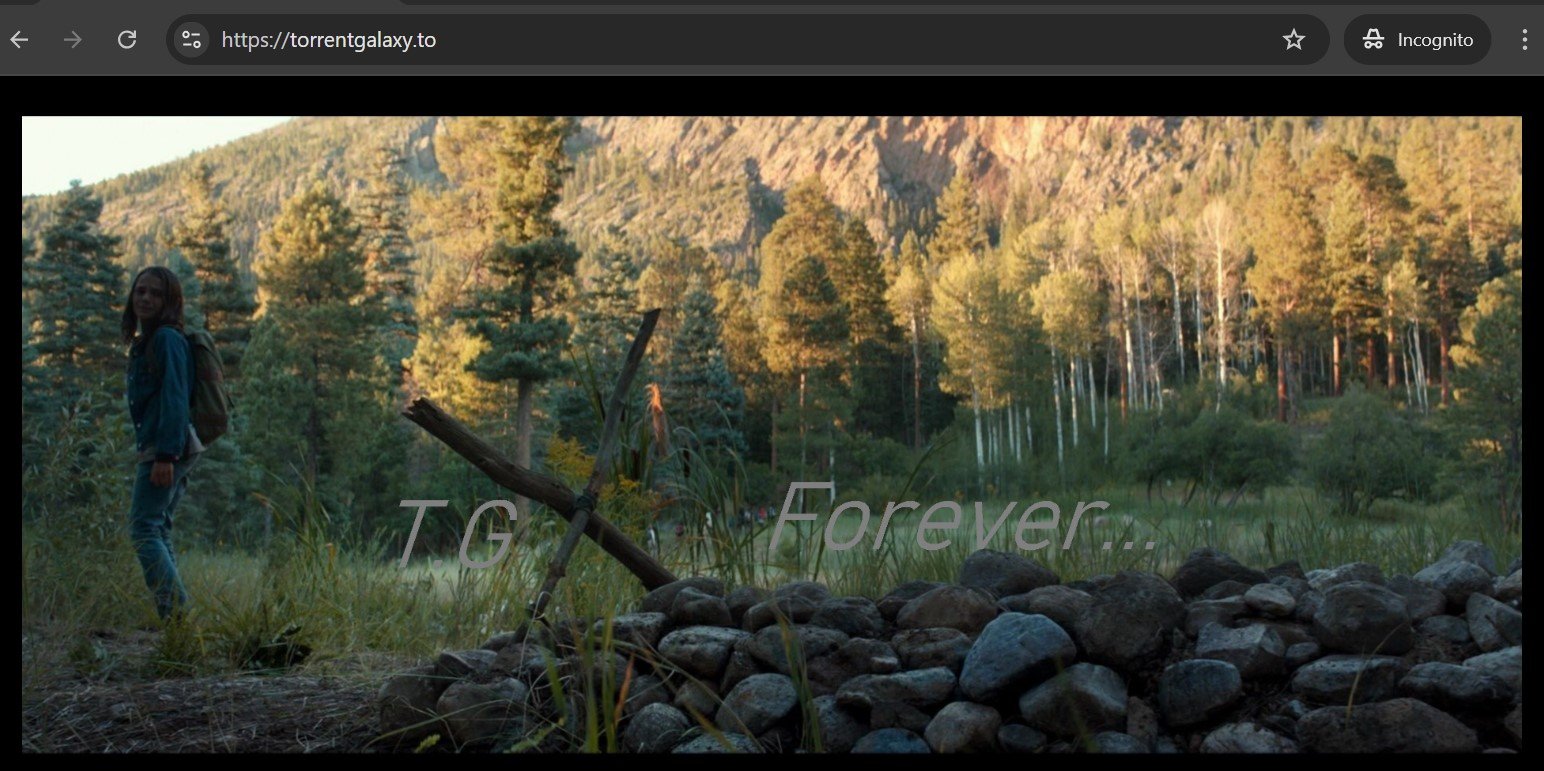
    A few hours ago, TorrentGalaxy started displaying an image from the movie Logan across its website, along with another mysterious message: “TG(X) Forever”. No further information is being provided at this time.

    The mysterious message

    tgx forever

    The image in question is titled “johntucker.jpg”. It’s not clear what this refers to, but if we put on our speculation hats, the film “ John Tucker must Die ” comes to mind, of which a remake is currently in the works.

    These types of unsubstantiated theories do not give the site’s users much hope. However, it’s also possible that these vague messages are simply intended to confuse people, while regular maintenance is performed on the site. We simply don’t know.

    In any case, a message that’s currently displayed on the TorrentGalaxy proxy portal doesn’t instill much hope for the site’s confused users. “ Executing End-Program.exe… ,” it currently reads.

    TorrentGalaxy proxy page

    end program

    TorrentFreak reached out to a TorrentGalaxy moderator, but at the time of writing, we have yet to hear back. As mentioned earlier, during the last downtime, the moderator team was not kept in the loop. If any news comes in, we will update this article accordingly.

    From: TF , for the latest news on copyright battles, piracy and more.

    • To chevron_right

      TorrentGalaxy Spooks Users with More ‘Downtime’

      news.movim.eu / TorrentFreak • 3 September 2024 • 1 minute

    tgx logo In little over five years, TorrentGalaxy has grown out to become a leading player in the torrent ecosystem.

    The site originally set out to ‘ bridge the gap ‘ between torrent and streaming sites, and it ultimately became much more than that.

    With a dedicated group of uploaders and an active community, TorrentGalaxy provided a safe haven for many avid torrenters. The disappearance of other key torrent sources, including the demise of RARBG last year, has made TorrentGalaxy’s position as a torrent distribution portal increasingly important.

    TorrentGalaxy Forever?

    In June , many users feared that the site had thrown in the towel, as it directed visitors to a cryptic message that simply read “4ever?” This came as a surprise, even to the site’s moderators, who had no clue what was going on.

    The site eventually returned as if nothing ever happened and resumed its operations. The purpose of the downtime was never clarified but that didn’t seem to matter anymore; until now.

    A few hours ago, TorrentGalaxy started displaying an image from the movie Logan across its website, along with another mysterious message: “TG(X) Forever”. No further information is being provided at this time.

    The mysterious message

    tgx forever

    The image in question is titled “johntucker.jpg”. It’s not clear what this refers to, but if we put on our speculation hats, the film “ John Tucker must Die ” comes to mind, of which a remake is currently in the works.

    These types of unsubstantiated theories do not give the site’s users much hope. However, it’s also possible that these vague messages are simply intended to confuse people, while regular maintenance is performed on the site. We simply don’t know.

    In any case, a message that’s currently displayed on the TorrentGalaxy proxy portal doesn’t instill much hope for the site’s confused users. “ Executing End-Program.exe… ,” it currently reads.

    TorrentGalaxy proxy page

    end program

    TorrentFreak reached out to a TorrentGalaxy moderator, but at the time of writing, we have yet to hear back. As mentioned earlier, during the last downtime, the moderator team was not kept in the loop. If any news comes in, we will update this article accordingly.

    From: TF , for the latest news on copyright battles, piracy and more.

    • To chevron_right

      TorrentGalaxy Spooks Users with More ‘Downtime’

      news.movim.eu / TorrentFreak • 3 September 2024 • 1 minute

    tgx logo In little over five years, TorrentGalaxy has grown out to become a leading player in the torrent ecosystem.

    The site originally set out to ‘ bridge the gap ‘ between torrent and streaming sites, and it ultimately became much more than that.

    With a dedicated group of uploaders and an active community, TorrentGalaxy provided a safe haven for many avid torrenters. The disappearance of other key torrent sources, including the demise of RARBG last year, has made TorrentGalaxy’s position as a torrent distribution portal increasingly important.

    TorrentGalaxy Forever?

    In June , many users feared that the site had thrown in the towel, as it directed visitors to a cryptic message that simply read “4ever?” This came as a surprise, even to the site’s moderators, who had no clue what was going on.

    The site eventually returned as if nothing ever happened and resumed its operations. The purpose of the downtime was never clarified but that didn’t seem to matter anymore; until now.

    A few hours ago, TorrentGalaxy started displaying an image from the movie Logan across its website, along with another mysterious message: “TG(X) Forever”. No further information is being provided at this time.

    The mysterious message

    tgx forever

    The image in question is titled “johntucker.jpg”. It’s not clear what this refers to, but if we put on our speculation hats, the film “ John Tucker must Die ” comes to mind, of which a remake is currently in the works.

    These types of unsubstantiated theories do not give the site’s users much hope. However, it’s also possible that these vague messages are simply intended to confuse people, while regular maintenance is performed on the site. We simply don’t know.

    In any case, a message that’s currently displayed on the TorrentGalaxy proxy portal doesn’t instill much hope for the site’s confused users. “ Executing End-Program.exe… ,” it currently reads.

    TorrentGalaxy proxy page

    end program

    TorrentFreak reached out to a TorrentGalaxy moderator, but at the time of writing, we have yet to hear back. As mentioned earlier, during the last downtime, the moderator team was not kept in the loop. If any news comes in, we will update this article accordingly.

    From: TF , for the latest news on copyright battles, piracy and more.

    • To chevron_right

      EFF Assists Critic’s Fair Use Defense Over Kids’ Religious Program ‘Leak’

      news.movim.eu / TorrentFreak • 2 September 2024 • 7 minutes

    fair_use_1 Released Time for Religious Instruction (RTRI) is a mechanism in the United States which allows schoolchildren to receive religious instruction during school hours.

    The law says that this can only take place off-site, with teachers and authorities’ involvement limited to releasing children into the hands of third-party organizations for instruction elsewhere.

    In Ohio, parent Zachary Parrish became concerned by the actions and teachings of an organization called LifeWise, which recently described itself as a “privately funded Christian non-profit” that provides “religious instruction in traditional, character-based, Biblical teaching.”

    To raise awareness of LifeWise and what Parrish describes as its spreading of “Evangelical Christianity, Purity Culture, Christian Nationalism, homophobic beliefs, transphobia, and hateful rhetoric,” Parrish and the like-minded Molly Gaines teamed up to found an opposition group: Parents Against LifeWise .

    Parrish Publishes LifeWise’s Children’s Curriculum, LifeWise Sues

    In the belief that the curriculum contains information supportive of the opposition group’s cause, Parrish obtained a copy of the closely-guarded documents and, in the public interest, posted them publicly online. When he refused to comply with LifeWise’s demands to take the content down, LifeWise responded with a potentially crushing copyright infringement lawsuit.

    Filed in the Northern District of Indiana (Fort Wayne Division) on July 2, 2024, plaintiff LifeWise Inc. of Indiana described Parrish as a willful infringer whose goal was to “gather information and internal documents with the hope of publishing information online which might harm LifeWise’s reputation and galvanize parents to oppose local LifeWise Academy chapters in their communities.”

    After the complaint was filed, Parrish immediately received an offer to settle. That was perceived as an attempt to bring the matter to an end but on unacceptable terms; no recognition of Parrish’s right to use the material under the doctrine of fair use and a potentially devastating effect on raising awareness and future criticism of the religious group.

    These components unsurprisingly attracted the attention of the EFF, which is now defending Parrish against LifeWise’s copyright infringement allegations. That began in earnest last week with a motion to dismiss for failure to state a claim.

    Copyright Is Not a Tool to Punish or Silence Critics

    EFF’s approach to this litigation is encapsulated in the heading above, as explained by EFF IP Litigation Director Mitch Stoltz and Staff Attorney Tori Noble.

    “Copyright law is not a tool to punish or silence critics. This is a principle so fundamental that it is the ur-example of fair use, which typically allows copying another’s creative work when necessary for criticism,” EFF begins.

    “But sometimes, unscrupulous rightsholders misuse copyright law to bully critics into silence by filing meritless lawsuits, threatening potentially enormous personal liability unless they cease speaking out. That’s why EFF is defending Zachary Parrish, a parent in Indiana, against a copyright infringement suit by LifeWise, Inc.”

    A Perfect Example and Classic Fair Use

    In a motion to dismiss dated August 26, EFF notes that some infringement lawsuits amount to “baseless shakedowns” where the expense of discovery heightens the incentive to settle rather than defend a frivolous lawsuit.

    EFF informed the Court that the lawsuit against Parrish “is a perfect example.”

    “As we explained to the court, Mr. Parrish’s posting of the curriculum was a paradigmatic example of fair use, an important doctrine that allows critics like Mr. Parrish to comment on, criticize, and educate others on the contents of a copyrighted work. LifeWise’s own legal complaint shows why Mr. Parrish’s use was fair,” the EFF notes, referencing LifeWise’s claim that Parrish hoped to gather information to publish online to harm the group’s reputation.

    “This is a mission of public advocacy and education that copyright law protects. In addition, Mr. Parrish’s purpose was noncommercial: far from seeking to replace or compete with LifeWise, he posted the curriculum to encourage others to think carefully before signing their children up for the program.”

    Returning to LifeWise’s assertion that Parrish aimed to harm LifeWise by publishing its curriculum, EFF points out that if a film critic uses scenes from a movie to support a devastating review, that’s considered fair use under copyright law. Likewise, if a concerned parent wishes to educate other parents “about a controversial religious school program by showing them the actual content of that program,” that’s permitted too.

    Factors of Fair Use

    A. LifeWise Concedes Mr. Parrish’s Transformative and Noncommercial Purpose

    According to the motion to dismiss, LifeWise’s description of itself and its mission, of Parrish and his actions, show that LifeWise and Parrish had very different uses in mind for the curriculum.

    For a fee, the former allows use of the document for “traditional, character-based, Biblical teaching during school hours.” For no fee, the latter’s use of the document was to “publish information online which might harm LifeWise’s reputationand galvanize parents to oppose local LifeWise chapters in their communities.”

    B.The Nature of the Works Is Neither Disputed Nor Dispositive

    The second factor of fair use concerns the creativity of the allegedly-infringed work. Creative content receives more protection than factual content, meaning that a finding of fair use is more or less likely depending on the content mix.

    According to LifeWise, the curriculum is biblical instruction that includes videos, activity pages, leader guides, cards and printables; it is therefore a mix of creative work, passages from the Bible, plus other factual and non-creative elements.

    “Given this jumble of characteristics, the ‘creativity’ subfactor is not likely to offer much illumination to the analysis,” EFF informs the court.

    “Moreover, if the disputed use of the work ‘is not related to its mode of expression but rather to its historical facts’ then creativity matters even less to the analysis. Here, Mr. Parrish posted the Curriculum in order to make parents and the public aware of its content, not to appropriate its creative aspects.”

    C. Mr. Parrish Used What Was Necessary for His Critical Purpose

    It’s often claimed that using only small parts of a copyrighted work is key to a finding of fair use. While that may be helpful in some cases, copying of an entire work can be fair use in appropriate circumstances, when ‘time-shifting’ for example.

    In this case, the entire curriculum was published and according to EFF, that was necessary given the purpose of the use. LifeWise provides a public 27-page summary of the curriculum and describes it as “comprehensive” but the EFF begs to differ.

    “It is not plausible to infer that a 27-page summary, created by LifeWise itself —not exactly an objective source — would be adequate to fully educate parents or the public about what public school children might be learning during school hours from first grade through fifth grade, any more than a summary of the New Testament could substitute for actually reading it,” EFF informs the court.

    D. LifeWise Does Not and Cannot Plausibly Allege Market Harm

    The fourth and final factor of fair use considers the effect of the use of a copyrighted work on the potential market for that work. Put differently, whether use of the work deprived the copyright owner of income or undermined a new or even potential market. EFF argues that the complaint fails to show that any harm was caused.

    “Where, as here, a use is highly transformative, only a strong showing of harm will weigh against fair use. When a use is transformative and non-economic, as in this case, market harm is less likely to exist or weigh against a finding of fair use,” EFF notes.

    “LifeWise would never license the Curriculum for what it describes as Mr. Parrish’s intended use to ‘galvanize parents to oppose local LifeWise chapters in their communities. It concedes it would only license to Mr. Parrish, or anyone else, subject to ‘the restrictions that LifeWise is entitled to and would place on” use of the Curriculum, “including the right to deny permission altogether.”

    LifeWise alleged that internet users may have downloaded the Curriculum for the purposes of religious instruction, contrary to the purpose envisioned by Parrish.

    “Even taking this alleged harm at face value, Mr. Parrish cannot be held liable for what other people might hypothetically do; the question before the Court is whether Mr. Parrish’s own use is unlawful.”

    Conclusion

    EFF concludes that the posting of the LifeWise Curriculum “was a self-evident fair use”, and did not infringe any copyright. “This Court should dismiss the complaint and end LifeWise’s improper attempt to punish a critic.”

    EFF ends a summary of recent events with a cautionary note that deserves to be highlighted.

    Fair use is not the freedom to use copyrighted material with impunity. Fair use is a possible defense in a copyright lawsuit, not an immunity card that makes allegations disappear when waved in the air.

    Parrish is fortunate to have EFF on his side; defending a fair use case not only requires legal experts, it can also get horribly expensive, extremely quickly. It’s hoped that the motion to dismiss filed by Parrish and EFF last week may help to end this lawsuit before it becomes unnecessarily costly for everyone, including the plaintiff.

    Defendant’s motion to dismiss & EFF’s supporting brief are available here and here (pdf)

    From: TF , for the latest news on copyright battles, piracy and more.

    • To chevron_right

      EFF Assists Critic’s Fair Use Defense Over Kids’ Religious Program ‘Leak’

      news.movim.eu / TorrentFreak • 2 September 2024 • 7 minutes

    fair_use_1 Released Time for Religious Instruction (RTRI) is a mechanism in the United States which allows schoolchildren to receive religious instruction during school hours.

    The law says that this can only take place off-site, with teachers and authorities’ involvement limited to releasing children into the hands of third-party organizations for instruction elsewhere.

    In Ohio, parent Zachary Parrish became concerned by the actions and teachings of an organization called LifeWise, which recently described itself as a “privately funded Christian non-profit” that provides “religious instruction in traditional, character-based, Biblical teaching.”

    To raise awareness of LifeWise and what Parrish describes as its spreading of “Evangelical Christianity, Purity Culture, Christian Nationalism, homophobic beliefs, transphobia, and hateful rhetoric,” Parrish and the like-minded Molly Gaines teamed up to found an opposition group: Parents Against LifeWise .

    Parrish Publishes LifeWise’s Children’s Curriculum, LifeWise Sues

    In the belief that the curriculum contains information supportive of the opposition group’s cause, Parrish obtained a copy of the closely-guarded documents and, in the public interest, posted them publicly online. When he refused to comply with LifeWise’s demands to take the content down, LifeWise responded with a potentially crushing copyright infringement lawsuit.

    Filed in the Northern District of Indiana (Fort Wayne Division) on July 2, 2024, plaintiff LifeWise Inc. of Indiana described Parrish as a willful infringer whose goal was to “gather information and internal documents with the hope of publishing information online which might harm LifeWise’s reputation and galvanize parents to oppose local LifeWise Academy chapters in their communities.”

    After the complaint was filed, Parrish immediately received an offer to settle. That was perceived as an attempt to bring the matter to an end but on unacceptable terms; no recognition of Parrish’s right to use the material under the doctrine of fair use and a potentially devastating effect on raising awareness and future criticism of the religious group.

    These components unsurprisingly attracted the attention of the EFF, which is now defending Parrish against LifeWise’s copyright infringement allegations. That began in earnest last week with a motion to dismiss for failure to state a claim.

    Copyright Is Not a Tool to Punish or Silence Critics

    EFF’s approach to this litigation is encapsulated in the heading above, as explained by EFF IP Litigation Director Mitch Stoltz and Staff Attorney Tori Noble.

    “Copyright law is not a tool to punish or silence critics. This is a principle so fundamental that it is the ur-example of fair use, which typically allows copying another’s creative work when necessary for criticism,” EFF begins.

    “But sometimes, unscrupulous rightsholders misuse copyright law to bully critics into silence by filing meritless lawsuits, threatening potentially enormous personal liability unless they cease speaking out. That’s why EFF is defending Zachary Parrish, a parent in Indiana, against a copyright infringement suit by LifeWise, Inc.”

    A Perfect Example and Classic Fair Use

    In a motion to dismiss dated August 26, EFF notes that some infringement lawsuits amount to “baseless shakedowns” where the expense of discovery heightens the incentive to settle rather than defend a frivolous lawsuit.

    EFF informed the Court that the lawsuit against Parrish “is a perfect example.”

    “As we explained to the court, Mr. Parrish’s posting of the curriculum was a paradigmatic example of fair use, an important doctrine that allows critics like Mr. Parrish to comment on, criticize, and educate others on the contents of a copyrighted work. LifeWise’s own legal complaint shows why Mr. Parrish’s use was fair,” the EFF notes, referencing LifeWise’s claim that Parrish hoped to gather information to publish online to harm the group’s reputation.

    “This is a mission of public advocacy and education that copyright law protects. In addition, Mr. Parrish’s purpose was noncommercial: far from seeking to replace or compete with LifeWise, he posted the curriculum to encourage others to think carefully before signing their children up for the program.”

    Returning to LifeWise’s assertion that Parrish aimed to harm LifeWise by publishing its curriculum, EFF points out that if a film critic uses scenes from a movie to support a devastating review, that’s considered fair use under copyright law. Likewise, if a concerned parent wishes to educate other parents “about a controversial religious school program by showing them the actual content of that program,” that’s permitted too.

    Factors of Fair Use

    A. LifeWise Concedes Mr. Parrish’s Transformative and Noncommercial Purpose

    According to the motion to dismiss, LifeWise’s description of itself and its mission, of Parrish and his actions, show that LifeWise and Parrish had very different uses in mind for the curriculum.

    For a fee, the former allows use of the document for “traditional, character-based, Biblical teaching during school hours.” For no fee, the latter’s use of the document was to “publish information online which might harm LifeWise’s reputationand galvanize parents to oppose local LifeWise chapters in their communities.”

    B.The Nature of the Works Is Neither Disputed Nor Dispositive

    The second factor of fair use concerns the creativity of the allegedly-infringed work. Creative content receives more protection than factual content, meaning that a finding of fair use is more or less likely depending on the content mix.

    According to LifeWise, the curriculum is biblical instruction that includes videos, activity pages, leader guides, cards and printables; it is therefore a mix of creative work, passages from the Bible, plus other factual and non-creative elements.

    “Given this jumble of characteristics, the ‘creativity’ subfactor is not likely to offer much illumination to the analysis,” EFF informs the court.

    “Moreover, if the disputed use of the work ‘is not related to its mode of expression but rather to its historical facts’ then creativity matters even less to the analysis. Here, Mr. Parrish posted the Curriculum in order to make parents and the public aware of its content, not to appropriate its creative aspects.”

    C. Mr. Parrish Used What Was Necessary for His Critical Purpose

    It’s often claimed that using only small parts of a copyrighted work is key to a finding of fair use. While that may be helpful in some cases, copying of an entire work can be fair use in appropriate circumstances, when ‘time-shifting’ for example.

    In this case, the entire curriculum was published and according to EFF, that was necessary given the purpose of the use. LifeWise provides a public 27-page summary of the curriculum and describes it as “comprehensive” but the EFF begs to differ.

    “It is not plausible to infer that a 27-page summary, created by LifeWise itself —not exactly an objective source — would be adequate to fully educate parents or the public about what public school children might be learning during school hours from first grade through fifth grade, any more than a summary of the New Testament could substitute for actually reading it,” EFF informs the court.

    D. LifeWise Does Not and Cannot Plausibly Allege Market Harm

    The fourth and final factor of fair use considers the effect of the use of a copyrighted work on the potential market for that work. Put differently, whether use of the work deprived the copyright owner of income or undermined a new or even potential market. EFF argues that the complaint fails to show that any harm was caused.

    “Where, as here, a use is highly transformative, only a strong showing of harm will weigh against fair use. When a use is transformative and non-economic, as in this case, market harm is less likely to exist or weigh against a finding of fair use,” EFF notes.

    “LifeWise would never license the Curriculum for what it describes as Mr. Parrish’s intended use to ‘galvanize parents to oppose local LifeWise chapters in their communities. It concedes it would only license to Mr. Parrish, or anyone else, subject to ‘the restrictions that LifeWise is entitled to and would place on” use of the Curriculum, “including the right to deny permission altogether.”

    LifeWise alleged that internet users may have downloaded the Curriculum for the purposes of religious instruction, contrary to the purpose envisioned by Parrish.

    “Even taking this alleged harm at face value, Mr. Parrish cannot be held liable for what other people might hypothetically do; the question before the Court is whether Mr. Parrish’s own use is unlawful.”

    Conclusion

    EFF concludes that the posting of the LifeWise Curriculum “was a self-evident fair use”, and did not infringe any copyright. “This Court should dismiss the complaint and end LifeWise’s improper attempt to punish a critic.”

    EFF ends a summary of recent events with a cautionary note that deserves to be highlighted.

    Fair use is not the freedom to use copyrighted material with impunity. Fair use is a possible defense in a copyright lawsuit, not an immunity card that makes allegations disappear when waved in the air.

    Parrish is fortunate to have EFF on his side; defending a fair use case not only requires legal experts, it can also get horribly expensive, extremely quickly. It’s hoped that the motion to dismiss filed by Parrish and EFF last week may help to end this lawsuit before it becomes unnecessarily costly for everyone, including the plaintiff.

    Defendant’s motion to dismiss & EFF’s supporting brief are available here and here (pdf)

    From: TF , for the latest news on copyright battles, piracy and more.

    • To chevron_right

      EFF Assists Critic’s Fair Use Defense Over Kids’ Religious Program ‘Leak’

      news.movim.eu / TorrentFreak • 2 September 2024 • 7 minutes

    fair_use_1 Released Time for Religious Instruction (RTRI) is a mechanism in the United States which allows schoolchildren to receive religious instruction during school hours.

    The law says that this can only take place off-site, with teachers and authorities’ involvement limited to releasing children into the hands of third-party organizations for instruction elsewhere.

    In Ohio, parent Zachary Parrish became concerned by the actions and teachings of an organization called LifeWise, which recently described itself as a “privately funded Christian non-profit” that provides “religious instruction in traditional, character-based, Biblical teaching.”

    To raise awareness of LifeWise and what Parrish describes as its spreading of “Evangelical Christianity, Purity Culture, Christian Nationalism, homophobic beliefs, transphobia, and hateful rhetoric,” Parrish and the like-minded Molly Gaines teamed up to found an opposition group: Parents Against LifeWise .

    Parrish Publishes LifeWise’s Children’s Curriculum, LifeWise Sues

    In the belief that the curriculum contains information supportive of the opposition group’s cause, Parrish obtained a copy of the closely-guarded documents and, in the public interest, posted them publicly online. When he refused to comply with LifeWise’s demands to take the content down, LifeWise responded with a potentially crushing copyright infringement lawsuit.

    Filed in the Northern District of Indiana (Fort Wayne Division) on July 2, 2024, plaintiff LifeWise Inc. of Indiana described Parrish as a willful infringer whose goal was to “gather information and internal documents with the hope of publishing information online which might harm LifeWise’s reputation and galvanize parents to oppose local LifeWise Academy chapters in their communities.”

    After the complaint was filed, Parrish immediately received an offer to settle. That was perceived as an attempt to bring the matter to an end but on unacceptable terms; no recognition of Parrish’s right to use the material under the doctrine of fair use and a potentially devastating effect on raising awareness and future criticism of the religious group.

    These components unsurprisingly attracted the attention of the EFF, which is now defending Parrish against LifeWise’s copyright infringement allegations. That began in earnest last week with a motion to dismiss for failure to state a claim.

    Copyright Is Not a Tool to Punish or Silence Critics

    EFF’s approach to this litigation is encapsulated in the heading above, as explained by EFF IP Litigation Director Mitch Stoltz and Staff Attorney Tori Noble.

    “Copyright law is not a tool to punish or silence critics. This is a principle so fundamental that it is the ur-example of fair use, which typically allows copying another’s creative work when necessary for criticism,” EFF begins.

    “But sometimes, unscrupulous rightsholders misuse copyright law to bully critics into silence by filing meritless lawsuits, threatening potentially enormous personal liability unless they cease speaking out. That’s why EFF is defending Zachary Parrish, a parent in Indiana, against a copyright infringement suit by LifeWise, Inc.”

    A Perfect Example and Classic Fair Use

    In a motion to dismiss dated August 26, EFF notes that some infringement lawsuits amount to “baseless shakedowns” where the expense of discovery heightens the incentive to settle rather than defend a frivolous lawsuit.

    EFF informed the Court that the lawsuit against Parrish “is a perfect example.”

    “As we explained to the court, Mr. Parrish’s posting of the curriculum was a paradigmatic example of fair use, an important doctrine that allows critics like Mr. Parrish to comment on, criticize, and educate others on the contents of a copyrighted work. LifeWise’s own legal complaint shows why Mr. Parrish’s use was fair,” the EFF notes, referencing LifeWise’s claim that Parrish hoped to gather information to publish online to harm the group’s reputation.

    “This is a mission of public advocacy and education that copyright law protects. In addition, Mr. Parrish’s purpose was noncommercial: far from seeking to replace or compete with LifeWise, he posted the curriculum to encourage others to think carefully before signing their children up for the program.”

    Returning to LifeWise’s assertion that Parrish aimed to harm LifeWise by publishing its curriculum, EFF points out that if a film critic uses scenes from a movie to support a devastating review, that’s considered fair use under copyright law. Likewise, if a concerned parent wishes to educate other parents “about a controversial religious school program by showing them the actual content of that program,” that’s permitted too.

    Factors of Fair Use

    A. LifeWise Concedes Mr. Parrish’s Transformative and Noncommercial Purpose

    According to the motion to dismiss, LifeWise’s description of itself and its mission, of Parrish and his actions, show that LifeWise and Parrish had very different uses in mind for the curriculum.

    For a fee, the former allows use of the document for “traditional, character-based, Biblical teaching during school hours.” For no fee, the latter’s use of the document was to “publish information online which might harm LifeWise’s reputationand galvanize parents to oppose local LifeWise chapters in their communities.”

    B.The Nature of the Works Is Neither Disputed Nor Dispositive

    The second factor of fair use concerns the creativity of the allegedly-infringed work. Creative content receives more protection than factual content, meaning that a finding of fair use is more or less likely depending on the content mix.

    According to LifeWise, the curriculum is biblical instruction that includes videos, activity pages, leader guides, cards and printables; it is therefore a mix of creative work, passages from the Bible, plus other factual and non-creative elements.

    “Given this jumble of characteristics, the ‘creativity’ subfactor is not likely to offer much illumination to the analysis,” EFF informs the court.

    “Moreover, if the disputed use of the work ‘is not related to its mode of expression but rather to its historical facts’ then creativity matters even less to the analysis. Here, Mr. Parrish posted the Curriculum in order to make parents and the public aware of its content, not to appropriate its creative aspects.”

    C. Mr. Parrish Used What Was Necessary for His Critical Purpose

    It’s often claimed that using only small parts of a copyrighted work is key to a finding of fair use. While that may be helpful in some cases, copying of an entire work can be fair use in appropriate circumstances, when ‘time-shifting’ for example.

    In this case, the entire curriculum was published and according to EFF, that was necessary given the purpose of the use. LifeWise provides a public 27-page summary of the curriculum and describes it as “comprehensive” but the EFF begs to differ.

    “It is not plausible to infer that a 27-page summary, created by LifeWise itself —not exactly an objective source — would be adequate to fully educate parents or the public about what public school children might be learning during school hours from first grade through fifth grade, any more than a summary of the New Testament could substitute for actually reading it,” EFF informs the court.

    D. LifeWise Does Not and Cannot Plausibly Allege Market Harm

    The fourth and final factor of fair use considers the effect of the use of a copyrighted work on the potential market for that work. Put differently, whether use of the work deprived the copyright owner of income or undermined a new or even potential market. EFF argues that the complaint fails to show that any harm was caused.

    “Where, as here, a use is highly transformative, only a strong showing of harm will weigh against fair use. When a use is transformative and non-economic, as in this case, market harm is less likely to exist or weigh against a finding of fair use,” EFF notes.

    “LifeWise would never license the Curriculum for what it describes as Mr. Parrish’s intended use to ‘galvanize parents to oppose local LifeWise chapters in their communities. It concedes it would only license to Mr. Parrish, or anyone else, subject to ‘the restrictions that LifeWise is entitled to and would place on” use of the Curriculum, “including the right to deny permission altogether.”

    LifeWise alleged that internet users may have downloaded the Curriculum for the purposes of religious instruction, contrary to the purpose envisioned by Parrish.

    “Even taking this alleged harm at face value, Mr. Parrish cannot be held liable for what other people might hypothetically do; the question before the Court is whether Mr. Parrish’s own use is unlawful.”

    Conclusion

    EFF concludes that the posting of the LifeWise Curriculum “was a self-evident fair use”, and did not infringe any copyright. “This Court should dismiss the complaint and end LifeWise’s improper attempt to punish a critic.”

    EFF ends a summary of recent events with a cautionary note that deserves to be highlighted.

    Fair use is not the freedom to use copyrighted material with impunity. Fair use is a possible defense in a copyright lawsuit, not an immunity card that makes allegations disappear when waved in the air.

    Parrish is fortunate to have EFF on his side; defending a fair use case not only requires legal experts, it can also get horribly expensive, extremely quickly. It’s hoped that the motion to dismiss filed by Parrish and EFF last week may help to end this lawsuit before it becomes unnecessarily costly for everyone, including the plaintiff.

    Defendant’s motion to dismiss & EFF’s supporting brief are available here and here (pdf)

    From: TF , for the latest news on copyright battles, piracy and more.

    • To chevron_right

      Court Denies Cheat Seller AimJunkies a New Trial, Affirms Bungie’s $4.3m Win

      news.movim.eu / TorrentFreak • 2 September 2024 • 4 minutes

    aimjunkies Three years ago, Bungie filed a complaint at a federal court in Seattle, accusing Destiny 2 cheat seller AimJunkies.com of copyright and trademark infringement, among other things.

    The same accusations were also leveled against Phoenix Digital Group, the operating company behind the website, and third-party developer James May.

    Bungie Wins Landmark Trial

    After years of legal back-and-forth, the case went to trial in May, where both sides presented their arguments. AimJunkies, in particular, emphasized that the defendants never accessed or modified any of Destiny 2’s copyrighted game code.

    Bungie, on the other hand, argued that AimJunkies’ copyright-infringing activities were blatant and obvious. At the end of the trial, the Seattle jury ruled in favor of the video game company.

    After the hearings concluded, the jury found all defendants liable for direct, vicarious, and contributory copyright infringement. Phoenix Digital Group and all individual defendants were ordered to pay damages equivalent to the actual profits they earned, a total of $63,210 .

    Court Denies AimJunkies a New Trial

    The jury verdict was a clear victory for Bungie, but it didn’t mark the end of the legal battle. AimJunkies had previously filed a motion for judgment as a matter of law, contending that it was evident they hadn’t infringed on Destiny 2’s copyrights.

    The district court was therefore asked to overrule the jury’s decision and enter a new verdict. Alternatively, the court could order a new trial, offering AimJunkies another chance to defeat Bungie.

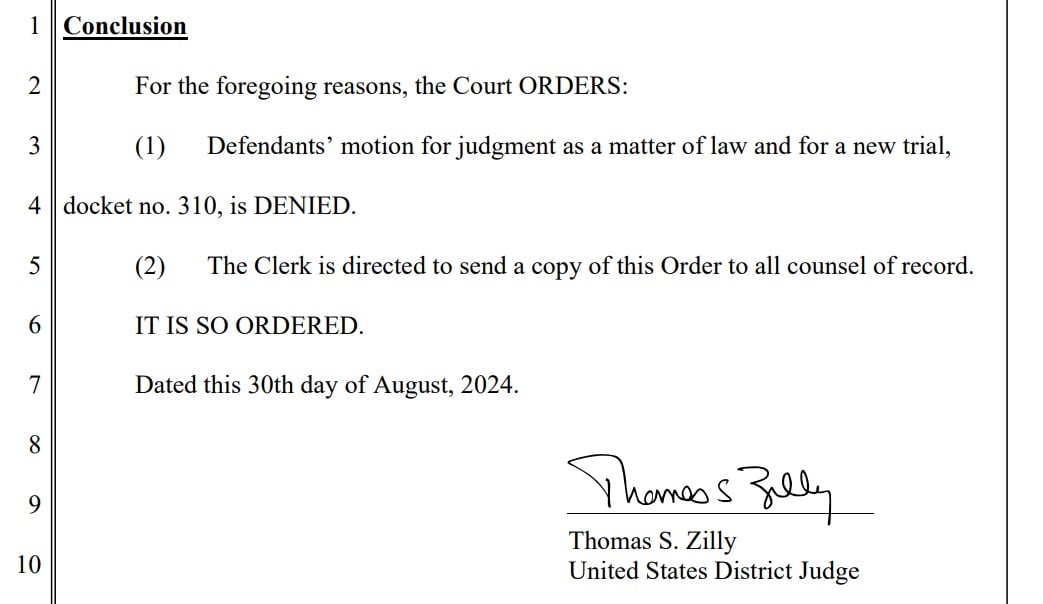
    Last week, United States District Judge Thomas Zilly denied the request for a do-over. Judgment as a matter of law may be granted if the evidence only allows for one reasonable conclusion , which runs contrary to the jury’s verdict. That’s not the case here.

    Judge Zilly writes that Bungie was required to prove that it owned the copyrights and that these were infringed by AimJunkies. The presented evidence supports that, he concludes.

    “[A]t trial Bungie needed only to establish that the ‘Cheat Software’ distributed by Defendants had copied protected aspects of Destiny 2. Bungie could show that Defendants copied protected aspects of Destiny 2 with either direct or circumstantial evidence of copying. Both types of evidence were presented at trial.”

    For example, both Bungie and AimJunkies agreed that the cheat software affected the audiovisual output of Destiny 2. That alone, is sufficient to support the jury’s verdict that defendants engaged in copyright infringement.

    Denied

    trial denied

    $4.3 Million Arbitration Award

    Before the trial took place, several of the claims presented in the lawsuit had already been resolved by an arbitrator. The arbitration process was conducted behind the scenes and resulted in a resounding win for the game developer. Bungie was awarded almost $4.4 million in damages and fees.

    The bulk of the award was DMCA-related damages. According to arbitration Judge Ronald Cox, the evidence made it clear that AimJunkies and third-party developer James May bypassed Bungie’s technical protection measures in violation of the DMCA.

    In addition to breaching the DMCA’s anti-circumvention provisions, the defendants were also found liable for trafficking in circumvention devices. Or, put differently, selling and shipping the cheats.

    The AimJunkies defendants were disappointed in the arbitration outcome and decided to challenge it at the court of appeal . According to the cheat sellers, the arbitration process was not fair and correct.

    The arbitrator relied heavily on evidence from Bungie’s witness, Dr. Kaiser, and denied cross-examination of the same witness, the defendants argued. This prevented AimJunkies from challenging the credibility of this key witness.

    Appeals Court Denies AimJunkies’ Arbitration Appeal

    Last week, the Ninth Circuit Court denied AimJunkies’ appeal. The court found that the district court did not err in confirming the $4.3 million arbitration award, concluding that the arbitrator didn’t prevent the defendants from challenging the witness.

    “The Arbitrator did not entirely dismiss AimJunkies’ attempt or ability to impeach Dr. Kaiser,” Judges Nguyen, Johnstone and Ezra concluded

    “For example, AimJunkies’ counsel could have tried to rephrase its question, question Dr. Kaiser about his transcripts, or read Dr. Kaiser’s transcripts into the record to impeach Dr. Kaiser. AimJunkies’ counsel did not attempt to do so.

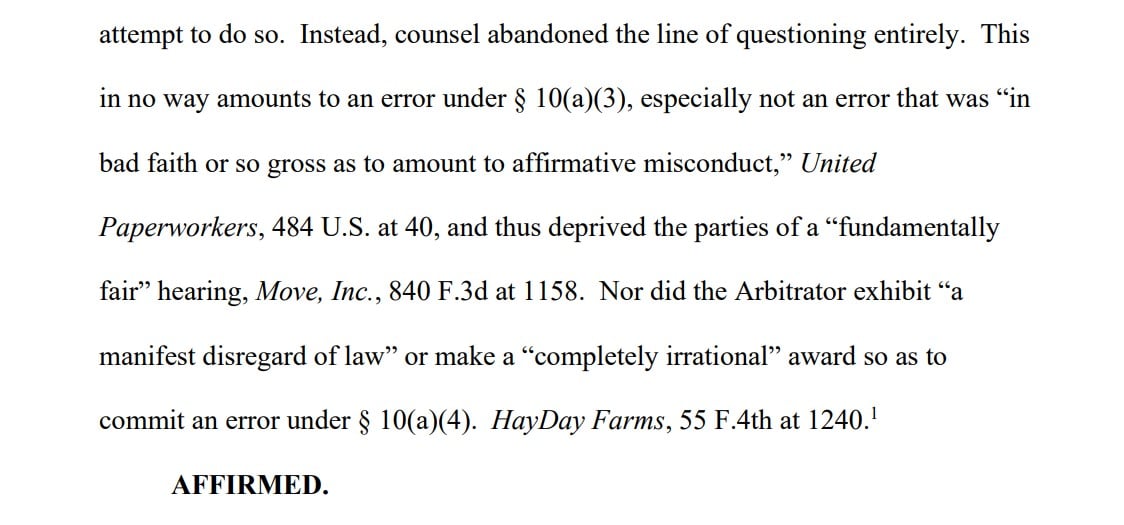
    “Instead, counsel abandoned the line of questioning entirely. This in no way amounts to an error […], especially not an error that was ‘in bad faith or so gross as to amount to affirmative misconduct’ […] and thus deprived the parties of a ‘fundamentally fair’ hearing.”

    The arbitrator did not show “a manifest disregard” of law, no clear errors were made, and the scale of the award was not “completely irrational.”

    As a result, the court of appeal affirmed the $4.3 million arbitration award.

    Affirmed

    affirmed

    As a result, Bungie emerges the clear winner once again. AimJunkies won’t get a new trial and the arbitration award, which was previously put on hold pending the appeal, can now be collected.

    While there may still be further challenges ahead, AimJunkies’ outlook is ever more grim.

    A copy of the Seattle District Court’s order is available here (pdf) . The order from the Ninth Circuit Court of Appeals can be found here (pdf) .

    From: TF , for the latest news on copyright battles, piracy and more.

    • To chevron_right

      Court Denies Cheat Seller AimJunkies a New Trial, Affirms Bungie’s $4.3m Win

      news.movim.eu / TorrentFreak • 2 September 2024 • 4 minutes

    aimjunkies Three years ago, Bungie filed a complaint at a federal court in Seattle, accusing Destiny 2 cheat seller AimJunkies.com of copyright and trademark infringement, among other things.

    The same accusations were also leveled against Phoenix Digital Group, the operating company behind the website, and third-party developer James May.

    Bungie Wins Landmark Trial

    After years of legal back-and-forth, the case went to trial in May, where both sides presented their arguments. AimJunkies, in particular, emphasized that the defendants never accessed or modified any of Destiny 2’s copyrighted game code.

    Bungie, on the other hand, argued that AimJunkies’ copyright-infringing activities were blatant and obvious. At the end of the trial, the Seattle jury ruled in favor of the video game company.

    After the hearings concluded, the jury found all defendants liable for direct, vicarious, and contributory copyright infringement. Phoenix Digital Group and all individual defendants were ordered to pay damages equivalent to the actual profits they earned, a total of $63,210 .

    Court Denies AimJunkies a New Trial

    The jury verdict was a clear victory for Bungie, but it didn’t mark the end of the legal battle. AimJunkies had previously filed a motion for judgment as a matter of law, contending that it was evident they hadn’t infringed on Destiny 2’s copyrights.

    The district court was therefore asked to overrule the jury’s decision and enter a new verdict. Alternatively, the court could order a new trial, offering AimJunkies another chance to defeat Bungie.

    Last week, United States District Judge Thomas Zilly denied the request for a do-over. Judgment as a matter of law may be granted if the evidence only allows for one reasonable conclusion , which runs contrary to the jury’s verdict. That’s not the case here.

    Judge Zilly writes that Bungie was required to prove that it owned the copyrights and that these were infringed by AimJunkies. The presented evidence supports that, he concludes.

    “[A]t trial Bungie needed only to establish that the ‘Cheat Software’ distributed by Defendants had copied protected aspects of Destiny 2. Bungie could show that Defendants copied protected aspects of Destiny 2 with either direct or circumstantial evidence of copying. Both types of evidence were presented at trial.”

    For example, both Bungie and AimJunkies agreed that the cheat software affected the audiovisual output of Destiny 2. That alone, is sufficient to support the jury’s verdict that defendants engaged in copyright infringement.

    Denied

    trial denied

    $4.3 Million Arbitration Award

    Before the trial took place, several of the claims presented in the lawsuit had already been resolved by an arbitrator. The arbitration process was conducted behind the scenes and resulted in a resounding win for the game developer. Bungie was awarded almost $4.4 million in damages and fees.

    The bulk of the award was DMCA-related damages. According to arbitration Judge Ronald Cox, the evidence made it clear that AimJunkies and third-party developer James May bypassed Bungie’s technical protection measures in violation of the DMCA.

    In addition to breaching the DMCA’s anti-circumvention provisions, the defendants were also found liable for trafficking in circumvention devices. Or, put differently, selling and shipping the cheats.

    The AimJunkies defendants were disappointed in the arbitration outcome and decided to challenge it at the court of appeal . According to the cheat sellers, the arbitration process was not fair and correct.

    The arbitrator relied heavily on evidence from Bungie’s witness, Dr. Kaiser, and denied cross-examination of the same witness, the defendants argued. This prevented AimJunkies from challenging the credibility of this key witness.

    Appeals Court Denies AimJunkies’ Arbitration Appeal

    Last week, the Ninth Circuit Court denied AimJunkies’ appeal. The court found that the district court did not err in confirming the $4.3 million arbitration award, concluding that the arbitrator didn’t prevent the defendants from challenging the witness.

    “The Arbitrator did not entirely dismiss AimJunkies’ attempt or ability to impeach Dr. Kaiser,” Judges Nguyen, Johnstone and Ezra concluded

    “For example, AimJunkies’ counsel could have tried to rephrase its question, question Dr. Kaiser about his transcripts, or read Dr. Kaiser’s transcripts into the record to impeach Dr. Kaiser. AimJunkies’ counsel did not attempt to do so.

    “Instead, counsel abandoned the line of questioning entirely. This in no way amounts to an error […], especially not an error that was ‘in bad faith or so gross as to amount to affirmative misconduct’ […] and thus deprived the parties of a ‘fundamentally fair’ hearing.”

    The arbitrator did not show “a manifest disregard” of law, no clear errors were made, and the scale of the award was not “completely irrational.”

    As a result, the court of appeal affirmed the $4.3 million arbitration award.

    Affirmed

    affirmed

    As a result, Bungie emerges the clear winner once again. AimJunkies won’t get a new trial and the arbitration award, which was previously put on hold pending the appeal, can now be collected.

    While there may still be further challenges ahead, AimJunkies’ outlook is ever more grim.

    A copy of the Seattle District Court’s order is available here (pdf) . The order from the Ninth Circuit Court of Appeals can be found here (pdf) .

    From: TF , for the latest news on copyright battles, piracy and more.

    • To chevron_right

      Court Denies Cheat Seller AimJunkies a New Trial, Affirms Bungie’s $4.3m Win

      news.movim.eu / TorrentFreak • 2 September 2024 • 4 minutes

    aimjunkies Three years ago, Bungie filed a complaint at a federal court in Seattle, accusing Destiny 2 cheat seller AimJunkies.com of copyright and trademark infringement, among other things.

    The same accusations were also leveled against Phoenix Digital Group, the operating company behind the website, and third-party developer James May.

    Bungie Wins Landmark Trial

    After years of legal back-and-forth, the case went to trial in May, where both sides presented their arguments. AimJunkies, in particular, emphasized that the defendants never accessed or modified any of Destiny 2’s copyrighted game code.

    Bungie, on the other hand, argued that AimJunkies’ copyright-infringing activities were blatant and obvious. At the end of the trial, the Seattle jury ruled in favor of the video game company.

    After the hearings concluded, the jury found all defendants liable for direct, vicarious, and contributory copyright infringement. Phoenix Digital Group and all individual defendants were ordered to pay damages equivalent to the actual profits they earned, a total of $63,210 .

    Court Denies AimJunkies a New Trial

    The jury verdict was a clear victory for Bungie, but it didn’t mark the end of the legal battle. AimJunkies had previously filed a motion for judgment as a matter of law, contending that it was evident they hadn’t infringed on Destiny 2’s copyrights.

    The district court was therefore asked to overrule the jury’s decision and enter a new verdict. Alternatively, the court could order a new trial, offering AimJunkies another chance to defeat Bungie.

    Last week, United States District Judge Thomas Zilly denied the request for a do-over. Judgment as a matter of law may be granted if the evidence only allows for one reasonable conclusion , which runs contrary to the jury’s verdict. That’s not the case here.

    Judge Zilly writes that Bungie was required to prove that it owned the copyrights and that these were infringed by AimJunkies. The presented evidence supports that, he concludes.

    “[A]t trial Bungie needed only to establish that the ‘Cheat Software’ distributed by Defendants had copied protected aspects of Destiny 2. Bungie could show that Defendants copied protected aspects of Destiny 2 with either direct or circumstantial evidence of copying. Both types of evidence were presented at trial.”

    For example, both Bungie and AimJunkies agreed that the cheat software affected the audiovisual output of Destiny 2. That alone, is sufficient to support the jury’s verdict that defendants engaged in copyright infringement.

    Denied

    trial denied

    $4.3 Million Arbitration Award

    Before the trial took place, several of the claims presented in the lawsuit had already been resolved by an arbitrator. The arbitration process was conducted behind the scenes and resulted in a resounding win for the game developer. Bungie was awarded almost $4.4 million in damages and fees.

    The bulk of the award was DMCA-related damages. According to arbitration Judge Ronald Cox, the evidence made it clear that AimJunkies and third-party developer James May bypassed Bungie’s technical protection measures in violation of the DMCA.

    In addition to breaching the DMCA’s anti-circumvention provisions, the defendants were also found liable for trafficking in circumvention devices. Or, put differently, selling and shipping the cheats.

    The AimJunkies defendants were disappointed in the arbitration outcome and decided to challenge it at the court of appeal . According to the cheat sellers, the arbitration process was not fair and correct.

    The arbitrator relied heavily on evidence from Bungie’s witness, Dr. Kaiser, and denied cross-examination of the same witness, the defendants argued. This prevented AimJunkies from challenging the credibility of this key witness.

    Appeals Court Denies AimJunkies’ Arbitration Appeal

    Last week, the Ninth Circuit Court denied AimJunkies’ appeal. The court found that the district court did not err in confirming the $4.3 million arbitration award, concluding that the arbitrator didn’t prevent the defendants from challenging the witness.

    “The Arbitrator did not entirely dismiss AimJunkies’ attempt or ability to impeach Dr. Kaiser,” Judges Nguyen, Johnstone and Ezra concluded

    “For example, AimJunkies’ counsel could have tried to rephrase its question, question Dr. Kaiser about his transcripts, or read Dr. Kaiser’s transcripts into the record to impeach Dr. Kaiser. AimJunkies’ counsel did not attempt to do so.

    “Instead, counsel abandoned the line of questioning entirely. This in no way amounts to an error […], especially not an error that was ‘in bad faith or so gross as to amount to affirmative misconduct’ […] and thus deprived the parties of a ‘fundamentally fair’ hearing.”

    The arbitrator did not show “a manifest disregard” of law, no clear errors were made, and the scale of the award was not “completely irrational.”

    As a result, the court of appeal affirmed the $4.3 million arbitration award.

    Affirmed

    affirmed

    As a result, Bungie emerges the clear winner once again. AimJunkies won’t get a new trial and the arbitration award, which was previously put on hold pending the appeal, can now be collected.

    While there may still be further challenges ahead, AimJunkies’ outlook is ever more grim.

    A copy of the Seattle District Court’s order is available here (pdf) . The order from the Ninth Circuit Court of Appeals can be found here (pdf) .

    From: TF , for the latest news on copyright battles, piracy and more.