• To chevron_right

      Threatening Anti-Piracy Messaging Fails to Stimulate Intent to Subscribe

      news.movim.eu / TorrentFreak • 8 September 2024 • 5 minutes

    not-credible After years of anti-piracy campaigns, there’s a tendency to wonder whether the secret sauce of success is right around the corner or just as elusive as it’s ever been.

    Yet, even briefly considering the perspective of those creating these campaigns can be a fairly sobering experience. There’s a blank sheet of paper and this campaign has to work, what can it possibly say that hasn’t been said before?

    Even more important than simply being original, is there a type of messaging that won’t be ignored or ridiculed straight off the bat, yet goes on to deliver real results?

    While advertising agencies will always claim to have a great solution, the default for most anti-piracy messaging is negativity, with few campaigns reaching the public without at least some element of fear.

    Whether the fear focuses on direct consequences for the consumer or the broader impact on others, it’s often amplified by direct threats.

    There Must Be a Better Way

    Published on Thursday by researchers at the prestigious Autonomous University of Madrid (la Autónoma), Incentivizing SVOD Platform Subscription Intention through Tiered Discounts and Anti-Piracy Messages acknowledges the challenge piracy presents.

    Rather than focusing on the negatives, the researchers argue that a more positive approach, one that incentivizes people not to pirate while acknowledging loyalty, can improve relationships with customers, make them happier, and even lead to improved profitability.

    Some platforms offer better prices in exchange for a one-year subscription commitment, but tiered discounts based on subscriber loyalty are much less common. The researchers say there’s almost no public research on their effectiveness. With their study, which also examines two types of anti-piracy messaging, they aim to fill that gap.

    Effectiveness and Conditions

    Through a nationwide survey in Spain, the researchers asked 883 subjects who subscribe to streaming platforms and make use of illegal sites, to report their intention to subscribe to a hypothetical new platform (‘Flixio’) constructed by the researchers. The study had two objectives:

    Identify the conditions under which the intention to subscribe to an SVOD platform is enhanced by four types of incentives (tiered advertising/loyalty discounts and prosocial/threatening anti-piracy messages)

    Explore the extent to which each type of incentive and the evaluation of platform content comparatively contribute to enhance subscription intention

    So what combinations worked best for Flixio and why?

    Tiered Advertising Discounts

    In respect of Tiered Advertising Discounts , the study found that users’ opinions on advertising in general predicted to a high degree whether they were satisfied with the tiered offer. For example, the discounted ads tier satisfied users with a more positive attitude towards advertising. The advertising-averse were satisfied by paying the full price and seeing no ads.

    “This result can be understood through social exchange theory: SVOD platforms can improve their relationships with users by offering tiered advertising discounts that match the specific dispositions of the different user groups, each of which will perceive a better cost-benefit balance in customized contract terms,” the study notes.

    In general, platforms should run ads that users view positively and ditch those they do not. When consumers have a positive attitude towards a platform’s ads, tiered advertising discounts should become more attractive.

    Tiered Loyalty Discounts

    The study found that the interaction between loyalty level and attitudes to loyalty shows that subscription intention was enhanced by offering tiers with enough variety to satisfy a range of attitudes.

    By offering appropriate discounts to those with a positive attitude to loyalty, and offering non-discounted rates still pleasing to the loyalty averse, subscription intention was enhanced along with the opportunity to build stronger relationships with users.

    “In addition, this incentive should not only be aimed at retaining subscribers, but also at strengthening the perceived utility of being loyal users, because rewarding loyalty has a well-documented reinforcing effect on loyal attitudes and behaviors,” the researchers add.

    Prosocial Anti-Piracy Messaging

    The study considers two main types of anti-piracy messaging. The first, prosocial messaging , asks pirates to consider the effect of their consumption on others, such as harm to film industry workers and how piracy compromises the quality of future productions.

    The researchers say that confirmation of this approach may help to explain why prosocial anti-piracy messages are sometimes seen as effective and why sometimes they are not.

    “The effectiveness of these messages depends on whether the user of pirated SVOD content perceives them as sufficiently credible and has enough sensitivity to justice. If a prosocial message is not believable, illegitimate users will easily criticize its content and continue to justify their unauthorized behavior,” the study found.

    “If illegitimate users are not sensitive enough to recognize themselves as perpetrators and benefactors of an injustice against copyright holders, the message will not have the desired effect.”

    On a practical level, those deploying this type of messaging should assume that it will be ineffective against lower justice-sensitive users. On the plus side, when messaging contains “highly credible claims and arguments” higher justice-sensitive users are likely to be persuaded.

    Even Credible Threats Are Ineffective

    The second type, Threatening messaging , asks pirates to consider the potential negatives, such as being caught and having to deal with the consequences in the legal arena.

    The study’s findings on the effectiveness of threats surprised the researchers. Even when people found the threats credible and also feared punishment, the likelihood of them subscribing to legal platforms did not increase. The paper mentions two possible reasons for this outcome.

    First, while the threats may have discouraged piracy, they didn’t necessarily motivate people to pay for content. Second, the particularly strong threats used in the study may have backfired, triggering a defensive reaction and resentment towards the message sender. This aligns with the psychological theory of reactance, where people resist attempts to limit their freedom.

    Overall, the researchers suggest that overly aggressive anti-piracy messages are not an effective way to motivate people to subscribe to legal streaming services.

    Conclusion

    The study ultimately concludes that, by offering tiered discounts in exchange for advertising exposure, and by acknowledging and rewarding loyalty with discounts supported by prosocial anti-piracy messaging, streaming platforms can improve relationships with consumers and enhance business.

    In many respects, the findings in the study boil down to common sense. When companies meet or exceed subscribers’ expectations, customers tend to be happy and in turn, that contributes positively to loyalty. When expectations are not met the opposite is true and no amount of threats will ever change that, or repair any shred of loyalty left behind.

    That may be why threat model never goes away; it poisons a generation of consumers and just when it fades, people run out of innovative anti-piracy ideas. Then the cycle begins all over again, with threats that become more exaggerated as the years roll by, with the same predictable results.

    Incentivizing SVOD Platform Subscription Intention through Tiered Discounts and Anti-piracy Messages (Ignacio Redondo, Diana Serrano) is available here (pdf, not peer-reviewed)

    From: TF , for the latest news on copyright battles, piracy and more.

    • To chevron_right

      Threatening Anti-Piracy Messaging Fails to Stimulate Intent to Subscribe

      news.movim.eu / TorrentFreak • 8 September 2024 • 5 minutes

    not-credible After years of anti-piracy campaigns, there’s a tendency to wonder whether the secret sauce of success is right around the corner or just as elusive as it’s ever been.

    Yet, even briefly considering the perspective of those creating these campaigns can be a fairly sobering experience. There’s a blank sheet of paper and this campaign has to work, what can it possibly say that hasn’t been said before?

    Even more important than simply being original, is there a type of messaging that won’t be ignored or ridiculed straight off the bat, yet goes on to deliver real results?

    While advertising agencies will always claim to have a great solution, the default for most anti-piracy messaging is negativity, with few campaigns reaching the public without at least some element of fear.

    Whether the fear focuses on direct consequences for the consumer or the broader impact on others, it’s often amplified by direct threats.

    There Must Be a Better Way

    Published on Thursday by researchers at the prestigious Autonomous University of Madrid (la Autónoma), Incentivizing SVOD Platform Subscription Intention through Tiered Discounts and Anti-Piracy Messages acknowledges the challenge piracy presents.

    Rather than focusing on the negatives, the researchers argue that a more positive approach, one that incentivizes people not to pirate while acknowledging loyalty, can improve relationships with customers, make them happier, and even lead to improved profitability.

    Some platforms offer better prices in exchange for a one-year subscription commitment, but tiered discounts based on subscriber loyalty are much less common. The researchers say there’s almost no public research on their effectiveness. With their study, which also examines two types of anti-piracy messaging, they aim to fill that gap.

    Effectiveness and Conditions

    Through a nationwide survey in Spain, the researchers asked 883 subjects who subscribe to streaming platforms and make use of illegal sites, to report their intention to subscribe to a hypothetical new platform (‘Flixio’) constructed by the researchers. The study had two objectives:

    Identify the conditions under which the intention to subscribe to an SVOD platform is enhanced by four types of incentives (tiered advertising/loyalty discounts and prosocial/threatening anti-piracy messages)

    Explore the extent to which each type of incentive and the evaluation of platform content comparatively contribute to enhance subscription intention

    So what combinations worked best for Flixio and why?

    Tiered Advertising Discounts

    In respect of Tiered Advertising Discounts , the study found that users’ opinions on advertising in general predicted to a high degree whether they were satisfied with the tiered offer. For example, the discounted ads tier satisfied users with a more positive attitude towards advertising. The advertising-averse were satisfied by paying the full price and seeing no ads.

    “This result can be understood through social exchange theory: SVOD platforms can improve their relationships with users by offering tiered advertising discounts that match the specific dispositions of the different user groups, each of which will perceive a better cost-benefit balance in customized contract terms,” the study notes.

    In general, platforms should run ads that users view positively and ditch those they do not. When consumers have a positive attitude towards a platform’s ads, tiered advertising discounts should become more attractive.

    Tiered Loyalty Discounts

    The study found that the interaction between loyalty level and attitudes to loyalty shows that subscription intention was enhanced by offering tiers with enough variety to satisfy a range of attitudes.

    By offering appropriate discounts to those with a positive attitude to loyalty, and offering non-discounted rates still pleasing to the loyalty averse, subscription intention was enhanced along with the opportunity to build stronger relationships with users.

    “In addition, this incentive should not only be aimed at retaining subscribers, but also at strengthening the perceived utility of being loyal users, because rewarding loyalty has a well-documented reinforcing effect on loyal attitudes and behaviors,” the researchers add.

    Prosocial Anti-Piracy Messaging

    The study considers two main types of anti-piracy messaging. The first, prosocial messaging , asks pirates to consider the effect of their consumption on others, such as harm to film industry workers and how piracy compromises the quality of future productions.

    The researchers say that confirmation of this approach may help to explain why prosocial anti-piracy messages are sometimes seen as effective and why sometimes they are not.

    “The effectiveness of these messages depends on whether the user of pirated SVOD content perceives them as sufficiently credible and has enough sensitivity to justice. If a prosocial message is not believable, illegitimate users will easily criticize its content and continue to justify their unauthorized behavior,” the study found.

    “If illegitimate users are not sensitive enough to recognize themselves as perpetrators and benefactors of an injustice against copyright holders, the message will not have the desired effect.”

    On a practical level, those deploying this type of messaging should assume that it will be ineffective against lower justice-sensitive users. On the plus side, when messaging contains “highly credible claims and arguments” higher justice-sensitive users are likely to be persuaded.

    Even Credible Threats Are Ineffective

    The second type, Threatening messaging , asks pirates to consider the potential negatives, such as being caught and having to deal with the consequences in the legal arena.

    The study’s findings on the effectiveness of threats surprised the researchers. Even when people found the threats credible and also feared punishment, the likelihood of them subscribing to legal platforms did not increase. The paper mentions two possible reasons for this outcome.

    First, while the threats may have discouraged piracy, they didn’t necessarily motivate people to pay for content. Second, the particularly strong threats used in the study may have backfired, triggering a defensive reaction and resentment towards the message sender. This aligns with the psychological theory of reactance, where people resist attempts to limit their freedom.

    Overall, the researchers suggest that overly aggressive anti-piracy messages are not an effective way to motivate people to subscribe to legal streaming services.

    Conclusion

    The study ultimately concludes that, by offering tiered discounts in exchange for advertising exposure, and by acknowledging and rewarding loyalty with discounts supported by prosocial anti-piracy messaging, streaming platforms can improve relationships with consumers and enhance business.

    In many respects, the findings in the study boil down to common sense. When companies meet or exceed subscribers’ expectations, customers tend to be happy and in turn, that contributes positively to loyalty. When expectations are not met the opposite is true and no amount of threats will ever change that, or repair any shred of loyalty left behind.

    That may be why threat model never goes away; it poisons a generation of consumers and just when it fades, people run out of innovative anti-piracy ideas. Then the cycle begins all over again, with threats that become more exaggerated as the years roll by, with the same predictable results.

    Incentivizing SVOD Platform Subscription Intention through Tiered Discounts and Anti-piracy Messages (Ignacio Redondo, Diana Serrano) is available here (pdf, not peer-reviewed)

    From: TF , for the latest news on copyright battles, piracy and more.

    • To chevron_right

      Threatening Anti-Piracy Messaging Fails to Stimulate Intent to Subscribe

      news.movim.eu / TorrentFreak • 8 September 2024 • 5 minutes

    not-credible After years of anti-piracy campaigns, there’s a tendency to wonder whether the secret sauce of success is right around the corner or just as elusive as it’s ever been.

    Yet, even briefly considering the perspective of those creating these campaigns can be a fairly sobering experience. There’s a blank sheet of paper and this campaign has to work, what can it possibly say that hasn’t been said before?

    Even more important than simply being original, is there a type of messaging that won’t be ignored or ridiculed straight off the bat, yet goes on to deliver real results?

    While advertising agencies will always claim to have a great solution, the default for most anti-piracy messaging is negativity, with few campaigns reaching the public without at least some element of fear.

    Whether the fear focuses on direct consequences for the consumer or the broader impact on others, it’s often amplified by direct threats.

    There Must Be a Better Way

    Published on Thursday by researchers at the prestigious Autonomous University of Madrid (la Autónoma), Incentivizing SVOD Platform Subscription Intention through Tiered Discounts and Anti-Piracy Messages acknowledges the challenge piracy presents.

    Rather than focusing on the negatives, the researchers argue that a more positive approach, one that incentivizes people not to pirate while acknowledging loyalty, can improve relationships with customers, make them happier, and even lead to improved profitability.

    Some platforms offer better prices in exchange for a one-year subscription commitment, but tiered discounts based on subscriber loyalty are much less common. The researchers say there’s almost no public research on their effectiveness. With their study, which also examines two types of anti-piracy messaging, they aim to fill that gap.

    Effectiveness and Conditions

    Through a nationwide survey in Spain, the researchers asked 883 subjects who subscribe to streaming platforms and make use of illegal sites, to report their intention to subscribe to a hypothetical new platform (‘Flixio’) constructed by the researchers. The study had two objectives:

    Identify the conditions under which the intention to subscribe to an SVOD platform is enhanced by four types of incentives (tiered advertising/loyalty discounts and prosocial/threatening anti-piracy messages)

    Explore the extent to which each type of incentive and the evaluation of platform content comparatively contribute to enhance subscription intention

    So what combinations worked best for Flixio and why?

    Tiered Advertising Discounts

    In respect of Tiered Advertising Discounts , the study found that users’ opinions on advertising in general predicted to a high degree whether they were satisfied with the tiered offer. For example, the discounted ads tier satisfied users with a more positive attitude towards advertising. The advertising-averse were satisfied by paying the full price and seeing no ads.

    “This result can be understood through social exchange theory: SVOD platforms can improve their relationships with users by offering tiered advertising discounts that match the specific dispositions of the different user groups, each of which will perceive a better cost-benefit balance in customized contract terms,” the study notes.

    In general, platforms should run ads that users view positively and ditch those they do not. When consumers have a positive attitude towards a platform’s ads, tiered advertising discounts should become more attractive.

    Tiered Loyalty Discounts

    The study found that the interaction between loyalty level and attitudes to loyalty shows that subscription intention was enhanced by offering tiers with enough variety to satisfy a range of attitudes.

    By offering appropriate discounts to those with a positive attitude to loyalty, and offering non-discounted rates still pleasing to the loyalty averse, subscription intention was enhanced along with the opportunity to build stronger relationships with users.

    “In addition, this incentive should not only be aimed at retaining subscribers, but also at strengthening the perceived utility of being loyal users, because rewarding loyalty has a well-documented reinforcing effect on loyal attitudes and behaviors,” the researchers add.

    Prosocial Anti-Piracy Messaging

    The study considers two main types of anti-piracy messaging. The first, prosocial messaging , asks pirates to consider the effect of their consumption on others, such as harm to film industry workers and how piracy compromises the quality of future productions.

    The researchers say that confirmation of this approach may help to explain why prosocial anti-piracy messages are sometimes seen as effective and why sometimes they are not.

    “The effectiveness of these messages depends on whether the user of pirated SVOD content perceives them as sufficiently credible and has enough sensitivity to justice. If a prosocial message is not believable, illegitimate users will easily criticize its content and continue to justify their unauthorized behavior,” the study found.

    “If illegitimate users are not sensitive enough to recognize themselves as perpetrators and benefactors of an injustice against copyright holders, the message will not have the desired effect.”

    On a practical level, those deploying this type of messaging should assume that it will be ineffective against lower justice-sensitive users. On the plus side, when messaging contains “highly credible claims and arguments” higher justice-sensitive users are likely to be persuaded.

    Even Credible Threats Are Ineffective

    The second type, Threatening messaging , asks pirates to consider the potential negatives, such as being caught and having to deal with the consequences in the legal arena.

    The study’s findings on the effectiveness of threats surprised the researchers. Even when people found the threats credible and also feared punishment, the likelihood of them subscribing to legal platforms did not increase. The paper mentions two possible reasons for this outcome.

    First, while the threats may have discouraged piracy, they didn’t necessarily motivate people to pay for content. Second, the particularly strong threats used in the study may have backfired, triggering a defensive reaction and resentment towards the message sender. This aligns with the psychological theory of reactance, where people resist attempts to limit their freedom.

    Overall, the researchers suggest that overly aggressive anti-piracy messages are not an effective way to motivate people to subscribe to legal streaming services.

    Conclusion

    The study ultimately concludes that, by offering tiered discounts in exchange for advertising exposure, and by acknowledging and rewarding loyalty with discounts supported by prosocial anti-piracy messaging, streaming platforms can improve relationships with consumers and enhance business.

    In many respects, the findings in the study boil down to common sense. When companies meet or exceed subscribers’ expectations, customers tend to be happy and in turn, that contributes positively to loyalty. When expectations are not met the opposite is true and no amount of threats will ever change that, or repair any shred of loyalty left behind.

    That may be why threat model never goes away; it poisons a generation of consumers and just when it fades, people run out of innovative anti-piracy ideas. Then the cycle begins all over again, with threats that become more exaggerated as the years roll by, with the same predictable results.

    Incentivizing SVOD Platform Subscription Intention through Tiered Discounts and Anti-piracy Messages (Ignacio Redondo, Diana Serrano) is available here (pdf, not peer-reviewed)

    From: TF , for the latest news on copyright battles, piracy and more.

    • To chevron_right

      ‘Make Pay-Per-View Access to Boxing Events Free to Fight Piracy’

      news.movim.eu / TorrentFreak • 7 September 2024 • 4 minutes

    flying pig In recent years, rightsholders of major sports events have repeatedly complained that piracy of live sports is rising through the roof.

    They’ve called on lawmakers to tighten legislation and urged law enforcement to take the problem much more seriously.

    Last month, U.S. authorities took action by seizing several domain names of sports streaming site Streameast, which has millions of monthly users. The seizures were carried out by the book but didn’t achieve the desired effect, as Streameast remains available through alternative domains.

    According to the site’s operators, it won’t stop until sports streaming is more affordable to the public. The sweet spot is unknown, but price reduction plans are being openly discussed.

    Affordable Sports Streaming

    A few weeks ago, sports streaming services in Greece significantly reduced their bundle prices in an attempt to combat piracy . The decision resulted in many happy consumers who now feel that they’re getting their money’s worth.

    Similar initiatives have started to surface elsewhere too. For example, Turki Alalshikh a member of the Saudi Royal Court and the driving force behind many large boxing events taking place in Saudi Arabia, called for lower PPV prices this week.

    Speaking with TalkSport , His Excellency suggested that high prices drive people to pirate sites and services, which is ultimately bad for the sport.

    “I dream of a PPV with a good price to make the fans happy and subscribe and get them to watch it legally. Usually when I see a high PPV, a lot of people go and watch the fight illegally and this is not healthy for boxing and the platform,” Alalshikh said.

    The solution is simple. Alalshikh will try to make the prime fighting events in Saudi Arabia during the Riyadh Season available for £20 in England and less than $20 around the world.

    “If I give the fans good fights at a good price then I will increase the fanbase,” Alalshikh explained.

    Make It Free!

    While these drastic price reductions would be a major step, some want to go even further. This includes American boxer Chris Algieri, who has a suggestion that will appeal to even the most hardcore pirates.

    The boxer and former kickboxer appeared on Probox TV , discussing a price reduction plan proposed by Alalshikh. According to Algieri, $20 might still be a hurdle for many people, so it makes more sense to go all the way and offer access to PPV events for free.

    “I don’t know if it’s a way to fight the piracy because $20 is still $20. If you’re going to steal it, free is better than $20,” Algieri said. “Just make it free,” he added.

    In theory, $20 per viewer could bring in more revenue per event than $40, if the total number of viewers more than doubled. However, offering access to streams without charge is not really a sustainable business model.

    Algieri is aware of this and doesn’t propose to make fights free forever. Instead, he sees it as a temporary measure to build the sports fanbase. After that, events can start to charge again.

    For now, free PPV events is likely a step too far for organizers. Algieri believes that the proposed price reductions would be a good start, and he is curious to see if that would disproportionately increase the number of viewers.

    “I do like the idea, that it’s allowing fight fans to watch their favorite fighters at a price tag that’s not exorbitant, that’s not keeping them from being able to watch their favorite fighters,” Algieri said.

    Dana White and ‘Streameast’ Enter the Octagon

    While price reductions are music to the ears of boxing fans, not everyone agrees. UFC CEO Dana White, for example, told reporters on Tuesday that he sees more benefit in an offensive approach, by going after pirates in court.

    “I won’t tell you extensively what we do every event, but we go after piracy hard and you saw a few years ago we started prosecuting people,” White said. “That’s how you combat piracy. Start f*cking prosecuting people for stealing.”

    White’s aggressive tone towards pirates isn’t new; similar threats have been made in the past.

    Joshua vs Dubois will be available for £19.95 in the UK, with prices elsewhere yet to be officially confirmed. As far as we know, however, UFC hasn’t taken any action against people who consume pirated streams, yet.

    That said, White’s fighting words may be sufficient for some not to try the ‘pirate’ alternatives, including the previously mentioned streaming platform Streameast. For some, Dana’s stance on piracy is a form of entertainment in its own right.

    white streameast

    A comment from ACD MMA on X about the rivalry triggered a response from the ‘Streameast News Network’, which is unrelated to the Streameast site.

    “He’s desperate. Making up lies praying it scares away a few hundred people from clicking the link,” the unofficial Streameast account replied.

    Some news sites confused this reply for a message from the actual Streameast service, making matters even more messy. Streameast hasn’t officially commented on White’s comments, or the price reductions, as far as we know. That said, they can surely get behind Algieri’s suggestion to make PPV streams free.

    From: TF , for the latest news on copyright battles, piracy and more.

    • To chevron_right

      ‘Make Pay-Per-View Access to Boxing Events Free to Fight Piracy’

      news.movim.eu / TorrentFreak • 7 September 2024 • 4 minutes

    flying pig In recent years, rightsholders of major sports events have repeatedly complained that piracy of live sports is rising through the roof.
    They’ve called on lawmakers to tighten legislation and urged law enforcement to take the problem much more seriously.

    Last month, U.S. authorities took action by seizing several domain names of sports streaming site Streameast, which has millions of monthly users. The seizures were carried out by the book but didn’t achieve the desired effect, as Streameast remains available through alternative domains.

    According to the site’s operators, it won’t stop until sports streaming is more affordable to the public. The sweet spot is unknown, but price reduction plans are being openly discussed.

    Affordable Sports Streaming

    A few weeks ago, sports streaming services in Greece significantly reduced their bundle prices in an attempt to combat piracy . The decision resulted in many happy consumers who now feel that they’re getting their money’s worth.

    Similar initiatives have started to surface elsewhere too. For example, Turki Alalshikh a member of the Saudi Royal Court and the driving force behind many large boxing events taking place in Saudi Arabia, called for lower PPV prices this week.

    Speaking with TalkSport , His Excellency suggested that high prices drive people to pirate sites and services, which is ultimately bad for the sport.

    “I dream of a PPV with a good price to make the fans happy and subscribe and get them to watch it legally. Usually when I see a high PPV, a lot of people go and watch the fight illegally and this is not healthy for boxing and the platform,” Alalshikh said.

    The solution is simple. Alalshikh will try to make the prime fighting events in Saudi Arabia during the Riyadh Season available for £20 in England and less than $20 around the world.

    “If I give the fans good fights at a good price then I will increase the fanbase,” Alalshikh explained.

    Make It Free!

    While these drastic price reductions would be a major step, some want to go even further. This includes American boxer Chris Algieri, who has a suggestion that will appeal to even the most hardcore pirates.

    The boxer and former kickboxer appeared on Probox TV , discussing a price reduction plan proposed by Alalshikh. According to Algieri, $20 might still be a hurdle for many people, so it makes more sense to go all the way and offer access to PPV events for free.

    “I don’t know if it’s a way to fight the piracy because $20 is still $20. If you’re going to steal it, free is better than $20,” Algieri said. “Just make it free,” he added.

    In theory, $20 per viewer could bring in more revenue per event than $40, if the total number of viewers more than doubled. However, offering access to streams without charge is not really a sustainable business model.

    Algieri is aware of this and doesn’t propose to make fights free forever. Instead, he sees it as a temporary measure to build the sports fanbase. After that, events can start to charge again.

    For now, free PPV events is likely a step too far for organizers. Algieri believes that the proposed price reductions would be a good start, and he is curious to see if that would disproportionately increase the number of viewers.

    “I do like the idea, that it’s allowing fight fans to watch their favorite fighters at a price tag that’s not exorbitant, that’s not keeping them from being able to watch their favorite fighters,” Algieri said.

    Dana White and ‘Streameast’ Enter the Octagon

    While price reductions are music to the ears of boxing fans, not everyone agrees. UFC CEO Dana White, for example, told reporters on Tuesday that he sees more benefit in an offensive approach, by going after pirates in court.

    “I won’t tell you extensively what we do every event, but we go after piracy hard and you saw a few years ago we started prosecuting people,” White said. “That’s how you combat piracy. Start f*cking prosecuting people for stealing.”

    White’s aggressive tone towards pirates isn’t new; similar threats have been made in the past.

    Joshua vs Dubois will be available for £19.95 in the UK, with prices elsewhere yet to be officially confirmed. As far as we know, however, UFC hasn’t taken any action against people who consume pirated streams, yet.

    That said, White’s fighting words may be sufficient for some not to try the ‘pirate’ alternatives, including the previously mentioned streaming platform Streameast. For some, Dana’s stance on piracy is a form of entertainment in its own right.

    white streameast

    A comment from ACD MMA on X about the rivalry triggered a response from the ‘Streameast News Network’, which is unrelated to the Streameast site.

    “He’s desperate. Making up lies praying it scares away a few hundred people from clicking the link,” the unofficial Streameast account replied.

    Some news sites confused this reply for a message from the actual Streameast service, making matters even more messy. Streameast hasn’t officially commented on White’s comments, or the price reductions, as far as we know. That said, they can surely get behind Algieri’s suggestion to make PPV streams free.

    From: TF , for the latest news on copyright battles, piracy and more.

    • To chevron_right

      ‘Make Pay-Per-View Access to Boxing Events Free to Fight Piracy’

      news.movim.eu / TorrentFreak • 7 September 2024 • 4 minutes

    flying pig In recent years, rightsholders of major sports events have repeatedly complained that piracy of live sports is rising through the roof.
    They’ve called on lawmakers to tighten legislation and urged law enforcement to take the problem much more seriously.

    Last month, U.S. authorities took action by seizing several domain names of sports streaming site Streameast, which has millions of monthly users. The seizures were carried out by the book but didn’t achieve the desired effect, as Streameast remains available through alternative domains.

    According to the site’s operators, it won’t stop until sports streaming is more affordable to the public. The sweet spot is unknown, but price reduction plans are being openly discussed.

    Affordable Sports Streaming

    A few weeks ago, sports streaming services in Greece significantly reduced their bundle prices in an attempt to combat piracy . The decision resulted in many happy consumers who now feel that they’re getting their money’s worth.

    Similar initiatives have started to surface elsewhere too. For example, Turki Alalshikh a member of the Saudi Royal Court and the driving force behind many large boxing events taking place in Saudi Arabia, called for lower PPV prices this week.

    Speaking with TalkSport , His Excellency suggested that high prices drive people to pirate sites and services, which is ultimately bad for the sport.

    “I dream of a PPV with a good price to make the fans happy and subscribe and get them to watch it legally. Usually when I see a high PPV, a lot of people go and watch the fight illegally and this is not healthy for boxing and the platform,” Alalshikh said.

    The solution is simple. Alalshikh will try to make the prime fighting events in Saudi Arabia during the Riyadh Season available for £20 in England and less than $20 around the world.

    “If I give the fans good fights at a good price then I will increase the fanbase,” Alalshikh explained.

    Make It Free!

    While these drastic price reductions would be a major step, some want to go even further. This includes American boxer Chris Algieri, who has a suggestion that will appeal to even the most hardcore pirates.

    The boxer and former kickboxer appeared on Probox TV , discussing a price reduction plan proposed by Alalshikh. According to Algieri, $20 might still be a hurdle for many people, so it makes more sense to go all the way and offer access to PPV events for free.

    “I don’t know if it’s a way to fight the piracy because $20 is still $20. If you’re going to steal it, free is better than $20,” Algieri said. “Just make it free,” he added.

    In theory, $20 per viewer could bring in more revenue per event than $40, if the total number of viewers more than doubled. However, offering access to streams without charge is not really a sustainable business model.

    Algieri is aware of this and doesn’t propose to make fights free forever. Instead, he sees it as a temporary measure to build the sports fanbase. After that, events can start to charge again.

    For now, free PPV events is likely a step too far for organizers. Algieri believes that the proposed price reductions would be a good start, and he is curious to see if that would disproportionately increase the number of viewers.

    “I do like the idea, that it’s allowing fight fans to watch their favorite fighters at a price tag that’s not exorbitant, that’s not keeping them from being able to watch their favorite fighters,” Algieri said.

    Dana White and ‘Streameast’ Enter the Octagon

    While price reductions are music to the ears of boxing fans, not everyone agrees. UFC CEO Dana White, for example, told reporters on Tuesday that he sees more benefit in an offensive approach, by going after pirates in court.

    “I won’t tell you extensively what we do every event, but we go after piracy hard and you saw a few years ago we started prosecuting people,” White said. “That’s how you combat piracy. Start f*cking prosecuting people for stealing.”

    White’s aggressive tone towards pirates isn’t new; similar threats have been made in the past.

    Joshua vs Dubois will be available for £19.95 in the UK, with prices elsewhere yet to be officially confirmed. As far as we know, however, UFC hasn’t taken any action against people who consume pirated streams, yet.

    That said, White’s fighting words may be sufficient for some not to try the ‘pirate’ alternatives, including the previously mentioned streaming platform Streameast. For some, Dana’s stance on piracy is a form of entertainment in its own right.

    white streameast

    A comment from ACD MMA on X about the rivalry triggered a response from the ‘Streameast News Network’, which is unrelated to the Streameast site.

    “He’s desperate. Making up lies praying it scares away a few hundred people from clicking the link,” the unofficial Streameast account replied.

    Some news sites confused this reply for a message from the actual Streameast service, making matters even more messy. Streameast hasn’t officially commented on White’s comments, or the price reductions, as far as we know. That said, they can surely get behind Algieri’s suggestion to make PPV streams free.

    From: TF , for the latest news on copyright battles, piracy and more.

    • To chevron_right

      That’s All Folks: KimCartoon’s 120m Visit Piracy Caper Ends in a DMCA Disaster

      news.movim.eu / TorrentFreak • 6 September 2024 • 5 minutes

    kimcartoon-rip It has been a rough couple of weeks for people who love cartoons but prefer not to pay for them.

    The simultaneous disappearance of Aniwave and the connected Anix last week left a massive hole in the pirate market. The pair serviced at least one, and maybe as many as two, billion visits in the previous 12 months alone.

    While those platforms focused on Japanese anime, KimCartoon offered a much wider variety of cartoons. From decades-old classics and sought-after rarities, to modern cartoons and other fan favorites, KimCartoon reportedly came up with the goods. At least it did, before it abruptly shut down this week.

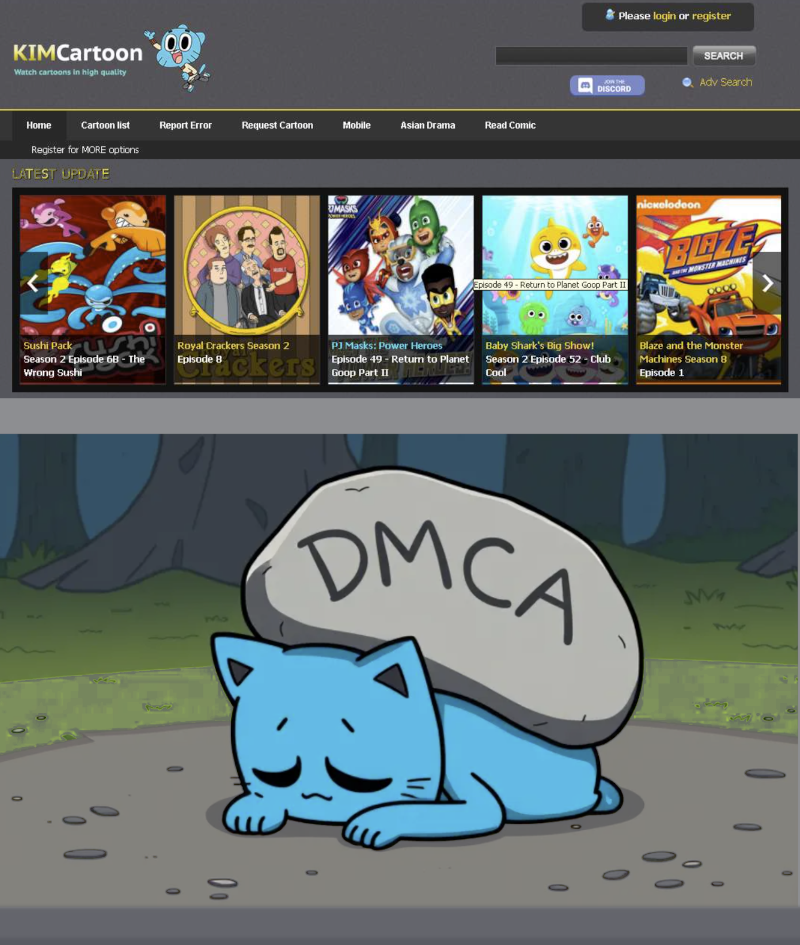
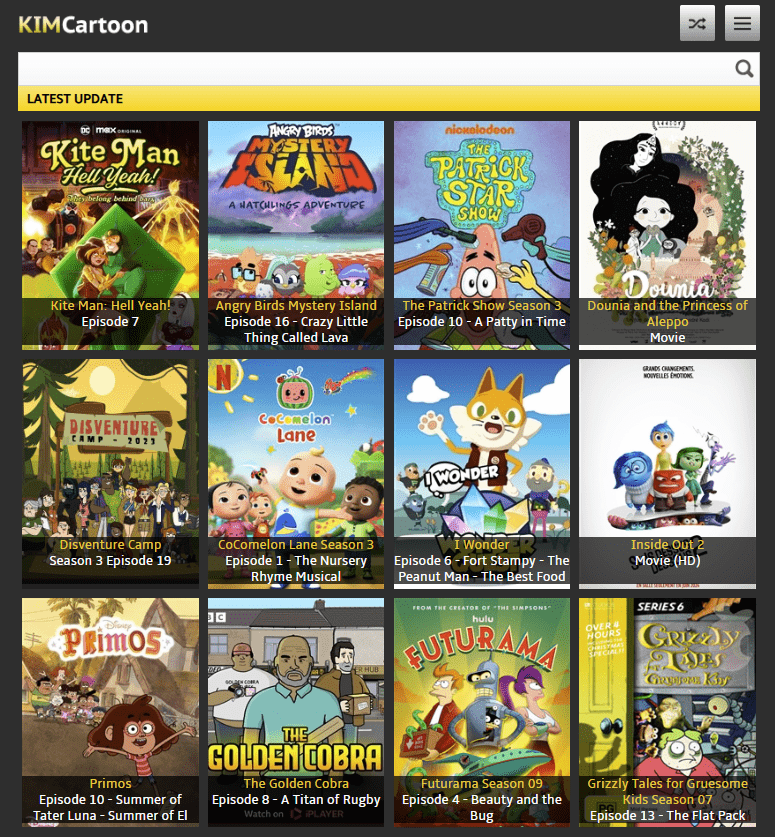
    KimCartoon before it displayed the end credits kimcartoon-li

    Visitors to the site today, at least those not running MalwareBytes which currently blocks access to the domain, won’t see the colorful display above anymore. The site is reportedly gone for good with the finger of blame pointing firmly at U.S. copyright law.

    Dead Due to DMCA

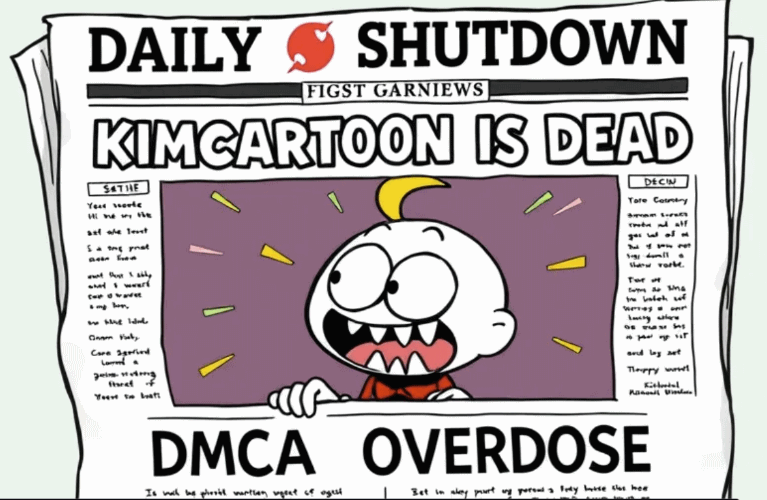
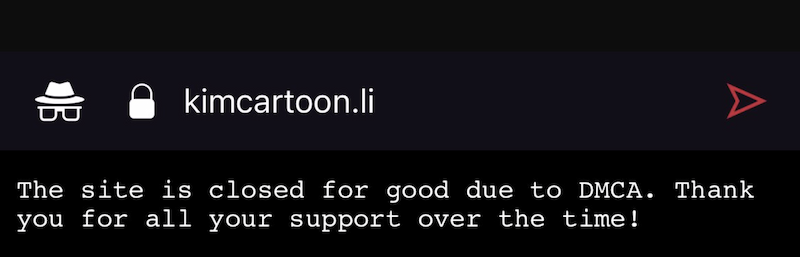
    The screenshot below contains the message that surprised users on Tuesday/Wednesday this week. There has been no other announcement that we know of so the precise nature of the DMCA-related problems is still unclear.

    A reference to the DMCA doesn’t necessarily have to be about takedown notices. In their own right, DMCA notices alone aren’t especially well known for their ability to shut sites down, at least not resilient ones like KimCartoon. The site has stayed online using its .li domain since at least 2021. With other domains, much longer than that.

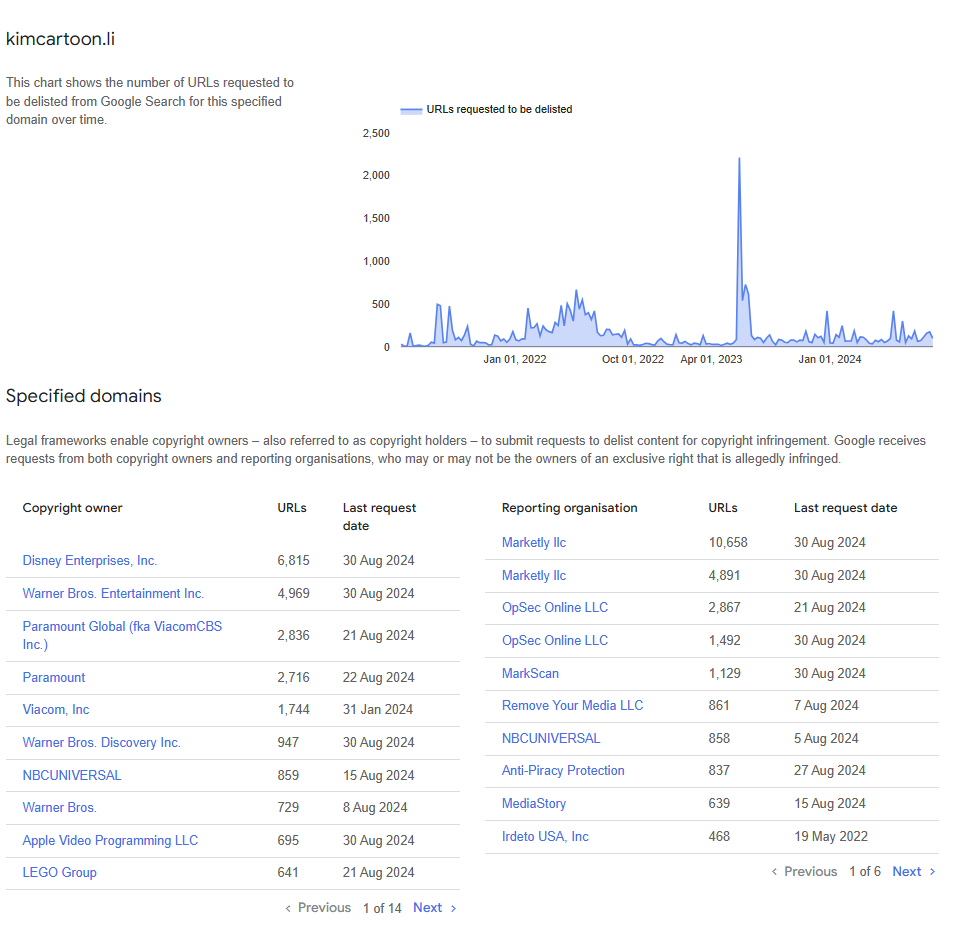
    Indeed, if we look at KimCartoon’s entry in Google’s Copyright Transparency Report, we can see that the site weathered at least one huge takedown storm last year and came out largely unscathed.

    However, if “due to DMCA” is a reference to copyright law in general, KimCartoon has had more than its fair share of copyright infringement troubles.

    Rightsholders Take Action in India and U.S.

    In July 2020, just as the world was being turned upside down by the coronavirus pandemic, Disney Enterprises obtained a dynamic injunction at the High Court in Delhi which compelled local ISPs to block 118 ‘pirate’ domains .

    The main targets were streaming platforms offering movies, general cartoons and Japanese anime, along with their proxy sites. Heading that list were 15 domains with KimCartoon and KissCartoon branding, many of which currently redirect to KimCartoon.li, the domain from which KimCartoon operated until earlier this week.

    Just a handful of months later, in September and October 2020, the domain KimCartoon.to appeared in two separate DMCA subpoenas served on Cloudflare and the Tonic domain registry by the Alliance for Creativity and Entertainment.

    Whether those subpoenas resulted in any useful information is unknown but KimCartoon later switched to the .li domain still in use today with the other domains redirecting.

    So What Killed KimCartoon? The DMCA or Maybe Something Else?

    When a site like KimCartoon still enjoys around 10 million visits per month as it has done for years, shutting it down voluntarily is a pretty big deal.

    With the finger pointing toward the DMCA, the shutdown notice fails to mention that an entire legal process in India, followed by not one but two ACE subpoenas, failed to shut down the site. Yet suddenly, ‘the DMCA’ has made it impossible to continue, even after all these years of weathering the storms and staying online.

    So who shut the site down, and why was that suddenly possible? We don’t know for certain but if we rewind the years for a moment, an interesting picture emerges.

    Diplomatic Moves, Reincarnation

    In 2017, Ted Osius, U.S. Ambassador to Vietnam, held a meeting with Truong Minh Tuan, Vietnam’s Minister of Information and Communications. Vietnam raised concerns about “offensive” content on YouTube and Facebook. Since the content may violate local law, Vietnam felt that ideally, it would be removed or blocked.

    Ambassador Osius’s request for assistance from Vietnam concerned three troublesome pirate sites. The United States believed their operators should be criminally prosecuted in Vietnam for pirating American content.

    Following these discussions, in March 2017 one of the sites mentioned – 123movies – suddenly went offline. Had the discussions really gone that well?

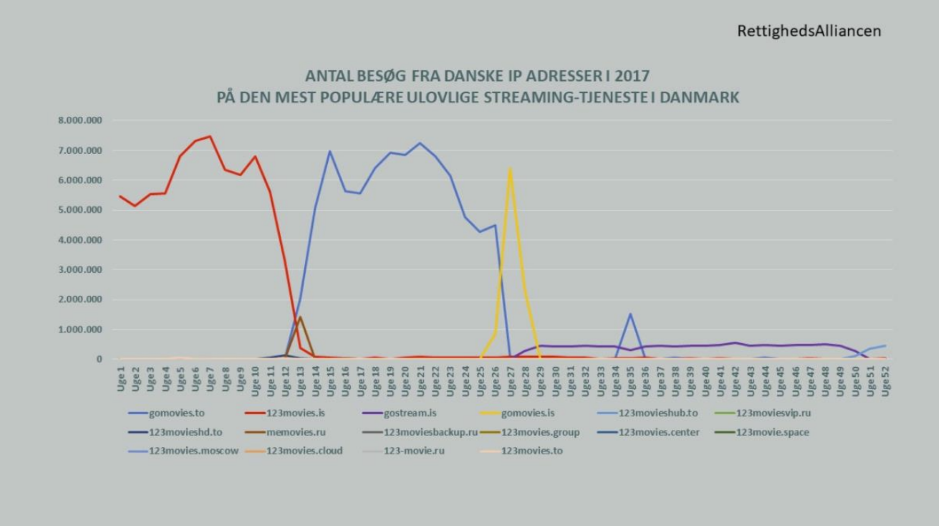
    An incredible chart from a 2017 Danish site-blocking study conducted by Rights Alliance shows that 123movies didn’t really die. An almost perfect mirror image of its carefully controlled demise (red line) can be seen as it rises almost identically once again (blue).

    New name: GoMovies.

    In the background, a Vietnam-based site called ‘Fmovies’ had been steadily accumulating traffic and in time, took the world by storm. That reign ended with Fmovies suddenly shutting down recently due to action by Vietnamese authorities with assistance from the Alliance for Creativity and Entertainment.

    When 123movies went offline in 2017 (or more accurately, morphed into GoMovies), another site mentioned by Ambassador Osius suddenly went offline too. That site was called KissCartoon and, according to reports, it had run into domain difficulties.. In parallel, a site called KissAnime began taking steps to distance itself from KissCartoon, most likely to avoid trouble itself.

    The steps taken included a now-familiar rebranding exercise and the emergence of a new site called KimCartoon which, after many years online and despite enjoying around 10 million visits as recently as last month, suddenly shut down this week.

    Probably Just a Coincidence

    Coincidentally or not, sites with billions of visits per month, all with connections to Vietnam, all of which have undergone rebranding exercises over the years, shut down only last week; aniwave, soap2day, zoroxtv, bflixhd, animesuge, anix, mov2day, 2flix, sflixtv, filmoflix, flixhive, and vidsrc, to name a few.

    In another surprise coincidence, a message identical to that displayed on 123movies/gomovies when it officially shut down in 2018 reappeared announcing this round of shut downs.

    None of the sites said they had shut down due to the DMCA as KimCartoon did this week, but it’s rare for anything in the piracy world to appear in a gift-wrapped package with a neat little bow on it.

    From: TF , for the latest news on copyright battles, piracy and more.

    • To chevron_right

      That’s All Folks: KimCartoon’s 120m Visit Piracy Caper Ends in a DMCA Disaster

      news.movim.eu / TorrentFreak • 6 September 2024 • 5 minutes

    kimcartoon-rip It has been a rough couple of weeks for people who love cartoons but prefer not to pay for them.

    The simultaneous disappearance of Aniwave and the connected Anix last week left a massive hole in the pirate market. The pair serviced at least one, and maybe as many as two, billion visits in the previous 12 months alone.

    While those platforms focused on Japanese anime, KimCartoon offered a much wider variety of cartoons. From decades-old classics and sought-after rarities, to modern cartoons and other fan favorites, KimCartoon reportedly came up with the goods. At least it did, before it abruptly shut down this week.

    KimCartoon before it displayed the end credits kimcartoon-li

    Visitors to the site today, at least those not running MalwareBytes which currently blocks access to the domain, won’t see the colorful display above anymore. The site is reportedly gone for good with the finger of blame pointing firmly at U.S. copyright law.

    Dead Due to DMCA

    The screenshot below contains the message that surprised users on Tuesday/Wednesday this week. There has been no other announcement that we know of so the precise nature of the DMCA-related problems is still unclear.

    A reference to the DMCA doesn’t necessarily have to be about takedown notices. In their own right, DMCA notices alone aren’t especially well known for their ability to shut sites down, at least not resilient ones like KimCartoon. The site has stayed online using its .li domain since at least 2021. With other domains, much longer than that.

    Indeed, if we look at KimCartoon’s entry in Google’s Copyright Transparency Report, we can see that the site weathered at least one huge takedown storm last year and came out largely unscathed.

    However, if “due to DMCA” is a reference to copyright law in general, KimCartoon has had more than its fair share of copyright infringement troubles.

    Rightsholders Take Action in India and U.S.

    In July 2020, just as the world was being turned upside down by the coronavirus pandemic, Disney Enterprises obtained a dynamic injunction at the High Court in Delhi which compelled local ISPs to block 118 ‘pirate’ domains .

    The main targets were streaming platforms offering movies, general cartoons and Japanese anime, along with their proxy sites. Heading that list were 15 domains with KimCartoon and KissCartoon branding, many of which currently redirect to KimCartoon.li, the domain from which KimCartoon operated until earlier this week.

    Just a handful of months later, in September and October 2020, the domain KimCartoon.to appeared in two separate DMCA subpoenas served on Cloudflare and the Tonic domain registry by the Alliance for Creativity and Entertainment.

    Whether those subpoenas resulted in any useful information is unknown but KimCartoon later switched to the .li domain still in use today with the other domains redirecting.

    So What Killed KimCartoon? The DMCA or Maybe Something Else?

    When a site like KimCartoon still enjoys around 10 million visits per month as it has done for years, shutting it down voluntarily is a pretty big deal.

    With the finger pointing toward the DMCA, the shutdown notice fails to mention that an entire legal process in India, followed by not one but two ACE subpoenas, failed to shut down the site. Yet suddenly, ‘the DMCA’ has made it impossible to continue, even after all these years of weathering the storms and staying online.

    So who shut the site down, and why was that suddenly possible? We don’t know for certain but if we rewind the years for a moment, an interesting picture emerges.

    Diplomatic Moves, Reincarnation

    In 2017, Ted Osius, U.S. Ambassador to Vietnam, held a meeting with Truong Minh Tuan, Vietnam’s Minister of Information and Communications. Vietnam raised concerns about “offensive” content on YouTube and Facebook. Since the content may violate local law, Vietnam felt that ideally, it would be removed or blocked.

    Ambassador Osius’s request for assistance from Vietnam concerned three troublesome pirate sites. The United States believed their operators should be criminally prosecuted in Vietnam for pirating American content.

    Following these discussions, in March 2017 one of the sites mentioned – 123movies – suddenly went offline. Had the discussions really gone that well?

    An incredible chart from a 2017 Danish site-blocking study conducted by Rights Alliance shows that 123movies didn’t really die. An almost perfect mirror image of its carefully controlled demise (red line) can be seen as it rises almost identically once again (blue).

    New name: GoMovies.

    In the background, a Vietnam-based site called ‘Fmovies’ had been steadily accumulating traffic and in time, took the world by storm. That reign ended with Fmovies suddenly shutting down recently due to action by Vietnamese authorities with assistance from the Alliance for Creativity and Entertainment.

    When 123movies went offline in 2017 (or more accurately, morphed into GoMovies), another site mentioned by Ambassador Osius suddenly went offline too. That site was called KissCartoon and, according to reports, it had run into domain difficulties.. In parallel, a site called KissAnime began taking steps to distance itself from KissCartoon, most likely to avoid trouble itself.

    The steps taken included a now-familiar rebranding exercise and the emergence of a new site called KimCartoon which, after many years online and despite enjoying around 10 million visits as recently as last month, suddenly shut down this week.

    Probably Just a Coincidence

    Coincidentally or not, sites with billions of visits per month, all with connections to Vietnam, all of which have undergone rebranding exercises over the years, shut down only last week; aniwave, soap2day, zoroxtv, bflixhd, animesuge, anix, mov2day, 2flix, sflixtv, filmoflix, flixhive, and vidsrc, to name a few.

    In another surprise coincidence, a message identical to that displayed on 123movies/gomovies when it officially shut down in 2018 reappeared announcing this round of shut downs.

    None of the sites said they had shut down due to the DMCA as KimCartoon did this week, but it’s rare for anything in the piracy world to appear in a gift-wrapped package with a neat little bow on it.

    From: TF , for the latest news on copyright battles, piracy and more.

    • To chevron_right

      That’s All Folks: KimCartoon’s 120m Visit Piracy Caper Ends in a DMCA Disaster

      news.movim.eu / TorrentFreak • 6 September 2024 • 5 minutes

    kimcartoon-rip It has been a rough couple of weeks for people who love cartoons but prefer not to pay for them.

    The simultaneous disappearance of Aniwave and the connected Anix last week left a massive hole in the pirate market. The pair serviced at least one, and maybe as many as two, billion visits in the previous 12 months alone.

    While those platforms focused on Japanese anime, KimCartoon offered a much wider variety of cartoons. From decades-old classics and sought-after rarities, to modern cartoons and other fan favorites, KimCartoon reportedly came up with the goods. At least it did, before it abruptly shut down this week.

    KimCartoon before it displayed the end credits kimcartoon-li

    Visitors to the site today, at least those not running MalwareBytes which currently blocks access to the domain, won’t see the colorful display above anymore. The site is reportedly gone for good with the finger of blame pointing firmly at U.S. copyright law.

    Dead Due to DMCA

    The screenshot below contains the message that surprised users on Tuesday/Wednesday this week. There has been no other announcement that we know of so the precise nature of the DMCA-related problems is still unclear.

    A reference to the DMCA doesn’t necessarily have to be about takedown notices. In their own right, DMCA notices alone aren’t especially well known for their ability to shut sites down, at least not resilient ones like KimCartoon. The site has stayed online using its .li domain since at least 2021. With other domains, much longer than that.

    Indeed, if we look at KimCartoon’s entry in Google’s Copyright Transparency Report, we can see that the site weathered at least one huge takedown storm last year and came out largely unscathed.

    However, if “due to DMCA” is a reference to copyright law in general, KimCartoon has had more than its fair share of copyright infringement troubles.

    Rightsholders Take Action in India and U.S.

    In July 2020, just as the world was being turned upside down by the coronavirus pandemic, Disney Enterprises obtained a dynamic injunction at the High Court in Delhi which compelled local ISPs to block 118 ‘pirate’ domains .

    The main targets were streaming platforms offering movies, general cartoons and Japanese anime, along with their proxy sites. Heading that list were 15 domains with KimCartoon and KissCartoon branding, many of which currently redirect to KimCartoon.li, the domain from which KimCartoon operated until earlier this week.

    Just a handful of months later, in September and October 2020, the domain KimCartoon.to appeared in two separate DMCA subpoenas served on Cloudflare and the Tonic domain registry by the Alliance for Creativity and Entertainment.

    Whether those subpoenas resulted in any useful information is unknown but KimCartoon later switched to the .li domain still in use today with the other domains redirecting.

    So What Killed KimCartoon? The DMCA or Maybe Something Else?

    When a site like KimCartoon still enjoys around 10 million visits per month as it has done for years, shutting it down voluntarily is a pretty big deal.

    With the finger pointing toward the DMCA, the shutdown notice fails to mention that an entire legal process in India, followed by not one but two ACE subpoenas, failed to shut down the site. Yet suddenly, ‘the DMCA’ has made it impossible to continue, even after all these years of weathering the storms and staying online.

    So who shut the site down, and why was that suddenly possible? We don’t know for certain but if we rewind the years for a moment, an interesting picture emerges.

    Diplomatic Moves, Reincarnation

    In 2017, Ted Osius, U.S. Ambassador to Vietnam, held a meeting with Truong Minh Tuan, Vietnam’s Minister of Information and Communications. Vietnam raised concerns about “offensive” content on YouTube and Facebook. Since the content may violate local law, Vietnam felt that ideally, it would be removed or blocked.

    Ambassador Osius’s request for assistance from Vietnam concerned three troublesome pirate sites. The United States believed their operators should be criminally prosecuted in Vietnam for pirating American content.

    Following these discussions, in March 2017 one of the sites mentioned – 123movies – suddenly went offline. Had the discussions really gone that well?

    An incredible chart from a 2017 Danish site-blocking study conducted by Rights Alliance shows that 123movies didn’t really die. An almost perfect mirror image of its carefully controlled demise (red line) can be seen as it rises almost identically once again (blue).

    New name: GoMovies.

    In the background, a Vietnam-based site called ‘Fmovies’ had been steadily accumulating traffic and in time, took the world by storm. That reign ended with Fmovies suddenly shutting down recently due to action by Vietnamese authorities with assistance from the Alliance for Creativity and Entertainment.

    When 123movies went offline in 2017 (or more accurately, morphed into GoMovies), another site mentioned by Ambassador Osius suddenly went offline too. That site was called KissCartoon and, according to reports, it had run into domain difficulties.. In parallel, a site called KissAnime began taking steps to distance itself from KissCartoon, most likely to avoid trouble itself.

    The steps taken included a now-familiar rebranding exercise and the emergence of a new site called KimCartoon which, after many years online and despite enjoying around 10 million visits as recently as last month, suddenly shut down this week.

    Probably Just a Coincidence

    Coincidentally or not, sites with billions of visits per month, all with connections to Vietnam, all of which have undergone rebranding exercises over the years, shut down only last week; aniwave, soap2day, zoroxtv, bflixhd, animesuge, anix, mov2day, 2flix, sflixtv, filmoflix, flixhive, and vidsrc, to name a few.

    In another surprise coincidence, a message identical to that displayed on 123movies/gomovies when it officially shut down in 2018 reappeared announcing this round of shut downs.

    None of the sites said they had shut down due to the DMCA as KimCartoon did this week, but it’s rare for anything in the piracy world to appear in a gift-wrapped package with a neat little bow on it.

    From: TF , for the latest news on copyright battles, piracy and more.