• To chevron_right

      French Pirate Site Blocking Order Targets Expired and Seized Z-Library Domains

      news.movim.eu / TorrentFreak • 13 September 2024 • 5 minutes

    zlib A few weeks before the U.S. Department of Justice announced the criminal prosecution of two alleged Z-Library operators in 2022, the French Publishers Union (SNE) had already targeted the site indirectly.

    In August that year, SNE obtained an order at a Paris Court, requiring French ISPs to block more than 200 domain names .

    By November 2022, the order was largely moot. U.S. authorities didn’t just call for the arrest of two people connected to the site in Argentina, the feds also seized the majority of the shadow library’s domain names.

    In theory, this chain of events shouldn’t be a problem for the publishers but it ended up working against them as Z-Library didn’t fold. The site registered dozens of new domain names and continued operations after a short hiatus.

    As a result, the earlier blocking victory turned out to be short-lived. The new domain names rendered the hard-fought Z-Library blockades useless and French readers continued to flock to the site.

    Legally, there was no easy solution to add new domains, so SNE eventually had to go back to court, which it did this spring. Armed with a list of nearly a hundred new domain names, supported by the earlier win, there was little doubt that the Paris Court would rule in favor of an expansion.

    Court Grants New Z-Library Blockades

    Yesterday, Marc Rees at L’informé reported that the Tribunal Judiciaire de Paris signed a new blocking order on SNE’s request. The action targets 98 domain names in total, which were found to be predominantly copyright infringing.

    As is often the case in these blocking procedures, the rightsholders supplied the necessary evidence. In this case, they presented analyses from anti-piracy outfit LeakID, which found that in a sample of 500 works listed on Z-Library, 83% were from SNE publishers.

    “SNE established in a sufficiently convincing manner that the disputed site, which is aimed at a French-speaking audience, allows Internet users […] to download protected works from links without having the authorization of the rights holders, which constitutes copyright infringement,” the court concluded.

    Bittersweet

    The publishers will be pleased that the court granted their extended Z-Library blocking request. However, this is yet another bittersweet victory; perhaps more bitter than sweet.

    Firstly, Z-Library can circumvent the blocking measures without much effort by registering new domain names. The court recognized the ‘dynamic’ nature of the problem but the order doesn’t allow the publishers to add new domains on their own accord.

    If SNE wants to block additional domain names in the future, it must go back to court. This update process can take weeks, if not months, after which the same cycle can start all over again.

    Blocking Seized Domains

    The second ‘bittersweet’ element is related to this blocking lag. SNE submitted its recent blocking request on May 21st this year, just a few days before the FBI carried out its latest round of Z-Library domain seizures .

    As a result, the majority of the Z-Library domain names listed in the latest court order no longer pose a threat. Put differently, French ISPs have been ordered to block dozens of domain names that have a prominent seizure banner, and are no longer controlled by Z-Library.

    These seized domains include go-to-zlibrary.se, singlelogin.se, booksc.eu, zlibrary-fr.se, zlibrary-redirect.se, z-library.se, go-to-zlibrary.se and many others (full list here ).
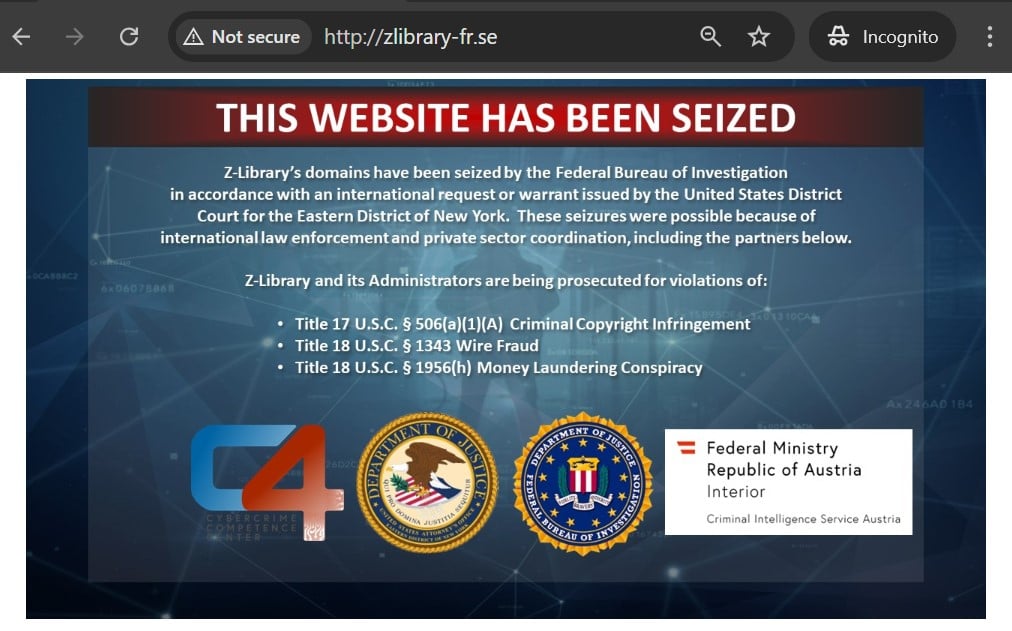
    One of the ‘blocked’ Z-Library domains

    seized and blocked

    Other ‘blocked’ domain names have expired in recent months and become available for registration again. That applies to frenchbooks.se, greek-books.se, korean-books.se, and many more. A few other domains appear to be parked.
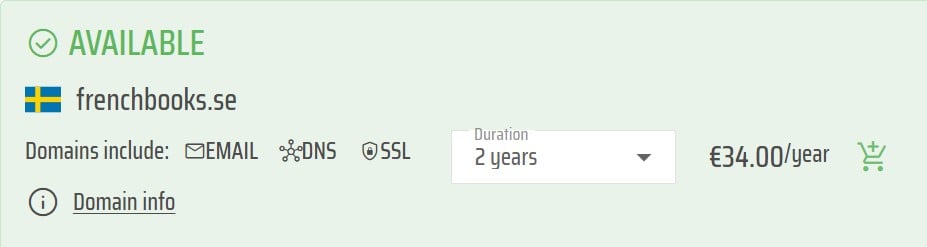
    Expired and available

    available

    This means that, of the 98 domain names targeted in the latest court order, only nine are still active today. The others haven’t been available for weeks and Z-Library has put up several replacement domains, which are not covered by the blocking order.

    It’s not difficult to see how this whole process must be a massive source of frustration for the publishers. If they go back to court, this will likely serve as an example of why more ‘flexible’ blocking measures are needed.

    At the same time, it begs the question of why the Paris court grants a new blocking order for domain names that no longer link to any infringing material, as well as domains that have expired.


    The court order, as published by L’informé, lists the following 98 domain names that ISPs are required to block:

    – go-to-zlibrary.se (seized)
    – singlelogin.se (seized)
    – booksc.eu (seized)
    – cn1lib.is (not loading)
    – zlibrary-africa.se (parked)
    – zlibrary-es.se (seized)
    – afrikaans-books.se (expired)
    – arabic-books.se (expired)
    – azerbaijani-books.sk
    – bengali-books.se (expired)
    – bulgarian-books.se (expired)
    – catalan-books.se (expired)
    – croatian-books.se (expired)
    – frenchbooks.se (expired)
    – german-books.se (expired)
    – go-to-zlibrary.se (seized)
    – greek-books.se (expired)
    – hebrew-books.se (expired)
    – hindi-books.se (expired)
    – hungarian-books.se (expired)
    – indonesian-books.se (expired)
    – italian-books.se (expired)
    – japanese-books.se (expired)
    – kazakh-books.sk
    – korean-books.se (expired)
    – latin-books.sk
    – latvian-books.se (expired)
    – portuguese-books.se (expired)
    – russian-books.se (expired)
    – serbian-books.se (expired)
    – singlelogin.re
    – slovak-books.sk
    – spanish-books.se (expired)
    – swedish-books.se (expired)
    – turkish-books.se (expired)
    – ukrainian-books.se (expired)
    – urdu-books.sk
    – z-library.se (seized)
    – zlibrary-ae.se (seized)
    – zlibrary-ar.se (seized)
    – zlibrary-sg.se (seized)
    – zlibrary-sk.se (seized)
    – zlibrary-sng.se (seized)
    – zlibrary-th.se (seized)
    – zlibrary-tr.se (seized)
    – zlibrary-tw.se (seized)
    – zlibrary-ua.se (seized)
    – zlibrary-vn.se (seized)
    – zlibrary-za.se (seized)
    – lithuanian-books.se (expired
    – malayalam-books.sk
    – pashto-books.sk
    – polish-books.se (expired)
    – zlibrary-asia.se
    – zlibrary-at.se (seized)
    – zlibrary-au.se (seized)
    – zlibrary-be.se (seized)
    – zlibrary-bg.se (seized)
    – zlibrary-bl.se (seized)
    – zlibrary-br.se (seized)
    – zlibrary-by.se (seized)
    – zlibrary-ca.se (seized)
    – zlibrary-ch.se (seized)
    – zlibrary-china.se (parked)
    – zlibrary-cl.se (seized)
    – zlibrary-cz.se (seized)
    – zlibrary-de.se (seized)
    – zlibrary-east.se (parked)
    – zlibrary-eg.se (seized)
    – zlibrary-es.se (seized)
    – zlibrary-et.se (seized)
    – zlibrary-fr.se (seized)
    – zlibrary-fr.se (seized)
    – zlibrary-global.se (seized)
    – zlibrary-gr.se (seized)
    – zlibrary-hk.se (seized)
    – zlibrary-hu.se (seized)
    – zlibrary-id.se (seized)
    – zlibrary-in.se (seized)
    – zlibrary-ir.se(seized)
    – zlibrary-it.se (seized)
    – zlibrary-jp.se (seized)
    – zlibrary-kp.se (seized)
    – zlibrary-kr.se (seized)
    – zlibrary-lk.se (seized)
    – zlibrary-ma.se (seized)
    – zlibrary-my.se (seized)
    – zlibrary-ng.se (seized)
    – zlibrary-nl.se (seized)
    – zlibrary-nz.se (seized)
    – zlibrary-pb.se (seized)
    – zlibrary-ph.se (seized)
    – zlibrary-pk.se (seized)
    – zlibrary-pl.se (seized)
    – zlibrary-pt.se (seized)
    – zlibrary-redirect.se (seized)
    – zlibrary-ru.se (seized)
    – zlibrary-sa.se (seized)

    From: TF , for the latest news on copyright battles, piracy and more.

    • To chevron_right

      French Pirate Site Blocking Order Targets Expired and Seized Z-Library Domains

      news.movim.eu / TorrentFreak • 13 September 2024 • 5 minutes

    zlib A few weeks before the U.S. Department of Justice announced the criminal prosecution of two alleged Z-Library operators in 2022, the French Publishers Union (SNE) had already targeted the site indirectly.

    In August that year, SNE obtained an order at a Paris Court, requiring French ISPs to block more than 200 domain names .

    By November 2022, the order was largely moot. U.S. authorities didn’t just call for the arrest of two people connected to the site in Argentina, the feds also seized the majority of the shadow library’s domain names.

    In theory, this chain of events shouldn’t be a problem for the publishers but it ended up working against them as Z-Library didn’t fold. The site registered dozens of new domain names and continued operations after a short hiatus.

    As a result, the earlier blocking victory turned out to be short-lived. The new domain names rendered the hard-fought Z-Library blockades useless and French readers continued to flock to the site.

    Legally, there was no easy solution to add new domains, so SNE eventually had to go back to court, which it did this spring. Armed with a list of nearly a hundred new domain names, supported by the earlier win, there was little doubt that the Paris Court would rule in favor of an expansion.

    Court Grants New Z-Library Blockades

    Yesterday, Marc Rees at L’informé reported that the Tribunal Judiciaire de Paris signed a new blocking order on SNE’s request. The action targets 98 domain names in total, which were found to be predominantly copyright infringing.

    As is often the case in these blocking procedures, the rightsholders supplied the necessary evidence. In this case, they presented analyses from anti-piracy outfit LeakID, which found that in a sample of 500 works listed on Z-Library, 83% were from SNE publishers.

    “SNE established in a sufficiently convincing manner that the disputed site, which is aimed at a French-speaking audience, allows Internet users […] to download protected works from links without having the authorization of the rights holders, which constitutes copyright infringement,” the court concluded.

    Bittersweet

    The publishers will be pleased that the court granted their extended Z-Library blocking request. However, this is yet another bittersweet victory; perhaps more bitter than sweet.

    Firstly, Z-Library can circumvent the blocking measures without much effort by registering new domain names. The court recognized the ‘dynamic’ nature of the problem but the order doesn’t allow the publishers to add new domains on their own accord.

    If SNE wants to block additional domain names in the future, it must go back to court. This update process can take weeks, if not months, after which the same cycle can start all over again.

    Blocking Seized Domains

    The second ‘bittersweet’ element is related to this blocking lag. SNE submitted its recent blocking request on May 21st this year, just a few days before the FBI carried out its latest round of Z-Library domain seizures .

    As a result, the majority of the Z-Library domain names listed in the latest court order no longer pose a threat. Put differently, French ISPs have been ordered to block dozens of domain names that have a prominent seizure banner, and are no longer controlled by Z-Library.

    These seized domains include go-to-zlibrary.se, singlelogin.se, booksc.eu, zlibrary-fr.se, zlibrary-redirect.se, z-library.se, go-to-zlibrary.se and many others (full list here ).

    One of the ‘blocked’ Z-Library domains

    seized and blocked

    Other ‘blocked’ domain names have expired in recent months and become available for registration again. That applies to frenchbooks.se, greek-books.se, korean-books.se, and many more. A few other domains appear to be parked.

    Expired and available

    available

    This means that, of the 98 domain names targeted in the latest court order, only nine are still active today. The others haven’t been available for weeks and Z-Library has put up several replacement domains, which are not covered by the blocking order.

    It’s not difficult to see how this whole process must be a massive source of frustration for the publishers. If they go back to court, this will likely serve as an example of why more ‘flexible’ blocking measures are needed.

    At the same time, it begs the question of why the Paris court grants a new blocking order for domain names that no longer link to any infringing material, as well as domains that have expired.


    The court order, as published by L’informé, lists the following 98 domain names that ISPs are required to block:

    – go-to-zlibrary.se (seized)
    – singlelogin.se (seized)
    – booksc.eu (seized)
    – cn1lib.is (not loading)
    – zlibrary-africa.se (parked)
    – zlibrary-es.se (seized)
    – afrikaans-books.se (expired)
    – arabic-books.se (expired)
    – azerbaijani-books.sk
    – bengali-books.se (expired)
    – bulgarian-books.se (expired)
    – catalan-books.se (expired)
    – croatian-books.se (expired)
    – frenchbooks.se (expired)
    – german-books.se (expired)
    – go-to-zlibrary.se (seized)
    – greek-books.se (expired)
    – hebrew-books.se (expired)
    – hindi-books.se (expired)
    – hungarian-books.se (expired)
    – indonesian-books.se (expired)
    – italian-books.se (expired)
    – japanese-books.se (expired)
    – kazakh-books.sk
    – korean-books.se (expired)
    – latin-books.sk
    – latvian-books.se (expired)
    – portuguese-books.se (expired)
    – russian-books.se (expired)
    – serbian-books.se (expired)
    – singlelogin.re
    – slovak-books.sk
    – spanish-books.se (expired)
    – swedish-books.se (expired)
    – turkish-books.se (expired)
    – ukrainian-books.se (expired)
    – urdu-books.sk
    – z-library.se (seized)
    – zlibrary-ae.se (seized)
    – zlibrary-ar.se (seized)
    – zlibrary-sg.se (seized)
    – zlibrary-sk.se (seized)
    – zlibrary-sng.se (seized)
    – zlibrary-th.se (seized)
    – zlibrary-tr.se (seized)
    – zlibrary-tw.se (seized)
    – zlibrary-ua.se (seized)
    – zlibrary-vn.se (seized)
    – zlibrary-za.se (seized)
    – lithuanian-books.se (expired
    – malayalam-books.sk
    – pashto-books.sk
    – polish-books.se (expired)
    – zlibrary-asia.se
    – zlibrary-at.se (seized)
    – zlibrary-au.se (seized)
    – zlibrary-be.se (seized)
    – zlibrary-bg.se (seized)
    – zlibrary-bl.se (seized)
    – zlibrary-br.se (seized)
    – zlibrary-by.se (seized)
    – zlibrary-ca.se (seized)
    – zlibrary-ch.se (seized)
    – zlibrary-china.se (parked)
    – zlibrary-cl.se (seized)
    – zlibrary-cz.se (seized)
    – zlibrary-de.se (seized)
    – zlibrary-east.se (parked)
    – zlibrary-eg.se (seized)
    – zlibrary-es.se (seized)
    – zlibrary-et.se (seized)
    – zlibrary-fr.se (seized)
    – zlibrary-fr.se (seized)
    – zlibrary-global.se (seized)
    – zlibrary-gr.se (seized)
    – zlibrary-hk.se (seized)
    – zlibrary-hu.se (seized)
    – zlibrary-id.se (seized)
    – zlibrary-in.se (seized)
    – zlibrary-ir.se(seized)
    – zlibrary-it.se (seized)
    – zlibrary-jp.se (seized)
    – zlibrary-kp.se (seized)
    – zlibrary-kr.se (seized)
    – zlibrary-lk.se (seized)
    – zlibrary-ma.se (seized)
    – zlibrary-my.se (seized)
    – zlibrary-ng.se (seized)
    – zlibrary-nl.se (seized)
    – zlibrary-nz.se (seized)
    – zlibrary-pb.se (seized)
    – zlibrary-ph.se (seized)
    – zlibrary-pk.se (seized)
    – zlibrary-pl.se (seized)
    – zlibrary-pt.se (seized)
    – zlibrary-redirect.se (seized)
    – zlibrary-ru.se (seized)
    – zlibrary-sa.se (seized)

    From: TF , for the latest news on copyright battles, piracy and more.

    • To chevron_right

      French Pirate Site Blocking Order Targets Expired and Seized Z-Library Domains

      news.movim.eu / TorrentFreak • 13 September 2024 • 5 minutes

    zlib A few weeks before the U.S. Department of Justice announced the criminal prosecution of two alleged Z-Library operators in 2022, the French Publishers Union (SNE) had already targeted the site indirectly.

    In August that year, SNE obtained an order at a Paris Court, requiring French ISPs to block more than 200 domain names .

    By November 2022, the order was largely moot. U.S. authorities didn’t just call for the arrest of two people connected to the site in Argentina, the feds also seized the majority of the shadow library’s domain names.

    In theory, this chain of events shouldn’t be a problem for the publishers but it ended up working against them as Z-Library didn’t fold. The site registered dozens of new domain names and continued operations after a short hiatus.

    As a result, the earlier blocking victory turned out to be short-lived. The new domain names rendered the hard-fought Z-Library blockades useless and French readers continued to flock to the site.

    Legally, there was no easy solution to add new domains, so SNE eventually had to go back to court, which it did this spring. Armed with a list of nearly a hundred new domain names, supported by the earlier win, there was little doubt that the Paris Court would rule in favor of an expansion.

    Court Grants New Z-Library Blockades

    Yesterday, Marc Rees at L’informé reported that the Tribunal Judiciaire de Paris signed a new blocking order on SNE’s request. The action targets 98 domain names in total, which were found to be predominantly copyright infringing.

    As is often the case in these blocking procedures, the rightsholders supplied the necessary evidence. In this case, they presented analyses from anti-piracy outfit LeakID, which found that in a sample of 500 works listed on Z-Library, 83% were from SNE publishers.

    “SNE established in a sufficiently convincing manner that the disputed site, which is aimed at a French-speaking audience, allows Internet users […] to download protected works from links without having the authorization of the rights holders, which constitutes copyright infringement,” the court concluded.

    Bittersweet

    The publishers will be pleased that the court granted their extended Z-Library blocking request. However, this is yet another bittersweet victory; perhaps more bitter than sweet.

    Firstly, Z-Library can circumvent the blocking measures without much effort by registering new domain names. The court recognized the ‘dynamic’ nature of the problem but the order doesn’t allow the publishers to add new domains on their own accord.

    If SNE wants to block additional domain names in the future, it must go back to court. This update process can take weeks, if not months, after which the same cycle can start all over again.

    Blocking Seized Domains

    The second ‘bittersweet’ element is related to this blocking lag. SNE submitted its recent blocking request on May 21st this year, just a few days before the FBI carried out its latest round of Z-Library domain seizures .

    As a result, the majority of the Z-Library domain names listed in the latest court order no longer pose a threat. Put differently, French ISPs have been ordered to block dozens of domain names that have a prominent seizure banner, and are no longer controlled by Z-Library.

    These seized domains include go-to-zlibrary.se, singlelogin.se, booksc.eu, zlibrary-fr.se, zlibrary-redirect.se, z-library.se, go-to-zlibrary.se and many others (full list here ).

    One of the ‘blocked’ Z-Library domains

    seized and blocked

    Other ‘blocked’ domain names have expired in recent months and become available for registration again. That applies to frenchbooks.se, greek-books.se, korean-books.se, and many more. A few other domains appear to be parked.

    Expired and available

    available

    This means that, of the 98 domain names targeted in the latest court order, only nine are still active today. The others haven’t been available for weeks and Z-Library has put up several replacement domains, which are not covered by the blocking order.

    It’s not difficult to see how this whole process must be a massive source of frustration for the publishers. If they go back to court, this will likely serve as an example of why more ‘flexible’ blocking measures are needed.

    At the same time, it begs the question of why the Paris court grants a new blocking order for domain names that no longer link to any infringing material, as well as domains that have expired.


    The court order, as published by L’informé, lists the following 98 domain names that ISPs are required to block:

    – go-to-zlibrary.se (seized)
    – singlelogin.se (seized)
    – booksc.eu (seized)
    – cn1lib.is (not loading)
    – zlibrary-africa.se (parked)
    – zlibrary-es.se (seized)
    – afrikaans-books.se (expired)
    – arabic-books.se (expired)
    – azerbaijani-books.sk
    – bengali-books.se (expired)
    – bulgarian-books.se (expired)
    – catalan-books.se (expired)
    – croatian-books.se (expired)
    – frenchbooks.se (expired)
    – german-books.se (expired)
    – go-to-zlibrary.se (seized)
    – greek-books.se (expired)
    – hebrew-books.se (expired)
    – hindi-books.se (expired)
    – hungarian-books.se (expired)
    – indonesian-books.se (expired)
    – italian-books.se (expired)
    – japanese-books.se (expired)
    – kazakh-books.sk
    – korean-books.se (expired)
    – latin-books.sk
    – latvian-books.se (expired)
    – portuguese-books.se (expired)
    – russian-books.se (expired)
    – serbian-books.se (expired)
    – singlelogin.re
    – slovak-books.sk
    – spanish-books.se (expired)
    – swedish-books.se (expired)
    – turkish-books.se (expired)
    – ukrainian-books.se (expired)
    – urdu-books.sk
    – z-library.se (seized)
    – zlibrary-ae.se (seized)
    – zlibrary-ar.se (seized)
    – zlibrary-sg.se (seized)
    – zlibrary-sk.se (seized)
    – zlibrary-sng.se (seized)
    – zlibrary-th.se (seized)
    – zlibrary-tr.se (seized)
    – zlibrary-tw.se (seized)
    – zlibrary-ua.se (seized)
    – zlibrary-vn.se (seized)
    – zlibrary-za.se (seized)
    – lithuanian-books.se (expired
    – malayalam-books.sk
    – pashto-books.sk
    – polish-books.se (expired)
    – zlibrary-asia.se
    – zlibrary-at.se (seized)
    – zlibrary-au.se (seized)
    – zlibrary-be.se (seized)
    – zlibrary-bg.se (seized)
    – zlibrary-bl.se (seized)
    – zlibrary-br.se (seized)
    – zlibrary-by.se (seized)
    – zlibrary-ca.se (seized)
    – zlibrary-ch.se (seized)
    – zlibrary-china.se (parked)
    – zlibrary-cl.se (seized)
    – zlibrary-cz.se (seized)
    – zlibrary-de.se (seized)
    – zlibrary-east.se (parked)
    – zlibrary-eg.se (seized)
    – zlibrary-es.se (seized)
    – zlibrary-et.se (seized)
    – zlibrary-fr.se (seized)
    – zlibrary-fr.se (seized)
    – zlibrary-global.se (seized)
    – zlibrary-gr.se (seized)
    – zlibrary-hk.se (seized)
    – zlibrary-hu.se (seized)
    – zlibrary-id.se (seized)
    – zlibrary-in.se (seized)
    – zlibrary-ir.se(seized)
    – zlibrary-it.se (seized)
    – zlibrary-jp.se (seized)
    – zlibrary-kp.se (seized)
    – zlibrary-kr.se (seized)
    – zlibrary-lk.se (seized)
    – zlibrary-ma.se (seized)
    – zlibrary-my.se (seized)
    – zlibrary-ng.se (seized)
    – zlibrary-nl.se (seized)
    – zlibrary-nz.se (seized)
    – zlibrary-pb.se (seized)
    – zlibrary-ph.se (seized)
    – zlibrary-pk.se (seized)
    – zlibrary-pl.se (seized)
    – zlibrary-pt.se (seized)
    – zlibrary-redirect.se (seized)
    – zlibrary-ru.se (seized)
    – zlibrary-sa.se (seized)

    From: TF , for the latest news on copyright battles, piracy and more.

    • To chevron_right

      ‘Parasitic’ IPTV Piracy is Killing Football, “It’s Them or Us” Says Serie A CEO

      news.movim.eu / TorrentFreak • 12 September 2024 • 4 minutes

    piracy-kills-football Supported by almost constant life-or-death messaging, one has to wonder whether Serie A’s seemingly endless financial problems really are insurmountable.

    Yet for reasons that aren’t easily understood, let alone explained, every week matches go ahead as planned. With decaying stadiums at some clubs and billions of euros in persistent overall debt, companies in other industries would’ve stopped spending beyond their means long ago, or at least succumbed to financial pressure while refusing to do so.

    Serie A clubs have done neither, nor has the position changed on how to get finances back on track. In a recent interview with Serie A CEO Luigi De Siervo published by Il Mattino (paywall), most of the league’s problems have a habit of circling back to the usual suspect; rampant IPTV piracy.

    Cops and Robbers

    Conflicting statements can have a tendency to unnerve creditors and if the launch of the Piracy Shield system earlier this year is any example, here’s another big one. After months of heaping praise on what was billed as the savior of Italian football, today the goal posts of opinion appear to have shifted.

    “It’s like in ‘Cops and Robbers,’ we are always chasing,” said De Siervo per Il Mattino’s report. “As soon as we catch them, they move to another server.”

    What that means in practical terms is unclear but after less than eight months of constantly tampering with Italy’s DNS servers, current data reveals that 5,018 IP addresses and 16,523 domain names have already been blocked with no obviously positive results.

    The true scale of blocking in Italy is significantly higher. When the system began breaking down and agreed limits were exceeded recently, an unknown number of IP addresses and/or domains were removed from the system so that new ones could be added at the start of the new season. At the same time, De Siervo could be found defending the cost of season tickets, describing the price as appropriate for such a high quality product.

    Take People’s Money or Pirates Will

    In the UK, meanwhile, Serie A fans were unable to buy whole season passes to watch Serie A on streaming platform ‘ One Football .’ Four games into the season, they still can’t.

    They currently face the prospect of paying £5 for each match rather than an up-front £100 commitment for the whole season. Some pirate services, meanwhile, will accept £3 right now for an entire month of every conceivable channel, and in the time it takes to read this article, Serie A matches will be open for viewing.

    Instances like these may not be typical or overly numerous, but they are more damaging than some might expect. While hardcore pirates have no qualms about resorting to piracy, the same isn’t true of those who ordinarily pay for content.

    Forbidden Fruit, Not Even Once

    Failing to supply legal content can provide justification for piracy and if that persists long enough for former customers to hand over a relatively small sum for an annual pirate subscription, they’re gone for at least a year.

    Serie A’s strategy for converting pirates into customers seems unwavering. With assistance from the government and its prosecutors, Serie A believes that legal action is the only option, despite the inherent risks of treating all pirates the same, regardless of the circumstances.

    “There is a thread of Ariadne that connects the hacker [IPTV service] with the client’s terminal: now we have to trace the end user and sanction him. The rules are there,” De Siervo said.

    “A true fan does not watch a pirated match, because then he causes damage to his club. But it is a cultural issue, not linked to the price of season tickets.”

    Unwavering on Piracy, Unmovable on the Solution

    The statement above is likely to have zero effect on hardcore pirates; they’re regularly told they’re going to prison for their habit and not even that moves the needle of deterrence. The big question is how those with a more sensitive disposition might react, along with those currently on the fence, considering their return to legal services.

    Pretending that the attraction of pirate IPTV services is always about better service would be a mistake. People who can afford to subscribe to legal services use them, just as much as those who cannot. Perhaps the former aren’t true fans while the latter desperately want to be fans but have been priced out by a sport that can’t even manage its own money. But here we are and money has to come from somewhere.

    “Modern football is maintained by selling matches. We are also attacking search engines that in some ways are complicit,” De Siervo continued.

    “There are, I repeat, 300 million euros of lost revenue, or 30 percent of the value of TV rights [lost to piracy]. Football is being killed like this, because there are no longer the patrons of the past who lose money, what comes in is spent.”

    Serie A seems determined to reclaim this revenue by force and in many ways, targeting those who undermine a business at such scale should expect a significant response, especially if they don’t jump to a new server quickly enough, or so the reporting goes.

    “We have the football we deserve and this parasitic system that doesn’t pay to watch matches must be blown up,” De Siervo insists. “Otherwise football will blow up. It’s either them or us.”

    ‘Us’ has to mean more than Serie A and its clubs. If this war pans out as suggested, fighting on one front while starting a war with fans on another will not end well. Fans need to played onside, like yesterday.

    From: TF , for the latest news on copyright battles, piracy and more.

    • To chevron_right

      ‘Parasitic’ IPTV Piracy is Killing Football, “It’s Them or Us” Says Serie A CEO

      news.movim.eu / TorrentFreak • 12 September 2024 • 4 minutes

    piracy-kills-football Supported by almost constant life-or-death messaging, one has to wonder whether Serie A’s seemingly endless financial problems really are insurmountable.

    Yet for reasons that aren’t easily understood, let alone explained, every week matches go ahead as planned. With decaying stadiums at some clubs and billions of euros in persistent overall debt, companies in other industries would’ve stopped spending beyond their means long ago, or at least succumbed to financial pressure while refusing to do so.

    Serie A clubs have done neither, nor has the position changed on how to get finances back on track. In a recent interview with Serie A CEO Luigi De Siervo published by Il Mattino (paywall), most of the league’s problems have a habit of circling back to the usual suspect; rampant IPTV piracy.

    Cops and Robbers

    Conflicting statements can have a tendency to unnerve creditors and if the launch of the Piracy Shield system earlier this year is any example, here’s another big one. After months of heaping praise on what was billed as the savior of Italian football, today the goal posts of opinion appear to have shifted.

    “It’s like in ‘Cops and Robbers,’ we are always chasing,” said De Siervo per Il Mattino’s report. “As soon as we catch them, they move to another server.”

    What that means in practical terms is unclear but after less than eight months of constantly tampering with Italy’s DNS servers, current data reveals that 5,018 IP addresses and 16,523 domain names have already been blocked with no obviously positive results.

    The true scale of blocking in Italy is significantly higher. When the system began breaking down and agreed limits were exceeded recently, an unknown number of IP addresses and/or domains were removed from the system so that new ones could be added at the start of the new season. At the same time, De Siervo could be found defending the cost of season tickets, describing the price as appropriate for such a high quality product.

    Take People’s Money or Pirates Will

    In the UK, meanwhile, Serie A fans were unable to buy whole season passes to watch Serie A on streaming platform ‘ One Football .’ Four games into the season, they still can’t.

    They currently face the prospect of paying £5 for each match rather than an up-front £100 commitment for the whole season. Some pirate services, meanwhile, will accept £3 right now for an entire month of every conceivable channel, and in the time it takes to read this article, Serie A matches will be open for viewing.

    Instances like these may not be typical or overly numerous, but they are more damaging than some might expect. While hardcore pirates have no qualms about resorting to piracy, the same isn’t true of those who ordinarily pay for content.

    Forbidden Fruit, Not Even Once

    Failing to supply legal content can provide justification for piracy and if that persists long enough for former customers to hand over a relatively small sum for an annual pirate subscription, they’re gone for at least a year.

    Serie A’s strategy for converting pirates into customers seems unwavering. With assistance from the government and its prosecutors, Serie A believes that legal action is the only option, despite the inherent risks of treating all pirates the same, regardless of the circumstances.

    “There is a thread of Ariadne that connects the hacker [IPTV service] with the client’s terminal: now we have to trace the end user and sanction him. The rules are there,” De Siervo said.

    “A true fan does not watch a pirated match, because then he causes damage to his club. But it is a cultural issue, not linked to the price of season tickets.”

    Unwavering on Piracy, Unmovable on the Solution

    The statement above is likely to have zero effect on hardcore pirates; they’re regularly told they’re going to prison for their habit and not even that moves the needle of deterrence. The big question is how those with a more sensitive disposition might react, along with those currently on the fence, considering their return to legal services.

    Pretending that the attraction of pirate IPTV services is always about better service would be a mistake. People who can afford to subscribe to legal services use them, just as much as those who cannot. Perhaps the former aren’t true fans while the latter desperately want to be fans but have been priced out by a sport that can’t even manage its own money. But here we are and money has to come from somewhere.

    “Modern football is maintained by selling matches. We are also attacking search engines that in some ways are complicit,” De Siervo continued.

    “There are, I repeat, 300 million euros of lost revenue, or 30 percent of the value of TV rights [lost to piracy]. Football is being killed like this, because there are no longer the patrons of the past who lose money, what comes in is spent.”

    Serie A seems determined to reclaim this revenue by force and in many ways, targeting those who undermine a business at such scale should expect a significant response, especially if they don’t jump to a new server quickly enough, or so the reporting goes.

    “We have the football we deserve and this parasitic system that doesn’t pay to watch matches must be blown up,” De Siervo insists. “Otherwise football will blow up. It’s either them or us.”

    ‘Us’ has to mean more than Serie A and its clubs. If this war pans out as suggested, fighting on one front while starting a war with fans on another will not end well. Fans need to played onside, like yesterday.

    From: TF , for the latest news on copyright battles, piracy and more.

    • To chevron_right

      ‘Parasitic’ IPTV Piracy is Killing Football, “It’s Them or Us” Says Serie A CEO

      news.movim.eu / TorrentFreak • 12 September 2024 • 4 minutes

    piracy-kills-football Supported by almost constant life-or-death messaging, one has to wonder whether Serie A’s seemingly endless financial problems really are insurmountable.

    Yet for reasons that aren’t easily understood, let alone explained, every week matches go ahead as planned. With decaying stadiums at some clubs and billions of euros in persistent overall debt, companies in other industries would’ve stopped spending beyond their means long ago, or at least succumbed to financial pressure while refusing to do so.

    Serie A clubs have done neither, nor has the position changed on how to get finances back on track. In a recent interview with Serie A CEO Luigi De Siervo published by Il Mattino (paywall), most of the league’s problems have a habit of circling back to the usual suspect; rampant IPTV piracy.

    Cops and Robbers

    Conflicting statements can have a tendency to unnerve creditors and if the launch of the Piracy Shield system earlier this year is any example, here’s another big one. After months of heaping praise on what was billed as the savior of Italian football, today the goal posts of opinion appear to have shifted.

    “It’s like in ‘Cops and Robbers,’ we are always chasing,” said De Siervo per Il Mattino’s report. “As soon as we catch them, they move to another server.”

    What that means in practical terms is unclear but after less than eight months of constantly tampering with Italy’s DNS servers, current data reveals that 5,018 IP addresses and 16,523 domain names have already been blocked with no obviously positive results.

    The true scale of blocking in Italy is significantly higher. When the system began breaking down and agreed limits were exceeded recently, an unknown number of IP addresses and/or domains were removed from the system so that new ones could be added at the start of the new season. At the same time, De Siervo could be found defending the cost of season tickets, describing the price as appropriate for such a high quality product.

    Take People’s Money or Pirates Will

    In the UK, meanwhile, Serie A fans were unable to buy whole season passes to watch Serie A on streaming platform ‘ One Football .’ Four games into the season, they still can’t.

    They currently face the prospect of paying £5 for each match rather than an up-front £100 commitment for the whole season. Some pirate services, meanwhile, will accept £3 right now for an entire month of every conceivable channel, and in the time it takes to read this article, Serie A matches will be open for viewing.

    Instances like these may not be typical or overly numerous, but they are more damaging than some might expect. While hardcore pirates have no qualms about resorting to piracy, the same isn’t true of those who ordinarily pay for content.

    Forbidden Fruit, Not Even Once

    Failing to supply legal content can provide justification for piracy and if that persists long enough for former customers to hand over a relatively small sum for an annual pirate subscription, they’re gone for at least a year.

    Serie A’s strategy for converting pirates into customers seems unwavering. With assistance from the government and its prosecutors, Serie A believes that legal action is the only option, despite the inherent risks of treating all pirates the same, regardless of the circumstances.

    “There is a thread of Ariadne that connects the hacker [IPTV service] with the client’s terminal: now we have to trace the end user and sanction him. The rules are there,” De Siervo said.

    “A true fan does not watch a pirated match, because then he causes damage to his club. But it is a cultural issue, not linked to the price of season tickets.”

    Unwavering on Piracy, Unmovable on the Solution

    The statement above is likely to have zero effect on hardcore pirates; they’re regularly told they’re going to prison for their habit and not even that moves the needle of deterrence. The big question is how those with a more sensitive disposition might react, along with those currently on the fence, considering their return to legal services.

    Pretending that the attraction of pirate IPTV services is always about better service would be a mistake. People who can afford to subscribe to legal services use them, just as much as those who cannot. Perhaps the former aren’t true fans while the latter desperately want to be fans but have been priced out by a sport that can’t even manage its own money. But here we are and money has to come from somewhere.

    “Modern football is maintained by selling matches. We are also attacking search engines that in some ways are complicit,” De Siervo continued.

    “There are, I repeat, 300 million euros of lost revenue, or 30 percent of the value of TV rights [lost to piracy]. Football is being killed like this, because there are no longer the patrons of the past who lose money, what comes in is spent.”

    Serie A seems determined to reclaim this revenue by force and in many ways, targeting those who undermine a business at such scale should expect a significant response, especially if they don’t jump to a new server quickly enough, or so the reporting goes.

    “We have the football we deserve and this parasitic system that doesn’t pay to watch matches must be blown up,” De Siervo insists. “Otherwise football will blow up. It’s either them or us.”

    ‘Us’ has to mean more than Serie A and its clubs. If this war pans out as suggested, fighting on one front while starting a war with fans on another will not end well. Fans need to played onside, like yesterday.

    From: TF , for the latest news on copyright battles, piracy and more.

    • To chevron_right

      Pirate IPTV Arrests in Sweden Should Include Users, Rightsholders Tell Govt.

      news.movim.eu / TorrentFreak • 9 September 2024 • 5 minutes

    ghostfarmer-iptv-s Formerly known as Svenska Antipiratbyrån (Swedish Anti-Piracy Agency), in one form or another, Rights Alliance has been on the front lines of Sweden’s war against piracy for almost 25 years.

    Most famously, the formation of Antipiratbyrån around 2001 triggered the formation of Piratbyrån (Piracy Agency), the pro-piracy activist group behind the launch of The Pirate Bay.

    Antipiratbyrån dissolved then reemerged as Rättighetsalliansen (Rights Alliance) in 2011 and today, 13 years after its rebranding and 23 years since its inception, the anti-piracy group has a new nemesis and perhaps the greatest challenge it has ever faced.

    The New Nemesis: Pirate IPTV

    More complex and difficult to counter than The Pirate Bay, pirate IPTV services are causing headaches everywhere, not just in Sweden. Rights Alliance, which represents local and international film and TV companies, including the studios of the MPA, has several successful IPTV prosecutions to its name and late last week, reported that another is underway.

    “A man from Malmö is now being prosecuted for running the illegal IPTV service Ghostfarmer,” Rights Alliance informed us via email Friday.

    “The case was initiated after a notification from the Rights Alliance in 2023. Both TV channels and a large selection of films and series were made available on the service.”

    After building a case against suspects, Rights Alliance shares whatever it has learned with police, hoping to prompt a criminal investigation and the arrest of any suspects. Success in a state prosecution opens up the possibility of a prison sentence for the offender. Considered a valuable deterrent, a criminal conviction often includes damages, which can return at least some of the alleged losses.

    Confidence in Ghost Farmer Prosecution

    In the Ghost Farmer prosecution, the suspect is accused of administering a website and an IPTV panel, providing customer support (presumably on Telegram where a channel still exists today), and transferring money to his own account and crypto exchanges.

    “The police investigation shows that there is a lot of evidence against the man, both of a financial and digital nature. There have been raids on the man’s home and the police have also carried out remote searches, including the Telegram chat application. The fact that the police are now allowed to carry out remote searches is a good and long-awaited tool, which was made possible by a relatively recent change in the law,” the anti-piracy group explains.

    A Tiny Drop in a Huge Ocean

    Rights Alliance says that the suspect has confessed, but whether that means a custodial sentence and/or an award for damages will depend on the circumstances. From the description, it seems likely that the suspect was reselling subscriptions, not running a video platform of his own. Rights Alliance says the service was marketed via email and from the ‘marketing’ we’ve seen independently, also by posting on sites like Reddit.

    “[I]t can be suspected that the man ran more illegal services,” Rights Alliance adds.

    While to us this seems to confirm that the man was indeed reselling subscriptions, the terminology is a little ambiguous. In general, determining the importance of those prosecuted to the overall ecosystem isn’t always straightforward, which can make overall progress difficult to gauge.

    As far as alleged subscription sales to the public are concerned, some of those convicted in Sweden had thousands of customers, a significant amount in financial terms. However, since only those at the top of the supply chain are critical to the survival of a pirate service, the removal of a reseller won’t affect overall content availability.

    Letters to Government

    Actions that have a real effect on IPTV supply are rare and this isn’t just a problem for Sweden. Those who subscribe to these services may view this as a positive but for major rightsholders, doing nothing is rarely an option. That may explain why rightsholders in Sweden appear to be considering controversial measures targeting the other end of the supply chain.

    Rights Alliance highlights a letter ( 1 ) sent to Minister for Justice Gunnar Strömmer by Social Democratic politician Lars Mejern Larsson, asking what the government intends to do to about rising consumption of pirated content.

    Records held at the Riksdag (parliament) reveal that Larsson sent the same letter to Minister of Culture Parisa Liljestrand ( 2 ) and Minister of Finance Elisabeth Svantesson ( 3 ) . Larsson speaks about the negative effects on the film industry and points out that criminals are also stealing from the government.

    “Piracy of film and television content damages the rights holder financially and thus affects the possibility of – and the desire for – new production. It is a major threat to a viable Swedish film industry,” the letter notes.

    “The Swedish Tax Agency has also said that Sweden stands out with the highest percentage of the population that buys illegal television, and this is estimated at around 600,000 people. The market has a turnover of SEK 550,000,000 [~US$53.1m].”

    Targeting Pirate IPTV Subscribers

    The main message in Larsson’s letter ends with the suggestion that while criminals make off without paying taxes, ultimately the finger of blame can be pointed at those who give them money.

    “Somewhat harshly, anyone who downloads films illegally contributes to organized economic crime,” Larsson notes.

    In his response, Minister of Justice Gunnar Strömmer says that the government is aware of the effects on rightsholders and society in general. He notes that a change to the law in 2020 enabling stiffer sentences and greater damages awards has already produced results and more prosecutions are in the pipeline.

    Strömmer says that an investigation by the tax authorities will lead to criminal charges in the majority of cases. When combined with the government’s “extensive measures” to target combat organized crime generally, the above should have an effect on the illegal provision and consumption of pirated content.

    These measures should be given time to exert the necessary pressure before taking direct action against those who consume content from illicit sources. For Rights Alliance, more needs to be done, sooner rather than later. But it’s not difficult to see where this could end up if all else fails.

    From: TF , for the latest news on copyright battles, piracy and more.

    • To chevron_right

      Pirate IPTV Arrests in Sweden Should Include Users, Rightsholders Tell Govt.

      news.movim.eu / TorrentFreak • 9 September 2024 • 5 minutes

    ghostfarmer-iptv-s Formerly known as Svenska Antipiratbyrån (Swedish Anti-Piracy Agency), in one form or another, Rights Alliance has been on the front lines of Sweden’s war against piracy for almost 25 years.

    Most famously, the formation of Antipiratbyrån around 2001 triggered the formation of Piratbyrån (Piracy Agency), the pro-piracy activist group behind the launch of The Pirate Bay.

    Antipiratbyrån dissolved then reemerged as Rättighetsalliansen (Rights Alliance) in 2011 and today, 13 years after its rebranding and 23 years since its inception, the anti-piracy group has a new nemesis and perhaps the greatest challenge it has ever faced.

    The New Nemesis: Pirate IPTV

    More complex and difficult to counter than The Pirate Bay, pirate IPTV services are causing headaches everywhere, not just in Sweden. Rights Alliance, which represents local and international film and TV companies, including the studios of the MPA, has several successful IPTV prosecutions to its name and late last week, reported that another is underway.

    “A man from Malmö is now being prosecuted for running the illegal IPTV service Ghostfarmer,” Rights Alliance informed us via email Friday.

    “The case was initiated after a notification from the Rights Alliance in 2023. Both TV channels and a large selection of films and series were made available on the service.”

    After building a case against suspects, Rights Alliance shares whatever it has learned with police, hoping to prompt a criminal investigation and the arrest of any suspects. Success in a state prosecution opens up the possibility of a prison sentence for the offender. Considered a valuable deterrent, a criminal conviction often includes damages, which can return at least some of the alleged losses.

    Confidence in Ghost Farmer Prosecution

    In the Ghost Farmer prosecution, the suspect is accused of administering a website and an IPTV panel, providing customer support (presumably on Telegram where a channel still exists today), and transferring money to his own account and crypto exchanges.

    “The police investigation shows that there is a lot of evidence against the man, both of a financial and digital nature. There have been raids on the man’s home and the police have also carried out remote searches, including the Telegram chat application. The fact that the police are now allowed to carry out remote searches is a good and long-awaited tool, which was made possible by a relatively recent change in the law,” the anti-piracy group explains.

    A Tiny Drop in a Huge Ocean

    Rights Alliance says that the suspect has confessed, but whether that means a custodial sentence and/or an award for damages will depend on the circumstances. From the description, it seems likely that the suspect was reselling subscriptions, not running a video platform of his own. Rights Alliance says the service was marketed via email and from the ‘marketing’ we’ve seen independently, also by posting on sites like Reddit.

    “[I]t can be suspected that the man ran more illegal services,” Rights Alliance adds.

    While to us this seems to confirm that the man was indeed reselling subscriptions, the terminology is a little ambiguous. In general, determining the importance of those prosecuted to the overall ecosystem isn’t always straightforward, which can make overall progress difficult to gauge.

    As far as alleged subscription sales to the public are concerned, some of those convicted in Sweden had thousands of customers, a significant amount in financial terms. However, since only those at the top of the supply chain are critical to the survival of a pirate service, the removal of a reseller won’t affect overall content availability.

    Letters to Government

    Actions that have a real effect on IPTV supply are rare and this isn’t just a problem for Sweden. Those who subscribe to these services may view this as a positive but for major rightsholders, doing nothing is rarely an option. That may explain why rightsholders in Sweden appear to be considering controversial measures targeting the other end of the supply chain.

    Rights Alliance highlights a letter ( 1 ) sent to Minister for Justice Gunnar Strömmer by Social Democratic politician Lars Mejern Larsson, asking what the government intends to do to about rising consumption of pirated content.

    Records held at the Riksdag (parliament) reveal that Larsson sent the same letter to Minister of Culture Parisa Liljestrand ( 2 ) and Minister of Finance Elisabeth Svantesson ( 3 ) . Larsson speaks about the negative effects on the film industry and points out that criminals are also stealing from the government.

    “Piracy of film and television content damages the rights holder financially and thus affects the possibility of – and the desire for – new production. It is a major threat to a viable Swedish film industry,” the letter notes.

    “The Swedish Tax Agency has also said that Sweden stands out with the highest percentage of the population that buys illegal television, and this is estimated at around 600,000 people. The market has a turnover of SEK 550,000,000 [~US$53.1m].”

    Targeting Pirate IPTV Subscribers

    The main message in Larsson’s letter ends with the suggestion that while criminals make off without paying taxes, ultimately the finger of blame can be pointed at those who give them money.

    “Somewhat harshly, anyone who downloads films illegally contributes to organized economic crime,” Larsson notes.

    In his response, Minister of Justice Gunnar Strömmer says that the government is aware of the effects on rightsholders and society in general. He notes that a change to the law in 2020 enabling stiffer sentences and greater damages awards has already produced results and more prosecutions are in the pipeline.

    Strömmer says that an investigation by the tax authorities will lead to criminal charges in the majority of cases. When combined with the government’s “extensive measures” to target combat organized crime generally, the above should have an effect on the illegal provision and consumption of pirated content.

    These measures should be given time to exert the necessary pressure before taking direct action against those who consume content from illicit sources. For Rights Alliance, more needs to be done, sooner rather than later. But it’s not difficult to see where this could end up if all else fails.

    From: TF , for the latest news on copyright battles, piracy and more.

    • To chevron_right

      Pirate IPTV Arrests in Sweden Should Include Users, Rightsholders Tell Govt.

      news.movim.eu / TorrentFreak • 9 September 2024 • 5 minutes

    ghostfarmer-iptv-s Formerly known as Svenska Antipiratbyrån (Swedish Anti-Piracy Agency), in one form or another, Rights Alliance has been on the front lines of Sweden’s war against piracy for almost 25 years.

    Most famously, the formation of Antipiratbyrån around 2001 triggered the formation of Piratbyrån (Piracy Agency), the pro-piracy activist group behind the launch of The Pirate Bay.

    Antipiratbyrån dissolved then reemerged as Rättighetsalliansen (Rights Alliance) in 2011 and today, 13 years after its rebranding and 23 years since its inception, the anti-piracy group has a new nemesis and perhaps the greatest challenge it has ever faced.

    The New Nemesis: Pirate IPTV

    More complex and difficult to counter than The Pirate Bay, pirate IPTV services are causing headaches everywhere, not just in Sweden. Rights Alliance, which represents local and international film and TV companies, including the studios of the MPA, has several successful IPTV prosecutions to its name and late last week, reported that another is underway.

    “A man from Malmö is now being prosecuted for running the illegal IPTV service Ghostfarmer,” Rights Alliance informed us via email Friday.

    “The case was initiated after a notification from the Rights Alliance in 2023. Both TV channels and a large selection of films and series were made available on the service.”

    After building a case against suspects, Rights Alliance shares whatever it has learned with police, hoping to prompt a criminal investigation and the arrest of any suspects. Success in a state prosecution opens up the possibility of a prison sentence for the offender. Considered a valuable deterrent, a criminal conviction often includes damages, which can return at least some of the alleged losses.

    Confidence in Ghost Farmer Prosecution

    In the Ghost Farmer prosecution, the suspect is accused of administering a website and an IPTV panel, providing customer support (presumably on Telegram where a channel still exists today), and transferring money to his own account and crypto exchanges.

    “The police investigation shows that there is a lot of evidence against the man, both of a financial and digital nature. There have been raids on the man’s home and the police have also carried out remote searches, including the Telegram chat application. The fact that the police are now allowed to carry out remote searches is a good and long-awaited tool, which was made possible by a relatively recent change in the law,” the anti-piracy group explains.

    A Tiny Drop in a Huge Ocean

    Rights Alliance says that the suspect has confessed, but whether that means a custodial sentence and/or an award for damages will depend on the circumstances. From the description, it seems likely that the suspect was reselling subscriptions, not running a video platform of his own. Rights Alliance says the service was marketed via email and from the ‘marketing’ we’ve seen independently, also by posting on sites like Reddit.

    “[I]t can be suspected that the man ran more illegal services,” Rights Alliance adds.

    While to us this seems to confirm that the man was indeed reselling subscriptions, the terminology is a little ambiguous. In general, determining the importance of those prosecuted to the overall ecosystem isn’t always straightforward, which can make overall progress difficult to gauge.

    As far as alleged subscription sales to the public are concerned, some of those convicted in Sweden had thousands of customers, a significant amount in financial terms. However, since only those at the top of the supply chain are critical to the survival of a pirate service, the removal of a reseller won’t affect overall content availability.

    Letters to Government

    Actions that have a real effect on IPTV supply are rare and this isn’t just a problem for Sweden. Those who subscribe to these services may view this as a positive but for major rightsholders, doing nothing is rarely an option. That may explain why rightsholders in Sweden appear to be considering controversial measures targeting the other end of the supply chain.

    Rights Alliance highlights a letter ( 1 ) sent to Minister for Justice Gunnar Strömmer by Social Democratic politician Lars Mejern Larsson, asking what the government intends to do to about rising consumption of pirated content.

    Records held at the Riksdag (parliament) reveal that Larsson sent the same letter to Minister of Culture Parisa Liljestrand ( 2 ) and Minister of Finance Elisabeth Svantesson ( 3 ) . Larsson speaks about the negative effects on the film industry and points out that criminals are also stealing from the government.

    “Piracy of film and television content damages the rights holder financially and thus affects the possibility of – and the desire for – new production. It is a major threat to a viable Swedish film industry,” the letter notes.

    “The Swedish Tax Agency has also said that Sweden stands out with the highest percentage of the population that buys illegal television, and this is estimated at around 600,000 people. The market has a turnover of SEK 550,000,000 [~US$53.1m].”

    Targeting Pirate IPTV Subscribers

    The main message in Larsson’s letter ends with the suggestion that while criminals make off without paying taxes, ultimately the finger of blame can be pointed at those who give them money.

    “Somewhat harshly, anyone who downloads films illegally contributes to organized economic crime,” Larsson notes.

    In his response, Minister of Justice Gunnar Strömmer says that the government is aware of the effects on rightsholders and society in general. He notes that a change to the law in 2020 enabling stiffer sentences and greater damages awards has already produced results and more prosecutions are in the pipeline.

    Strömmer says that an investigation by the tax authorities will lead to criminal charges in the majority of cases. When combined with the government’s “extensive measures” to target combat organized crime generally, the above should have an effect on the illegal provision and consumption of pirated content.

    These measures should be given time to exert the necessary pressure before taking direct action against those who consume content from illicit sources. For Rights Alliance, more needs to be done, sooner rather than later. But it’s not difficult to see where this could end up if all else fails.

    From: TF , for the latest news on copyright battles, piracy and more.