• Pl chevron_right

      Gajim: Gajim 2.2.0

      news.movim.eu / PlanetJabber • 15 May 2025 • 1 minute

    This release brings three new features: message retraction, blocking participants in group chats, and updated support for modern group chat avatars. Thank you for all your contributions!

    What’s New

    Gajim 2.2 comes with support for retracting messages via XEP-0424: Message Retraction . This allow you to retract your messages, if you’ve mistakenly sent it to the wrong recipient or group chat. Please note that your counterpart needs to support this feature as well, as a retraction can only be considered an unenforceable request.

    In group chats, Gajim now allows you to block individual participants, if need arises. Blocking is available through each participant’s context menu. Block lists are private, but they can be synchronized between devices. This feature is only supported by Gajim as of now.

    Finally, official support for XEP-0486: MUC Avatars has been added, which allows group chats to have individual profile pictures.

    A note for Windows users: At the time of writing, there are some issues with emoji rendering on Windows. That’s why there is no release of Gajim 2.2 for Windows yet. This issue should soon be resolved and we will post an update once Gajim 2.2 is released on Windows.

    More Changes

    • Account sidebar now indicates connectivity issues
    • Handling of retraction/moderation for corrections has been improved

    And much more! Have a look at the changelog for a complete list.

    Gajim

    As always, don’t hesitate to contact us at gajim@conference.gajim.org or open an issue on our Gitlab .

    Support Gajim

    Gajim is free software developed by volunteers.
    If you like to support Gajim, please consider making a donation.

    Donate via Liberapay:

    liberapay-donate.svg

    • Pl chevron_right

      Gajim: Gajim 2.2.0

      news.movim.eu / PlanetJabber • 15 May 2025 • 1 minute

    This release brings three new features: message retraction, blocking participants in group chats, and updated support for modern group chat avatars. Thank you for all your contributions!

    What’s New

    Gajim 2.2 comes with support for retracting messages via XEP-0424: Message Retraction . This allow you to retract your messages, if you’ve mistakenly sent it to the wrong recipient or group chat. Please note that your counterpart needs to support this feature as well, as a retraction can only be considered an unenforceable request.

    In group chats, Gajim now allows you to block individual participants, if need arises. Blocking is available through each participant’s context menu. Block lists are private, but they can be synchronized between devices. This feature is only supported by Gajim as of now.

    Finally, official support for XEP-0486: MUC Avatars has been added, which allows group chats to have individual profile pictures.

    A note for Windows users: At the time of writing, there are some issues with emoji rendering on Windows. That’s why there is no release of Gajim 2.2 for Windows yet. This issue should soon be resolved and we will post an update once Gajim 2.2 is released on Windows.

    More Changes

    • Account sidebar now indicates connectivity issues
    • Handling of retraction/moderation for corrections has been improved

    And much more! Have a look at the changelog for a complete list.

    Gajim

    As always, don’t hesitate to contact us at gajim@conference.gajim.org or open an issue on our Gitlab .

    Support Gajim

    Gajim is free software developed by volunteers.
    If you like to support Gajim, please consider making a donation.

    Donate via Liberapay:

    liberapay-donate.svg

    • Pl chevron_right

      Gajim: Gajim 2.2.0

      news.movim.eu / PlanetJabber • 15 May 2025 • 1 minute

    This release brings three new features: message retraction, blocking participants in group chats, and updated support for modern group chat avatars. Thank you for all your contributions!

    What’s New

    Gajim 2.2 comes with support for retracting messages via XEP-0424: Message Retraction . This allow you to retract your messages, if you’ve mistakenly sent it to the wrong recipient or group chat. Please note that your counterpart needs to support this feature as well, as a retraction can only be considered an unenforceable request.

    In group chats, Gajim now allows you to block individual participants, if need arises. Blocking is available through each participant’s context menu. Block lists are private, but they can be synchronized between devices. This feature is only supported by Gajim as of now.

    Finally, official support for XEP-0486: MUC Avatars has been added, which allows group chats to have individual profile pictures.

    A note for Windows users: At the time of writing, there are some issues with emoji rendering on Windows. That’s why there is no release of Gajim 2.2 for Windows yet. This issue should soon be resolved and we will post an update once Gajim 2.2 is released on Windows.

    More Changes

    • Account sidebar now indicates connectivity issues
    • Handling of retraction/moderation for corrections has been improved

    And much more! Have a look at the changelog for a complete list.

    Gajim

    As always, don’t hesitate to contact us at gajim@conference.gajim.org or open an issue on our Gitlab .

    Support Gajim

    Gajim is free software developed by volunteers.
    If you like to support Gajim, please consider making a donation.

    Donate via Liberapay:

    liberapay-donate.svg

    • Pl chevron_right

      Erlang Solutions: Common MVP mistakes: How to build smart without overbuilding

      news.movim.eu / PlanetJabber • 13 May 2025 • 5 minutes

    A Minimum Viable Product (MVP) is your first real signal to the market, your team, and your investors that you’re solving the right problem in the right way. While it’s often mentioned alongside terms like Proof-of-Concept (PoC), prototype, or pilot, an MVP plays a distinct role: validating real value with real users.

    Avoiding common missteps early sets the stage for faster iteration, smarter growth, and long-term success. Startups are under pressure to move quickly, but speed without focus can lead to costly mistakes. Proving value fast is essential, especially with limited resources, but moving too quickly without the right foundation can stall progress just as easily as moving too slowly.

    What an MVP should be

    An MVP is the leanest version of your product that still delivers real value and helps you learn whether you’re solving the right problem.

    It’s not about perfection, but validation. Will users care enough to try, pay, or share?

    Importantly, a strong MVP also signals to investors that you can efficiently test ideas, understand your market, and move fast with limited resources.

    Focus on what matters, build with intent, and treat your MVP not as a throwaway prototype, but as the foundation of everything to come.

    Small by design, smart by strategy

    Popularised by Eric Ries in The Lean Startup , the MVP is designed to reduce wasted time, money, and effort. By building only what’s needed to test your core assumptions, you can learn quickly and adjust early, before burning through too much time, money, or energy.

    A good MVP doesn’t just mean “basic”

    A strong MVP isn’t just a stripped-down prototype. It’s the foundation of your product. Lightweight, but also reliable, secure, and built for change. If it can’t be used, demoed, or trusted, it’s not doing its job.

    Focus on what matters, build with intent, and treat your MVP not as a throwaway prototype, but as the foundation of everything to come.

    Minimise risk, maximise learning

    An MVP helps you move fast and stay focused. It’s not about trial and error. It’s about proving your idea works and showing investors that you’re building something ready to grow.

    Common MVP mistakes (and how to avoid them)

    Building an MVP is about speed and learning. But moving fast shouldn’t mean skipping the fundamentals. Many startups fall into familiar traps: doing too much too soon, choosing the wrong tools, or cutting corners that cause problems later.

    By spotting these mistakes early, you can build smarter, avoid rework, and give your product a better chance of success.

    Overbuilding Before Validation

    Adding too many features at the start slows you down, increases costs, and weakens your core value. A bloated MVP is harder to test, more expensive to maintain, and often confusing for users.

    Why it happens:

    • Unclear priorities
    • Perfectionism
    • Fear of missing out

    How to avoid it:

    Focus on solving one clear problem well. Use low-code or no-code tools to test ideas quickly without overcommitting time or budget.

    Choosing the wrong tech stack

    Selecting technology based on trends instead of fit creates long-term issues. The wrong stack can lead to expensive rebuilds, poor stability, development slowdowns, and scaling challenges.

    Why it matters:

    Your tech choices affect how fast you can iterate, how well you scale, and how easy it is to adapt later.

    How to avoid it:

    Choose a simple, flexible stack that fits your domain. Use tools that support rapid development and long-term growth. Involve technical partners or advisors with experience to help avoid common mistakes.

    Ignoring security and code quality

    When speed trumps structure, the result is often messy, unreliable code.

    A growing trend, vibe coding , uses AI (especially large language models) to quickly generate code from natural language. While this accelerates initial progress, it often skips testing, documentation, and consistency, leading to hidden risks and technical debt.

    Though fast at first, vibe coding can leave fragile code that’s hard to debug, extend, or transfer, with teams diverging in approach and progress stalling over time.

    Why does it happen?

    • Misunderstanding MVP as “low quality” rather than “focused and efficient”
    • Overreliance on AI-generated code without review or standards
    • Lack of experienced engineering oversight

    Risks include:

    • System instability and hidden failures
    • Security vulnerabilities and compliance breaches
    • Technical debt and poor maintainability
    • Loss of trust from investors and partners

    How to avoid it:

    Prioritise quality from day one:

    • Review AI code for security, clarity, and maintainability
    • Apply secure authentication and data encryption
    • Set shared coding standards and style guides
    • Require basic tests and documentation, even for MVPs
    • Limit LLM use in critical paths unless thoroughly validated
    • Track shortcuts and log them as technical debt to resolve later

    A little rigour early on prevents major setbacks down the line.

    What smart MVP development looks like

    A smart MVP is fast, focused, and built for flexibility. It doesn’t aim to include everything, just enough to test your core idea with real users.

    Here’s what that looks like in practice:

    Built fast, not rushed

    Speed should serve as validation. The best MVPs reach users quickly without creating confusion or technical debt.

    Focus on:

    • Delivering one clear value
    • Releasing early to gather feedback
    • Improving in tight, focused cycles

    Easy to change, because feedback is coming

    A smart MVP is flexible by design. Once feedback starts coming in, you need to be ready to adjust quickly without overhauling everything.

    Make this easier with:

    • Modular code
    • Clear documentation
    • A prioritised backlog for fast iteration

    Safe and secure – even if it’s lean

    Even a small MVP needs to be stable and secure. If users are testing it, they’re trusting it.

    Trust depends on:

    • Data security and privacy (including GDPR compliance)
    • A clear, usable interface
    • Consistent, reliable performance

    A strong MVP is :

    • Right-sized: Solves one problem well
    • Stable: Works reliably in demos and tests
    • Scalable: Built on a foundation that can grow
    • Trustworthy: Respects and protects user data

    Smart MVP development means building fast, but building right. When you combine speed with strategy, you don’t just ship faster, you learn faster, improve faster, and grow stronger.

    Build fast. Build smart. Build for growth.

    A strong MVP helps you validate your idea, attract early users or investors, and gather feedback, without overbuilding or overspending. The goal is not just to launch quickly, but to launch with clarity, purpose, and scalability in mind.

    Many teams fall into the same traps: bloated feature sets, the wrong technology choices, or neglecting long-term costs. These missteps waste time, burn cash, and kill momentum. The most effective MVPs are built with focus, tested against the right assumptions, and grounded in a foundation that supports growth from day one.

    At Erlang Solutions, we can help your startup launch MVPs that are resilient under pressure and built for the future. If you’re ready to build something that works, let’s talk .

    The post Common MVP mistakes: How to build smart without overbuilding appeared first on Erlang Solutions .

    • Pl chevron_right

      Erlang Solutions: Common MVP mistakes: How to build smart without overbuilding

      news.movim.eu / PlanetJabber • 13 May 2025 • 5 minutes

    A Minimum Viable Product (MVP) is your first real signal to the market, your team, and your investors that you’re solving the right problem in the right way. While it’s often mentioned alongside terms like Proof-of-Concept (PoC), prototype, or pilot, an MVP plays a distinct role: validating real value with real users.

    Avoiding common missteps early sets the stage for faster iteration, smarter growth, and long-term success. Startups are under pressure to move quickly, but speed without focus can lead to costly mistakes. Proving value fast is essential, especially with limited resources, but moving too quickly without the right foundation can stall progress just as easily as moving too slowly.

    What an MVP should be

    An MVP is the leanest version of your product that still delivers real value and helps you learn whether you’re solving the right problem.

    It’s not about perfection, but validation. Will users care enough to try, pay, or share?

    Importantly, a strong MVP also signals to investors that you can efficiently test ideas, understand your market, and move fast with limited resources.

    Focus on what matters, build with intent, and treat your MVP not as a throwaway prototype, but as the foundation of everything to come.

    Small by design, smart by strategy

    Popularised by Eric Ries in The Lean Startup , the MVP is designed to reduce wasted time, money, and effort. By building only what’s needed to test your core assumptions, you can learn quickly and adjust early, before burning through too much time, money, or energy.

    A good MVP doesn’t just mean “basic”

    A strong MVP isn’t just a stripped-down prototype. It’s the foundation of your product. Lightweight, but also reliable, secure, and built for change. If it can’t be used, demoed, or trusted, it’s not doing its job.

    Focus on what matters, build with intent, and treat your MVP not as a throwaway prototype, but as the foundation of everything to come.

    Minimise risk, maximise learning

    An MVP helps you move fast and stay focused. It’s not about trial and error. It’s about proving your idea works and showing investors that you’re building something ready to grow.

    Common MVP mistakes (and how to avoid them)

    Building an MVP is about speed and learning. But moving fast shouldn’t mean skipping the fundamentals. Many startups fall into familiar traps: doing too much too soon, choosing the wrong tools, or cutting corners that cause problems later.

    By spotting these mistakes early, you can build smarter, avoid rework, and give your product a better chance of success.

    Overbuilding Before Validation

    Adding too many features at the start slows you down, increases costs, and weakens your core value. A bloated MVP is harder to test, more expensive to maintain, and often confusing for users.

    Why it happens:

    • Unclear priorities
    • Perfectionism
    • Fear of missing out

    How to avoid it:

    Focus on solving one clear problem well. Use low-code or no-code tools to test ideas quickly without overcommitting time or budget.

    Choosing the wrong tech stack

    Selecting technology based on trends instead of fit creates long-term issues. The wrong stack can lead to expensive rebuilds, poor stability, development slowdowns, and scaling challenges.

    Why it matters:

    Your tech choices affect how fast you can iterate, how well you scale, and how easy it is to adapt later.

    How to avoid it:

    Choose a simple, flexible stack that fits your domain. Use tools that support rapid development and long-term growth. Involve technical partners or advisors with experience to help avoid common mistakes.

    Ignoring security and code quality

    When speed trumps structure, the result is often messy, unreliable code.

    A growing trend, vibe coding , uses AI (especially large language models) to quickly generate code from natural language. While this accelerates initial progress, it often skips testing, documentation, and consistency, leading to hidden risks and technical debt.

    Though fast at first, vibe coding can leave fragile code that’s hard to debug, extend, or transfer, with teams diverging in approach and progress stalling over time.

    Why does it happen?

    • Misunderstanding MVP as “low quality” rather than “focused and efficient”
    • Overreliance on AI-generated code without review or standards
    • Lack of experienced engineering oversight

    Risks include:

    • System instability and hidden failures
    • Security vulnerabilities and compliance breaches
    • Technical debt and poor maintainability
    • Loss of trust from investors and partners

    How to avoid it:

    Prioritise quality from day one:

    • Review AI code for security, clarity, and maintainability
    • Apply secure authentication and data encryption
    • Set shared coding standards and style guides
    • Require basic tests and documentation, even for MVPs
    • Limit LLM use in critical paths unless thoroughly validated
    • Track shortcuts and log them as technical debt to resolve later

    A little rigour early on prevents major setbacks down the line.

    What smart MVP development looks like

    A smart MVP is fast, focused, and built for flexibility. It doesn’t aim to include everything, just enough to test your core idea with real users.

    Here’s what that looks like in practice:

    Built fast, not rushed

    Speed should serve as validation. The best MVPs reach users quickly without creating confusion or technical debt.

    Focus on:

    • Delivering one clear value
    • Releasing early to gather feedback
    • Improving in tight, focused cycles

    Easy to change, because feedback is coming

    A smart MVP is flexible by design. Once feedback starts coming in, you need to be ready to adjust quickly without overhauling everything.

    Make this easier with:

    • Modular code
    • Clear documentation
    • A prioritised backlog for fast iteration

    Safe and secure – even if it’s lean

    Even a small MVP needs to be stable and secure. If users are testing it, they’re trusting it.

    Trust depends on:

    • Data security and privacy (including GDPR compliance)
    • A clear, usable interface
    • Consistent, reliable performance

    A strong MVP is :

    • Right-sized: Solves one problem well
    • Stable: Works reliably in demos and tests
    • Scalable: Built on a foundation that can grow
    • Trustworthy: Respects and protects user data

    Smart MVP development means building fast, but building right. When you combine speed with strategy, you don’t just ship faster, you learn faster, improve faster, and grow stronger.

    Build fast. Build smart. Build for growth.

    A strong MVP helps you validate your idea, attract early users or investors, and gather feedback, without overbuilding or overspending. The goal is not just to launch quickly, but to launch with clarity, purpose, and scalability in mind.

    Many teams fall into the same traps: bloated feature sets, the wrong technology choices, or neglecting long-term costs. These missteps waste time, burn cash, and kill momentum. The most effective MVPs are built with focus, tested against the right assumptions, and grounded in a foundation that supports growth from day one.

    At Erlang Solutions, we can help your startup launch MVPs that are resilient under pressure and built for the future. If you’re ready to build something that works, let’s talk .

    The post Common MVP mistakes: How to build smart without overbuilding appeared first on Erlang Solutions .

    • Pl chevron_right

      Erlang Solutions: Common MVP mistakes: How to build smart without overbuilding

      news.movim.eu / PlanetJabber • 13 May 2025 • 5 minutes

    A Minimum Viable Product (MVP) is your first real signal to the market, your team, and your investors that you’re solving the right problem in the right way. While it’s often mentioned alongside terms like Proof-of-Concept (PoC), prototype, or pilot, an MVP plays a distinct role: validating real value with real users.

    Avoiding common missteps early sets the stage for faster iteration, smarter growth, and long-term success. Startups are under pressure to move quickly, but speed without focus can lead to costly mistakes. Proving value fast is essential, especially with limited resources, but moving too quickly without the right foundation can stall progress just as easily as moving too slowly.

    What an MVP should be

    An MVP is the leanest version of your product that still delivers real value and helps you learn whether you’re solving the right problem.

    It’s not about perfection, but validation. Will users care enough to try, pay, or share?

    Importantly, a strong MVP also signals to investors that you can efficiently test ideas, understand your market, and move fast with limited resources.

    Focus on what matters, build with intent, and treat your MVP not as a throwaway prototype, but as the foundation of everything to come.

    Small by design, smart by strategy

    Popularised by Eric Ries in The Lean Startup , the MVP is designed to reduce wasted time, money, and effort. By building only what’s needed to test your core assumptions, you can learn quickly and adjust early, before burning through too much time, money, or energy.

    A good MVP doesn’t just mean “basic”

    A strong MVP isn’t just a stripped-down prototype. It’s the foundation of your product. Lightweight, but also reliable, secure, and built for change. If it can’t be used, demoed, or trusted, it’s not doing its job.

    Focus on what matters, build with intent, and treat your MVP not as a throwaway prototype, but as the foundation of everything to come.

    Minimise risk, maximise learning

    An MVP helps you move fast and stay focused. It’s not about trial and error. It’s about proving your idea works and showing investors that you’re building something ready to grow.

    Common MVP mistakes (and how to avoid them)

    Building an MVP is about speed and learning. But moving fast shouldn’t mean skipping the fundamentals. Many startups fall into familiar traps: doing too much too soon, choosing the wrong tools, or cutting corners that cause problems later.

    By spotting these mistakes early, you can build smarter, avoid rework, and give your product a better chance of success.

    Overbuilding Before Validation

    Adding too many features at the start slows you down, increases costs, and weakens your core value. A bloated MVP is harder to test, more expensive to maintain, and often confusing for users.

    Why it happens:

    • Unclear priorities
    • Perfectionism
    • Fear of missing out

    How to avoid it:

    Focus on solving one clear problem well. Use low-code or no-code tools to test ideas quickly without overcommitting time or budget.

    Choosing the wrong tech stack

    Selecting technology based on trends instead of fit creates long-term issues. The wrong stack can lead to expensive rebuilds, poor stability, development slowdowns, and scaling challenges.

    Why it matters:

    Your tech choices affect how fast you can iterate, how well you scale, and how easy it is to adapt later.

    How to avoid it:

    Choose a simple, flexible stack that fits your domain. Use tools that support rapid development and long-term growth. Involve technical partners or advisors with experience to help avoid common mistakes.

    Ignoring security and code quality

    When speed trumps structure, the result is often messy, unreliable code.

    A growing trend, vibe coding , uses AI (especially large language models) to quickly generate code from natural language. While this accelerates initial progress, it often skips testing, documentation, and consistency, leading to hidden risks and technical debt.

    Though fast at first, vibe coding can leave fragile code that’s hard to debug, extend, or transfer, with teams diverging in approach and progress stalling over time.

    Why does it happen?

    • Misunderstanding MVP as “low quality” rather than “focused and efficient”
    • Overreliance on AI-generated code without review or standards
    • Lack of experienced engineering oversight

    Risks include:

    • System instability and hidden failures
    • Security vulnerabilities and compliance breaches
    • Technical debt and poor maintainability
    • Loss of trust from investors and partners

    How to avoid it:

    Prioritise quality from day one:

    • Review AI code for security, clarity, and maintainability
    • Apply secure authentication and data encryption
    • Set shared coding standards and style guides
    • Require basic tests and documentation, even for MVPs
    • Limit LLM use in critical paths unless thoroughly validated
    • Track shortcuts and log them as technical debt to resolve later

    A little rigour early on prevents major setbacks down the line.

    What smart MVP development looks like

    A smart MVP is fast, focused, and built for flexibility. It doesn’t aim to include everything, just enough to test your core idea with real users.

    Here’s what that looks like in practice:

    Built fast, not rushed

    Speed should serve as validation. The best MVPs reach users quickly without creating confusion or technical debt.

    Focus on:

    • Delivering one clear value
    • Releasing early to gather feedback
    • Improving in tight, focused cycles

    Easy to change, because feedback is coming

    A smart MVP is flexible by design. Once feedback starts coming in, you need to be ready to adjust quickly without overhauling everything.

    Make this easier with:

    • Modular code
    • Clear documentation
    • A prioritised backlog for fast iteration

    Safe and secure – even if it’s lean

    Even a small MVP needs to be stable and secure. If users are testing it, they’re trusting it.

    Trust depends on:

    • Data security and privacy (including GDPR compliance)
    • A clear, usable interface
    • Consistent, reliable performance

    A strong MVP is :

    • Right-sized: Solves one problem well
    • Stable: Works reliably in demos and tests
    • Scalable: Built on a foundation that can grow
    • Trustworthy: Respects and protects user data

    Smart MVP development means building fast, but building right. When you combine speed with strategy, you don’t just ship faster, you learn faster, improve faster, and grow stronger.

    Build fast. Build smart. Build for growth.

    A strong MVP helps you validate your idea, attract early users or investors, and gather feedback, without overbuilding or overspending. The goal is not just to launch quickly, but to launch with clarity, purpose, and scalability in mind.

    Many teams fall into the same traps: bloated feature sets, the wrong technology choices, or neglecting long-term costs. These missteps waste time, burn cash, and kill momentum. The most effective MVPs are built with focus, tested against the right assumptions, and grounded in a foundation that supports growth from day one.

    At Erlang Solutions, we can help your startup launch MVPs that are resilient under pressure and built for the future. If you’re ready to build something that works, let’s talk .

    The post Common MVP mistakes: How to build smart without overbuilding appeared first on Erlang Solutions .

    • Pl chevron_right

      The XMPP Standards Foundation: The XMPP Newsletter April 2025

      news.movim.eu / PlanetJabber • 5 May 2025 • 8 minutes

    XMPP Newsletter Banner

    XMPP Newsletter Banner

    Welcome to the XMPP Newsletter, great to have you here again! This issue covers the month of April 2025.

    Like this newsletter, many projects and their efforts in the XMPP community are a result of people’s voluntary work. If you are happy with the services and software you may be using, please consider saying thanks or help these projects! Interested in supporting the Newsletter team? Read more at the bottom .

    XSF Announcements

    XSF Membership

    If you are interested in joining the XMPP Standards Foundation as a member, submissions are open until May 18th, 2025, 00:00 UTC! .

    XSF Fiscal Hosting Projects

    The XSF offers fiscal hosting for XMPP projects. Please apply via Open Collective . For more information, see the announcement blog post . Current projects you can support:

    XMPP Events

    • Berlin XMPP Meetup [DE / EN]: monthly meeting of XMPP enthusiasts in Berlin, every 2nd Wednesday of the month at 6pm local time.
    • XMPP Italian happy hour [IT]: monthly Italian XMPP web meeting, every third Monday of the month at 7:00 PM local time (online event, with web meeting mode and live streaming).
    • XMPP Sprint in Berlin : On Friday, 23rd, Saturday, 24th, and Sunday, 25th of May 2025.

    XMPP Articles

    XMPP Software News

    XMPP Clients and Applications

    • Cheogram has released version 2.17.10-1 for Android. This version introduces an initial implementation of Spaces ( XEP-503 ), among other improvements, bugfixes and more!
    • Conversations has released versions 2.18.0 , 2.18.1 and 2.18.2 for Android. Notable changes include the ability to pick a custom backup location, a prominent backup restore option for Quicksy , and improved support for more kinds of URIs. The latter includes tel phone numbers, mailto email addresses, and more interestingly the web+ap scheme for ActivityPub proposed by Fedi Links .
    • Dino has released version 0.5 featuring OMEMO encryption by default, improved file transfers, image preview and other file details before downloading, and two completely reworked dialogs. See the release blog post for all the details.
      • At the same time, Dino has also received funding from NLnet to begin development on a slew of new features. This includes message moderation in group chats, local message deletion, modern connection handling with FAST and SASL2, more formatting options with Message Markup, and more! Visit the project page for all the details.
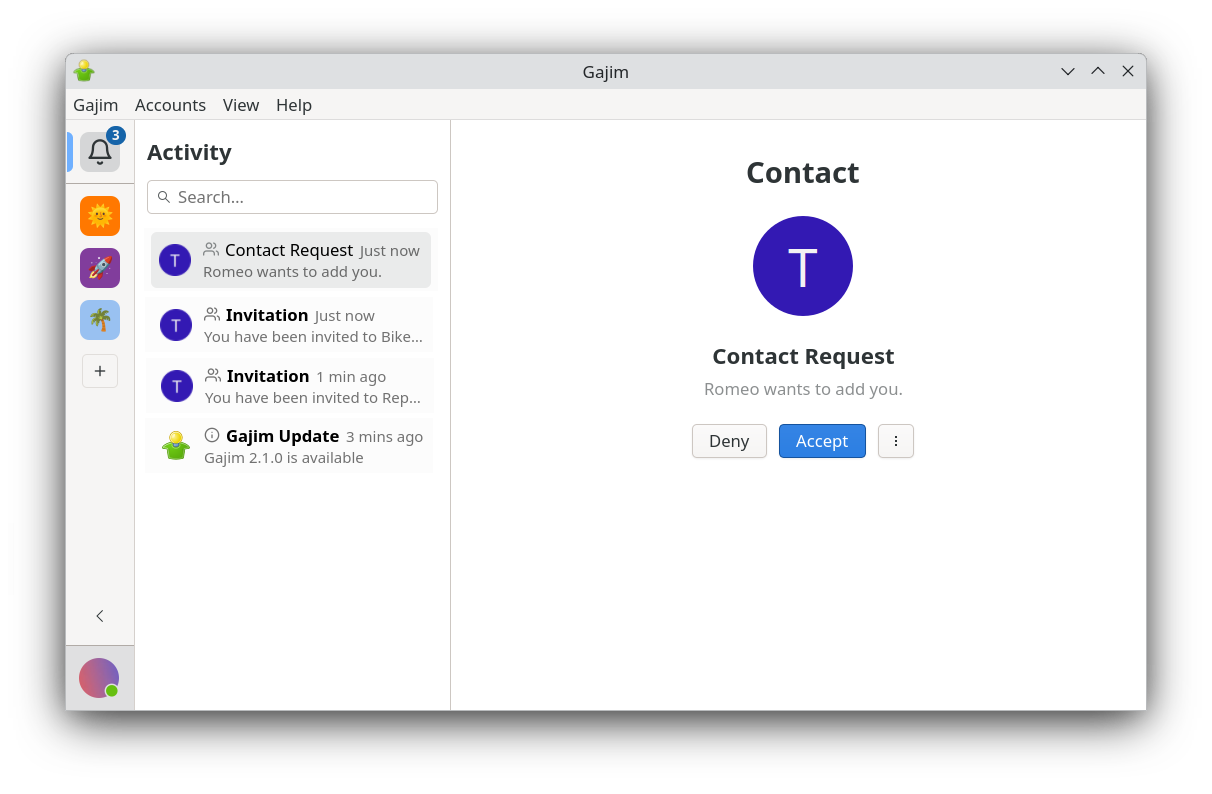
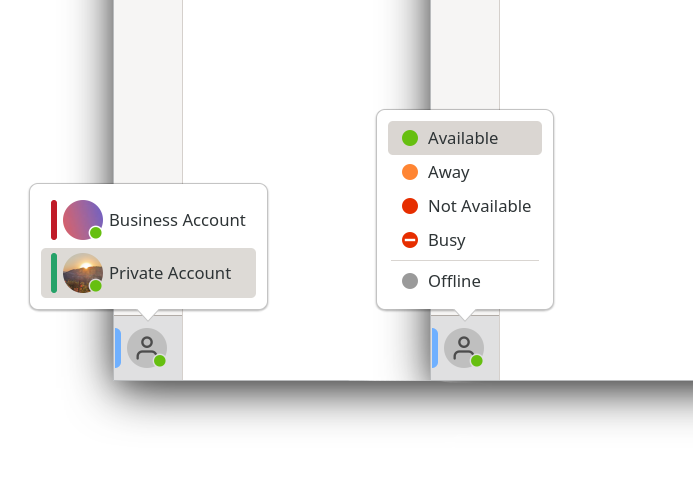
    • Gajim has released versions 2.1.0 and 2.1.1 with a new ‘Activity feed’ page, layout improvements for its ‘Start Chat’ dialog and support for ‘Message Display Synchronisation’ ( XEP-0490 ) across group chats among other improvements and bugfixes. Head over to their News section for all the details.
    Activity feed in Gajim 2.1

    Activity feed in Gajim 2.1

    Account and status selection in Gajim 2.1

    Account and status selection in Gajim 2.1

    • Kaidan has received NLnet funding for various improvement across the board , most notably multi-user chat and support for legacy OMEMO. The second point is significant because while Kaidan is using a newer version of the OMEMO end-to-end encryption protocol, other popular clients including Conversations, Monal, and Dino are still using an older version. Since the two are not compatible, this meant Kaidan users were unable to use OMEMO encryption with users of most other clients. By implementing the older spec as well, Kaidan will help bridge that gap.

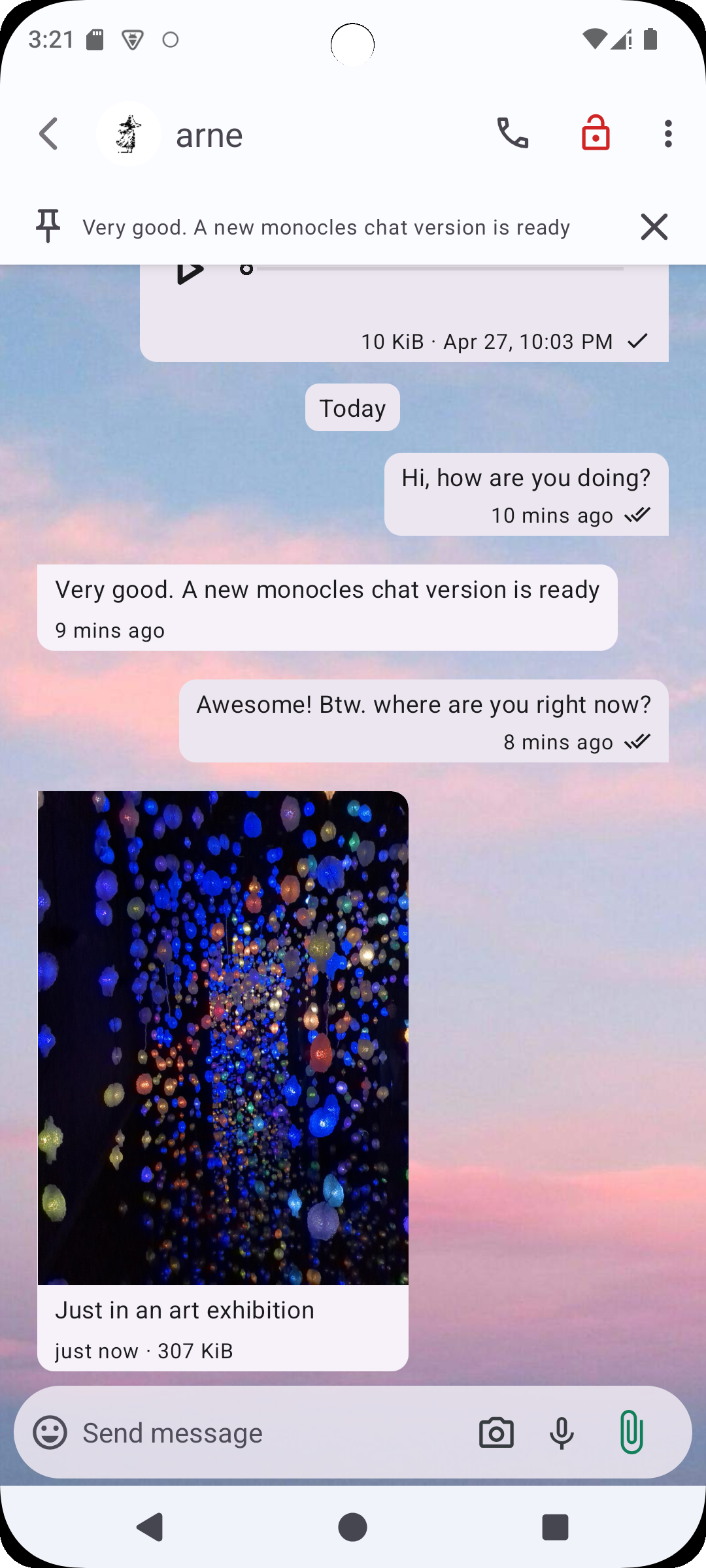
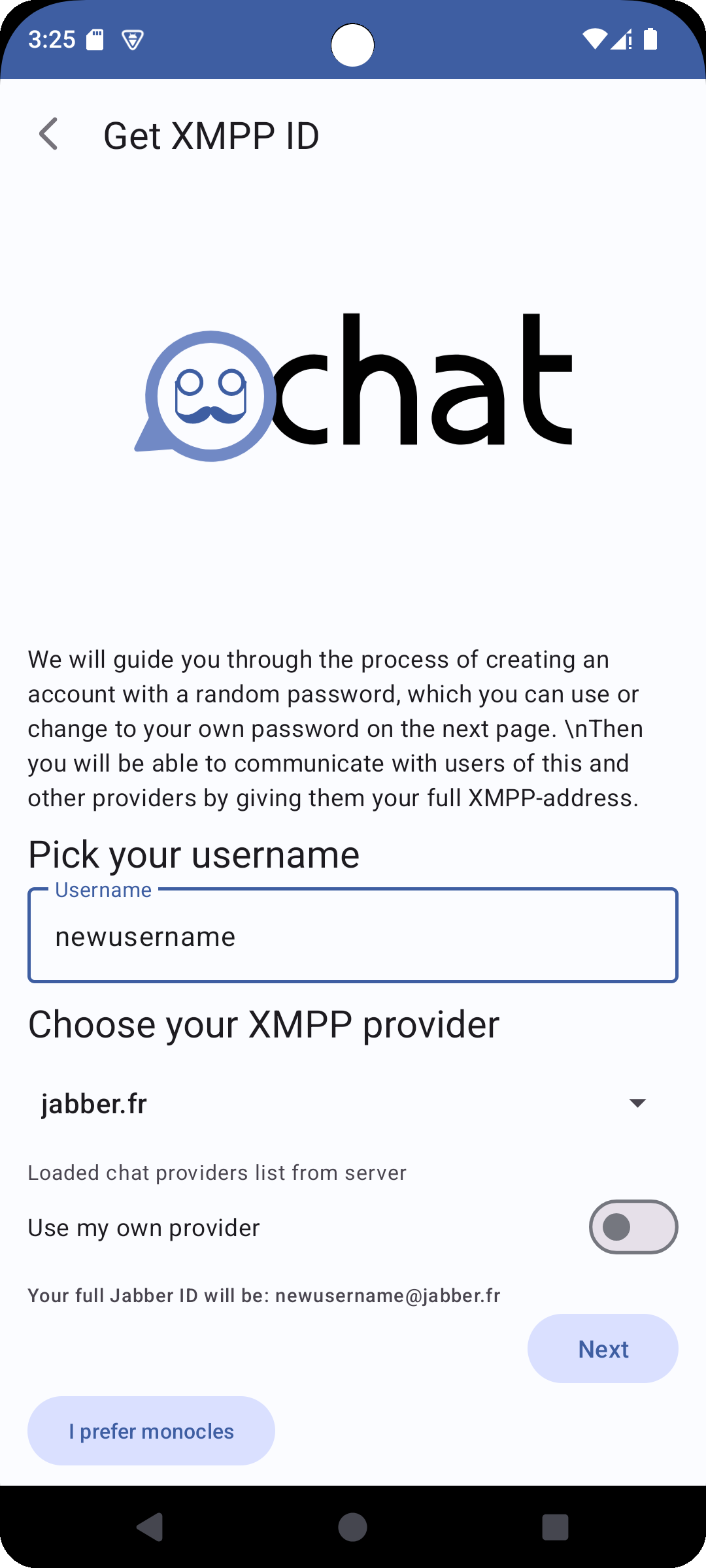
    • Monocles Chat 2.0.6 has been released for Android. This version brings initial support for file captions, the option to pin an unencrypted message to the top of a conversation, providers list support, and the option to register on your own XMPP server, among many other new features and improvements.

    Monocles Chat 2.0.6: Initial captions to files and pin message to the top

    Monocles Chat 2.0.6: Initial captions to files and pin message to the top

    Monocles Chat 2.0.6: Register on your own XMPP server or pick one from the providers list

    Monocles Chat 2.0.6: Register on your own XMPP server or pick one from the providers list

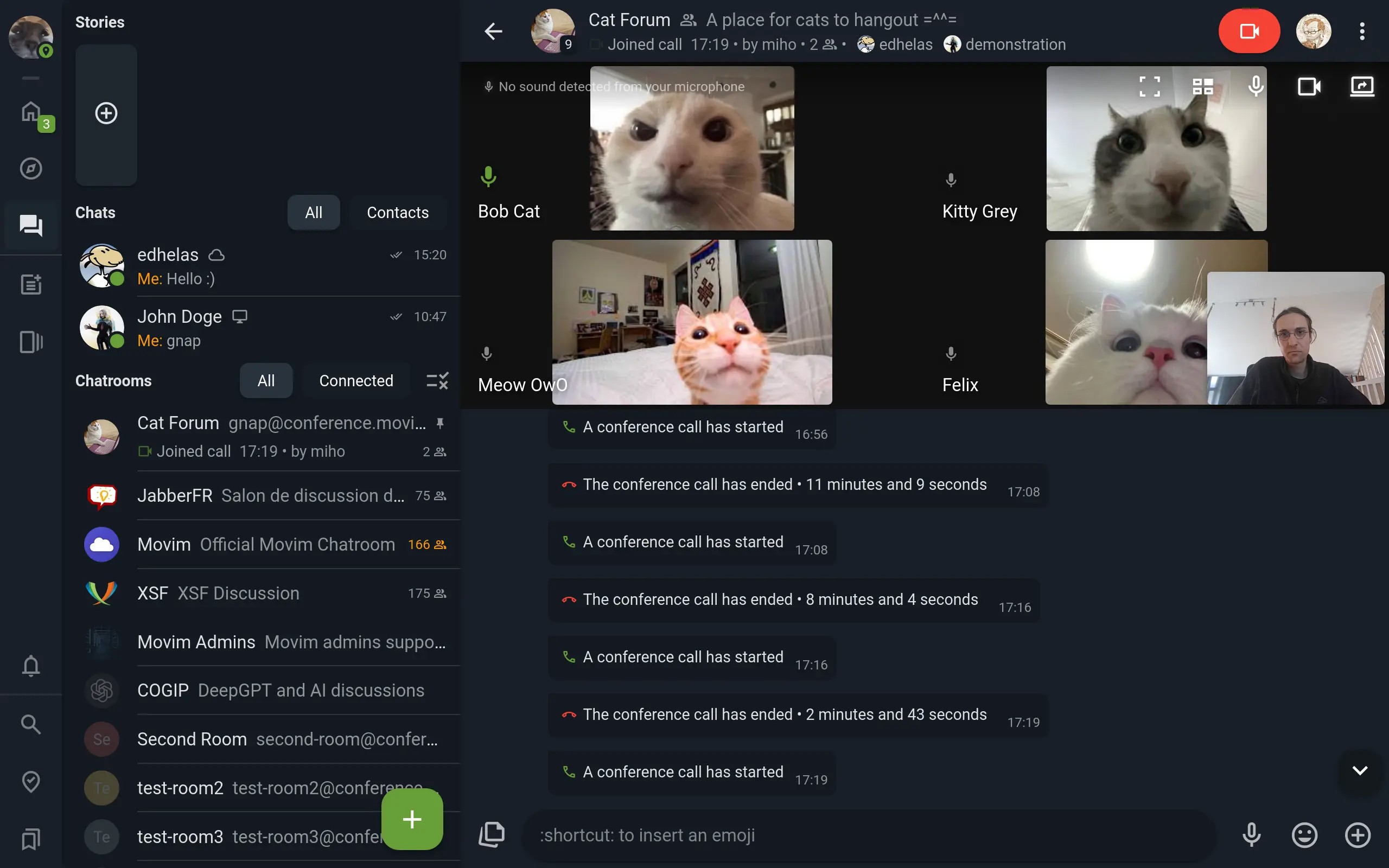
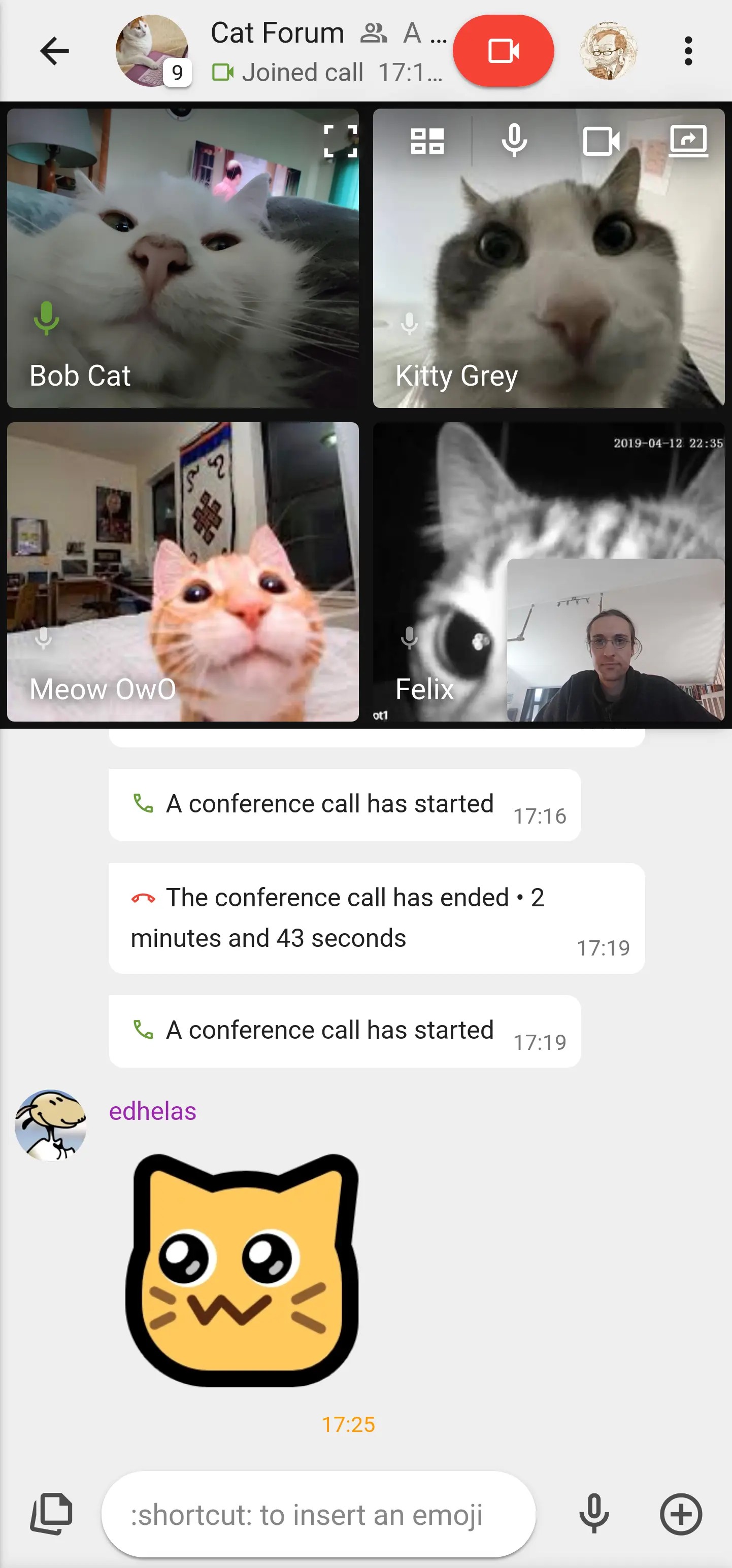
    • Movim has released version 0.30 (code named “ Encke ”), the biggest Movim evolution in many years! This release brings multi-participant calls , reactions being displayed in the detailed message view, support for Unicode 15.1 with plenty of new emojis to use, and avatars that change when a contact adds to their Story .
    Movim 0.30 (Encke): Multi Participant Calls. Bob Cat looking disgruntled by the presence of the ‘Hooman’ on the lower right of the screen!

    Movim 0.30 (Encke): Multi Participant Calls. Bob Cat looking disgruntled by the presence of the ‘Hooman’ on the lower right of the screen!

    Movim 0.30 (Encke): Meow OwO bedazzled by the looks of Multi Participant Calls on his mobile device!

    Movim 0.30 (Encke): Meow OwO bedazzled by the looks of Multi Participant Calls on his mobile device!

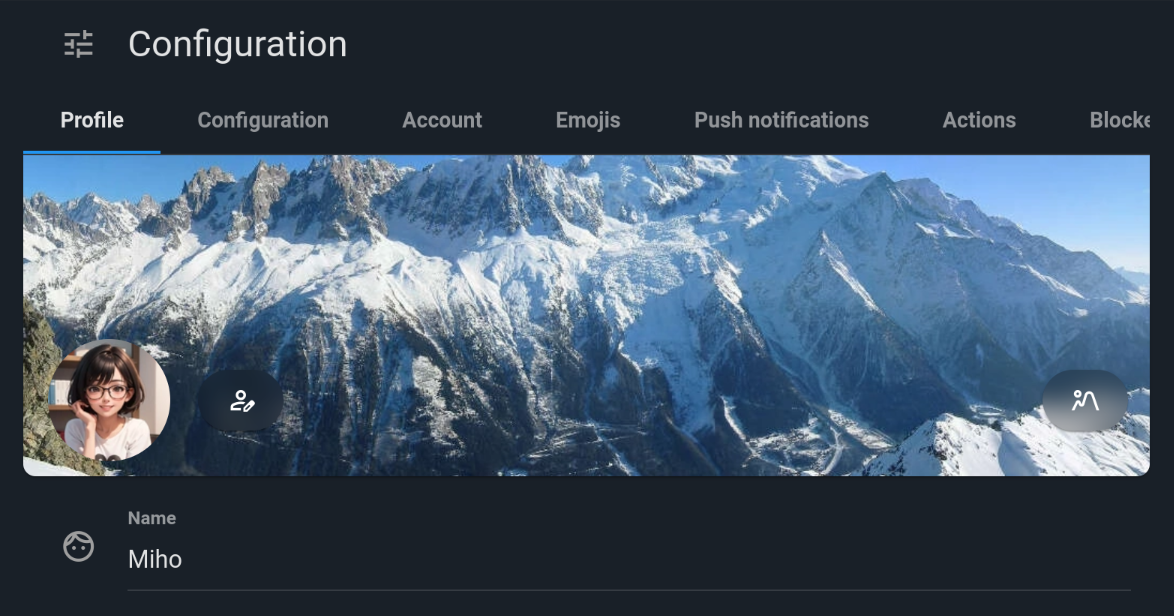
    • and following right on its heels, Movim also published its first bug-fix release: version 0.30.1 , adding animated pictures support in the image proxy and a new Avatar and Banner Configuration Panel, as well as implementing ( XEP-0392 ) Consistent Color Generation, among many other improvements and bugfixes. Make sure to check out the official announcements at the Movim Blog for all the details!
    Movim 0.30.1: Avatar and banner configuration panel

    Movim 0.30.1: Avatar and banner configuration panel

    XMPP Servers

    • MongooseIM has released version 6.3.3 of its Enterprise Instant Messaging Solution. This minor update includes various fixes and improvements. For more information, check out the documentation .
    • ProcessOne has published ejabberd 25.04 . This release brings an important security fix, several bug fixes and a new API command.
    • Prosody IM is pleased to announce version 13.0.1 , a new minor release from the latest stable branch. It fixes some important bugs that were discovered after the latest release. Read all the details on the release changelog . As always, detailed download and install instructions are available on the download page for your convenience.
    • The Prosody app for YunoHost has been updated to provide a bunch of supported XEPs by default, configured for all YunoHost users in just one click. YunoHost is a set of tools to easily manage your own selfhosted services, and while it used to come bundled with the Prosody fork Metronome by default, it has recently bundled its XMPP functionality into a separate “app” so that people can swap in any other XMPP server of their choice.

    XMPP Libraries & Tools

    Extensions and specifications

    The XMPP Standards Foundation develops extensions to XMPP in its XEP series in addition to XMPP RFCs . Developers and other standards experts from around the world collaborate on these extensions, developing new specifications for emerging practices, and refining existing ways of doing things. Proposed by anybody, the particularly successful ones end up as Final or Active - depending on their type - while others are carefully archived as Deferred. This life cycle is described in XEP-0001 , which contains the formal and canonical definitions for the types, states, and processes. Read more about the standards process . Communication around Standards and Extensions happens in the Standards Mailing List ( online archive ).

    Proposed

    The XEP development process starts by writing up an idea and submitting it to the XMPP Editor . Within two weeks, the Council decides whether to accept this proposal as an Experimental XEP.

    • No XEPs proposed this month.

    New

    • No New XEPs this month.

    Deferred

    If an experimental XEP is not updated for more than twelve months, it will be moved off Experimental to Deferred. If there is another update, it will put the XEP back onto Experimental.

    • No XEPs deferred this month.

    Updated

    • Version 1.1.3 of XEP-0313 (Message Archive Management)
      • Fixed typo (XEP Editor (dg))
    • Version 0.4.0 of XEP-0377 (Spam Reporting)
      • Add spam report processing opt-in.
      • Add Guus der Kinderen as co-author. (gdk)
    • Version 1.0.1 of XEP-0421 (Occupant identifiers for semi-anonymous MUCs)
      • Fixed typo (XEP Editor (dg))
    • Version 0.3.0 of XEP-0455 (Service Outage Status)
      • Remove all in-band event signaling. (mp)

    Last Call

    Last calls are issued once everyone seems satisfied with the current XEP status. After the Council decides whether the XEP seems ready, the XMPP Editor issues a Last Call for comments. The feedback gathered during the Last Call can help improve the XEP before returning it to the Council for advancement to Stable.

    • No Last Call this month.

    Stable

    • No XEPs moved to Stable this month.

    Deprecated

    • No XEPs deprecated this month.

    Rejected

    • No XEPs rejected this month.

    Spread the news

    Please share the news on other networks:

    Subscribe to the monthly XMPP newsletter
    Subscribe

    Also check out our RSS Feed !

    Looking for job offers or want to hire a professional consultant for your XMPP project? Visit our XMPP job board .

    Newsletter Contributors & Translations

    This is a community effort, and we would like to thank translators for their contributions. Volunteers and more languages are welcome! Translations of the XMPP Newsletter will be released here (with some delay):

    • English (original): xmpp.org
      • General contributors: Adrien Bourmault (neox), Alexander “PapaTutuWawa”, Arne, Badri Sunderarajan, Benson Muite, cal0pteryx, emus, Federico, Gonzalo Raúl Nemmi, Jonas Stein, Kris “poVoq”, Licaon_Kter, Ludovic Bocquet, Mario Sabatino, melvo, MSavoritias (fae,ve), nicola, Schimon Zachary, Simone Canaletti, singpolyma, XSF iTeam
    • French: jabberfr.org and linuxfr.org
      • Translators: Adrien Bourmault (neox), alkino, anubis, Arkem, Benoît Sibaud, mathieui, nyco, Pierre Jarillon, Ppjet6, Ysabeau
    • Italian: notes.nicfab.eu
      • Translators: nicola
    • Spanish: xmpp.org
      • Translators: Gonzalo Raúl Nemmi
    • German: xmpp.org
      • Translators: Millesimus
    • Português (BR): xmpp.org
      • Translators: Paulo

    Help us to build the newsletter

    This XMPP Newsletter is produced collaboratively by the XMPP community. Each month’s newsletter issue is drafted in this simple pad . At the end of each month, the pad’s content is merged into the XSF GitHub repository . We are always happy to welcome contributors. Do not hesitate to join the discussion in our Comm-Team group chat (MUC) and thereby help us sustain this as a community effort. You have a project and want to spread the news? Please consider sharing your news or events here, and promote it to a large audience.

    Tasks we do on a regular basis:

    • gathering news in the XMPP universe
    • short summaries of news and events
    • summary of the monthly communication on extensions (XEPs)
    • review of the newsletter draft
    • preparation of media images
    • translations
    • communication via media accounts

    Unsubscribe from the XMPP Newsletter

    To unsubscribe from this list, please log in first . If you have not previously logged in, you may need to set up an account with the appropriate email address.

    License

    This newsletter is published under CC BY-SA license .

    • Pl chevron_right

      The XMPP Standards Foundation: The XMPP Newsletter April 2025

      news.movim.eu / PlanetJabber • 5 May 2025 • 8 minutes

    XMPP Newsletter Banner

    XMPP Newsletter Banner

    Welcome to the XMPP Newsletter, great to have you here again! This issue covers the month of April 2025.

    Like this newsletter, many projects and their efforts in the XMPP community are a result of people’s voluntary work. If you are happy with the services and software you may be using, please consider saying thanks or help these projects! Interested in supporting the Newsletter team? Read more at the bottom .

    XSF Announcements

    XSF Membership

    If you are interested in joining the XMPP Standards Foundation as a member, submissions are open until May 18th, 2025, 00:00 UTC! .

    XSF Fiscal Hosting Projects

    The XSF offers fiscal hosting for XMPP projects. Please apply via Open Collective . For more information, see the announcement blog post . Current projects you can support:

    XMPP Events

    • Berlin XMPP Meetup [DE / EN]: monthly meeting of XMPP enthusiasts in Berlin, every 2nd Wednesday of the month at 6pm local time.
    • XMPP Italian happy hour [IT]: monthly Italian XMPP web meeting, every third Monday of the month at 7:00 PM local time (online event, with web meeting mode and live streaming).
    • XMPP Sprint in Berlin : On Friday, 23rd, Saturday, 24th, and Sunday, 25th of May 2025.

    XMPP Articles

    XMPP Software News

    XMPP Clients and Applications

    • Cheogram has released version 2.17.10-1 for Android. This version introduces an initial implementation of Spaces ( XEP-503 ), among other improvements, bugfixes and more!
    • Conversations has released versions 2.18.0 , 2.18.1 and 2.18.2 for Android. Notable changes include the ability to pick a custom backup location, a prominent backup restore option for Quicksy , and improved support for more kinds of URIs. The latter includes tel phone numbers, mailto email addresses, and more interestingly the web+ap scheme for ActivityPub proposed by Fedi Links .
    • Dino has released version 0.5 featuring OMEMO encryption by default, improved file transfers, image preview and other file details before downloading, and two completely reworked dialogs. See the release blog post for all the details.
      • At the same time, Dino has also received funding from NLnet to begin development on a slew of new features. This includes message moderation in group chats, local message deletion, modern connection handling with FAST and SASL2, more formatting options with Message Markup, and more! Visit the project page for all the details.
    • Gajim has released versions 2.1.0 and 2.1.1 with a new ‘Activity feed’ page, layout improvements for its ‘Start Chat’ dialog and support for ‘Message Display Synchronisation’ ( XEP-0490 ) across group chats among other improvements and bugfixes. Head over to their News section for all the details.
    Activity feed in Gajim 2.1

    Activity feed in Gajim 2.1

    Account and status selection in Gajim 2.1

    Account and status selection in Gajim 2.1

    • Kaidan has received NLnet funding for various improvement across the board , most notably multi-user chat and support for legacy OMEMO. The second point is significant because while Kaidan is using a newer version of the OMEMO end-to-end encryption protocol, other popular clients including Conversations, Monal, and Dino are still using an older version. Since the two are not compatible, this meant Kaidan users were unable to use OMEMO encryption with users of most other clients. By implementing the older spec as well, Kaidan will help bridge that gap.

    • Monocles Chat 2.0.6 has been released for Android. This version brings initial support for file captions, the option to pin an unencrypted message to the top of a conversation, providers list support, and the option to register on your own XMPP server, among many other new features and improvements.

    Monocles Chat 2.0.6: Initial captions to files and pin message to the top

    Monocles Chat 2.0.6: Initial captions to files and pin message to the top

    Monocles Chat 2.0.6: Register on your own XMPP server or pick one from the providers list

    Monocles Chat 2.0.6: Register on your own XMPP server or pick one from the providers list

    • Movim has released version 0.30 (code named “ Encke ”), the biggest Movim evolution in many years! This release brings multi-participant calls , reactions being displayed in the detailed message view, support for Unicode 15.1 with plenty of new emojis to use, and avatars that change when a contact adds to their Story .
    Movim 0.30 (Encke): Multi Participant Calls. Bob Cat looking disgruntled by the presence of the ‘Hooman’ on the lower right of the screen!

    Movim 0.30 (Encke): Multi Participant Calls. Bob Cat looking disgruntled by the presence of the ‘Hooman’ on the lower right of the screen!

    Movim 0.30 (Encke): Meow OwO bedazzled by the looks of Multi Participant Calls on his mobile device!

    Movim 0.30 (Encke): Meow OwO bedazzled by the looks of Multi Participant Calls on his mobile device!

    • and following right on its heels, Movim also published its first bug-fix release: version 0.30.1 , adding animated pictures support in the image proxy and a new Avatar and Banner Configuration Panel, as well as implementing ( XEP-0392 ) Consistent Color Generation, among many other improvements and bugfixes. Make sure to check out the official announcements at the Movim Blog for all the details!
    Movim 0.30.1: Avatar and banner configuration panel

    Movim 0.30.1: Avatar and banner configuration panel

    XMPP Servers

    • MongooseIM has released version 6.3.3 of its Enterprise Instant Messaging Solution. This minor update includes various fixes and improvements. For more information, check out the documentation .
    • ProcessOne has published ejabberd 25.04 . This release brings an important security fix, several bug fixes and a new API command.
    • Prosody IM is pleased to announce version 13.0.1 , a new minor release from the latest stable branch. It fixes some important bugs that were discovered after the latest release. Read all the details on the release changelog . As always, detailed download and install instructions are available on the download page for your convenience.
    • The Prosody app for YunoHost has been updated to provide a bunch of supported XEPs by default, configured for all YunoHost users in just one click. YunoHost is a set of tools to easily manage your own selfhosted services, and while it used to come bundled with the Prosody fork Metronome by default, it has recently bundled its XMPP functionality into a separate “app” so that people can swap in any other XMPP server of their choice.

    XMPP Libraries & Tools

    Extensions and specifications

    The XMPP Standards Foundation develops extensions to XMPP in its XEP series in addition to XMPP RFCs . Developers and other standards experts from around the world collaborate on these extensions, developing new specifications for emerging practices, and refining existing ways of doing things. Proposed by anybody, the particularly successful ones end up as Final or Active - depending on their type - while others are carefully archived as Deferred. This life cycle is described in XEP-0001 , which contains the formal and canonical definitions for the types, states, and processes. Read more about the standards process . Communication around Standards and Extensions happens in the Standards Mailing List ( online archive ).

    Proposed

    The XEP development process starts by writing up an idea and submitting it to the XMPP Editor . Within two weeks, the Council decides whether to accept this proposal as an Experimental XEP.

    • No XEPs proposed this month.

    New

    • No New XEPs this month.

    Deferred

    If an experimental XEP is not updated for more than twelve months, it will be moved off Experimental to Deferred. If there is another update, it will put the XEP back onto Experimental.

    • No XEPs deferred this month.

    Updated

    • Version 1.1.3 of XEP-0313 (Message Archive Management)
      • Fixed typo (XEP Editor (dg))
    • Version 0.4.0 of XEP-0377 (Spam Reporting)
      • Add spam report processing opt-in.
      • Add Guus der Kinderen as co-author. (gdk)
    • Version 1.0.1 of XEP-0421 (Occupant identifiers for semi-anonymous MUCs)
      • Fixed typo (XEP Editor (dg))
    • Version 0.3.0 of XEP-0455 (Service Outage Status)
      • Remove all in-band event signaling. (mp)

    Last Call

    Last calls are issued once everyone seems satisfied with the current XEP status. After the Council decides whether the XEP seems ready, the XMPP Editor issues a Last Call for comments. The feedback gathered during the Last Call can help improve the XEP before returning it to the Council for advancement to Stable.

    • No Last Call this month.

    Stable

    • No XEPs moved to Stable this month.

    Deprecated

    • No XEPs deprecated this month.

    Rejected

    • No XEPs rejected this month.

    Spread the news

    Please share the news on other networks:

    Subscribe to the monthly XMPP newsletter
    Subscribe

    Also check out our RSS Feed !

    Looking for job offers or want to hire a professional consultant for your XMPP project? Visit our XMPP job board .

    Newsletter Contributors & Translations

    This is a community effort, and we would like to thank translators for their contributions. Volunteers and more languages are welcome! Translations of the XMPP Newsletter will be released here (with some delay):

    • English (original): xmpp.org
      • General contributors: Adrien Bourmault (neox), Alexander “PapaTutuWawa”, Arne, Badri Sunderarajan, Benson Muite, cal0pteryx, emus, Federico, Gonzalo Raúl Nemmi, Jonas Stein, Kris “poVoq”, Licaon_Kter, Ludovic Bocquet, Mario Sabatino, melvo, MSavoritias (fae,ve), nicola, Schimon Zachary, Simone Canaletti, singpolyma, XSF iTeam
    • French: jabberfr.org and linuxfr.org
      • Translators: Adrien Bourmault (neox), alkino, anubis, Arkem, Benoît Sibaud, mathieui, nyco, Pierre Jarillon, Ppjet6, Ysabeau
    • Italian: notes.nicfab.eu
      • Translators: nicola
    • Spanish: xmpp.org
      • Translators: Gonzalo Raúl Nemmi
    • German: xmpp.org
      • Translators: Millesimus
    • Português (BR): xmpp.org
      • Translators: Paulo

    Help us to build the newsletter

    This XMPP Newsletter is produced collaboratively by the XMPP community. Each month’s newsletter issue is drafted in this simple pad . At the end of each month, the pad’s content is merged into the XSF GitHub repository . We are always happy to welcome contributors. Do not hesitate to join the discussion in our Comm-Team group chat (MUC) and thereby help us sustain this as a community effort. You have a project and want to spread the news? Please consider sharing your news or events here, and promote it to a large audience.

    Tasks we do on a regular basis:

    • gathering news in the XMPP universe
    • short summaries of news and events
    • summary of the monthly communication on extensions (XEPs)
    • review of the newsletter draft
    • preparation of media images
    • translations
    • communication via media accounts

    Unsubscribe from the XMPP Newsletter

    To unsubscribe from this list, please log in first . If you have not previously logged in, you may need to set up an account with the appropriate email address.

    License

    This newsletter is published under CC BY-SA license .

    • Pl chevron_right

      The XMPP Standards Foundation: The XMPP Newsletter April 2025

      news.movim.eu / PlanetJabber • 5 May 2025 • 8 minutes

    XMPP Newsletter Banner

    XMPP Newsletter Banner

    Welcome to the XMPP Newsletter, great to have you here again! This issue covers the month of April 2025.

    Like this newsletter, many projects and their efforts in the XMPP community are a result of people’s voluntary work. If you are happy with the services and software you may be using, please consider saying thanks or help these projects! Interested in supporting the Newsletter team? Read more at the bottom .

    XSF Announcements

    XSF Membership

    If you are interested in joining the XMPP Standards Foundation as a member, submissions are open until May 18th, 2025, 00:00 UTC! .

    XSF Fiscal Hosting Projects

    The XSF offers fiscal hosting for XMPP projects. Please apply via Open Collective . For more information, see the announcement blog post . Current projects you can support:

    XMPP Events

    • Berlin XMPP Meetup [DE / EN]: monthly meeting of XMPP enthusiasts in Berlin, every 2nd Wednesday of the month at 6pm local time.
    • XMPP Italian happy hour [IT]: monthly Italian XMPP web meeting, every third Monday of the month at 7:00 PM local time (online event, with web meeting mode and live streaming).
    • XMPP Sprint in Berlin : On Friday, 23rd, Saturday, 24th, and Sunday, 25th of May 2025.

    XMPP Articles

    XMPP Software News

    XMPP Clients and Applications

    • Cheogram has released version 2.17.10-1 for Android. This version introduces an initial implementation of Spaces ( XEP-503 ), among other improvements, bugfixes and more!
    • Conversations has released versions 2.18.0 , 2.18.1 and 2.18.2 for Android. Notable changes include the ability to pick a custom backup location, a prominent backup restore option for Quicksy , and improved support for more kinds of URIs. The latter includes tel phone numbers, mailto email addresses, and more interestingly the web+ap scheme for ActivityPub proposed by Fedi Links .
    • Dino has released version 0.5 featuring OMEMO encryption by default, improved file transfers, image preview and other file details before downloading, and two completely reworked dialogs. See the release blog post for all the details.
      • At the same time, Dino has also received funding from NLnet to begin development on a slew of new features. This includes message moderation in group chats, local message deletion, modern connection handling with FAST and SASL2, more formatting options with Message Markup, and more! Visit the project page for all the details.
    • Gajim has released versions 2.1.0 and 2.1.1 with a new ‘Activity feed’ page, layout improvements for its ‘Start Chat’ dialog and support for ‘Message Display Synchronisation’ ( XEP-0490 ) across group chats among other improvements and bugfixes. Head over to their News section for all the details.
    Activity feed in Gajim 2.1

    Activity feed in Gajim 2.1

    Account and status selection in Gajim 2.1

    Account and status selection in Gajim 2.1

    • Kaidan has received NLnet funding for various improvement across the board , most notably multi-user chat and support for legacy OMEMO. The second point is significant because while Kaidan is using a newer version of the OMEMO end-to-end encryption protocol, other popular clients including Conversations, Monal, and Dino are still using an older version. Since the two are not compatible, this meant Kaidan users were unable to use OMEMO encryption with users of most other clients. By implementing the older spec as well, Kaidan will help bridge that gap.

    • Monocles Chat 2.0.6 has been released for Android. This version brings initial support for file captions, the option to pin an unencrypted message to the top of a conversation, providers list support, and the option to register on your own XMPP server, among many other new features and improvements.

    Monocles Chat 2.0.6: Initial captions to files and pin message to the top

    Monocles Chat 2.0.6: Initial captions to files and pin message to the top

    Monocles Chat 2.0.6: Register on your own XMPP server or pick one from the providers list

    Monocles Chat 2.0.6: Register on your own XMPP server or pick one from the providers list

    • Movim has released version 0.30 (code named “ Encke ”), the biggest Movim evolution in many years! This release brings multi-participant calls , reactions being displayed in the detailed message view, support for Unicode 15.1 with plenty of new emojis to use, and avatars that change when a contact adds to their Story .
    Movim 0.30 (Encke): Multi Participant Calls. Bob Cat looking disgruntled by the presence of the ‘Hooman’ on the lower right of the screen!

    Movim 0.30 (Encke): Multi Participant Calls. Bob Cat looking disgruntled by the presence of the ‘Hooman’ on the lower right of the screen!

    Movim 0.30 (Encke): Meow OwO bedazzled by the looks of Multi Participant Calls on his mobile device!

    Movim 0.30 (Encke): Meow OwO bedazzled by the looks of Multi Participant Calls on his mobile device!

    • and following right on its heels, Movim also published its first bug-fix release: version 0.30.1 , adding animated pictures support in the image proxy and a new Avatar and Banner Configuration Panel, as well as implementing ( XEP-0392 ) Consistent Color Generation, among many other improvements and bugfixes. Make sure to check out the official announcements at the Movim Blog for all the details!
    Movim 0.30.1: Avatar and banner configuration panel

    Movim 0.30.1: Avatar and banner configuration panel

    XMPP Servers

    • MongooseIM has released version 6.3.3 of its Enterprise Instant Messaging Solution. This minor update includes various fixes and improvements. For more information, check out the documentation .
    • ProcessOne has published ejabberd 25.04 . This release brings an important security fix, several bug fixes and a new API command.
    • Prosody IM is pleased to announce version 13.0.1 , a new minor release from the latest stable branch. It fixes some important bugs that were discovered after the latest release. Read all the details on the release changelog . As always, detailed download and install instructions are available on the download page for your convenience.
    • The Prosody app for YunoHost has been updated to provide a bunch of supported XEPs by default, configured for all YunoHost users in just one click. YunoHost is a set of tools to easily manage your own selfhosted services, and while it used to come bundled with the Prosody fork Metronome by default, it has recently bundled its XMPP functionality into a separate “app” so that people can swap in any other XMPP server of their choice.

    XMPP Libraries & Tools

    Extensions and specifications

    The XMPP Standards Foundation develops extensions to XMPP in its XEP series in addition to XMPP RFCs . Developers and other standards experts from around the world collaborate on these extensions, developing new specifications for emerging practices, and refining existing ways of doing things. Proposed by anybody, the particularly successful ones end up as Final or Active - depending on their type - while others are carefully archived as Deferred. This life cycle is described in XEP-0001 , which contains the formal and canonical definitions for the types, states, and processes. Read more about the standards process . Communication around Standards and Extensions happens in the Standards Mailing List ( online archive ).

    Proposed

    The XEP development process starts by writing up an idea and submitting it to the XMPP Editor . Within two weeks, the Council decides whether to accept this proposal as an Experimental XEP.

    • No XEPs proposed this month.

    New

    • No New XEPs this month.

    Deferred

    If an experimental XEP is not updated for more than twelve months, it will be moved off Experimental to Deferred. If there is another update, it will put the XEP back onto Experimental.

    • No XEPs deferred this month.

    Updated

    • Version 1.1.3 of XEP-0313 (Message Archive Management)
      • Fixed typo (XEP Editor (dg))
    • Version 0.4.0 of XEP-0377 (Spam Reporting)
      • Add spam report processing opt-in.
      • Add Guus der Kinderen as co-author. (gdk)
    • Version 1.0.1 of XEP-0421 (Occupant identifiers for semi-anonymous MUCs)
      • Fixed typo (XEP Editor (dg))
    • Version 0.3.0 of XEP-0455 (Service Outage Status)
      • Remove all in-band event signaling. (mp)

    Last Call

    Last calls are issued once everyone seems satisfied with the current XEP status. After the Council decides whether the XEP seems ready, the XMPP Editor issues a Last Call for comments. The feedback gathered during the Last Call can help improve the XEP before returning it to the Council for advancement to Stable.

    • No Last Call this month.

    Stable

    • No XEPs moved to Stable this month.

    Deprecated

    • No XEPs deprecated this month.

    Rejected

    • No XEPs rejected this month.

    Spread the news

    Please share the news on other networks:

    Subscribe to the monthly XMPP newsletter
    Subscribe

    Also check out our RSS Feed !

    Looking for job offers or want to hire a professional consultant for your XMPP project? Visit our XMPP job board .

    Newsletter Contributors & Translations

    This is a community effort, and we would like to thank translators for their contributions. Volunteers and more languages are welcome! Translations of the XMPP Newsletter will be released here (with some delay):

    • English (original): xmpp.org
      • General contributors: Adrien Bourmault (neox), Alexander “PapaTutuWawa”, Arne, Badri Sunderarajan, Benson Muite, cal0pteryx, emus, Federico, Gonzalo Raúl Nemmi, Jonas Stein, Kris “poVoq”, Licaon_Kter, Ludovic Bocquet, Mario Sabatino, melvo, MSavoritias (fae,ve), nicola, Schimon Zachary, Simone Canaletti, singpolyma, XSF iTeam
    • French: jabberfr.org and linuxfr.org
      • Translators: Adrien Bourmault (neox), alkino, anubis, Arkem, Benoît Sibaud, mathieui, nyco, Pierre Jarillon, Ppjet6, Ysabeau
    • Italian: notes.nicfab.eu
      • Translators: nicola
    • Spanish: xmpp.org
      • Translators: Gonzalo Raúl Nemmi
    • German: xmpp.org
      • Translators: Millesimus
    • Português (BR): xmpp.org
      • Translators: Paulo

    Help us to build the newsletter

    This XMPP Newsletter is produced collaboratively by the XMPP community. Each month’s newsletter issue is drafted in this simple pad . At the end of each month, the pad’s content is merged into the XSF GitHub repository . We are always happy to welcome contributors. Do not hesitate to join the discussion in our Comm-Team group chat (MUC) and thereby help us sustain this as a community effort. You have a project and want to spread the news? Please consider sharing your news or events here, and promote it to a large audience.

    Tasks we do on a regular basis:

    • gathering news in the XMPP universe
    • short summaries of news and events
    • summary of the monthly communication on extensions (XEPs)
    • review of the newsletter draft
    • preparation of media images
    • translations
    • communication via media accounts

    Unsubscribe from the XMPP Newsletter

    To unsubscribe from this list, please log in first . If you have not previously logged in, you may need to set up an account with the appropriate email address.

    License

    This newsletter is published under CC BY-SA license .