• progress_activity cloud_sync

    Reconnection to the server…

    Movim cannot talk with the server, please try again later


    • Public subscriptions

    • chevron_right

      coopr8

    • chevron_right

      gabagoo

    • chevron_right

      kenu_demon

    • chevron_right

      coopr8

    • chevron_right

      gabagoo

    • chevron_right

      kenu_demon

    • chevron_right

      coopr8

    • chevron_right

      gabagoo

    • chevron_right

      kenu_demon

  • Register Login

    Movim

    movim.chatterboxtown.us


  • group_work rss_feed
    add Follow

    ArsTechnica

    • Ar chevron_right

      How hacking your Switch can lead to better Tears of the Kingdom frame rates

      news.movim.eu / ArsTechnica • 16 May 2023 • 1 minute

    Modern Vintage Gamer shows the frame rate improvements possible by overclocking Tears of the Kingdom with a hacked Switch.

    For a marquee game on 6-year-old hardware (which was already relatively underpowered when it launched in 2017), the open-world construction set of The Legend of Zelda: Tears of the Kingdom is a pretty impressive technical feat. Digital Foundry recently laid out how the game's day-one patch ensures the software "holds very close to the 30 frames per second target" for "nearly the entirety" of their playtime.

    Still, Digital Foundry does note that Tears of the Kingdom 's frame rate can still drop down to 20 fps at times, especially when Link's signature Ultra Hand ability is activated in crowded areas like Kakariko Village or Goron City. For those situations, though, Switch users with a hacked console can use overclocking tools to make the game run more smoothly.

    In a recent video , Modern Vintage Gamer (MVG) walks viewers through the overclocking options offered to Tears of the Kingdom players who have installed a tool like sys-clk on their hacked systems. Pushing the CPU up from around 1 GHz to 1.5 GHz leads to "really not much difference at all" in MVG's testing. By contrast, increasing the GPU speed from 768 MHz to just 900 MHz (in docked mode) results in frame rates that are "definitely smoothed out," though there are "still... times where it does drop its frame rate."


    Read 3 remaining paragraphs | Comments

    • taggaming & culture taggaming & culture taggaming & culture tagnintendo switch tagnintendo switch tagnintendo switch tagoverclocking tagoverclocking tagoverclocking tagthe legend of zelda: tears of the kingdom tagthe legend of zelda: tears of the kingdom tagthe legend of zelda: tears of the kingdom taggaming & culture taggaming & culture taggaming & culture tagnintendo switch tagnintendo switch tagnintendo switch tagoverclocking tagoverclocking tagoverclocking tagthe legend of zelda: tears of the kingdom tagthe legend of zelda: tears of the kingdom tagthe legend of zelda: tears of the kingdom taggaming & culture taggaming & culture taggaming & culture tagnintendo switch tagnintendo switch tagnintendo switch tagoverclocking tagoverclocking tagoverclocking tagthe legend of zelda: tears of the kingdom tagthe legend of zelda: tears of the kingdom tagthe legend of zelda: tears of the kingdom

    • Ar chevron_right

      How hacking your Switch can lead to better Tears of the Kingdom frame rates

      news.movim.eu / ArsTechnica • 16 May 2023 • 1 minute

    Modern Vintage Gamer shows the frame rate improvements possible by overclocking Tears of the Kingdom with a hacked Switch.

    For a marquee game on 6-year-old hardware (which was already relatively underpowered when it launched in 2017), the open-world construction set of The Legend of Zelda: Tears of the Kingdom is a pretty impressive technical feat. Digital Foundry recently laid out how the game's day-one patch ensures the software "holds very close to the 30 frames per second target" for "nearly the entirety" of their playtime.

    Still, Digital Foundry does note that Tears of the Kingdom 's frame rate can still drop down to 20 fps at times, especially when Link's signature Ultra Hand ability is activated in crowded areas like Kakariko Village or Goron City. For those situations, though, Switch users with a hacked console can use overclocking tools to make the game run more smoothly.

    In a recent video , Modern Vintage Gamer (MVG) walks viewers through the overclocking options offered to Tears of the Kingdom players who have installed a tool like sys-clk on their hacked systems. Pushing the CPU up from around 1 GHz to 1.5 GHz leads to "really not much difference at all" in MVG's testing. By contrast, increasing the GPU speed from 768 MHz to just 900 MHz (in docked mode) results in frame rates that are "definitely smoothed out," though there are "still... times where it does drop its frame rate."
    Read 3 remaining paragraphs | Comments

    • taggaming & culture taggaming & culture taggaming & culture tagnintendo switch tagnintendo switch tagnintendo switch tagoverclocking tagoverclocking tagoverclocking tagthe legend of zelda: tears of the kingdom tagthe legend of zelda: tears of the kingdom tagthe legend of zelda: tears of the kingdom taggaming & culture taggaming & culture taggaming & culture tagnintendo switch tagnintendo switch tagnintendo switch tagoverclocking tagoverclocking tagoverclocking tagthe legend of zelda: tears of the kingdom tagthe legend of zelda: tears of the kingdom tagthe legend of zelda: tears of the kingdom taggaming & culture taggaming & culture taggaming & culture tagnintendo switch tagnintendo switch tagnintendo switch tagoverclocking tagoverclocking tagoverclocking tagthe legend of zelda: tears of the kingdom tagthe legend of zelda: tears of the kingdom tagthe legend of zelda: tears of the kingdom

    • Ar chevron_right

      How hacking your Switch can lead to better Tears of the Kingdom frame rates

      news.movim.eu / ArsTechnica • 16 May 2023 • 1 minute

    Modern Vintage Gamer shows the frame rate improvements possible by overclocking Tears of the Kingdom with a hacked Switch.

    For a marquee game on 6-year-old hardware (which was already relatively underpowered when it launched in 2017), the open-world construction set of The Legend of Zelda: Tears of the Kingdom is a pretty impressive technical feat. Digital Foundry recently laid out how the game's day-one patch ensures the software "holds very close to the 30 frames per second target" for "nearly the entirety" of their playtime.

    Still, Digital Foundry does note that Tears of the Kingdom 's frame rate can still drop down to 20 fps at times, especially when Link's signature Ultra Hand ability is activated in crowded areas like Kakariko Village or Goron City. For those situations, though, Switch users with a hacked console can use overclocking tools to make the game run more smoothly.

    In a recent video , Modern Vintage Gamer (MVG) walks viewers through the overclocking options offered to Tears of the Kingdom players who have installed a tool like sys-clk on their hacked systems. Pushing the CPU up from around 1 GHz to 1.5 GHz leads to "really not much difference at all" in MVG's testing. By contrast, increasing the GPU speed from 768 MHz to just 900 MHz (in docked mode) results in frame rates that are "definitely smoothed out," though there are "still... times where it does drop its frame rate."

    Read 3 remaining paragraphs | Comments

    • taggaming & culture taggaming & culture taggaming & culture tagnintendo switch tagnintendo switch tagnintendo switch tagoverclocking tagoverclocking tagoverclocking tagthe legend of zelda: tears of the kingdom tagthe legend of zelda: tears of the kingdom tagthe legend of zelda: tears of the kingdom taggaming & culture taggaming & culture taggaming & culture tagnintendo switch tagnintendo switch tagnintendo switch tagoverclocking tagoverclocking tagoverclocking tagthe legend of zelda: tears of the kingdom tagthe legend of zelda: tears of the kingdom tagthe legend of zelda: tears of the kingdom taggaming & culture taggaming & culture taggaming & culture tagnintendo switch tagnintendo switch tagnintendo switch tagoverclocking tagoverclocking tagoverclocking tagthe legend of zelda: tears of the kingdom tagthe legend of zelda: tears of the kingdom tagthe legend of zelda: tears of the kingdom

    • Ar chevron_right

      We can ID people from DNA that shows up in environmental studies

      news.movim.eu / ArsTechnica • 16 May 2023 • 1 minute

    Image of a DNA molecule formed from shrubbery.

    Enlarge / People may accidentally sequence your DNA while trying to study something else entirely. (credit: Andriy Onufriyenko )

    It used to be that if you wanted to find a DNA sequence in a particular sample, you had to go searching for that specific sequence—you had to fish it out with a hook designed especially to catch it. But no more. DNA sequencing technology has advanced to the point where you can take a sample from almost any environment—a drop of water, an ice core, a scoop of sand or soil, even air—and just see whatever DNA is in there.

    This provides a non-invasive way to study wild populations and invasive or endangered species and has been used to monitor for pathogens (SARS-CoV-2, mpox, polio, tuberculosis) in wastewater. But guess who else’s DNA is in those environmental samples? Yup. Ours.

    Something identifiable in the air

    Liam Whitmore is a zoologist and conservationist who studies green turtles. He and his colleagues realized that having human DNA slip into research samples might be an issue, so they looked to see if they could find any in old water and sand samples they had taken as part of a wildlife and pathogen monitoring study. They did. Then they went intentionally searching for specific human sequences, and, in water, sand, and air samples, they found plenty of genomic regions that could identify a person’s ancestry and susceptibility to several diseases. They didn’t go so far as to identify individuals but noted that someone probably could compare these sequences to public genetic data without too much difficulty.

    Read 8 remaining paragraphs | Comments

    • tagpolicy tagpolicy tagpolicy tagscience tagscience tagscience tagbiology tagbiology tagbiology tagdna tagdna tagdna tagenvironmental dna tagenvironmental dna tagenvironmental dna taggenomics taggenomics taggenomics tagprivacy tagprivacy tagprivacy tagpolicy tagpolicy tagpolicy tagscience tagscience tagscience tagbiology tagbiology tagbiology tagdna tagdna tagdna tagenvironmental dna tagenvironmental dna tagenvironmental dna taggenomics taggenomics taggenomics tagprivacy tagprivacy tagprivacy tagpolicy tagpolicy tagpolicy tagscience tagscience tagscience tagbiology tagbiology tagbiology tagdna tagdna tagdna tagenvironmental dna tagenvironmental dna tagenvironmental dna taggenomics taggenomics taggenomics tagprivacy tagprivacy tagprivacy

    • Ar chevron_right

      We can ID people from DNA that shows up in environmental studies

      news.movim.eu / ArsTechnica • 16 May 2023 • 1 minute

    Image of a DNA molecule formed from shrubbery.

    Enlarge / People may accidentally sequence your DNA while trying to study something else entirely. (credit: Andriy Onufriyenko )

    It used to be that if you wanted to find a DNA sequence in a particular sample, you had to go searching for that specific sequence—you had to fish it out with a hook designed especially to catch it. But no more. DNA sequencing technology has advanced to the point where you can take a sample from almost any environment—a drop of water, an ice core, a scoop of sand or soil, even air—and just see whatever DNA is in there.

    This provides a non-invasive way to study wild populations and invasive or endangered species and has been used to monitor for pathogens (SARS-CoV-2, mpox, polio, tuberculosis) in wastewater. But guess who else’s DNA is in those environmental samples? Yup. Ours.

    Something identifiable in the air

    Liam Whitmore is a zoologist and conservationist who studies green turtles. He and his colleagues realized that having human DNA slip into research samples might be an issue, so they looked to see if they could find any in old water and sand samples they had taken as part of a wildlife and pathogen monitoring study. They did. Then they went intentionally searching for specific human sequences, and, in water, sand, and air samples, they found plenty of genomic regions that could identify a person’s ancestry and susceptibility to several diseases. They didn’t go so far as to identify individuals but noted that someone probably could compare these sequences to public genetic data without too much difficulty.

    Read 8 remaining paragraphs | Comments

    • tagpolicy tagpolicy tagpolicy tagscience tagscience tagscience tagbiology tagbiology tagbiology tagdna tagdna tagdna tagenvironmental dna tagenvironmental dna tagenvironmental dna taggenomics taggenomics taggenomics tagprivacy tagprivacy tagprivacy tagpolicy tagpolicy tagpolicy tagscience tagscience tagscience tagbiology tagbiology tagbiology tagdna tagdna tagdna tagenvironmental dna tagenvironmental dna tagenvironmental dna taggenomics taggenomics taggenomics tagprivacy tagprivacy tagprivacy tagpolicy tagpolicy tagpolicy tagscience tagscience tagscience tagbiology tagbiology tagbiology tagdna tagdna tagdna tagenvironmental dna tagenvironmental dna tagenvironmental dna taggenomics taggenomics taggenomics tagprivacy tagprivacy tagprivacy

    • Ar chevron_right

      We can ID people from DNA that shows up in environmental studies

      news.movim.eu / ArsTechnica • 16 May 2023 • 1 minute

    Image of a DNA molecule formed from shrubbery.

    Enlarge / People may accidentally sequence your DNA while trying to study something else entirely. (credit: Andriy Onufriyenko )

    It used to be that if you wanted to find a DNA sequence in a particular sample, you had to go searching for that specific sequence—you had to fish it out with a hook designed especially to catch it. But no more. DNA sequencing technology has advanced to the point where you can take a sample from almost any environment—a drop of water, an ice core, a scoop of sand or soil, even air—and just see whatever DNA is in there.

    This provides a non-invasive way to study wild populations and invasive or endangered species and has been used to monitor for pathogens (SARS-CoV-2, mpox, polio, tuberculosis) in wastewater. But guess who else’s DNA is in those environmental samples? Yup. Ours.

    Something identifiable in the air

    Liam Whitmore is a zoologist and conservationist who studies green turtles. He and his colleagues realized that having human DNA slip into research samples might be an issue, so they looked to see if they could find any in old water and sand samples they had taken as part of a wildlife and pathogen monitoring study. They did. Then they went intentionally searching for specific human sequences, and, in water, sand, and air samples, they found plenty of genomic regions that could identify a person’s ancestry and susceptibility to several diseases. They didn’t go so far as to identify individuals but noted that someone probably could compare these sequences to public genetic data without too much difficulty.

    Read 8 remaining paragraphs | Comments

    • tagpolicy tagpolicy tagpolicy tagscience tagscience tagscience tagbiology tagbiology tagbiology tagdna tagdna tagdna tagenvironmental dna tagenvironmental dna tagenvironmental dna taggenomics taggenomics taggenomics tagprivacy tagprivacy tagprivacy tagpolicy tagpolicy tagpolicy tagscience tagscience tagscience tagbiology tagbiology tagbiology tagdna tagdna tagdna tagenvironmental dna tagenvironmental dna tagenvironmental dna taggenomics taggenomics taggenomics tagprivacy tagprivacy tagprivacy tagpolicy tagpolicy tagpolicy tagscience tagscience tagscience tagbiology tagbiology tagbiology tagdna tagdna tagdna tagenvironmental dna tagenvironmental dna tagenvironmental dna taggenomics taggenomics taggenomics tagprivacy tagprivacy tagprivacy

    • Ar chevron_right

      Sci-fi becomes real as renowned magazine closes submissions due to AI writers

      news.movim.eu / ArsTechnica • 21 February 2023

    An AI-generated image of a robot eagerly writing a submission to Clarkesworld.

    Enlarge / An AI-generated image of a robot eagerly writing a submission to Clarkesworld. (credit: Ars Technica)

    One side effect of unlimited content-creation machines—generative AI—is unlimited content. On Monday, the editor of the renowned sci-fi publication Clarkesworld Magazine announced that he had temporarily closed story submissions due to a massive increase in machine-generated stories sent to the publication.

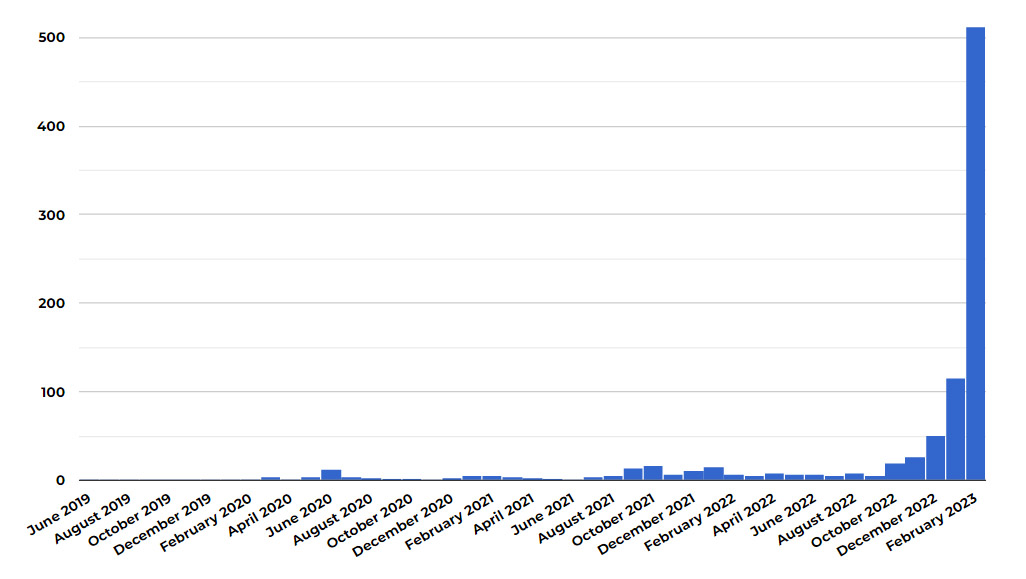
    In a graph shared on Twitter , Clarkesworld editor Neil Clarke tallied the number of banned writers submitting plagiarized or machine-generated stories. The numbers totaled 500 in February, up from just over 100 in January and a low baseline of around 25 in October 2022. The rise in banned submissions roughly coincides with the release of ChatGPT on November 30, 2022.

    A graph provided by Neil Clarke of Clarkesworld Magazine: "This is the number of people we've had to ban by month. Prior to late 2022, that was mostly plagiarism. Now it's machine-generated submissions."

    A graph provided by Neil Clarke of Clarkesworld Magazine: "This is the number of people we've had to ban by month. Prior to late 2022, that was mostly plagiarism. Now it's machine-generated submissions." (credit: Neil Clarke )

    Large language models (LLM) such as ChatGPT have been trained on millions of books and websites and can author original stories quickly. They don't work autonomously, however, and a human must guide their output with a prompt that the AI model then attempts to automatically complete.

    Read 7 remaining paragraphs | Comments

    • tagbiz & it tagbiz & it tagbiz & it tagai tagai tagai tagchatgpt tagchatgpt tagchatgpt tagclarkesworld magazine tagclarkesworld magazine tagclarkesworld magazine taggpt-3 taggpt-3 taggpt-3 taglarge language models taglarge language models taglarge language models tagmachine learning tagmachine learning tagmachine learning tagneil clarke tagneil clarke tagneil clarke tagopenai tagopenai tagopenai tagsci-fi tagsci-fi tagsci-fi tagbiz & it tagbiz & it tagbiz & it tagai tagai tagai tagchatgpt tagchatgpt tagchatgpt tagclarkesworld magazine tagclarkesworld magazine tagclarkesworld magazine taggpt-3 taggpt-3 taggpt-3 taglarge language models taglarge language models taglarge language models tagmachine learning tagmachine learning tagmachine learning tagneil clarke tagneil clarke tagneil clarke tagopenai tagopenai tagopenai tagsci-fi tagsci-fi tagsci-fi tagbiz & it tagbiz & it tagbiz & it tagai tagai tagai tagchatgpt tagchatgpt tagchatgpt tagclarkesworld magazine tagclarkesworld magazine tagclarkesworld magazine taggpt-3 taggpt-3 taggpt-3 taglarge language models taglarge language models taglarge language models tagmachine learning tagmachine learning tagmachine learning tagneil clarke tagneil clarke tagneil clarke tagopenai tagopenai tagopenai tagsci-fi tagsci-fi tagsci-fi

    • Ar chevron_right

      Sci-fi becomes real as renowned magazine closes submissions due to AI writers

      news.movim.eu / ArsTechnica • 21 February 2023

    An AI-generated image of a robot eagerly writing a submission to Clarkesworld.

    Enlarge / An AI-generated image of a robot eagerly writing a submission to Clarkesworld. (credit: Ars Technica)

    One side effect of unlimited content-creation machines—generative AI—is unlimited content. On Monday, the editor of the renowned sci-fi publication Clarkesworld Magazine announced that he had temporarily closed story submissions due to a massive increase in machine-generated stories sent to the publication.

    In a graph shared on Twitter , Clarkesworld editor Neil Clarke tallied the number of banned writers submitting plagiarized or machine-generated stories. The numbers totaled 500 in February, up from just over 100 in January and a low baseline of around 25 in October 2022. The rise in banned submissions roughly coincides with the release of ChatGPT on November 30, 2022.

    A graph provided by Neil Clarke of Clarkesworld Magazine: "This is the number of people we've had to ban by month. Prior to late 2022, that was mostly plagiarism. Now it's machine-generated submissions."

    A graph provided by Neil Clarke of Clarkesworld Magazine: "This is the number of people we've had to ban by month. Prior to late 2022, that was mostly plagiarism. Now it's machine-generated submissions." (credit: Neil Clarke )

    Large language models (LLM) such as ChatGPT have been trained on millions of books and websites and can author original stories quickly. They don't work autonomously, however, and a human must guide their output with a prompt that the AI model then attempts to automatically complete.

    Read 7 remaining paragraphs | Comments

    • tagbiz & it tagbiz & it tagbiz & it tagai tagai tagai tagchatgpt tagchatgpt tagchatgpt tagclarkesworld magazine tagclarkesworld magazine tagclarkesworld magazine taggpt-3 taggpt-3 taggpt-3 taglarge language models taglarge language models taglarge language models tagmachine learning tagmachine learning tagmachine learning tagneil clarke tagneil clarke tagneil clarke tagopenai tagopenai tagopenai tagsci-fi tagsci-fi tagsci-fi tagbiz & it tagbiz & it tagbiz & it tagai tagai tagai tagchatgpt tagchatgpt tagchatgpt tagclarkesworld magazine tagclarkesworld magazine tagclarkesworld magazine taggpt-3 taggpt-3 taggpt-3 taglarge language models taglarge language models taglarge language models tagmachine learning tagmachine learning tagmachine learning tagneil clarke tagneil clarke tagneil clarke tagopenai tagopenai tagopenai tagsci-fi tagsci-fi tagsci-fi tagbiz & it tagbiz & it tagbiz & it tagai tagai tagai tagchatgpt tagchatgpt tagchatgpt tagclarkesworld magazine tagclarkesworld magazine tagclarkesworld magazine taggpt-3 taggpt-3 taggpt-3 taglarge language models taglarge language models taglarge language models tagmachine learning tagmachine learning tagmachine learning tagneil clarke tagneil clarke tagneil clarke tagopenai tagopenai tagopenai tagsci-fi tagsci-fi tagsci-fi

    • Ar chevron_right

      Sci-fi becomes real as renowned magazine closes submissions due to AI writers

      news.movim.eu / ArsTechnica • 21 February 2023

    An AI-generated image of a robot eagerly writing a submission to Clarkesworld.

    Enlarge / An AI-generated image of a robot eagerly writing a submission to Clarkesworld. (credit: Ars Technica)

    One side effect of unlimited content-creation machines—generative AI—is unlimited content. On Monday, the editor of the renowned sci-fi publication Clarkesworld Magazine announced that he had temporarily closed story submissions due to a massive increase in machine-generated stories sent to the publication.

    In a graph shared on Twitter , Clarkesworld editor Neil Clarke tallied the number of banned writers submitting plagiarized or machine-generated stories. The numbers totaled 500 in February, up from just over 100 in January and a low baseline of around 25 in October 2022. The rise in banned submissions roughly coincides with the release of ChatGPT on November 30, 2022.

    A graph provided by Neil Clarke of Clarkesworld Magazine: "This is the number of people we've had to ban by month. Prior to late 2022, that was mostly plagiarism. Now it's machine-generated submissions."

    A graph provided by Neil Clarke of Clarkesworld Magazine: "This is the number of people we've had to ban by month. Prior to late 2022, that was mostly plagiarism. Now it's machine-generated submissions." (credit: Neil Clarke )

    Large language models (LLM) such as ChatGPT have been trained on millions of books and websites and can author original stories quickly. They don't work autonomously, however, and a human must guide their output with a prompt that the AI model then attempts to automatically complete.

    Read 7 remaining paragraphs | Comments

    • tagbiz & it tagbiz & it tagbiz & it tagai tagai tagai tagchatgpt tagchatgpt tagchatgpt tagclarkesworld magazine tagclarkesworld magazine tagclarkesworld magazine taggpt-3 taggpt-3 taggpt-3 taglarge language models taglarge language models taglarge language models tagmachine learning tagmachine learning tagmachine learning tagneil clarke tagneil clarke tagneil clarke tagopenai tagopenai tagopenai tagsci-fi tagsci-fi tagsci-fi tagbiz & it tagbiz & it tagbiz & it tagai tagai tagai tagchatgpt tagchatgpt tagchatgpt tagclarkesworld magazine tagclarkesworld magazine tagclarkesworld magazine taggpt-3 taggpt-3 taggpt-3 taglarge language models taglarge language models taglarge language models tagmachine learning tagmachine learning tagmachine learning tagneil clarke tagneil clarke tagneil clarke tagopenai tagopenai tagopenai tagsci-fi tagsci-fi tagsci-fi tagbiz & it tagbiz & it tagbiz & it tagai tagai tagai tagchatgpt tagchatgpt tagchatgpt tagclarkesworld magazine tagclarkesworld magazine tagclarkesworld magazine taggpt-3 taggpt-3 taggpt-3 taglarge language models taglarge language models taglarge language models tagmachine learning tagmachine learning tagmachine learning tagneil clarke tagneil clarke tagneil clarke tagopenai tagopenai tagopenai tagsci-fi tagsci-fi tagsci-fi

  • history

    Get older posts

  • cloud_queue

    Powered by Movim