• progress_activity cloud_sync

    Reconnection to the server…

    Movim cannot talk with the server, please try again later


    • Public subscriptions

    • chevron_right

      coopr8

    • chevron_right

      gabagoo

    • chevron_right

      kenu_demon

    • chevron_right

      coopr8

    • chevron_right

      gabagoo

    • chevron_right

      kenu_demon

    • chevron_right

      coopr8

    • chevron_right

      gabagoo

    • chevron_right

      kenu_demon

  • Register Login

    Movim

    movim.chatterboxtown.us


  • group_work rss_feed
    add Follow

    ArsTechnica

    • Ar chevron_right

      Sci-fi becomes real as renowned magazine closes submissions due to AI writers

      news.movim.eu / ArsTechnica • 21 February 2023

    An AI-generated image of a robot eagerly writing a submission to Clarkesworld.

    Enlarge / An AI-generated image of a robot eagerly writing a submission to Clarkesworld. (credit: Ars Technica)

    One side effect of unlimited content-creation machines—generative AI—is unlimited content. On Monday, the editor of the renowned sci-fi publication Clarkesworld Magazine announced that he had temporarily closed story submissions due to a massive increase in machine-generated stories sent to the publication.

    In a graph shared on Twitter , Clarkesworld editor Neil Clarke tallied the number of banned writers submitting plagiarized or machine-generated stories. The numbers totaled 500 in February, up from just over 100 in January and a low baseline of around 25 in October 2022. The rise in banned submissions roughly coincides with the release of ChatGPT on November 30, 2022.
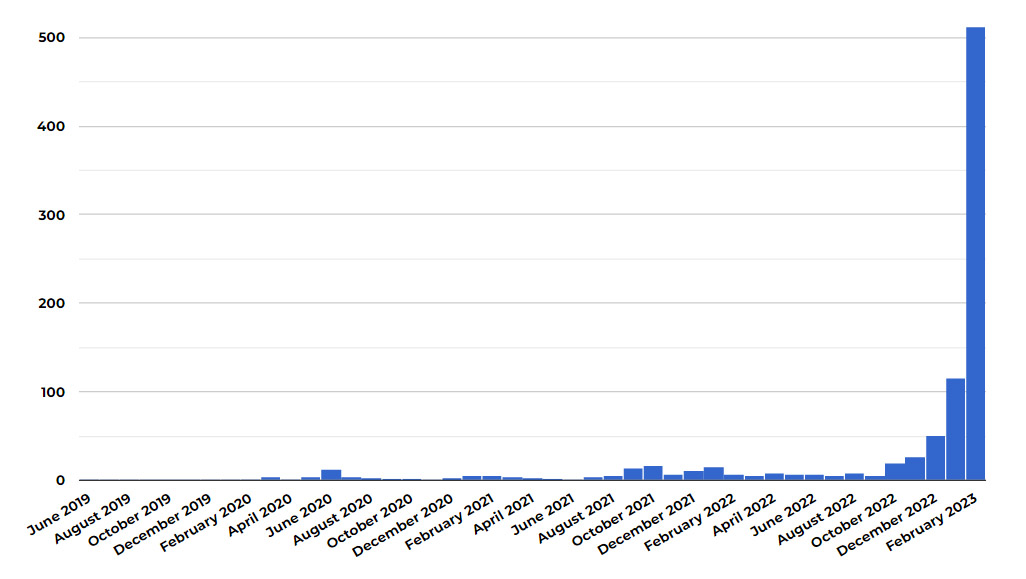
    A graph provided by Neil Clarke of Clarkesworld Magazine: "This is the number of people we've had to ban by month. Prior to late 2022, that was mostly plagiarism. Now it's machine-generated submissions."

    A graph provided by Neil Clarke of Clarkesworld Magazine: "This is the number of people we've had to ban by month. Prior to late 2022, that was mostly plagiarism. Now it's machine-generated submissions." (credit: Neil Clarke )

    Large language models (LLM) such as ChatGPT have been trained on millions of books and websites and can author original stories quickly. They don't work autonomously, however, and a human must guide their output with a prompt that the AI model then attempts to automatically complete.

    Read 7 remaining paragraphs | Comments

    • tagbiz & it tagbiz & it tagbiz & it tagai tagai tagai tagchatgpt tagchatgpt tagchatgpt tagclarkesworld magazine tagclarkesworld magazine tagclarkesworld magazine taggpt-3 taggpt-3 taggpt-3 taglarge language models taglarge language models taglarge language models tagmachine learning tagmachine learning tagmachine learning tagneil clarke tagneil clarke tagneil clarke tagopenai tagopenai tagopenai tagsci-fi tagsci-fi tagsci-fi tagbiz & it tagbiz & it tagbiz & it tagai tagai tagai tagchatgpt tagchatgpt tagchatgpt tagclarkesworld magazine tagclarkesworld magazine tagclarkesworld magazine taggpt-3 taggpt-3 taggpt-3 taglarge language models taglarge language models taglarge language models tagmachine learning tagmachine learning tagmachine learning tagneil clarke tagneil clarke tagneil clarke tagopenai tagopenai tagopenai tagsci-fi tagsci-fi tagsci-fi tagbiz & it tagbiz & it tagbiz & it tagai tagai tagai tagchatgpt tagchatgpt tagchatgpt tagclarkesworld magazine tagclarkesworld magazine tagclarkesworld magazine taggpt-3 taggpt-3 taggpt-3 taglarge language models taglarge language models taglarge language models tagmachine learning tagmachine learning tagmachine learning tagneil clarke tagneil clarke tagneil clarke tagopenai tagopenai tagopenai tagsci-fi tagsci-fi tagsci-fi

    • Ar chevron_right

      Sci-fi becomes real as renowned magazine closes submissions due to AI writers

      news.movim.eu / ArsTechnica • 21 February 2023

    An AI-generated image of a robot eagerly writing a submission to Clarkesworld.

    Enlarge / An AI-generated image of a robot eagerly writing a submission to Clarkesworld. (credit: Ars Technica)

    One side effect of unlimited content-creation machines—generative AI—is unlimited content. On Monday, the editor of the renowned sci-fi publication Clarkesworld Magazine announced that he had temporarily closed story submissions due to a massive increase in machine-generated stories sent to the publication.

    In a graph shared on Twitter , Clarkesworld editor Neil Clarke tallied the number of banned writers submitting plagiarized or machine-generated stories. The numbers totaled 500 in February, up from just over 100 in January and a low baseline of around 25 in October 2022. The rise in banned submissions roughly coincides with the release of ChatGPT on November 30, 2022.

    A graph provided by Neil Clarke of Clarkesworld Magazine: "This is the number of people we've had to ban by month. Prior to late 2022, that was mostly plagiarism. Now it's machine-generated submissions."

    A graph provided by Neil Clarke of Clarkesworld Magazine: "This is the number of people we've had to ban by month. Prior to late 2022, that was mostly plagiarism. Now it's machine-generated submissions." (credit: Neil Clarke )

    Large language models (LLM) such as ChatGPT have been trained on millions of books and websites and can author original stories quickly. They don't work autonomously, however, and a human must guide their output with a prompt that the AI model then attempts to automatically complete.

    Read 7 remaining paragraphs | Comments

    • tagbiz & it tagbiz & it tagbiz & it tagai tagai tagai tagchatgpt tagchatgpt tagchatgpt tagclarkesworld magazine tagclarkesworld magazine tagclarkesworld magazine taggpt-3 taggpt-3 taggpt-3 taglarge language models taglarge language models taglarge language models tagmachine learning tagmachine learning tagmachine learning tagneil clarke tagneil clarke tagneil clarke tagopenai tagopenai tagopenai tagsci-fi tagsci-fi tagsci-fi tagbiz & it tagbiz & it tagbiz & it tagai tagai tagai tagchatgpt tagchatgpt tagchatgpt tagclarkesworld magazine tagclarkesworld magazine tagclarkesworld magazine taggpt-3 taggpt-3 taggpt-3 taglarge language models taglarge language models taglarge language models tagmachine learning tagmachine learning tagmachine learning tagneil clarke tagneil clarke tagneil clarke tagopenai tagopenai tagopenai tagsci-fi tagsci-fi tagsci-fi tagbiz & it tagbiz & it tagbiz & it tagai tagai tagai tagchatgpt tagchatgpt tagchatgpt tagclarkesworld magazine tagclarkesworld magazine tagclarkesworld magazine taggpt-3 taggpt-3 taggpt-3 taglarge language models taglarge language models taglarge language models tagmachine learning tagmachine learning tagmachine learning tagneil clarke tagneil clarke tagneil clarke tagopenai tagopenai tagopenai tagsci-fi tagsci-fi tagsci-fi

    • Ar chevron_right

      Sci-fi becomes real as renowned magazine closes submissions due to AI writers

      news.movim.eu / ArsTechnica • 21 February 2023

    An AI-generated image of a robot eagerly writing a submission to Clarkesworld.

    Enlarge / An AI-generated image of a robot eagerly writing a submission to Clarkesworld. (credit: Ars Technica)

    One side effect of unlimited content-creation machines—generative AI—is unlimited content. On Monday, the editor of the renowned sci-fi publication Clarkesworld Magazine announced that he had temporarily closed story submissions due to a massive increase in machine-generated stories sent to the publication.

    In a graph shared on Twitter , Clarkesworld editor Neil Clarke tallied the number of banned writers submitting plagiarized or machine-generated stories. The numbers totaled 500 in February, up from just over 100 in January and a low baseline of around 25 in October 2022. The rise in banned submissions roughly coincides with the release of ChatGPT on November 30, 2022.

    A graph provided by Neil Clarke of Clarkesworld Magazine: "This is the number of people we've had to ban by month. Prior to late 2022, that was mostly plagiarism. Now it's machine-generated submissions."

    A graph provided by Neil Clarke of Clarkesworld Magazine: "This is the number of people we've had to ban by month. Prior to late 2022, that was mostly plagiarism. Now it's machine-generated submissions." (credit: Neil Clarke )

    Large language models (LLM) such as ChatGPT have been trained on millions of books and websites and can author original stories quickly. They don't work autonomously, however, and a human must guide their output with a prompt that the AI model then attempts to automatically complete.

    Read 7 remaining paragraphs | Comments

    • tagbiz & it tagbiz & it tagbiz & it tagai tagai tagai tagchatgpt tagchatgpt tagchatgpt tagclarkesworld magazine tagclarkesworld magazine tagclarkesworld magazine taggpt-3 taggpt-3 taggpt-3 taglarge language models taglarge language models taglarge language models tagmachine learning tagmachine learning tagmachine learning tagneil clarke tagneil clarke tagneil clarke tagopenai tagopenai tagopenai tagsci-fi tagsci-fi tagsci-fi tagbiz & it tagbiz & it tagbiz & it tagai tagai tagai tagchatgpt tagchatgpt tagchatgpt tagclarkesworld magazine tagclarkesworld magazine tagclarkesworld magazine taggpt-3 taggpt-3 taggpt-3 taglarge language models taglarge language models taglarge language models tagmachine learning tagmachine learning tagmachine learning tagneil clarke tagneil clarke tagneil clarke tagopenai tagopenai tagopenai tagsci-fi tagsci-fi tagsci-fi tagbiz & it tagbiz & it tagbiz & it tagai tagai tagai tagchatgpt tagchatgpt tagchatgpt tagclarkesworld magazine tagclarkesworld magazine tagclarkesworld magazine taggpt-3 taggpt-3 taggpt-3 taglarge language models taglarge language models taglarge language models tagmachine learning tagmachine learning tagmachine learning tagneil clarke tagneil clarke tagneil clarke tagopenai tagopenai tagopenai tagsci-fi tagsci-fi tagsci-fi

  • cloud_queue

    Powered by Movim