• progress_activity cloud_sync

    Reconnection to the server…

    Movim cannot talk with the server, please try again later


    • Public subscriptions

    • chevron_right

      coopr8

    • chevron_right

      gabagoo

    • chevron_right

      kenu_demon

    • chevron_right

      coopr8

    • chevron_right

      gabagoo

    • chevron_right

      kenu_demon

    • chevron_right

      coopr8

    • chevron_right

      gabagoo

    • chevron_right

      kenu_demon

  • Register Login

    Movim

    movim.chatterboxtown.us


  • group_work rss_feed
    add Follow

    ArsTechnica

    • Ar chevron_right

      The end of an era: Dell will no longer make XPS computers

      news.movim.eu / ArsTechnica • 6 January 2025

    After ditching the traditional Dell XPS laptop look in favor of the polarizing design of the XPS 13 Plus released in 2022 , Dell is killing the XPS branding that has become a mainstay for people seeking a sleek, respectable, well-priced PC.

    This means that there won't be any more Dell XPS clamshell ultralight laptops, 2-in-1 laptops, or desktops. Dell is also killing its Latitude, Inspiron, and Precision branding, it announced today.

    Moving forward, Dell computers will have either just Dell branding, which Dell’s announcement today described as “designed for play, school, and work,” Dell Pro branding “for professional-grade productivity,” or be Dell Pro Max products, which are “designed for maximum performance." Dell will release Dell and Dell Pro-branded displays, accessories, and "services," it said. The Pro Max line will feature laptops and desktop workstations with professional-grade GPU capabilities as well as a new thermal design.
    Read full article

    Comments

    • tagtech tagtech tagtech tagdell tagdell tagdell tagdesktops tagdesktops tagdesktops taglaptops taglaptops taglaptops tagtech tagtech tagtech tagdell tagdell tagdell tagdesktops tagdesktops tagdesktops taglaptops taglaptops taglaptops tagtech tagtech tagtech tagdell tagdell tagdell tagdesktops tagdesktops tagdesktops taglaptops taglaptops taglaptops

    • Pictures 3 image

    • visibility
    • visibility
    • visibility
    • Ar chevron_right

      The end of an era: Dell will no longer make XPS computers

      news.movim.eu / ArsTechnica • 6 January 2025

    After ditching the traditional Dell XPS laptop look in favor of the polarizing design of the XPS 13 Plus released in 2022 , Dell is killing the XPS branding that has become a mainstay for people seeking a sleek, respectable, well-priced PC.

    This means that there won't be any more Dell XPS clamshell ultralight laptops, 2-in-1 laptops, or desktops. Dell is also killing its Latitude, Inspiron, and Precision branding, it announced today.

    Moving forward, Dell computers will have either just Dell branding, which Dell’s announcement today described as “designed for play, school, and work,” Dell Pro branding “for professional-grade productivity,” or be Dell Pro Max products, which are “designed for maximum performance." Dell will release Dell and Dell Pro-branded displays, accessories, and "services," it said. The Pro Max line will feature laptops and desktop workstations with professional-grade GPU capabilities as well as a new thermal design.

    Read full article

    Comments

    • tagtech tagtech tagtech tagdell tagdell tagdell tagdesktops tagdesktops tagdesktops taglaptops taglaptops taglaptops tagtech tagtech tagtech tagdell tagdell tagdell tagdesktops tagdesktops tagdesktops taglaptops taglaptops taglaptops tagtech tagtech tagtech tagdell tagdell tagdell tagdesktops tagdesktops tagdesktops taglaptops taglaptops taglaptops

    • Pictures 3 image

    • visibility
    • visibility
    • visibility
    • Ar chevron_right

      The end of an era: Dell will no longer make XPS computers

      news.movim.eu / ArsTechnica • 6 January 2025

    After ditching the traditional Dell XPS laptop look in favor of the polarizing design of the XPS 13 Plus released in 2022 , Dell is killing the XPS branding that has become a mainstay for people seeking a sleek, respectable, well-priced PC.

    This means that there won't be any more Dell XPS clamshell ultralight laptops, 2-in-1 laptops, or desktops. Dell is also killing its Latitude, Inspiron, and Precision branding, it announced today.

    Moving forward, Dell computers will have either just Dell branding, which Dell’s announcement today described as “designed for play, school, and work,” Dell Pro branding “for professional-grade productivity,” or be Dell Pro Max products, which are “designed for maximum performance." Dell will release Dell and Dell Pro-branded displays, accessories, and "services," it said. The Pro Max line will feature laptops and desktop workstations with professional-grade GPU capabilities as well as a new thermal design.

    Read full article

    Comments

    • tagtech tagtech tagtech tagdell tagdell tagdell tagdesktops tagdesktops tagdesktops taglaptops taglaptops taglaptops tagtech tagtech tagtech tagdell tagdell tagdell tagdesktops tagdesktops tagdesktops taglaptops taglaptops taglaptops tagtech tagtech tagtech tagdell tagdell tagdell tagdesktops tagdesktops tagdesktops taglaptops taglaptops taglaptops

    • Pictures 3 image

    • visibility
    • visibility
    • visibility
    • Ar chevron_right

      New Radeon RX 9000 GPUs promise to fix two of AMD’s biggest weaknesses

      news.movim.eu / ArsTechnica • 6 January 2025 • 1 minute

    Nvidia is widely expected to announce specs, pricing, and availability information for the first few cards in the new RTX 50 series at its CES keynote later today. AMD isn't ready to get as specific about its next-generation graphics lineup yet, but the company shared a few morsels today about its next-generation RDNA 4 graphics architecture and its 9000-series graphics cards.

    AMD mentioned that RDNA 4 cards were on track to launch in early 2025 during a recent earnings call , acknowledging that shipments of current-generation RX 7000-series cards were already slowing down. CEO Lisa Su said then that the architecture would include "significantly higher ray-tracing performance" as well as "new AI capabilities."

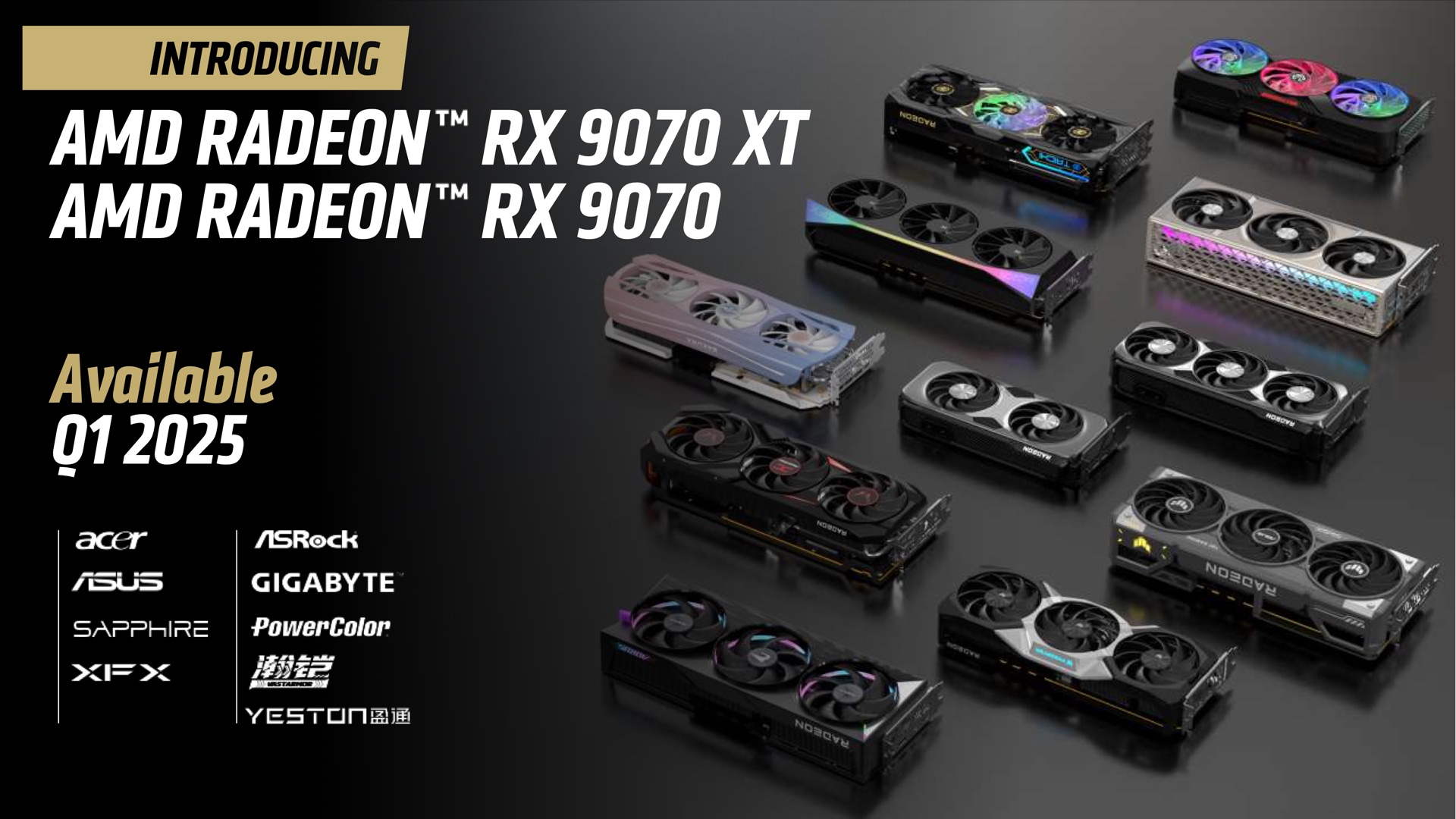
    AMD's RDNA 4 launch will begin with the 9070 XT and 9070, which are both being positioned as upper-midrange GPUs like the RTX 4070 series. Credit: AMD
    The preview the company is providing today provides few details beyond those surface-level proclamations. The compute units will be "optimized," AI compute will be "supercharged," ray-tracing will be "improved," and media encoding quality will be "better," but AMD isn't providing hard numbers for anything at this point. The RDNA 4 launch will begin with the Radeon RX 9070 XT and 9070 at some point in Q1 of 2025, and AMD will provide more information "later in the quarter."

    Read full article

    Comments

    • tagtech tagtech tagtech tagamd tagamd tagamd tagamd radeon tagamd radeon tagamd radeon tagtech tagtech tagtech tagamd tagamd tagamd tagamd radeon tagamd radeon tagamd radeon tagtech tagtech tagtech tagamd tagamd tagamd tagamd radeon tagamd radeon tagamd radeon

    • Pictures 3 image

    • visibility
    • visibility
    • visibility
    • Ar chevron_right

      New Radeon RX 9000 GPUs promise to fix two of AMD’s biggest weaknesses

      news.movim.eu / ArsTechnica • 6 January 2025 • 1 minute

    Nvidia is widely expected to announce specs, pricing, and availability information for the first few cards in the new RTX 50 series at its CES keynote later today. AMD isn't ready to get as specific about its next-generation graphics lineup yet, but the company shared a few morsels today about its next-generation RDNA 4 graphics architecture and its 9000-series graphics cards.

    AMD mentioned that RDNA 4 cards were on track to launch in early 2025 during a recent earnings call , acknowledging that shipments of current-generation RX 7000-series cards were already slowing down. CEO Lisa Su said then that the architecture would include "significantly higher ray-tracing performance" as well as "new AI capabilities."

    AMD's RDNA 4 launch will begin with the 9070 XT and 9070, which are both being positioned as upper-midrange GPUs like the RTX 4070 series. Credit: AMD
    The preview the company is providing today provides few details beyond those surface-level proclamations. The compute units will be "optimized," AI compute will be "supercharged," ray-tracing will be "improved," and media encoding quality will be "better," but AMD isn't providing hard numbers for anything at this point. The RDNA 4 launch will begin with the Radeon RX 9070 XT and 9070 at some point in Q1 of 2025, and AMD will provide more information "later in the quarter."

    Read full article

    Comments

    • tagtech tagtech tagtech tagamd tagamd tagamd tagamd radeon tagamd radeon tagamd radeon tagtech tagtech tagtech tagamd tagamd tagamd tagamd radeon tagamd radeon tagamd radeon tagtech tagtech tagtech tagamd tagamd tagamd tagamd radeon tagamd radeon tagamd radeon

    • Pictures 3 image

    • visibility
    • visibility
    • visibility
    • Ar chevron_right

      New Radeon RX 9000 GPUs promise to fix two of AMD’s biggest weaknesses

      news.movim.eu / ArsTechnica • 6 January 2025 • 1 minute

    Nvidia is widely expected to announce specs, pricing, and availability information for the first few cards in the new RTX 50 series at its CES keynote later today. AMD isn't ready to get as specific about its next-generation graphics lineup yet, but the company shared a few morsels today about its next-generation RDNA 4 graphics architecture and its 9000-series graphics cards.

    AMD mentioned that RDNA 4 cards were on track to launch in early 2025 during a recent earnings call , acknowledging that shipments of current-generation RX 7000-series cards were already slowing down. CEO Lisa Su said then that the architecture would include "significantly higher ray-tracing performance" as well as "new AI capabilities."

    AMD's RDNA 4 launch will begin with the 9070 XT and 9070, which are both being positioned as upper-midrange GPUs like the RTX 4070 series. Credit: AMD

    The preview the company is providing today provides few details beyond those surface-level proclamations. The compute units will be "optimized," AI compute will be "supercharged," ray-tracing will be "improved," and media encoding quality will be "better," but AMD isn't providing hard numbers for anything at this point. The RDNA 4 launch will begin with the Radeon RX 9070 XT and 9070 at some point in Q1 of 2025, and AMD will provide more information "later in the quarter."

    Read full article

    Comments

    • tagtech tagtech tagtech tagamd tagamd tagamd tagamd radeon tagamd radeon tagamd radeon tagtech tagtech tagtech tagamd tagamd tagamd tagamd radeon tagamd radeon tagamd radeon tagtech tagtech tagtech tagamd tagamd tagamd tagamd radeon tagamd radeon tagamd radeon

    • Pictures 3 image

    • visibility
    • visibility
    • visibility
    • Ar chevron_right

      HDMI 2.2 will require new “Ultra96” cables, whenever we have 8K TVs and content

      news.movim.eu / ArsTechnica • 6 January 2025 • 1 minute

    We've all had a good seven years to figure out why our interconnected devices refused to work properly with the HDMI 2.1 specification. The HDMI Forum announced at CES today that it's time to start considering new headaches. HDMI 2.2 will require new cables for full compatibility, but it has the same physical connectors. Tiny QR codes are suggested to help with that, however.

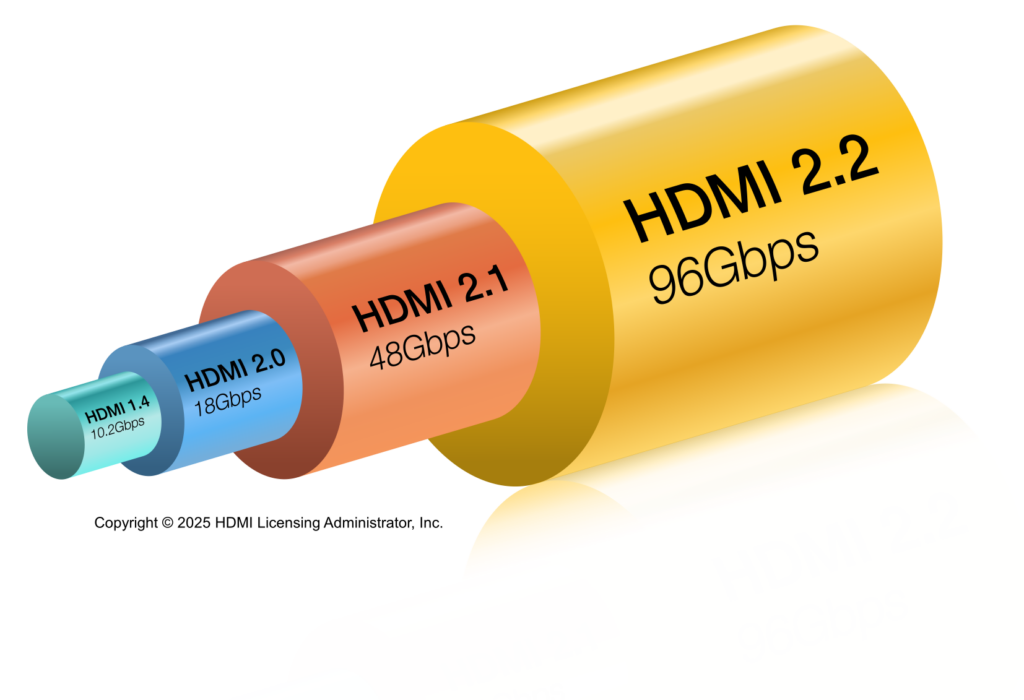
    The new specification is named HDMI 2.2, but compatible cables will carry an "Ultra96" marker to indicate that they can carry 96GBps, double the 48 of HDMI 2.1b. The Forum anticipates this will result in higher resolutions and refresh rates and a "next-gen HDMI Fixed Rate Link ." The Forum cited "AR/VR/MR, spatial reality, and light field displays" as benefiting from increased bandwidth, along with medical imaging and machine vision.

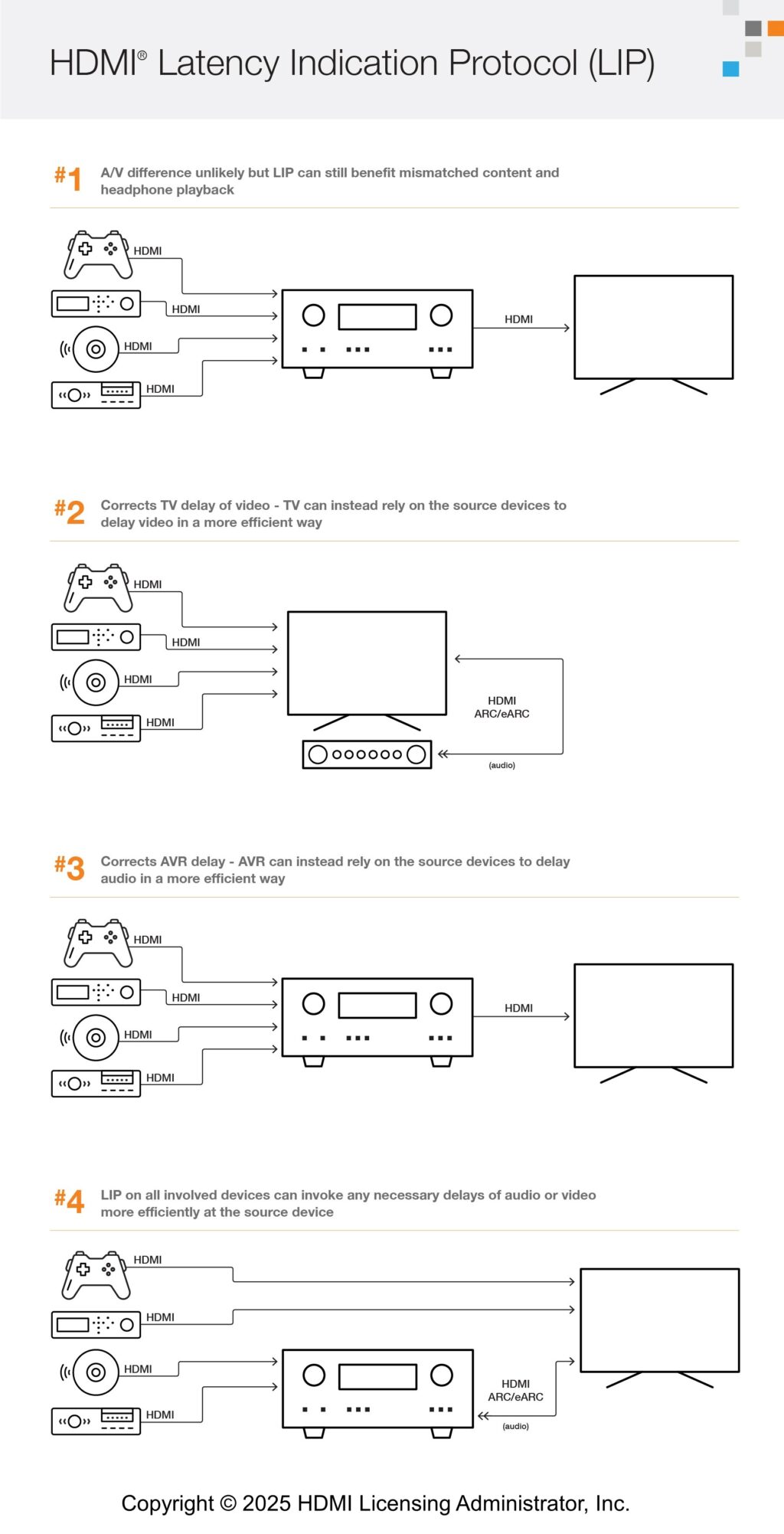
    Examples of how HDMI 2.2's synchronization abilities will benefit home theaters.
    A visualization of how far HDMI has come in bandwidth, from 1.0 to 2.2.

    A bit closer to home, the HDMI 2.2 specification also includes "Latency Indication Protocol" (LIP), which can help improve audio and video synchronization. This should matter most in "multi-hop" systems, such as home theater setups with soundbars or receivers. Illustrations offered by the Forum show LIP working to correct delays on headphones, soundbars connected through ARC or eARC, and mixed systems where some components may be connected to a TV, while others go straight into the receiver.

    Read full article

    Comments

    • tagtech tagtech tagtech taghdmi taghdmi taghdmi taghdmi 2.2 taghdmi 2.2 taghdmi 2.2 tagultra96 tagultra96 tagultra96 tagtech tagtech tagtech taghdmi taghdmi taghdmi taghdmi 2.2 taghdmi 2.2 taghdmi 2.2 tagultra96 tagultra96 tagultra96 tagtech tagtech tagtech taghdmi taghdmi taghdmi taghdmi 2.2 taghdmi 2.2 taghdmi 2.2 tagultra96 tagultra96 tagultra96

    • Pictures 3 image

    • visibility
    • visibility
    • visibility
    • Ar chevron_right

      HDMI 2.2 will require new “Ultra96” cables, whenever we have 8K TVs and content

      news.movim.eu / ArsTechnica • 6 January 2025 • 1 minute

    We've all had a good seven years to figure out why our interconnected devices refused to work properly with the HDMI 2.1 specification. The HDMI Forum announced at CES today that it's time to start considering new headaches. HDMI 2.2 will require new cables for full compatibility, but it has the same physical connectors. Tiny QR codes are suggested to help with that, however.

    The new specification is named HDMI 2.2, but compatible cables will carry an "Ultra96" marker to indicate that they can carry 96GBps, double the 48 of HDMI 2.1b. The Forum anticipates this will result in higher resolutions and refresh rates and a "next-gen HDMI Fixed Rate Link ." The Forum cited "AR/VR/MR, spatial reality, and light field displays" as benefiting from increased bandwidth, along with medical imaging and machine vision.

    Examples of how HDMI 2.2's synchronization abilities will benefit home theaters.
    A visualization of how far HDMI has come in bandwidth, from 1.0 to 2.2.

    A bit closer to home, the HDMI 2.2 specification also includes "Latency Indication Protocol" (LIP), which can help improve audio and video synchronization. This should matter most in "multi-hop" systems, such as home theater setups with soundbars or receivers. Illustrations offered by the Forum show LIP working to correct delays on headphones, soundbars connected through ARC or eARC, and mixed systems where some components may be connected to a TV, while others go straight into the receiver.

    Read full article

    Comments

    • tagtech tagtech tagtech taghdmi taghdmi taghdmi taghdmi 2.2 taghdmi 2.2 taghdmi 2.2 tagultra96 tagultra96 tagultra96 tagtech tagtech tagtech taghdmi taghdmi taghdmi taghdmi 2.2 taghdmi 2.2 taghdmi 2.2 tagultra96 tagultra96 tagultra96 tagtech tagtech tagtech taghdmi taghdmi taghdmi taghdmi 2.2 taghdmi 2.2 taghdmi 2.2 tagultra96 tagultra96 tagultra96

    • Pictures 3 image

    • visibility
    • visibility
    • visibility
    • Ar chevron_right

      HDMI 2.2 will require new “Ultra96” cables, whenever we have 8K TVs and content

      news.movim.eu / ArsTechnica • 6 January 2025 • 1 minute

    We've all had a good seven years to figure out why our interconnected devices refused to work properly with the HDMI 2.1 specification. The HDMI Forum announced at CES today that it's time to start considering new headaches. HDMI 2.2 will require new cables for full compatibility, but it has the same physical connectors. Tiny QR codes are suggested to help with that, however.

    The new specification is named HDMI 2.2, but compatible cables will carry an "Ultra96" marker to indicate that they can carry 96GBps, double the 48 of HDMI 2.1b. The Forum anticipates this will result in higher resolutions and refresh rates and a "next-gen HDMI Fixed Rate Link ." The Forum cited "AR/VR/MR, spatial reality, and light field displays" as benefiting from increased bandwidth, along with medical imaging and machine vision.

    Examples of how HDMI 2.2's synchronization abilities will benefit home theaters.
    A visualization of how far HDMI has come in bandwidth, from 1.0 to 2.2.

    A bit closer to home, the HDMI 2.2 specification also includes "Latency Indication Protocol" (LIP), which can help improve audio and video synchronization. This should matter most in "multi-hop" systems, such as home theater setups with soundbars or receivers. Illustrations offered by the Forum show LIP working to correct delays on headphones, soundbars connected through ARC or eARC, and mixed systems where some components may be connected to a TV, while others go straight into the receiver.

    Read full article

    Comments

    • tagtech tagtech tagtech taghdmi taghdmi taghdmi taghdmi 2.2 taghdmi 2.2 taghdmi 2.2 tagultra96 tagultra96 tagultra96 tagtech tagtech tagtech taghdmi taghdmi taghdmi taghdmi 2.2 taghdmi 2.2 taghdmi 2.2 tagultra96 tagultra96 tagultra96 tagtech tagtech tagtech taghdmi taghdmi taghdmi taghdmi 2.2 taghdmi 2.2 taghdmi 2.2 tagultra96 tagultra96 tagultra96

    • Pictures 3 image

    • visibility
    • visibility
    • visibility
  • history

    Get older posts

  • cloud_queue

    Powered by Movim