• progress_activity cloud_sync

    Reconnection to the server…

    Movim cannot talk with the server, please try again later


    • Public subscriptions

    • chevron_right

      coopr8

    • chevron_right

      gabagoo

    • chevron_right

      kenu_demon

    • chevron_right

      coopr8

    • chevron_right

      gabagoo

    • chevron_right

      kenu_demon

    • chevron_right

      coopr8

    • chevron_right

      gabagoo

    • chevron_right

      kenu_demon

  • Register Login

    Movim

    movim.chatterboxtown.us


  • group_work rss_feed
    add Follow

    ArsTechnica

    • Ar chevron_right

      HDMI 2.2 will require new “Ultra96” cables, whenever we have 8K TVs and content

      news.movim.eu / ArsTechnica • 6 January 2025 • 1 minute

    We've all had a good seven years to figure out why our interconnected devices refused to work properly with the HDMI 2.1 specification. The HDMI Forum announced at CES today that it's time to start considering new headaches. HDMI 2.2 will require new cables for full compatibility, but it has the same physical connectors. Tiny QR codes are suggested to help with that, however.

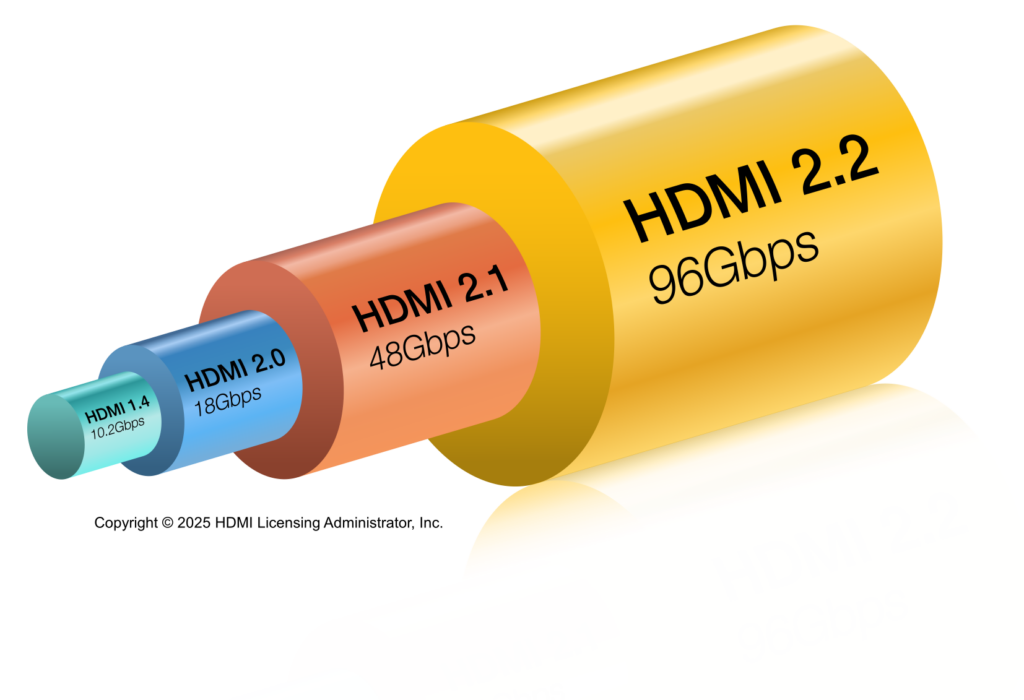
    The new specification is named HDMI 2.2, but compatible cables will carry an "Ultra96" marker to indicate that they can carry 96GBps, double the 48 of HDMI 2.1b. The Forum anticipates this will result in higher resolutions and refresh rates and a "next-gen HDMI Fixed Rate Link ." The Forum cited "AR/VR/MR, spatial reality, and light field displays" as benefiting from increased bandwidth, along with medical imaging and machine vision.
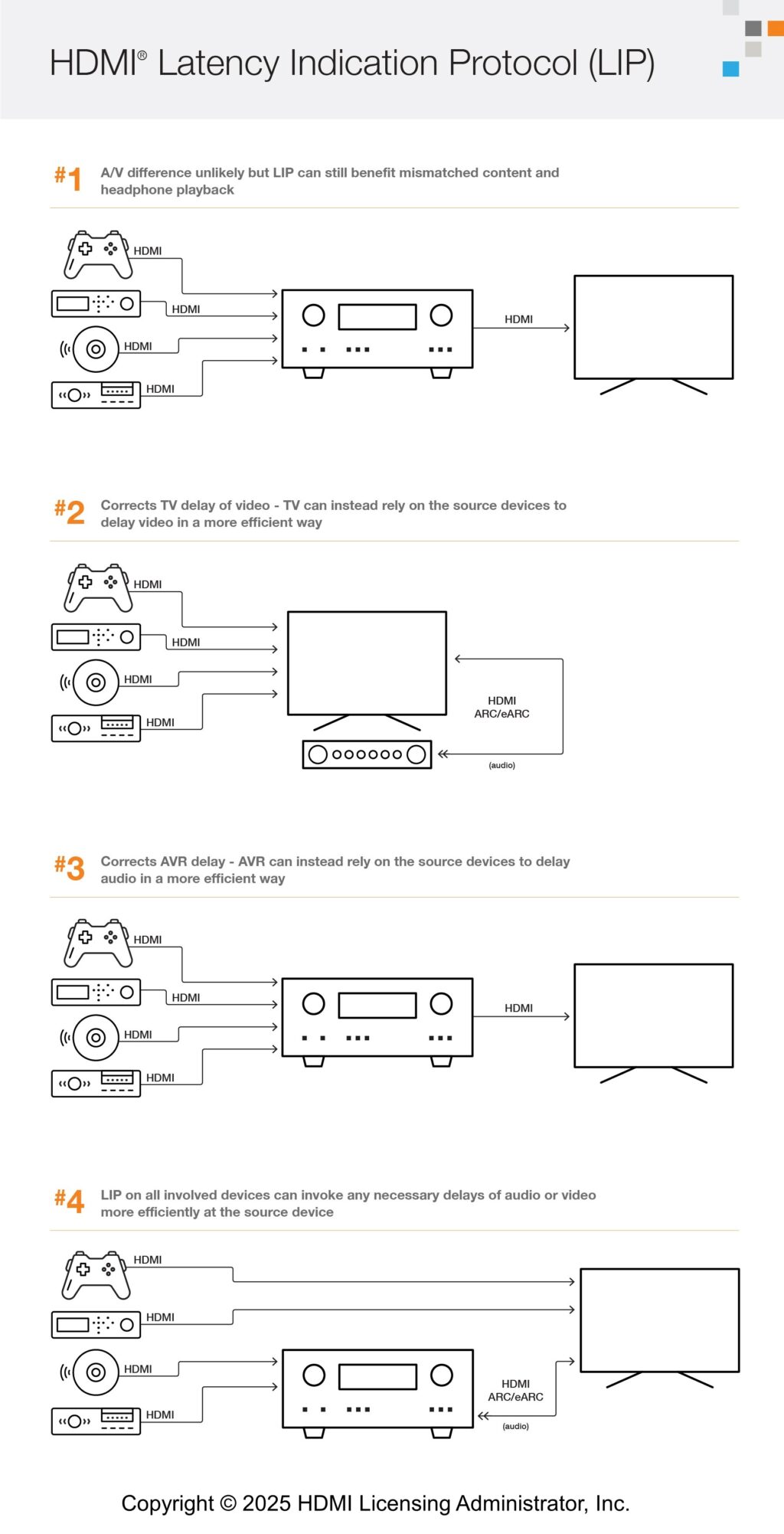
    Examples of how HDMI 2.2's synchronization abilities will benefit home theaters.
    A visualization of how far HDMI has come in bandwidth, from 1.0 to 2.2.

    A bit closer to home, the HDMI 2.2 specification also includes "Latency Indication Protocol" (LIP), which can help improve audio and video synchronization. This should matter most in "multi-hop" systems, such as home theater setups with soundbars or receivers. Illustrations offered by the Forum show LIP working to correct delays on headphones, soundbars connected through ARC or eARC, and mixed systems where some components may be connected to a TV, while others go straight into the receiver.

    Read full article

    Comments

    • tagtech tagtech tagtech taghdmi taghdmi taghdmi taghdmi 2.2 taghdmi 2.2 taghdmi 2.2 tagultra96 tagultra96 tagultra96 tagtech tagtech tagtech taghdmi taghdmi taghdmi taghdmi 2.2 taghdmi 2.2 taghdmi 2.2 tagultra96 tagultra96 tagultra96 tagtech tagtech tagtech taghdmi taghdmi taghdmi taghdmi 2.2 taghdmi 2.2 taghdmi 2.2 tagultra96 tagultra96 tagultra96

    • Pictures 3 image

    • visibility
    • visibility
    • visibility
    • Ar chevron_right

      HDMI 2.2 will require new “Ultra96” cables, whenever we have 8K TVs and content

      news.movim.eu / ArsTechnica • 6 January 2025 • 1 minute

    We've all had a good seven years to figure out why our interconnected devices refused to work properly with the HDMI 2.1 specification. The HDMI Forum announced at CES today that it's time to start considering new headaches. HDMI 2.2 will require new cables for full compatibility, but it has the same physical connectors. Tiny QR codes are suggested to help with that, however.

    The new specification is named HDMI 2.2, but compatible cables will carry an "Ultra96" marker to indicate that they can carry 96GBps, double the 48 of HDMI 2.1b. The Forum anticipates this will result in higher resolutions and refresh rates and a "next-gen HDMI Fixed Rate Link ." The Forum cited "AR/VR/MR, spatial reality, and light field displays" as benefiting from increased bandwidth, along with medical imaging and machine vision.

    Examples of how HDMI 2.2's synchronization abilities will benefit home theaters.
    A visualization of how far HDMI has come in bandwidth, from 1.0 to 2.2.

    A bit closer to home, the HDMI 2.2 specification also includes "Latency Indication Protocol" (LIP), which can help improve audio and video synchronization. This should matter most in "multi-hop" systems, such as home theater setups with soundbars or receivers. Illustrations offered by the Forum show LIP working to correct delays on headphones, soundbars connected through ARC or eARC, and mixed systems where some components may be connected to a TV, while others go straight into the receiver.

    Read full article

    Comments

    • tagtech tagtech tagtech taghdmi taghdmi taghdmi taghdmi 2.2 taghdmi 2.2 taghdmi 2.2 tagultra96 tagultra96 tagultra96 tagtech tagtech tagtech taghdmi taghdmi taghdmi taghdmi 2.2 taghdmi 2.2 taghdmi 2.2 tagultra96 tagultra96 tagultra96 tagtech tagtech tagtech taghdmi taghdmi taghdmi taghdmi 2.2 taghdmi 2.2 taghdmi 2.2 tagultra96 tagultra96 tagultra96

    • Pictures 3 image

    • visibility
    • visibility
    • visibility
    • Ar chevron_right

      HDMI 2.2 will require new “Ultra96” cables, whenever we have 8K TVs and content

      news.movim.eu / ArsTechnica • 6 January 2025 • 1 minute

    We've all had a good seven years to figure out why our interconnected devices refused to work properly with the HDMI 2.1 specification. The HDMI Forum announced at CES today that it's time to start considering new headaches. HDMI 2.2 will require new cables for full compatibility, but it has the same physical connectors. Tiny QR codes are suggested to help with that, however.

    The new specification is named HDMI 2.2, but compatible cables will carry an "Ultra96" marker to indicate that they can carry 96GBps, double the 48 of HDMI 2.1b. The Forum anticipates this will result in higher resolutions and refresh rates and a "next-gen HDMI Fixed Rate Link ." The Forum cited "AR/VR/MR, spatial reality, and light field displays" as benefiting from increased bandwidth, along with medical imaging and machine vision.

    Examples of how HDMI 2.2's synchronization abilities will benefit home theaters.
    A visualization of how far HDMI has come in bandwidth, from 1.0 to 2.2.

    A bit closer to home, the HDMI 2.2 specification also includes "Latency Indication Protocol" (LIP), which can help improve audio and video synchronization. This should matter most in "multi-hop" systems, such as home theater setups with soundbars or receivers. Illustrations offered by the Forum show LIP working to correct delays on headphones, soundbars connected through ARC or eARC, and mixed systems where some components may be connected to a TV, while others go straight into the receiver.

    Read full article

    Comments

    • tagtech tagtech tagtech taghdmi taghdmi taghdmi taghdmi 2.2 taghdmi 2.2 taghdmi 2.2 tagultra96 tagultra96 tagultra96 tagtech tagtech tagtech taghdmi taghdmi taghdmi taghdmi 2.2 taghdmi 2.2 taghdmi 2.2 tagultra96 tagultra96 tagultra96 tagtech tagtech tagtech taghdmi taghdmi taghdmi taghdmi 2.2 taghdmi 2.2 taghdmi 2.2 tagultra96 tagultra96 tagultra96

    • Pictures 3 image

    • visibility
    • visibility
    • visibility
  • cloud_queue

    Powered by Movim