• progress_activity cloud_sync

    Reconnection to the server…

    Movim cannot talk with the server, please try again later


    • Public subscriptions

    • chevron_right

      coopr8

    • chevron_right

      gabagoo

    • chevron_right

      kenu_demon

    • chevron_right

      coopr8

    • chevron_right

      gabagoo

    • chevron_right

      kenu_demon

    • chevron_right

      coopr8

    • chevron_right

      gabagoo

    • chevron_right

      kenu_demon

  • Register Login

    Movim

    movim.chatterboxtown.us


  • group_work rss_feed
    add Follow

    ArsTechnica

    • Ar chevron_right

      French painters inspire new insights into the physics of soap bubbles

      news.movim.eu / ArsTechnica • 16 May 2023 • 1 minute
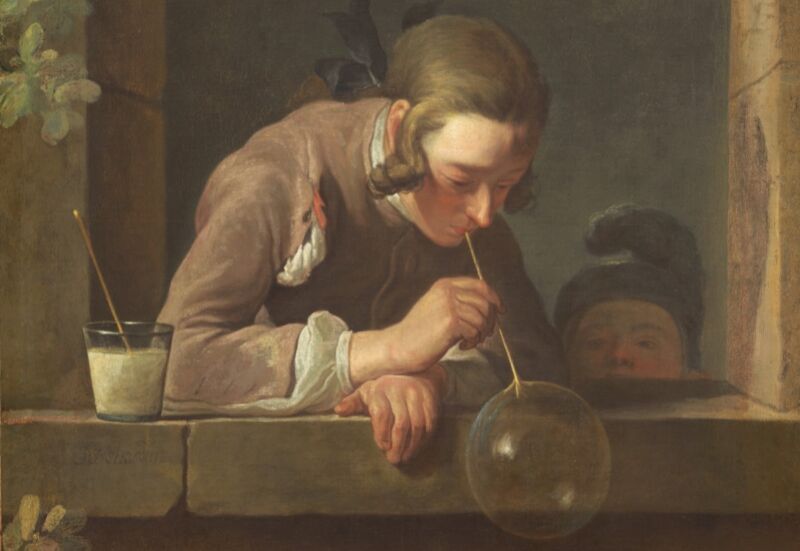
    A still life of a boy blowing a bubble by 18th century French painter Jean Simeon Chardin

    Enlarge / Still life of a boy blowing a bubble (circa 1734) by 18th century French painter Jean Siméon Chardin. (credit: Public domain)
    French painters Jean Siméon Chardin and Édouard Manet both created well-known paintings that depicted children blowing bubbles through straw-like tubes, albeit more than a century apart. Those realistic depictions of bubble dynamics have now inspired two physicists at the Université Grenoble Alpes in France, who conducted their own soap bubble experiments to learn more about the early formation stages of bubble dynamics. They describe their experimental results in a forthcoming paper to be published on May 22 in the journal Physical Review Fluids.

    Bubbles may seem frivolous, but there is some complex underlying physics, and their study has long been serious science. In the 1800s, Belgian physicist Joseph Plateau outlined four basic laws of surface tension that determine the structure of soapy films. Surface tension is why bubbles are round; that shape has the least surface area for a given volume, so it requires the least energy to maintain. Over time, that shape will look more like a soccer ball than a perfect sphere as gravity pulls the liquid downward ("coarsening").

    More recently, French physicists in 2016 worked out a theoretical model for the exact mechanism for how soap bubbles form when jets of air hit a soapy film. The researchers found that bubbles only formed above a certain speed, which depends on the width of the jet of air. In 2018, we reported how mathematicians at New York University's Applied Math Lab had fine-tuned the method for blowing the perfect bubble based on a series of experiments with thin, soapy films. In 2019, physicists at MIT and Princeton University demonstrated how to develop spherical bubbles uniformly by confining them in a narrow tube. Something about the interactions between the walls of the tube and the bubble makes the whole system less sensitive to irregularities in the initial conditions.

    Read 9 remaining paragraphs | Comments

    • taggaming & culture taggaming & culture taggaming & culture tagscience tagscience tagscience tagart tagart tagart tagbubble kinetics tagbubble kinetics tagbubble kinetics tagbubbles tagbubbles tagbubbles tagfluid dynamics tagfluid dynamics tagfluid dynamics tagphysics tagphysics tagphysics taggaming & culture taggaming & culture taggaming & culture tagscience tagscience tagscience tagart tagart tagart tagbubble kinetics tagbubble kinetics tagbubble kinetics tagbubbles tagbubbles tagbubbles tagfluid dynamics tagfluid dynamics tagfluid dynamics tagphysics tagphysics tagphysics taggaming & culture taggaming & culture taggaming & culture tagscience tagscience tagscience tagart tagart tagart tagbubble kinetics tagbubble kinetics tagbubble kinetics tagbubbles tagbubbles tagbubbles tagfluid dynamics tagfluid dynamics tagfluid dynamics tagphysics tagphysics tagphysics

    • Ar chevron_right

      French painters inspire new insights into the physics of soap bubbles

      news.movim.eu / ArsTechnica • 16 May 2023 • 1 minute

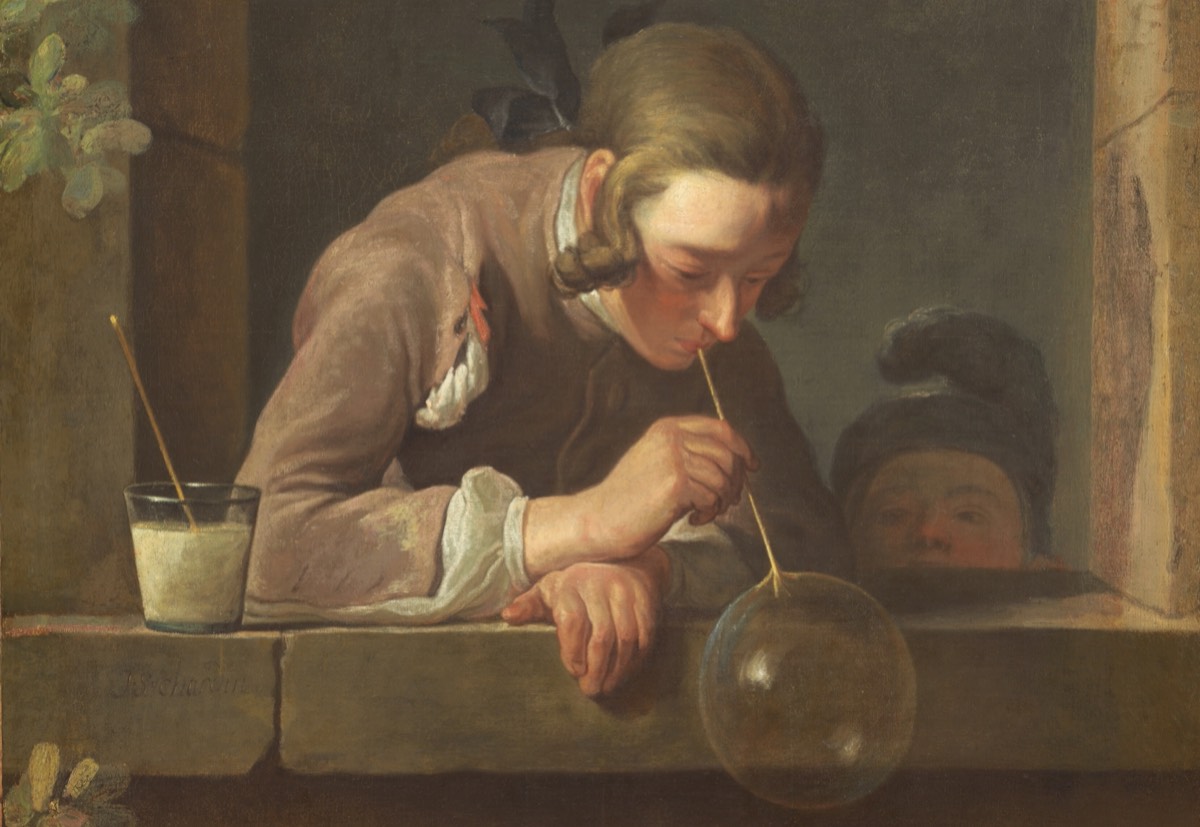
    A still life of a boy blowing a bubble by 18th century French painter Jean Simeon Chardin

    Enlarge / Still life of a boy blowing a bubble (circa 1734) by 18th century French painter Jean Siméon Chardin. (credit: Public domain)

    French painters Jean Siméon Chardin and Édouard Manet both created well-known paintings that depicted children blowing bubbles through straw-like tubes, albeit more than a century apart. Those realistic depictions of bubble dynamics have now inspired two physicists at the Université Grenoble Alpes in France, who conducted their own soap bubble experiments to learn more about the early formation stages of bubble dynamics. They describe their experimental results in a forthcoming paper to be published on May 22 in the journal Physical Review Fluids.

    Bubbles may seem frivolous, but there is some complex underlying physics, and their study has long been serious science. In the 1800s, Belgian physicist Joseph Plateau outlined four basic laws of surface tension that determine the structure of soapy films. Surface tension is why bubbles are round; that shape has the least surface area for a given volume, so it requires the least energy to maintain. Over time, that shape will look more like a soccer ball than a perfect sphere as gravity pulls the liquid downward ("coarsening").

    More recently, French physicists in 2016 worked out a theoretical model for the exact mechanism for how soap bubbles form when jets of air hit a soapy film. The researchers found that bubbles only formed above a certain speed, which depends on the width of the jet of air. In 2018, we reported how mathematicians at New York University's Applied Math Lab had fine-tuned the method for blowing the perfect bubble based on a series of experiments with thin, soapy films. In 2019, physicists at MIT and Princeton University demonstrated how to develop spherical bubbles uniformly by confining them in a narrow tube. Something about the interactions between the walls of the tube and the bubble makes the whole system less sensitive to irregularities in the initial conditions.

    Read 9 remaining paragraphs | Comments

    • taggaming & culture taggaming & culture taggaming & culture tagscience tagscience tagscience tagart tagart tagart tagbubble kinetics tagbubble kinetics tagbubble kinetics tagbubbles tagbubbles tagbubbles tagfluid dynamics tagfluid dynamics tagfluid dynamics tagphysics tagphysics tagphysics taggaming & culture taggaming & culture taggaming & culture tagscience tagscience tagscience tagart tagart tagart tagbubble kinetics tagbubble kinetics tagbubble kinetics tagbubbles tagbubbles tagbubbles tagfluid dynamics tagfluid dynamics tagfluid dynamics tagphysics tagphysics tagphysics taggaming & culture taggaming & culture taggaming & culture tagscience tagscience tagscience tagart tagart tagart tagbubble kinetics tagbubble kinetics tagbubble kinetics tagbubbles tagbubbles tagbubbles tagfluid dynamics tagfluid dynamics tagfluid dynamics tagphysics tagphysics tagphysics

    • Ar chevron_right

      French painters inspire new insights into the physics of soap bubbles

      news.movim.eu / ArsTechnica • 16 May 2023 • 1 minute

    A still life of a boy blowing a bubble by 18th century French painter Jean Simeon Chardin

    Enlarge / Still life of a boy blowing a bubble (circa 1734) by 18th century French painter Jean Siméon Chardin. (credit: Public domain)

    French painters Jean Siméon Chardin and Édouard Manet both created well-known paintings that depicted children blowing bubbles through straw-like tubes, albeit more than a century apart. Those realistic depictions of bubble dynamics have now inspired two physicists at the Université Grenoble Alpes in France, who conducted their own soap bubble experiments to learn more about the early formation stages of bubble dynamics. They describe their experimental results in a forthcoming paper to be published on May 22 in the journal Physical Review Fluids.

    Bubbles may seem frivolous, but there is some complex underlying physics, and their study has long been serious science. In the 1800s, Belgian physicist Joseph Plateau outlined four basic laws of surface tension that determine the structure of soapy films. Surface tension is why bubbles are round; that shape has the least surface area for a given volume, so it requires the least energy to maintain. Over time, that shape will look more like a soccer ball than a perfect sphere as gravity pulls the liquid downward ("coarsening").

    More recently, French physicists in 2016 worked out a theoretical model for the exact mechanism for how soap bubbles form when jets of air hit a soapy film. The researchers found that bubbles only formed above a certain speed, which depends on the width of the jet of air. In 2018, we reported how mathematicians at New York University's Applied Math Lab had fine-tuned the method for blowing the perfect bubble based on a series of experiments with thin, soapy films. In 2019, physicists at MIT and Princeton University demonstrated how to develop spherical bubbles uniformly by confining them in a narrow tube. Something about the interactions between the walls of the tube and the bubble makes the whole system less sensitive to irregularities in the initial conditions.

    Read 9 remaining paragraphs | Comments

    • taggaming & culture taggaming & culture taggaming & culture tagscience tagscience tagscience tagart tagart tagart tagbubble kinetics tagbubble kinetics tagbubble kinetics tagbubbles tagbubbles tagbubbles tagfluid dynamics tagfluid dynamics tagfluid dynamics tagphysics tagphysics tagphysics taggaming & culture taggaming & culture taggaming & culture tagscience tagscience tagscience tagart tagart tagart tagbubble kinetics tagbubble kinetics tagbubble kinetics tagbubbles tagbubbles tagbubbles tagfluid dynamics tagfluid dynamics tagfluid dynamics tagphysics tagphysics tagphysics taggaming & culture taggaming & culture taggaming & culture tagscience tagscience tagscience tagart tagart tagart tagbubble kinetics tagbubble kinetics tagbubble kinetics tagbubbles tagbubbles tagbubbles tagfluid dynamics tagfluid dynamics tagfluid dynamics tagphysics tagphysics tagphysics

  • cloud_queue

    Powered by Movim