• progress_activity cloud_sync

    Reconnection to the server…

    Movim cannot talk with the server, please try again later

  • back_to_tab fullscreen tile_small dialpad mic videocam switch_camera screen_share

    mic_none No sound detected from your microphone


    • Public subscriptions

    • chevron_right

      gabagoo

    • chevron_right

      gabagoo

    • chevron_right

      gabagoo

  • Register Login

    Movim

    movim.chatterboxtown.us


  • group_work rss_feed
    add Follow

    TorrentFreak

    • To chevron_right

      Link-Busters Flagged Over 56 Million ‘Pirate’ URLs to Google in a Week

      news.movim.eu / TorrentFreak • 31 May 2024 • 2 minutes

    dmca-google-s1 Little over a decade ago, Google expanded its transparency report with a new section dedicated to DMCA takedown requests .

    For the first time, this allowed outsiders to see which URLs were being targeted by copyright holders and in what quantity.

    In the years that followed, we meticulously covered a steady increase in takedown notices. From just a few thousand reported links per week, soon it was hundreds of thousands, eventually crossing the 7 million mark around 2015.

    The graph below shows the takedown boom during these years. At the time, we covered these record-breaking numbers, which peaked at roughly 20 million links reported weekly.

    All Google Takedowns (2012-2016)

    googlenewrecord

    The exponential growth curve eventually flattened out and around 2017 the takedown volume began to decline . The decrease was in part due to various anti-piracy algorithms making pirated content less visible in search results.

    Takedown Resurgence

    While Google’s demotion measures are still in place, pirates haven’t disappeared. On the contrary, they actively try to bypass the search engine’s countermeasures. As a result, after a few years of declining volumes, DMCA notices shot up once again .

    The resurgence produced record-breaking numbers. As reported earlier this year, it only took little over six months for Google to add a billion takedowns . That’s 36 million pirate URLs flagged per week, on average, but more was yet to come.

    While browsing though Google’s transparency report this week, we noticed one reporting outfit quickly climbing the ranks. Dutch piracy reporter Link-Busters works with major book publishers and is now the top sender of Google takedown notices this year. The company is flagging URLs at a rate we’ve never seen before.

    To set the stage; last year, MG Premium broke new records by being the first reporters to submit over 14 million links per week. That’s peanuts compared to Link-Busters’ latest efforts.

    Last year, Link-Busters reported hundreds of thousands of links per week, increasing to around 14 million during the first months of the year. More recently, however, reporting rates have skyrocketed.

    56 Million Per Week

    In April, the anti-piracy group flagged a record-breaking 56 million links in a single week. That’s an average of more than 5,000 URLs per second. If it could maintain this rate, this single company would report 2.5 billion URLs in a year.

    Link-Busters Weekly Takedowns (to Google)

    link busters weekly takedowns

    The chart above shows Link-Busters’ weekly takedown volume , which already seems to have dropped a bit. Still, the company may be on track to be the first to report a billion pirate URLs to Google.

    And there’s another interesting statistic. Since February, Google processed around 750 million reported links, nearly half of which were reported by Link-Busters.

    For the Books

    As mentioned earlier, Link-Busters mainly works with major book publishers. Most of its takedowns are sent on behalf of Penguin Random House, HarperCollins Publishers, Hachette, John Wiley & Sons, and Princeton University Press.

    This ‘book’ crackdown is also relatively new. Previously, music, movie, and adult rightsholders occupied the top takedown spots.

    Not surprisingly, Link-Busters mainly targets the domain names of popular shadow libraries. Their top 10 includes several domains connected to Anna’s Archive and Z-Library, as show below.

    Link-Busters Most Targeted Domains

    shadow-dmca

    Whether Link-Busters can keep up this takedown rate has yet to be seen. We’ve asked the company to comment on the recent volume surge and how it expects things to evolve going forward, but we haven’t heard back.

    From: TF , for the latest news on copyright battles, piracy and more.
    • taganti-piracy taganti-piracy taganti-piracy tagdmca tagdmca tagdmca taggoogle taggoogle taggoogle taglink-busters taglink-busters taglink-busters taganti-piracy taganti-piracy taganti-piracy tagdmca tagdmca tagdmca taggoogle taggoogle taggoogle taglink-busters taglink-busters taglink-busters taganti-piracy taganti-piracy taganti-piracy tagdmca tagdmca tagdmca taggoogle taggoogle taggoogle taglink-busters taglink-busters taglink-busters

    • To chevron_right

      Link-Busters Flagged Over 56 Million ‘Pirate’ URLs to Google in a Week

      news.movim.eu / TorrentFreak • 31 May 2024 • 2 minutes

    dmca-google-s1 Little over a decade ago, Google expanded its transparency report with a new section dedicated to DMCA takedown requests .

    For the first time, this allowed outsiders to see which URLs were being targeted by copyright holders and in what quantity.

    In the years that followed, we meticulously covered a steady increase in takedown notices. From just a few thousand reported links per week, soon it was hundreds of thousands, eventually crossing the 7 million mark around 2015.

    The graph below shows the takedown boom during these years. At the time, we covered these record-breaking numbers, which peaked at roughly 20 million links reported weekly.

    All Google Takedowns (2012-2016)

    googlenewrecord

    The exponential growth curve eventually flattened out and around 2017 the takedown volume began to decline . The decrease was in part due to various anti-piracy algorithms making pirated content less visible in search results.

    Takedown Resurgence

    While Google’s demotion measures are still in place, pirates haven’t disappeared. On the contrary, they actively try to bypass the search engine’s countermeasures. As a result, after a few years of declining volumes, DMCA notices shot up once again .

    The resurgence produced record-breaking numbers. As reported earlier this year, it only took little over six months for Google to add a billion takedowns . That’s 36 million pirate URLs flagged per week, on average, but more was yet to come.

    While browsing though Google’s transparency report this week, we noticed one reporting outfit quickly climbing the ranks. Dutch piracy reporter Link-Busters works with major book publishers and is now the top sender of Google takedown notices this year. The company is flagging URLs at a rate we’ve never seen before.

    To set the stage; last year, MG Premium broke new records by being the first reporters to submit over 14 million links per week. That’s peanuts compared to Link-Busters’ latest efforts.

    Last year, Link-Busters reported hundreds of thousands of links per week, increasing to around 14 million during the first months of the year. More recently, however, reporting rates have skyrocketed.

    56 Million Per Week

    In April, the anti-piracy group flagged a record-breaking 56 million links in a single week. That’s an average of more than 5,000 URLs per second. If it could maintain this rate, this single company would report 2.5 billion URLs in a year.

    Link-Busters Weekly Takedowns (to Google)

    link busters weekly takedowns

    The chart above shows Link-Busters’ weekly takedown volume , which already seems to have dropped a bit. Still, the company may be on track to be the first to report a billion pirate URLs to Google.

    And there’s another interesting statistic. Since February, Google processed around 750 million reported links, nearly half of which were reported by Link-Busters.

    For the Books

    As mentioned earlier, Link-Busters mainly works with major book publishers. Most of its takedowns are sent on behalf of Penguin Random House, HarperCollins Publishers, Hachette, John Wiley & Sons, and Princeton University Press.

    This ‘book’ crackdown is also relatively new. Previously, music, movie, and adult rightsholders occupied the top takedown spots.

    Not surprisingly, Link-Busters mainly targets the domain names of popular shadow libraries. Their top 10 includes several domains connected to Anna’s Archive and Z-Library, as show below.

    Link-Busters Most Targeted Domains

    shadow-dmca

    Whether Link-Busters can keep up this takedown rate has yet to be seen. We’ve asked the company to comment on the recent volume surge and how it expects things to evolve going forward, but we haven’t heard back.

    From: TF , for the latest news on copyright battles, piracy and more.

    • taganti-piracy taganti-piracy taganti-piracy tagdmca tagdmca tagdmca taggoogle taggoogle taggoogle taglink-busters taglink-busters taglink-busters taganti-piracy taganti-piracy taganti-piracy tagdmca tagdmca tagdmca taggoogle taggoogle taggoogle taglink-busters taglink-busters taglink-busters taganti-piracy taganti-piracy taganti-piracy tagdmca tagdmca tagdmca taggoogle taggoogle taggoogle taglink-busters taglink-busters taglink-busters

    • To chevron_right

      Link-Busters Flagged Over 56 Million ‘Pirate’ URLs to Google in a Week

      news.movim.eu / TorrentFreak • 31 May 2024 • 2 minutes

    dmca-google-s1 Little over a decade ago, Google expanded its transparency report with a new section dedicated to DMCA takedown requests .

    For the first time, this allowed outsiders to see which URLs were being targeted by copyright holders and in what quantity.

    In the years that followed, we meticulously covered a steady increase in takedown notices. From just a few thousand reported links per week, soon it was hundreds of thousands, eventually crossing the 7 million mark around 2015.

    The graph below shows the takedown boom during these years. At the time, we covered these record-breaking numbers, which peaked at roughly 20 million links reported weekly.

    All Google Takedowns (2012-2016)

    googlenewrecord

    The exponential growth curve eventually flattened out and around 2017 the takedown volume began to decline . The decrease was in part due to various anti-piracy algorithms making pirated content less visible in search results.

    Takedown Resurgence

    While Google’s demotion measures are still in place, pirates haven’t disappeared. On the contrary, they actively try to bypass the search engine’s countermeasures. As a result, after a few years of declining volumes, DMCA notices shot up once again .

    The resurgence produced record-breaking numbers. As reported earlier this year, it only took little over six months for Google to add a billion takedowns . That’s 36 million pirate URLs flagged per week, on average, but more was yet to come.

    While browsing though Google’s transparency report this week, we noticed one reporting outfit quickly climbing the ranks. Dutch piracy reporter Link-Busters works with major book publishers and is now the top sender of Google takedown notices this year. The company is flagging URLs at a rate we’ve never seen before.

    To set the stage; last year, MG Premium broke new records by being the first reporters to submit over 14 million links per week. That’s peanuts compared to Link-Busters’ latest efforts.

    Last year, Link-Busters reported hundreds of thousands of links per week, increasing to around 14 million during the first months of the year. More recently, however, reporting rates have skyrocketed.

    56 Million Per Week

    In April, the anti-piracy group flagged a record-breaking 56 million links in a single week. That’s an average of more than 5,000 URLs per second. If it could maintain this rate, this single company would report 2.5 billion URLs in a year.

    Link-Busters Weekly Takedowns (to Google)

    link busters weekly takedowns

    The chart above shows Link-Busters’ weekly takedown volume , which already seems to have dropped a bit. Still, the company may be on track to be the first to report a billion pirate URLs to Google.

    And there’s another interesting statistic. Since February, Google processed around 750 million reported links, nearly half of which were reported by Link-Busters.

    For the Books

    As mentioned earlier, Link-Busters mainly works with major book publishers. Most of its takedowns are sent on behalf of Penguin Random House, HarperCollins Publishers, Hachette, John Wiley & Sons, and Princeton University Press.

    This ‘book’ crackdown is also relatively new. Previously, music, movie, and adult rightsholders occupied the top takedown spots.

    Not surprisingly, Link-Busters mainly targets the domain names of popular shadow libraries. Their top 10 includes several domains connected to Anna’s Archive and Z-Library, as show below.

    Link-Busters Most Targeted Domains

    shadow-dmca

    Whether Link-Busters can keep up this takedown rate has yet to be seen. We’ve asked the company to comment on the recent volume surge and how it expects things to evolve going forward, but we haven’t heard back.

    From: TF , for the latest news on copyright battles, piracy and more.
    • taganti-piracy taganti-piracy taganti-piracy tagdmca tagdmca tagdmca taggoogle taggoogle taggoogle taglink-busters taglink-busters taglink-busters taganti-piracy taganti-piracy taganti-piracy tagdmca tagdmca tagdmca taggoogle taggoogle taggoogle taglink-busters taglink-busters taglink-busters taganti-piracy taganti-piracy taganti-piracy tagdmca tagdmca tagdmca taggoogle taggoogle taggoogle taglink-busters taglink-busters taglink-busters

    • To chevron_right

      Spain’s Ongoing Pirate Site-Blocking War Targets Thousands of Subdomains

      news.movim.eu / TorrentFreak • 31 May 2024

    • tagpiracy tagpiracy tagpiracy tagadministrative blocking tagadministrative blocking tagadministrative blocking tagsite blocking tagsite blocking tagsite blocking tagspain tagspain tagspain tagsubdomains tagsubdomains tagsubdomains tagpiracy tagpiracy tagpiracy tagadministrative blocking tagadministrative blocking tagadministrative blocking tagsite blocking tagsite blocking tagsite blocking tagspain tagspain tagspain tagsubdomains tagsubdomains tagsubdomains tagpiracy tagpiracy tagpiracy tagadministrative blocking tagadministrative blocking tagadministrative blocking tagsite blocking tagsite blocking tagsite blocking tagspain tagspain tagspain tagsubdomains tagsubdomains tagsubdomains

    • To chevron_right

      Spain’s Ongoing Pirate Site-Blocking War Targets Thousands of Subdomains

      news.movim.eu / TorrentFreak • 31 May 2024

    • tagpiracy tagpiracy tagpiracy tagadministrative blocking tagadministrative blocking tagadministrative blocking tagsite blocking tagsite blocking tagsite blocking tagspain tagspain tagspain tagsubdomains tagsubdomains tagsubdomains tagpiracy tagpiracy tagpiracy tagadministrative blocking tagadministrative blocking tagadministrative blocking tagsite blocking tagsite blocking tagsite blocking tagspain tagspain tagspain tagsubdomains tagsubdomains tagsubdomains tagpiracy tagpiracy tagpiracy tagadministrative blocking tagadministrative blocking tagadministrative blocking tagsite blocking tagsite blocking tagsite blocking tagspain tagspain tagspain tagsubdomains tagsubdomains tagsubdomains

    • To chevron_right

      Spain’s Ongoing Pirate Site-Blocking War Targets Thousands of Subdomains

      news.movim.eu / TorrentFreak • 31 May 2024

    • tagpiracy tagpiracy tagpiracy tagadministrative blocking tagadministrative blocking tagadministrative blocking tagsite blocking tagsite blocking tagsite blocking tagspain tagspain tagspain tagsubdomains tagsubdomains tagsubdomains tagpiracy tagpiracy tagpiracy tagadministrative blocking tagadministrative blocking tagadministrative blocking tagsite blocking tagsite blocking tagsite blocking tagspain tagspain tagspain tagsubdomains tagsubdomains tagsubdomains tagpiracy tagpiracy tagpiracy tagadministrative blocking tagadministrative blocking tagadministrative blocking tagsite blocking tagsite blocking tagsite blocking tagspain tagspain tagspain tagsubdomains tagsubdomains tagsubdomains

    • To chevron_right

      FBI Carries Out Fresh Round of Z-Library Domain Name Seizures

      news.movim.eu / TorrentFreak • 31 May 2024 • 2 minutes

    zlibrary Z-Library is one of the largest shadow libraries on the Internet, hosting millions of books and articles that can be downloaded for free.

    The site defied all odds over the past two years. It continued to operate despite a full-fledged criminal prosecution by the United States, which resulted in the arrest of two alleged operators in Argentina.

    According to the latest available information, these two defendants are still fighting their extradition . Meanwhile, the Z-Library service has continued to operate as if nothing ever happened, serving books to millions of people all over the world.

    FBI Seizes More Domains

    The feds are not standing idly by and have seized hundreds of domain names belonging to the site. The first wave of seizures took place in November 2022, shortly before the criminal case was made public. Another round followed in the spring, and a third wave came last November.

    With these seizures, the FBI aims to frustrate Z-Library’s operations. Thus far, however, the library has always returned. U.S. law enforcement isn’t giving up though and, a few hours ago, it quietly carried out a new round of domain seizures.

    These new seizures cover z-library.se and z-library.sx, two of the three main domain names recently promoted by the site. The third, singlelogin.re, remains unaffected at the time of writing.

    The seizure banner above suggests that in addition to the U.S. authorities, Austria’s Criminal Intelligence Service played a role too. The same applies to Austria’s Cybercrime Competence Center , C4, but since the banner hasn’t been updated since the last round, this information could be dated.

    Email Hit

    The full list of seized domains is much longer and includes names such as zlibrary-redirect.se, zlibrary-africa.se, and zlibrary-china.se. More may follow in the near future as the enforcement action might be ongoing.

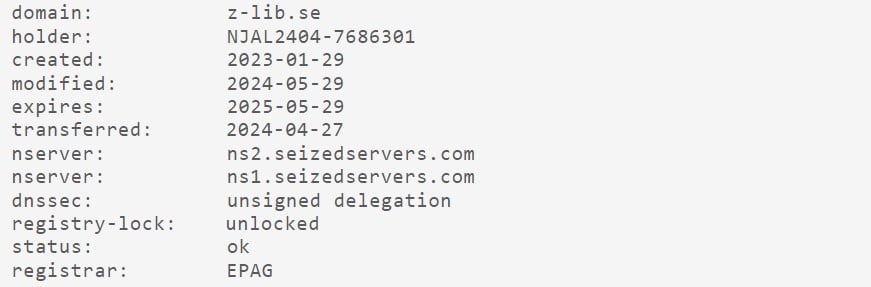
    Z-Library has yet to officially comment on the enforcement action. Communication though the regular ‘support’ email will be hard, however, as the site’s email domain z-lib.se is also part of the new seizure round.

    zlibrary mail

    At the time of writing, Z-Library’s Telegram channel remains online, with nearly 450,000 subscribers waiting in anticipation for an update.

    No Surprise

    The new seizures shouldn’t come as a surprise to the Z-Library team, considering the three earlier attempts. Previously, the site simply diverted users to new domains and ones that are still operational, including the .onion domain for the Tor network.

    Whether U.S. authorities have made progress on locating the whereabouts of the remaining Z-Library team is unknown. For now, however, it doesn’t appear that any of the site’s server infrastructure has been taken down.

    While all this plays out, the criminal prosecution in the U.S. shows little progress. The extradition process in Argentina hasn’t been finalized yet, it seems. In addition, a federal court in New York has yet to rule on a motion to dismiss filed by the Z-Library defendants last year.

    Update May 31: Z-Library just sent out this message.

    zlibrary

    From: TF , for the latest news on copyright battles, piracy and more.

    • tagpiracy tagpiracy tagpiracy tagzlibrary tagzlibrary tagzlibrary tagpiracy tagpiracy tagpiracy tagzlibrary tagzlibrary tagzlibrary tagpiracy tagpiracy tagpiracy tagzlibrary tagzlibrary tagzlibrary

    • To chevron_right

      FBI Carries Out Fresh Round of Z-Library Domain Name Seizures

      news.movim.eu / TorrentFreak • 31 May 2024 • 2 minutes

    zlibrary Z-Library is one of the largest shadow libraries on the Internet, hosting millions of books and articles that can be downloaded for free.

    The site defied all odds over the past two years. It continued to operate despite a full-fledged criminal prosecution by the United States, which resulted in the arrest of two alleged operators in Argentina.

    According to the latest available information, these two defendants are still fighting their extradition . Meanwhile, the Z-Library service has continued to operate as if nothing ever happened, serving books to millions of people all over the world.

    FBI Seizes More Domains

    The feds are not standing idly by and have seized hundreds of domain names belonging to the site. The first wave of seizures took place in November 2022, shortly before the criminal case was made public. Another round followed in the spring, and a third wave came last November.

    With these seizures, the FBI aims to frustrate Z-Library’s operations. Thus far, however, the library has always returned. U.S. law enforcement isn’t giving up though and, a few hours ago, it quietly carried out a new round of domain seizures.

    These new seizures cover z-library.se and z-library.sx, two of the three main domain names recently promoted by the site. The third, singlelogin.re, remains unaffected at the time of writing.

    The seizure banner above suggests that in addition to the U.S. authorities, Austria’s Criminal Intelligence Service played a role too. The same applies to Austria’s Cybercrime Competence Center , C4, but since the banner hasn’t been updated since the last round, this information could be dated.

    Email Hit

    The full list of seized domains is much longer and includes names such as zlibrary-redirect.se, zlibrary-africa.se, and zlibrary-china.se. More may follow in the near future as the enforcement action might be ongoing.

    Z-Library has yet to officially comment on the enforcement action. Communication though the regular ‘support’ email will be hard, however, as the site’s email domain z-lib.se is also part of the new seizure round.

    zlibrary mail

    At the time of writing, Z-Library’s Telegram channel remains online, with nearly 450,000 subscribers waiting in anticipation for an update.

    No Surprise

    The new seizures shouldn’t come as a surprise to the Z-Library team, considering the three earlier attempts. Previously, the site simply diverted users to new domains and ones that are still operational, including the .onion domain for the Tor network.

    Whether U.S. authorities have made progress on locating the whereabouts of the remaining Z-Library team is unknown. For now, however, it doesn’t appear that any of the site’s server infrastructure has been taken down.

    While all this plays out, the criminal prosecution in the U.S. shows little progress. The extradition process in Argentina hasn’t been finalized yet, it seems. In addition, a federal court in New York has yet to rule on a motion to dismiss filed by the Z-Library defendants last year.

    Update May 31: Z-Library just sent out this message.

    zlibrary

    From: TF , for the latest news on copyright battles, piracy and more.

    • tagpiracy tagpiracy tagpiracy tagzlibrary tagzlibrary tagzlibrary tagpiracy tagpiracy tagpiracy tagzlibrary tagzlibrary tagzlibrary tagpiracy tagpiracy tagpiracy tagzlibrary tagzlibrary tagzlibrary

    • To chevron_right

      FBI Carries Out Fresh Round of Z-Library Domain Name Seizures

      news.movim.eu / TorrentFreak • 31 May 2024 • 2 minutes

    zlibrary Z-Library is one of the largest shadow libraries on the Internet, hosting millions of books and articles that can be downloaded for free.

    The site defied all odds over the past two years. It continued to operate despite a full-fledged criminal prosecution by the United States, which resulted in the arrest of two alleged operators in Argentina.

    According to the latest available information, these two defendants are still fighting their extradition . Meanwhile, the Z-Library service has continued to operate as if nothing ever happened, serving books to millions of people all over the world.

    FBI Seizes More Domains

    The feds are not standing idly by and have seized hundreds of domain names belonging to the site. The first wave of seizures took place in November 2022, shortly before the criminal case was made public. Another round followed in the spring, and a third wave came last November.

    With these seizures, the FBI aims to frustrate Z-Library’s operations. Thus far, however, the library has always returned. U.S. law enforcement isn’t giving up though and, a few hours ago, it quietly carried out a new round of domain seizures.

    These new seizures cover z-library.se and z-library.sx, two of the three main domain names recently promoted by the site. The third, singlelogin.re, remains unaffected at the time of writing.

    The seizure banner above suggests that in addition to the U.S. authorities, Austria’s Criminal Intelligence Service played a role too. The same applies to Austria’s Cybercrime Competence Center , C4, but since the banner hasn’t been updated since the last round, this information could be dated.

    Email Hit

    The full list of seized domains is much longer and includes names such as zlibrary-redirect.se, zlibrary-africa.se, and zlibrary-china.se. More may follow in the near future as the enforcement action might be ongoing.

    Z-Library has yet to officially comment on the enforcement action. Communication though the regular ‘support’ email will be hard, however, as the site’s email domain z-lib.se is also part of the new seizure round.

    zlibrary mail

    At the time of writing, Z-Library’s Telegram channel remains online, with nearly 450,000 subscribers waiting in anticipation for an update.

    No Surprise

    The new seizures shouldn’t come as a surprise to the Z-Library team, considering the three earlier attempts. Previously, the site simply diverted users to new domains and ones that are still operational, including the .onion domain for the Tor network.

    Whether U.S. authorities have made progress on locating the whereabouts of the remaining Z-Library team is unknown. For now, however, it doesn’t appear that any of the site’s server infrastructure has been taken down.

    While all this plays out, the criminal prosecution in the U.S. shows little progress. The extradition process in Argentina hasn’t been finalized yet, it seems. In addition, a federal court in New York has yet to rule on a motion to dismiss filed by the Z-Library defendants last year.

    Update May 31: Z-Library just sent out this message.

    zlibrary

    From: TF , for the latest news on copyright battles, piracy and more.

    • tagpiracy tagpiracy tagpiracy tagzlibrary tagzlibrary tagzlibrary tagpiracy tagpiracy tagpiracy tagzlibrary tagzlibrary tagzlibrary tagpiracy tagpiracy tagpiracy tagzlibrary tagzlibrary tagzlibrary

  • history

    Get older posts

  • cloud_queue

    Powered by Movim