• To chevron_right

      Pirate IPTV-Selling ‘Law Enforcement Officer’ Faces Wiretapping Claim

      news.movim.eu / TorrentFreak • 5 November 2024 • 5 minutes

    iptv-ss The potential consequences of being associated with any aspect of a pirate IPTV operation are well known. Criminal action rarely ends well for defendants, with similar outcomes seen in private prosecutions and most civil copyright lawsuits.

    However, since the odds of being investigated and subsequently prosecuted are still relatively low, there’s no shortage of people willing to roll the dice in the hope of hitting the jackpot – and keeping it.

    But while some embark on a journey of meticulous anonymity, supported by knowledge of geographical complications that make others vastly easier to pursue, some prefer different approaches. These can also work quite well, at least until they don’t.

    New Piracy Lawsuit filed in the U.S.

    Filed at a federal court in Illinois, the complaint sees DISH Network and Sling TV target Richard Moy, the alleged owner of CLVPN LLC, which ordinarily does business as City Lights Entertainment .

    According to the plaintiffs’ investigation, Illinois-based Moy claimed that his IPTV reselling business was ‘USA based’ and he personally controlled the content it allegedly made available. Advertised as a “top notch” service, in which Moy had invested considerable sums of money obtaining servers and streams, subscriptions were sold both in bulk to a network of resellers or on a singular basis direct to consumers.

    The Plaintiffs cite Moy’s claim of having “over 500 sellers” in the market, but the number of subscribers isn’t a rough estimate. How DISH and Sling obtained direct access to Moy’s IPTV management panel isn’t revealed in the complaint, but it’s alleged that after seeing data for themselves, they concluded that the service had over 450,000 users.

    A one-month subscription purchased direct cost customers $20. Resellers were charged just a quarter of that, ensuring that they were able to return a profit after accounting for costs. The complaint claims that Moy, at least according to his own recollection, also acted as a channel supplier to other IPTV providers.

    Operations Exposed

    The complaint alleges that payments for the City Lights Entertainment (CLE) service were processed through Moy’s company, CLVPN LLC. Payments were accepted through Venmo, Cash App, and PayPal, some under Moy’s real name and others under aliases including “PapitoPatron” and “PapitoChacon.” A Venmo account linked to CLE recorded over 1,700 transactions, the plaintiffs note.

    “Moy instructed purchasers to disguise the purpose of their payments by claiming the payments were being sent to ‘Friends NOT [for] Services’,” the complaint reads. On various Telegram groups used in connection with the IPTV service, Moy operated under the alias ‘Holmes’ and the username ‘@PapitoPatron.’ Another ‘disguise’ allegedly deployed by Moy was much more unorthodox.

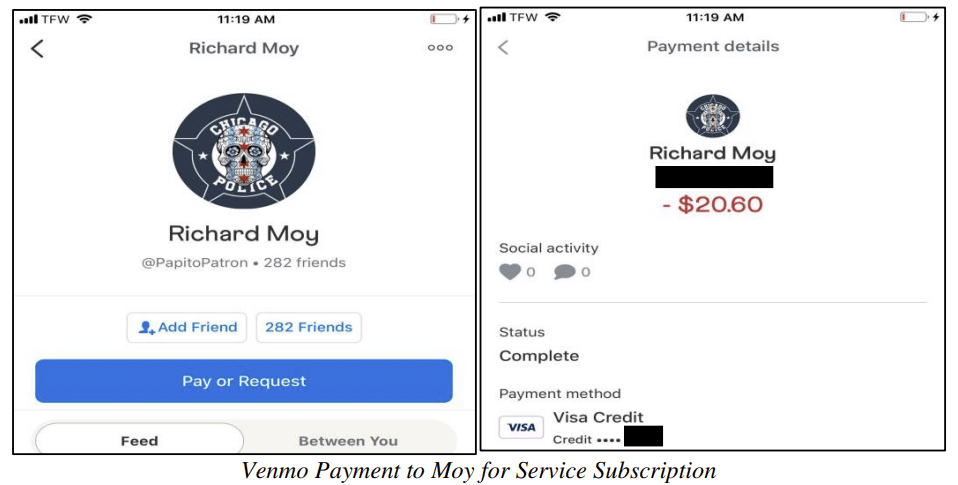
    “Moy held himself out as a Chicago-area law enforcement officer when selling the Service,” the lawsuit adds, referencing the images below.
    law-enforcement

    “Moy’s resellers were informed that he was a law enforcement officer and that message was spread in the Telegram groups, including by group moderators working for Moy. On information and belief, Moy used his alleged association with law enforcement to market the Service to users and resellers and mitigate potential concerns over the unlawfulness of the Service,” the plaintiffs note

    Other measures to avoid legal repercussions included a ban on resellers displaying “videos or pictures of channel lineups” of Moy’s service on social media, and the avoidance of “red flag keywords” such as “Tv Service… IPTV, Streams, Cable etc.”

    Moy allegedly alerted resellers to legal actions against other streaming services and offered advice on how best to acquire their customers. The plaintiffs claim that Moy referred to himself and his resellers as “silent assassins.”

    Claims for Relief Under the DMCA

    Count I alleges violations of the DMCA, 17 U.S.C. § 1201(a)(2) , which concerns circumvention of technical measures. The approach has proven successful for DISH and Sling and now appears in most reseller lawsuits.

    Count II alleges violations of the DMCA, 17 U.S.C. § 1201(b)(1), which prohibits the manufacture, sale, and distribution of devices that have no commercially significant purpose or use other than circumventing technical measures.

    Claim for Relief Under ECPA

    Count III alleges violations of the Electronic Communications Privacy Act (ECPA), which prohibits interception and disclosure of wire, oral, or electronic communications. The plaintiffs allege violations of 18 U.S.C. §§ 2511(1)(c)-(d) which occur when a person –

    (c) intentionally discloses, or endeavors to disclose, to any other person the contents of any wire, oral, or electronic communication, knowing or having reason to know that the information was obtained through the interception of a wire, oral, or electronic communication…

    (d) intentionally uses, or endeavors to use, the contents of any wire, oral, or electronic communication, knowing or having reason to know that the information was obtained through the interception of a wire, oral, or electronic communication…

    While not usually seen alongside alleged violations of the DMCA’s anti-circumvention provisions, inclusion here suggests that the plaintiffs believe there is sufficient evidence to show that a live stream was intercepted. The interpretation of “live stream” under ECPA concerns interception of a real-time transmission, rather than a stream of a live event.

    At least to our knowledge, this may be a new approach by the plaintiffs. However, the civil recovery available under 2520(a) does seem to align with existing strategy.

    Claims for Damages

    For Counts I and II, the plaintiffs request statutory damages of up to $2,500 for each violation of 17 U.S.C. § 1201(a)(2) and § 1201(b)(1). Should their claim of 450,000 subscribers pass muster, in theory statutory damages could reach $1,125,000,000. An award of that scale seems highly unlikely under the circumstances but could still be significant.

    Statutory damages for ECPA violations are almost negligible in comparison; $100 per day of violation or $10,000, whichever is greater.

    The complaint makes no mention of how long the alleged offending lasted, while references to the business are made in the past tense, which may suggest it no longer exists. If the alleged offending went on for a year, statutory damages could in theory reach a relatively modest $36,500.

    Insufficient Facts to Determine Actual Damages

    The plaintiffs may prefer actual damages and the defendant’s profits instead, added to the punitive damages they’re claiming under 18 U.S.C. § 2520(b)(2) for the ECPA violations, of course. Without access to specific details, such as the length of the alleged offending and how much profit was made, it’s not possible to estimate the scale of any damages.

    These details aren’t provided in the complaint, nor does the complaint mention any prior communication with the defendant, such and cease-and-desist notices, that type of thing. Yet in a sentence that stands out primarily for not explaining how the plaintiffs gained access to the IPTV service’s main panel, the exact number of subscribers is revealed as 450,000.

    Whether further details will emerge as part of a case contested on the merits remains to be seen, but a smooth conclusion here with damages for ECPA violations intact, may come in useful at a later date.

    The complaint is available here (pdf)

    From: TF , for the latest news on copyright battles, piracy and more.

    • To chevron_right

      Pirate IPTV-Selling ‘Law Enforcement Officer’ Faces Wiretapping Claim

      news.movim.eu / TorrentFreak • 5 November 2024 • 5 minutes

    iptv-ss The potential consequences of being associated with any aspect of a pirate IPTV operation are well known. Criminal action rarely ends well for defendants, with similar outcomes seen in private prosecutions and most civil copyright lawsuits.

    However, since the odds of being investigated and subsequently prosecuted are still relatively low, there’s no shortage of people willing to roll the dice in the hope of hitting the jackpot – and keeping it.

    But while some embark on a journey of meticulous anonymity, supported by knowledge of geographical complications that make others vastly easier to pursue, some prefer different approaches. These can also work quite well, at least until they don’t.

    New Piracy Lawsuit filed in the U.S.

    Filed at a federal court in Illinois, the complaint sees DISH Network and Sling TV target Richard Moy, the alleged owner of CLVPN LLC, which ordinarily does business as City Lights Entertainment .

    According to the plaintiffs’ investigation, Illinois-based Moy claimed that his IPTV reselling business was ‘USA based’ and he personally controlled the content it allegedly made available. Advertised as a “top notch” service, in which Moy had invested considerable sums of money obtaining servers and streams, subscriptions were sold both in bulk to a network of resellers or on a singular basis direct to consumers.

    The Plaintiffs cite Moy’s claim of having “over 500 sellers” in the market, but the number of subscribers isn’t a rough estimate. How DISH and Sling obtained direct access to Moy’s IPTV management panel isn’t revealed in the complaint, but it’s alleged that after seeing data for themselves, they concluded that the service had over 450,000 users.

    A one-month subscription purchased direct cost customers $20. Resellers were charged just a quarter of that, ensuring that they were able to return a profit after accounting for costs. The complaint claims that Moy, at least according to his own recollection, also acted as a channel supplier to other IPTV providers.

    Operations Exposed

    The complaint alleges that payments for the City Lights Entertainment (CLE) service were processed through Moy’s company, CLVPN LLC. Payments were accepted through Venmo, Cash App, and PayPal, some under Moy’s real name and others under aliases including “PapitoPatron” and “PapitoChacon.” A Venmo account linked to CLE recorded over 1,700 transactions, the plaintiffs note.

    “Moy instructed purchasers to disguise the purpose of their payments by claiming the payments were being sent to ‘Friends NOT [for] Services’,” the complaint reads. On various Telegram groups used in connection with the IPTV service, Moy operated under the alias ‘Holmes’ and the username ‘@PapitoPatron.’ Another ‘disguise’ allegedly deployed by Moy was much more unorthodox.

    “Moy held himself out as a Chicago-area law enforcement officer when selling the Service,” the lawsuit adds, referencing the images below.

    law-enforcement

    “Moy’s resellers were informed that he was a law enforcement officer and that message was spread in the Telegram groups, including by group moderators working for Moy. On information and belief, Moy used his alleged association with law enforcement to market the Service to users and resellers and mitigate potential concerns over the unlawfulness of the Service,” the plaintiffs note

    Other measures to avoid legal repercussions included a ban on resellers displaying “videos or pictures of channel lineups” of Moy’s service on social media, and the avoidance of “red flag keywords” such as “Tv Service… IPTV, Streams, Cable etc.”

    Moy allegedly alerted resellers to legal actions against other streaming services and offered advice on how best to acquire their customers. The plaintiffs claim that Moy referred to himself and his resellers as “silent assassins.”

    Claims for Relief Under the DMCA

    Count I alleges violations of the DMCA, 17 U.S.C. § 1201(a)(2) , which concerns circumvention of technical measures. The approach has proven successful for DISH and Sling and now appears in most reseller lawsuits.

    Count II alleges violations of the DMCA, 17 U.S.C. § 1201(b)(1), which prohibits the manufacture, sale, and distribution of devices that have no commercially significant purpose or use other than circumventing technical measures.

    Claim for Relief Under ECPA

    Count III alleges violations of the Electronic Communications Privacy Act (ECPA), which prohibits interception and disclosure of wire, oral, or electronic communications. The plaintiffs allege violations of 18 U.S.C. §§ 2511(1)(c)-(d) which occur when a person –

    (c) intentionally discloses, or endeavors to disclose, to any other person the contents of any wire, oral, or electronic communication, knowing or having reason to know that the information was obtained through the interception of a wire, oral, or electronic communication…

    (d) intentionally uses, or endeavors to use, the contents of any wire, oral, or electronic communication, knowing or having reason to know that the information was obtained through the interception of a wire, oral, or electronic communication…

    While not usually seen alongside alleged violations of the DMCA’s anti-circumvention provisions, inclusion here suggests that the plaintiffs believe there is sufficient evidence to show that a live stream was intercepted. The interpretation of “live stream” under ECPA concerns interception of a real-time transmission, rather than a stream of a live event.

    At least to our knowledge, this may be a new approach by the plaintiffs. However, the civil recovery available under 2520(a) does seem to align with existing strategy.

    Claims for Damages

    For Counts I and II, the plaintiffs request statutory damages of up to $2,500 for each violation of 17 U.S.C. § 1201(a)(2) and § 1201(b)(1). Should their claim of 450,000 subscribers pass muster, in theory statutory damages could reach $1,125,000,000. An award of that scale seems highly unlikely under the circumstances but could still be significant.

    Statutory damages for ECPA violations are almost negligible in comparison; $100 per day of violation or $10,000, whichever is greater.

    The complaint makes no mention of how long the alleged offending lasted, while references to the business are made in the past tense, which may suggest it no longer exists. If the alleged offending went on for a year, statutory damages could in theory reach a relatively modest $36,500.

    Insufficient Facts to Determine Actual Damages

    The plaintiffs may prefer actual damages and the defendant’s profits instead, added to the punitive damages they’re claiming under 18 U.S.C. § 2520(b)(2) for the ECPA violations, of course. Without access to specific details, such as the length of the alleged offending and how much profit was made, it’s not possible to estimate the scale of any damages.

    These details aren’t provided in the complaint, nor does the complaint mention any prior communication with the defendant, such and cease-and-desist notices, that type of thing. Yet in a sentence that stands out primarily for not explaining how the plaintiffs gained access to the IPTV service’s main panel, the exact number of subscribers is revealed as 450,000.

    Whether further details will emerge as part of a case contested on the merits remains to be seen, but a smooth conclusion here with damages for ECPA violations intact, may come in useful at a later date.

    The complaint is available here (pdf)

    From: TF , for the latest news on copyright battles, piracy and more.

    • To chevron_right

      Pirate IPTV-Selling ‘Law Enforcement Officer’ Faces Wiretapping Claim

      news.movim.eu / TorrentFreak • 5 November 2024 • 5 minutes

    iptv-ss The potential consequences of being associated with any aspect of a pirate IPTV operation are well known. Criminal action rarely ends well for defendants, with similar outcomes seen in private prosecutions and most civil copyright lawsuits.

    However, since the odds of being investigated and subsequently prosecuted are still relatively low, there’s no shortage of people willing to roll the dice in the hope of hitting the jackpot – and keeping it.

    But while some embark on a journey of meticulous anonymity, supported by knowledge of geographical complications that make others vastly easier to pursue, some prefer different approaches. These can also work quite well, at least until they don’t.

    New Piracy Lawsuit filed in the U.S.

    Filed at a federal court in Illinois, the complaint sees DISH Network and Sling TV target Richard Moy, the alleged owner of CLVPN LLC, which ordinarily does business as City Lights Entertainment .

    According to the plaintiffs’ investigation, Illinois-based Moy claimed that his IPTV reselling business was ‘USA based’ and he personally controlled the content it allegedly made available. Advertised as a “top notch” service, in which Moy had invested considerable sums of money obtaining servers and streams, subscriptions were sold both in bulk to a network of resellers or on a singular basis direct to consumers.

    The Plaintiffs cite Moy’s claim of having “over 500 sellers” in the market, but the number of subscribers isn’t a rough estimate. How DISH and Sling obtained direct access to Moy’s IPTV management panel isn’t revealed in the complaint, but it’s alleged that after seeing data for themselves, they concluded that the service had over 450,000 users.

    A one-month subscription purchased direct cost customers $20. Resellers were charged just a quarter of that, ensuring that they were able to return a profit after accounting for costs. The complaint claims that Moy, at least according to his own recollection, also acted as a channel supplier to other IPTV providers.

    Operations Exposed

    The complaint alleges that payments for the City Lights Entertainment (CLE) service were processed through Moy’s company, CLVPN LLC. Payments were accepted through Venmo, Cash App, and PayPal, some under Moy’s real name and others under aliases including “PapitoPatron” and “PapitoChacon.” A Venmo account linked to CLE recorded over 1,700 transactions, the plaintiffs note.

    “Moy instructed purchasers to disguise the purpose of their payments by claiming the payments were being sent to ‘Friends NOT [for] Services’,” the complaint reads. On various Telegram groups used in connection with the IPTV service, Moy operated under the alias ‘Holmes’ and the username ‘@PapitoPatron.’ Another ‘disguise’ allegedly deployed by Moy was much more unorthodox.

    “Moy held himself out as a Chicago-area law enforcement officer when selling the Service,” the lawsuit adds, referencing the images below.

    law-enforcement

    “Moy’s resellers were informed that he was a law enforcement officer and that message was spread in the Telegram groups, including by group moderators working for Moy. On information and belief, Moy used his alleged association with law enforcement to market the Service to users and resellers and mitigate potential concerns over the unlawfulness of the Service,” the plaintiffs note

    Other measures to avoid legal repercussions included a ban on resellers displaying “videos or pictures of channel lineups” of Moy’s service on social media, and the avoidance of “red flag keywords” such as “Tv Service… IPTV, Streams, Cable etc.”

    Moy allegedly alerted resellers to legal actions against other streaming services and offered advice on how best to acquire their customers. The plaintiffs claim that Moy referred to himself and his resellers as “silent assassins.”

    Claims for Relief Under the DMCA

    Count I alleges violations of the DMCA, 17 U.S.C. § 1201(a)(2) , which concerns circumvention of technical measures. The approach has proven successful for DISH and Sling and now appears in most reseller lawsuits.

    Count II alleges violations of the DMCA, 17 U.S.C. § 1201(b)(1), which prohibits the manufacture, sale, and distribution of devices that have no commercially significant purpose or use other than circumventing technical measures.

    Claim for Relief Under ECPA

    Count III alleges violations of the Electronic Communications Privacy Act (ECPA), which prohibits interception and disclosure of wire, oral, or electronic communications. The plaintiffs allege violations of 18 U.S.C. §§ 2511(1)(c)-(d) which occur when a person –

    (c) intentionally discloses, or endeavors to disclose, to any other person the contents of any wire, oral, or electronic communication, knowing or having reason to know that the information was obtained through the interception of a wire, oral, or electronic communication…

    (d) intentionally uses, or endeavors to use, the contents of any wire, oral, or electronic communication, knowing or having reason to know that the information was obtained through the interception of a wire, oral, or electronic communication…

    While not usually seen alongside alleged violations of the DMCA’s anti-circumvention provisions, inclusion here suggests that the plaintiffs believe there is sufficient evidence to show that a live stream was intercepted. The interpretation of “live stream” under ECPA concerns interception of a real-time transmission, rather than a stream of a live event.

    At least to our knowledge, this may be a new approach by the plaintiffs. However, the civil recovery available under 2520(a) does seem to align with existing strategy.

    Claims for Damages

    For Counts I and II, the plaintiffs request statutory damages of up to $2,500 for each violation of 17 U.S.C. § 1201(a)(2) and § 1201(b)(1). Should their claim of 450,000 subscribers pass muster, in theory statutory damages could reach $1,125,000,000. An award of that scale seems highly unlikely under the circumstances but could still be significant.

    Statutory damages for ECPA violations are almost negligible in comparison; $100 per day of violation or $10,000, whichever is greater.

    The complaint makes no mention of how long the alleged offending lasted, while references to the business are made in the past tense, which may suggest it no longer exists. If the alleged offending went on for a year, statutory damages could in theory reach a relatively modest $36,500.

    Insufficient Facts to Determine Actual Damages

    The plaintiffs may prefer actual damages and the defendant’s profits instead, added to the punitive damages they’re claiming under 18 U.S.C. § 2520(b)(2) for the ECPA violations, of course. Without access to specific details, such as the length of the alleged offending and how much profit was made, it’s not possible to estimate the scale of any damages.

    These details aren’t provided in the complaint, nor does the complaint mention any prior communication with the defendant, such and cease-and-desist notices, that type of thing. Yet in a sentence that stands out primarily for not explaining how the plaintiffs gained access to the IPTV service’s main panel, the exact number of subscribers is revealed as 450,000.

    Whether further details will emerge as part of a case contested on the merits remains to be seen, but a smooth conclusion here with damages for ECPA violations intact, may come in useful at a later date.

    The complaint is available here (pdf)

    From: TF , for the latest news on copyright battles, piracy and more.

    • To chevron_right

      Google Asked to Remove 10 Billion “Pirate” Search Results

      news.movim.eu / TorrentFreak • 5 November 2024 • 3 minutes

    google dark While search engines are extremely helpful for the average Internet user, copyright holders have also seen a massive downside.
    In addition to trillions of legitimate pages, there’s a steady supply of pirate sites. These can be hard to ignore for some entertainment-hungry users.

    This problem is not new. When piracy-discovery became web-based with the surge of BitTorrent in the early 2000s, search engines were unwittingly used as pirate gateways. Luckily for rightsholders, however, U.S. law provided a solution; DMCA notices.

    In the hope of steering prospective pirates away from pirate sites, copyright holders began sending DMCA takedown requests to Google. These notices flag pirate links, which Google then removes from its search index.

    From Hundreds to 10 Billion

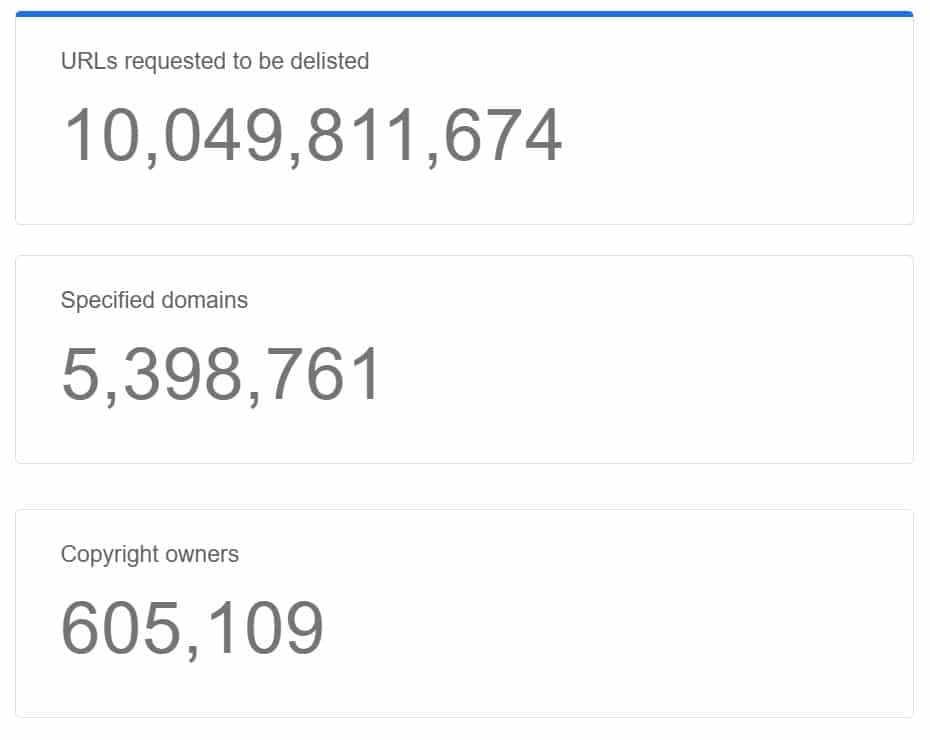
    These requests have increased dramatically over the years and have just hit a new milestone. According to the official transparency report, Google search has now processed takedown requests for more than 10 billion URLs.

    10 billion

    10 billion

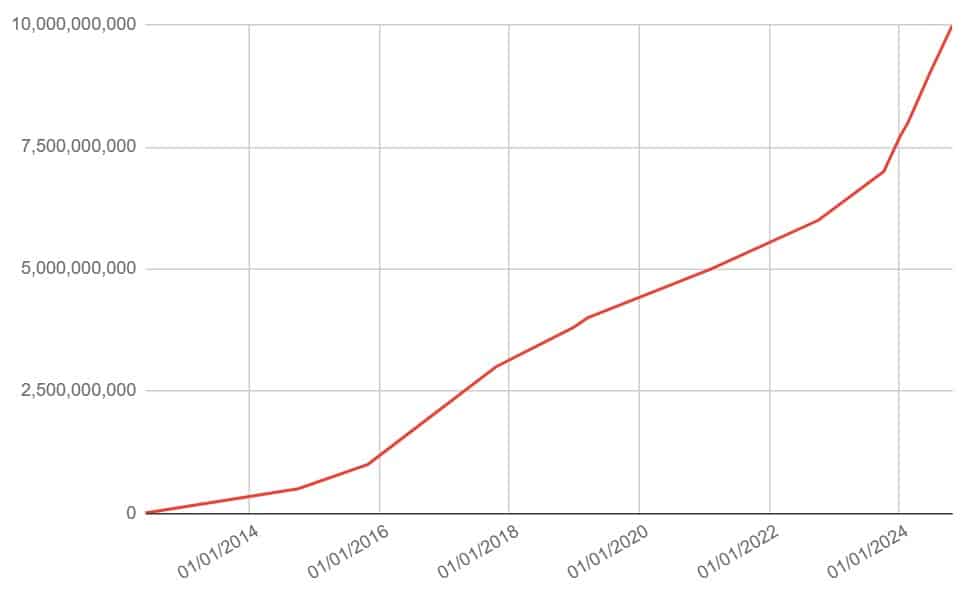
    The path to 10 billion was turbulent. When Google first made DMCA details public it was processing a few million DMCA takedown requests in a year. That number swiftly increased to hundreds of millions and eventually reached a billion DMCA requests in 2016.

    The exponential growth curve eventually flattened out and around 2017, the takedown volume started to decline . The decrease was in part due to various anti-piracy algorithms making pirated content less visible in search results.

    By downranking pirate sites , infringing content became harder to find. As a result, Google processed fewer takedown notices, a welcome change for both rightsholders and the search engine.

    The Takedown Resurgence

    Today, Google continues to make pirate sites less visible in search, but the reduction in takedown notices didn’t last. On the contrary, over the past several months, Google search processed a record number of DMCA notices.

    Last summer, the search giant recorded the 7 billionth takedown request and after that the numbers shot up, adding billions more in the year that followed.

    The company is now handling removal requests at a rate of roughly 2.5 billion per year; a new record. This represents more than 50 million takedown requests per week and roughly 5,000 every minute.

    Google Search Takedown Notices (2012-2024)

    The graph above illustrates how these numbers have grown over time, with the most recent uptick on the right.

    The Content Shift

    Aside from volume, there are significant changes in the targeted sites as well. Initially, torrent sites such as The Pirate Bay were frequently listed, but file-hosting services and streaming portals took over later, as these have many more indexed pages.

    Studies published around 2013 showed that music companies were the most frequent senders. The labels and their representatives accounted for more than 40% of all takedown notices, followed by adult entertainment, and movie/TV rightsholders at a respectful distance.

    At the time, the publishing industry accounted for less than 5% of all DMCA requests. The position is quite different today, as publishers are responsible for more than half of the URLs reported this year.

    Faced with defiant pirate sites such as Z-Library and Anna’s Archive, publishers are clearly taking piracy more seriously than ever before. And in anti-piracy outfit Link-Busters, they have found a prolific takedown partner that meets their needs. That brings us to the outliers.

    The Outliers

    While the 10 billionth reported URL is undoubtedly a milestone, this number is largely driven by a few rightsholders, reporting outfits, and domain names. The aforementioned takedown outfit Link-Busters, for example, accounts for roughly 15% of all reported links, nearly 1.5 billion.

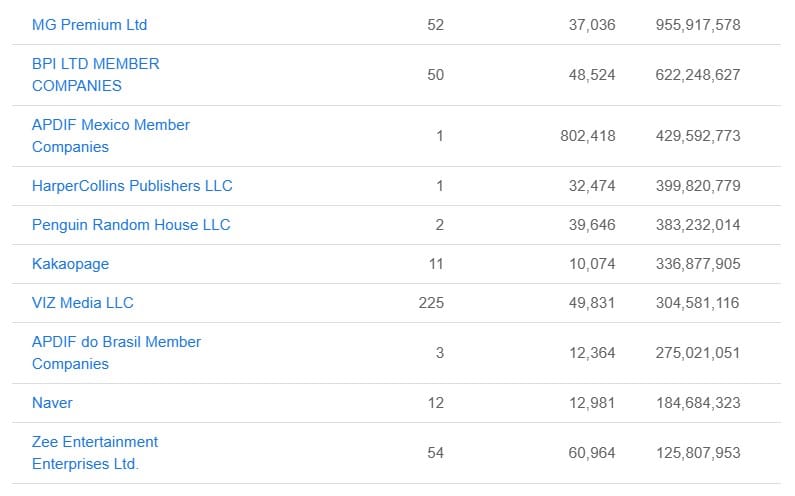
    Similarly, the ten most prolific rightsholders, including the BPI, HarperCollins, and VIZ Media, are responsible for 40% of all reported links. These ten companies are only a tiny fraction of the 600,000 rightsholders that reported pirated links, however.

    Top Rightsholders

    top rightsholders

    A small group of domains also receives a disproportionate amount of attention. In total, 5,400,061 domains have been reported, with the top domains having dozens of millions of flagged URLs each. However, most domains have only a few flagged links, some of which are erroneous.

    The WhiteHouse.gov domain name, for example, was reported 27 times. Google didn’t see any infringing material on the site, however, so none of these takedown requests were honored.

    The overall number of URLs actually removed from Google search isn’t clear from Google’s transparency data . The 10 billion number includes links that were not removed by Google, as well as duplicate URLs, and those that were not indexed by Google at the time the takedown notice was received.

    From: TF , for the latest news on copyright battles, piracy and more.

    • To chevron_right

      Google Asked to Remove 10 Billion “Pirate” Search Results

      news.movim.eu / TorrentFreak • 5 November 2024 • 3 minutes

    google dark While search engines are extremely helpful for the average Internet user, copyright holders have also seen a massive downside.
    In addition to trillions of legitimate pages, there’s a steady supply of pirate sites. These can be hard to ignore for some entertainment-hungry users.

    This problem is not new. When piracy-discovery became web-based with the surge of BitTorrent in the early 2000s, search engines were unwittingly used as pirate gateways. Luckily for rightsholders, however, U.S. law provided a solution; DMCA notices.

    In the hope of steering prospective pirates away from pirate sites, copyright holders began sending DMCA takedown requests to Google. These notices flag pirate links, which Google then removes from its search index.

    From Hundreds to 10 Billion

    These requests have increased dramatically over the years and have just hit a new milestone. According to the official transparency report, Google search has now processed takedown requests for more than 10 billion URLs.

    10 billion

    10 billion

    The path to 10 billion was turbulent. When Google first made DMCA details public it was processing a few million DMCA takedown requests in a year. That number swiftly increased to hundreds of millions and eventually reached a billion DMCA requests in 2016.

    The exponential growth curve eventually flattened out and around 2017, the takedown volume started to decline . The decrease was in part due to various anti-piracy algorithms making pirated content less visible in search results.

    By downranking pirate sites , infringing content became harder to find. As a result, Google processed fewer takedown notices, a welcome change for both rightsholders and the search engine.

    The Takedown Resurgence

    Today, Google continues to make pirate sites less visible in search, but the reduction in takedown notices didn’t last. On the contrary, over the past several months, Google search processed a record number of DMCA notices.

    Last summer, the search giant recorded the 7 billionth takedown request and after that the numbers shot up, adding billions more in the year that followed.

    The company is now handling removal requests at a rate of roughly 2.5 billion per year; a new record. This represents more than 50 million takedown requests per week and roughly 5,000 every minute.

    Google Search Takedown Notices (2012-2024)

    The graph above illustrates how these numbers have grown over time, with the most recent uptick on the right.

    The Content Shift

    Aside from volume, there are significant changes in the targeted sites as well. Initially, torrent sites such as The Pirate Bay were frequently listed, but file-hosting services and streaming portals took over later, as these have many more indexed pages.

    Studies published around 2013 showed that music companies were the most frequent senders. The labels and their representatives accounted for more than 40% of all takedown notices, followed by adult entertainment, and movie/TV rightsholders at a respectful distance.

    At the time, the publishing industry accounted for less than 5% of all DMCA requests. The position is quite different today, as publishers are responsible for more than half of the URLs reported this year.

    Faced with defiant pirate sites such as Z-Library and Anna’s Archive, publishers are clearly taking piracy more seriously than ever before. And in anti-piracy outfit Link-Busters, they have found a prolific takedown partner that meets their needs. That brings us to the outliers.

    The Outliers

    While the 10 billionth reported URL is undoubtedly a milestone, this number is largely driven by a few rightsholders, reporting outfits, and domain names. The aforementioned takedown outfit Link-Busters, for example, accounts for roughly 15% of all reported links, nearly 1.5 billion.

    Similarly, the ten most prolific rightsholders, including the BPI, HarperCollins, and VIZ Media, are responsible for 40% of all reported links. These ten companies are only a tiny fraction of the 600,000 rightsholders that reported pirated links, however.

    Top Rightsholders

    top rightsholders

    A small group of domains also receives a disproportionate amount of attention. In total, 5,400,061 domains have been reported, with the top domains having dozens of millions of flagged URLs each. However, most domains have only a few flagged links, some of which are erroneous.

    The WhiteHouse.gov domain name, for example, was reported 27 times. Google didn’t see any infringing material on the site, however, so none of these takedown requests were honored.

    The overall number of URLs actually removed from Google search isn’t clear from Google’s transparency data . The 10 billion number includes links that were not removed by Google, as well as duplicate URLs, and those that were not indexed by Google at the time the takedown notice was received.

    From: TF , for the latest news on copyright battles, piracy and more.

    • To chevron_right

      Google Asked to Remove 10 Billion “Pirate” Search Results

      news.movim.eu / TorrentFreak • 5 November 2024 • 3 minutes

    google dark While search engines are extremely helpful for the average Internet user, copyright holders have also seen a massive downside.

    In addition to trillions of legitimate pages, there’s a steady supply of pirate sites. These can be hard to ignore for some entertainment-hungry users.

    This problem is not new. When piracy-discovery became web-based with the surge of BitTorrent in the early 2000s, search engines were unwittingly used as pirate gateways. Luckily for rightsholders, however, U.S. law provided a solution; DMCA notices.

    In the hope of steering prospective pirates away from pirate sites, copyright holders began sending DMCA takedown requests to Google. These notices flag pirate links, which Google then removes from its search index.

    From Hundreds to 10 Billion

    These requests have increased dramatically over the years and have just hit a new milestone. According to the official transparency report, Google search has now processed takedown requests for more than 10 billion URLs.

    10 billion

    10 billion

    The path to 10 billion was turbulent. When Google first made DMCA details public it was processing a few million DMCA takedown requests in a year. That number swiftly increased to hundreds of millions and eventually reached a billion DMCA requests in 2016.

    The exponential growth curve eventually flattened out and around 2017, the takedown volume started to decline . The decrease was in part due to various anti-piracy algorithms making pirated content less visible in search results.

    By downranking pirate sites , infringing content became harder to find. As a result, Google processed fewer takedown notices, a welcome change for both rightsholders and the search engine.

    The Takedown Resurgence

    Today, Google continues to make pirate sites less visible in search, but the reduction in takedown notices didn’t last. On the contrary, over the past several months, Google search processed a record number of DMCA notices.

    Last summer, the search giant recorded the 7 billionth takedown request and after that the numbers shot up, adding billions more in the year that followed.

    The company is now handling removal requests at a rate of roughly 2.5 billion per year; a new record. This represents more than 50 million takedown requests per week and roughly 5,000 every minute.

    Google Search Takedown Notices (2012-2024)

    The graph above illustrates how these numbers have grown over time, with the most recent uptick on the right.

    The Content Shift

    Aside from volume, there are significant changes in the targeted sites as well. Initially, torrent sites such as The Pirate Bay were frequently listed, but file-hosting services and streaming portals took over later, as these have many more indexed pages.

    Studies published around 2013 showed that music companies were the most frequent senders. The labels and their representatives accounted for more than 40% of all takedown notices, followed by adult entertainment, and movie/TV rightsholders at a respectful distance.

    At the time, the publishing industry accounted for less than 5% of all DMCA requests. The position is quite different today, as publishers are responsible for more than half of the URLs reported this year.

    Faced with defiant pirate sites such as Z-Library and Anna’s Archive, publishers are clearly taking piracy more seriously than ever before. And in anti-piracy outfit Link-Busters, they have found a prolific takedown partner that meets their needs. That brings us to the outliers.

    The Outliers

    While the 10 billionth reported URL is undoubtedly a milestone, this number is largely driven by a few rightsholders, reporting outfits, and domain names. The aforementioned takedown outfit Link-Busters, for example, accounts for roughly 15% of all reported links, nearly 1.5 billion.

    Similarly, the ten most prolific rightsholders, including the BPI, HarperCollins, and VIZ Media, are responsible for 40% of all reported links. These ten companies are only a tiny fraction of the 600,000 rightsholders that reported pirated links, however.

    Top Rightsholders

    top rightsholders

    A small group of domains also receives a disproportionate amount of attention. In total, 5,400,061 domains have been reported, with the top domains having dozens of millions of flagged URLs each. However, most domains have only a few flagged links, some of which are erroneous.

    The WhiteHouse.gov domain name, for example, was reported 27 times. Google didn’t see any infringing material on the site, however, so none of these takedown requests were honored.

    The overall number of URLs actually removed from Google search isn’t clear from Google’s transparency data . The 10 billion number includes links that were not removed by Google, as well as duplicate URLs, and those that were not indexed by Google at the time the takedown notice was received.

    From: TF , for the latest news on copyright battles, piracy and more.

    • To chevron_right

      Pirate Video Hosting Domain of Fmovies ‘Mothership’ Makes Surprise Comeback

      news.movim.eu / TorrentFreak • 20 September 2024 • 3 minutes

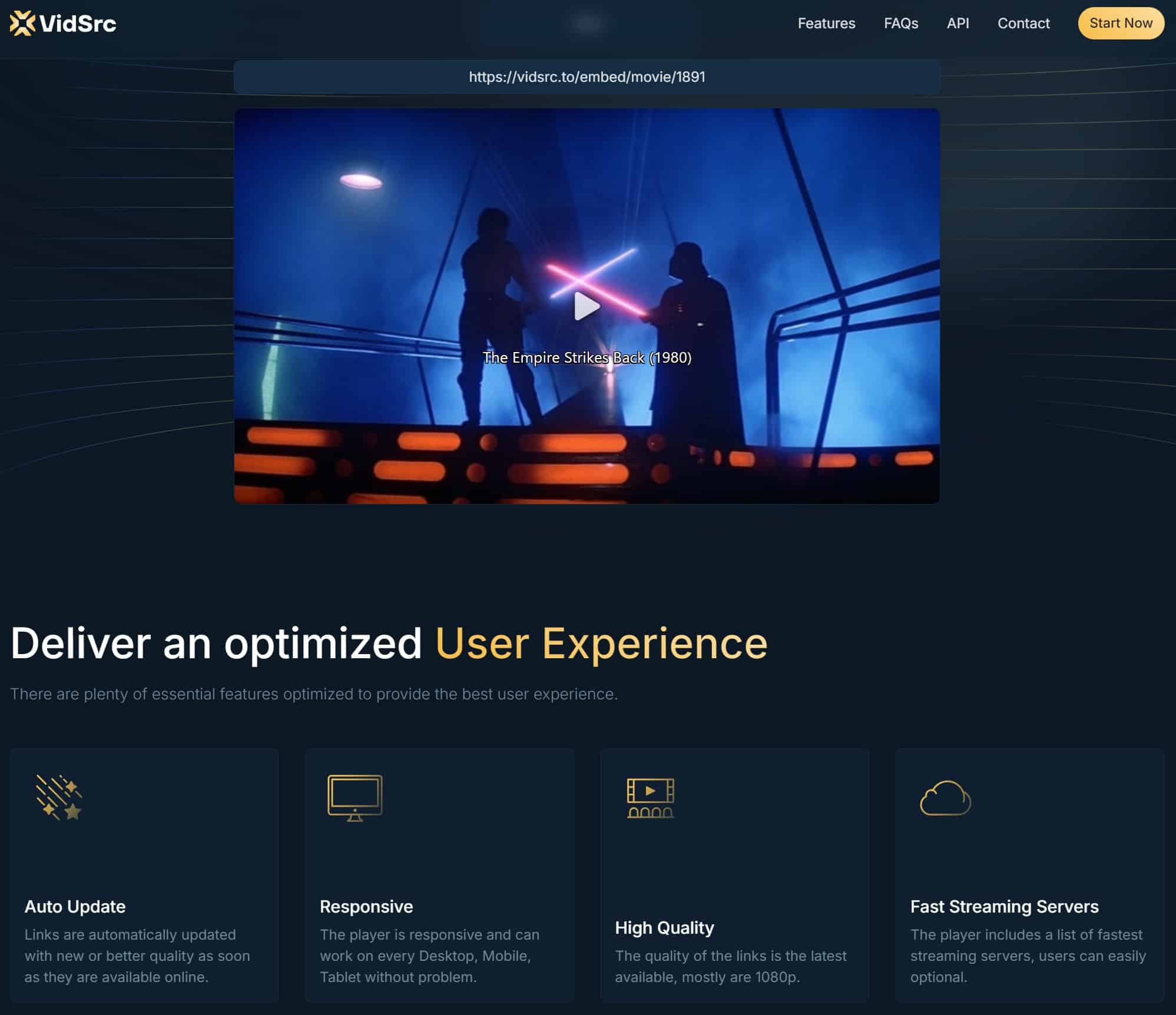
    vidsrc For years, Fmovies presented a major threat to Hollywood, one that seemed near impossible to defeat.

    The site’s operators were linked to dozens of popular pirate sites, generating billions of visits annually.

    While MPA’s anti-piracy flagship ACE tied the operation to Vietnam early on, effectively shutting it down took years. In addition to gathering intelligence, Hollywood’s diplomatic powers were required to force a breakthrough.

    This summer, these efforts paid off handsomely. After the main Fmovies site fell apart in July , related streaming portals including Bflix, Aniwave, and Zorox fell like dominoes in the weeks after.

    Taking Down The Mothership

    The combined traffic of these platforms arguably makes the takedown operation the largest of its kind, ever. So, understandably, MPA and ACE took credit for helping the Vietnamese authorities achieve this feat.

    MPA CEO Charles Rivkin, for example, noted that anti-piracy efforts are bigger and bolder than before, equating Fmovies to the piracy “mothership”.

    “We took down the mothership here,” Rivkin told Variety last month. “There was a time when piracy was Whac-a-Mole… Today, we go after piracy at its root,” he said at the time.

    Rivkin didn’t exaggerate the size or impact of the takedown. The Fmovies wreckage included dozens of high-profile streaming portals including Vidsrc.to, a popular video hosting platform used by many third-party sites.

    “Vidsrc.to, a notorious video hosting provider operated by the same suspects was also taken down, impacting hundreds of additional dedicated piracy sites,” ACE reported last month.

    Pirate Empire Strikes Back?

    MPA and ACE were rightfully proud of their accomplishments but when dealing with pirates, new threats can emerge out of the blue. That’s precisely what’s happening this week, as Vidsrc.to has made a surprise comeback.

    While the video hosting site looks the same as before, there are no obvious signs that the Fmovies team is behind it. Instead, the videos appear to be sourced from an unrelated competitor, Vidsrc.me.

    Vidsrc.to is Back?

    Apparently, these new people managed to get their hands on this valuable domain name, using it to further the interests of another fleet of pirate streaming sites. And more domains may follow the same path.

    Vidsrc.to Auctioned Off

    Traditionally, when the MPA and ACE shut down sites, associated domain names are redirected to its “ Watch Legally ” page. In some cases domains expire and are not necessarily renewed.

    According to domain records, Vidsrc.to expired in July. Information received by TorrentFreak suggests that it was picked up by an unknown party, and sold through Namecheap for several hundred dollars a few days ago.

    From there the domain’s new owner brought the site back to its full glory. We can’t confirm who’s behind the comeback, but Vidsrc.to uses a video player from its former competitor, Vidstc.me.

    vidsrc

    More Loose Ends

    TorrentFreak reached out to the MPA, seeking a comment on this comeback and the lack of a more permanent domain seizure, but we didn’t immediately hear back. The organization still has control over some older ‘pirate’ domains, including Hotfile and IsoHunt , but it appears the same doesn’t apply to these recent actions.

    Vidsrc.to is not the only pirate site domain that’s available for purchase, however. Looking through Namecheap’s listings we also see that Tinyzone.tv can be purchased for $3,911 . This site reportedly had ties to Vietnam too, and was taken down by ACE last November.

    The same applies to ev01.net. That movie streaming site domain briefly redirected to the ACE website. It eventually expired and can be purchased through Namecheap for those who can afford $13,911.

    EV01

    evo1

    These loose ends can cause trouble in the future, but whether anyone will pick that domain up seems doubtful. The ev01.net domain previously redirected to ev01.to, which remains online today, and still uses the ev01.net branding.

    All in all, it is clear that these domain-related loose ends can be a source of trouble. MPA and ACE may have taken down the mothership, but the piracy galaxy doesn’t appear to rely on a single Star Destroyer.

    From: TF , for the latest news on copyright battles, piracy and more.

    • To chevron_right

      Pirate Video Hosting Domain of Fmovies ‘Mothership’ Makes Surprise Comeback

      news.movim.eu / TorrentFreak • 20 September 2024 • 3 minutes

    vidsrc For years, Fmovies presented a major threat to Hollywood, one that seemed near impossible to defeat.

    The site’s operators were linked to dozens of popular pirate sites, generating billions of visits annually.

    While MPA’s anti-piracy flagship ACE tied the operation to Vietnam early on, effectively shutting it down took years. In addition to gathering intelligence, Hollywood’s diplomatic powers were required to force a breakthrough.

    This summer, these efforts paid off handsomely. After the main Fmovies site fell apart in July , related streaming portals including Bflix, Aniwave, and Zorox fell like dominoes in the weeks after.

    Taking Down The Mothership

    The combined traffic of these platforms arguably makes the takedown operation the largest of its kind, ever. So, understandably, MPA and ACE took credit for helping the Vietnamese authorities achieve this feat.

    MPA CEO Charles Rivkin, for example, noted that anti-piracy efforts are bigger and bolder than before, equating Fmovies to the piracy “mothership”.

    “We took down the mothership here,” Rivkin told Variety last month. “There was a time when piracy was Whac-a-Mole… Today, we go after piracy at its root,” he said at the time.

    Rivkin didn’t exaggerate the size or impact of the takedown. The Fmovies wreckage included dozens of high-profile streaming portals including Vidsrc.to, a popular video hosting platform used by many third-party sites.

    “Vidsrc.to, a notorious video hosting provider operated by the same suspects was also taken down, impacting hundreds of additional dedicated piracy sites,” ACE reported last month.

    Pirate Empire Strikes Back?

    MPA and ACE were rightfully proud of their accomplishments but when dealing with pirates, new threats can emerge out of the blue. That’s precisely what’s happening this week, as Vidsrc.to has made a surprise comeback.

    While the video hosting site looks the same as before, there are no obvious signs that the Fmovies team is behind it. Instead, the videos appear to be sourced from an unrelated competitor, Vidsrc.me.

    Vidsrc.to is Back?

    Apparently, these new people managed to get their hands on this valuable domain name, using it to further the interests of another fleet of pirate streaming sites. And more domains may follow the same path.

    Vidsrc.to Auctioned Off

    Traditionally, when the MPA and ACE shut down sites, associated domain names are redirected to its “ Watch Legally ” page. In some cases domains expire and are not necessarily renewed.

    According to domain records, Vidsrc.to expired in July. Information received by TorrentFreak suggests that it was picked up by an unknown party, and sold through Namecheap for several hundred dollars a few days ago.

    From there the domain’s new owner brought the site back to its full glory. We can’t confirm who’s behind the comeback, but Vidsrc.to uses a video player from its former competitor, Vidstc.me.

    vidsrc

    More Loose Ends

    TorrentFreak reached out to the MPA, seeking a comment on this comeback and the lack of a more permanent domain seizure, but we didn’t immediately hear back. The organization still has control over some older ‘pirate’ domains, including Hotfile and IsoHunt , but it appears the same doesn’t apply to these recent actions.

    Vidsrc.to is not the only pirate site domain that’s available for purchase, however. Looking through Namecheap’s listings we also see that Tinyzone.tv can be purchased for $3,911 . This site reportedly had ties to Vietnam too, and was taken down by ACE last November.

    The same applies to ev01.net. That movie streaming site domain briefly redirected to the ACE website. It eventually expired and can be purchased through Namecheap for those who can afford $13,911.

    EV01

    evo1

    These loose ends can cause trouble in the future, but whether anyone will pick that domain up seems doubtful. The ev01.net domain previously redirected to ev01.to, which remains online today, and still uses the ev01.net branding.

    All in all, it is clear that these domain-related loose ends can be a source of trouble. MPA and ACE may have taken down the mothership, but the piracy galaxy doesn’t appear to rely on a single Star Destroyer.

    From: TF , for the latest news on copyright battles, piracy and more.

    • To chevron_right

      Pirate Video Hosting Domain of Fmovies ‘Mothership’ Makes Surprise Comeback

      news.movim.eu / TorrentFreak • 20 September 2024 • 3 minutes

    vidsrc For years, Fmovies presented a major threat to Hollywood, one that seemed near impossible to defeat.

    The site’s operators were linked to dozens of popular pirate sites, generating billions of visits annually.

    While MPA’s anti-piracy flagship ACE tied the operation to Vietnam early on, effectively shutting it down took years. In addition to gathering intelligence, Hollywood’s diplomatic powers were required to force a breakthrough.

    This summer, these efforts paid off handsomely. After the main Fmovies site fell apart in July , related streaming portals including Bflix, Aniwave, and Zorox fell like dominoes in the weeks after.

    Taking Down The Mothership

    The combined traffic of these platforms arguably makes the takedown operation the largest of its kind, ever. So, understandably, MPA and ACE took credit for helping the Vietnamese authorities achieve this feat.

    MPA CEO Charles Rivkin, for example, noted that anti-piracy efforts are bigger and bolder than before, equating Fmovies to the piracy “mothership”.

    “We took down the mothership here,” Rivkin told Variety last month. “There was a time when piracy was Whac-a-Mole… Today, we go after piracy at its root,” he said at the time.

    Rivkin didn’t exaggerate the size or impact of the takedown. The Fmovies wreckage included dozens of high-profile streaming portals including Vidsrc.to, a popular video hosting platform used by many third-party sites.

    “Vidsrc.to, a notorious video hosting provider operated by the same suspects was also taken down, impacting hundreds of additional dedicated piracy sites,” ACE reported last month.

    Pirate Empire Strikes Back?

    MPA and ACE were rightfully proud of their accomplishments but when dealing with pirates, new threats can emerge out of the blue. That’s precisely what’s happening this week, as Vidsrc.to has made a surprise comeback.

    While the video hosting site looks the same as before, there are no obvious signs that the Fmovies team is behind it. Instead, the videos appear to be sourced from an unrelated competitor, Vidsrc.me.

    Vidsrc.to is Back?

    Apparently, these new people managed to get their hands on this valuable domain name, using it to further the interests of another fleet of pirate streaming sites. And more domains may follow the same path.

    Vidsrc.to Auctioned Off

    Traditionally, when the MPA and ACE shut down sites, associated domain names are redirected to its “ Watch Legally ” page. In some cases domains expire and are not necessarily renewed.

    According to domain records, Vidsrc.to expired in July. Information received by TorrentFreak suggests that it was picked up by an unknown party, and sold through Namecheap for several hundred dollars a few days ago.

    From there the domain’s new owner brought the site back to its full glory. We can’t confirm who’s behind the comeback, but Vidsrc.to uses a video player from its former competitor, Vidstc.me.

    vidsrc

    More Loose Ends

    TorrentFreak reached out to the MPA, seeking a comment on this comeback and the lack of a more permanent domain seizure, but we didn’t immediately hear back. The organization still has control over some older ‘pirate’ domains, including Hotfile and IsoHunt , but it appears the same doesn’t apply to these recent actions.

    Vidsrc.to is not the only pirate site domain that’s available for purchase, however. Looking through Namecheap’s listings we also see that Tinyzone.tv can be purchased for $3,911 . This site reportedly had ties to Vietnam too, and was taken down by ACE last November.

    The same applies to ev01.net. That movie streaming site domain briefly redirected to the ACE website. It eventually expired and can be purchased through Namecheap for those who can afford $13,911.

    EV01

    evo1

    These loose ends can cause trouble in the future, but whether anyone will pick that domain up seems doubtful. The ev01.net domain previously redirected to ev01.to, which remains online today, and still uses the ev01.net branding.

    All in all, it is clear that these domain-related loose ends can be a source of trouble. MPA and ACE may have taken down the mothership, but the piracy galaxy doesn’t appear to rely on a single Star Destroyer.

    From: TF , for the latest news on copyright battles, piracy and more.