• To chevron_right

      Key Pirate Bay Figures Don’t Recognize Themselves in TV Series

      news.movim.eu / TorrentFreak • 10 November 2024 • 6 minutes
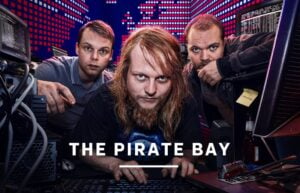
    tpb series The long-awaited Pirate Bay TV series premiered in Sweden on Friday, through official channel and (eventually also) on The Pirate Bay .

    There’s no doubt that the notorious torrent site has made history, but getting everything down on paper and converting it into a TV-series is no easy task.

    TorrentFreak has seen the first two episodes. While reviews are not our thing, we requested input from two founding figures, both of whom were featured in the show. This made clear that there is plenty to say.

    Fiction

    Let’s begin by stressing that The Pirate Bay series is a work of fiction, inspired by facts. The story of the remarkably deviant and resilient torrent site is well known. Never before, however, has it been told this way; by the entertainment industry.

    Documenting a historical movement on screen blurs the lines between fact and fiction. It can be tricky to distinguish what really happened from the embellishments introduced under creative license. That’s also the case here.

    Viewers shouldn’t confuse the series with reality. It is mostly a collection of scenes that never took place; at least not as portrayed. It’s the interpretation of the writers and directors, based on public information and details shared by insiders.

    The three lead characters, Pirate Bay founders Fredrik, Gottfrid, and Peter, were not involved in the project. This means that important context and details are missing. You can’t really blame the creators for this, but it’s important to keep in mind.

    Never Happened…

    Based on the first episodes, the series presents an entertaining version of The Pirate Bay’s origin story. There is plenty of attention for historical details and some props were meticulously recreated, including the legendary Pirate Bay bus .

    The broader storyline, ultimately ending with the founders’ prison sentences, is well documented too. The creators don’t deviate much there. That said, many scenes, timelines, and events portrayed on TV never took place.

    For example, there’s a key opening scene where the tracker is officially launched by Piratbyrån’s Rasmus Fleischer at a house party. The event was videotaped and sent to the Swedish anti-piracy bureau, Antipiratbyrån. While the scene is entertaining, it never happened.

    The same applies to other details. For example, the suggestion that the Pirate Bay’s key figures were hard to find is overblown. There was a publicly posted bank account tied to the donations, for example, and Pirate Bay’s hosting company PRQ was owned by two of the site’s founders.

    These details are largely irrelevant to the broader public. Overall, they provide a good overview of the site’s origins and the main story arc, leaving room for viewers to draw their own conclusions.

    For those at the heart of the events, the series is a different story altogether. They see ‘copies’ of themselves playing roles they don’t necessarily identify with. After everything they went through, that can feel like a slap in the face; from the entertainment industry.

    Peter Sunde: Disappointed

    Pirate Bay co-founder Peter Sunde, aka Brokep, doesn’t recognize himself in the series. Peter skipped the official advance screener in Stockholm that was organized for key figures but found an unofficial option to watch it before it aired. He wasn’t impressed.

    “To be honest, I’m very disappointed. Sure it’s fictional, but what does that really mean when they use your name, quote you on things you’ve said, and then portray you completely different?” he tells us.

    For example, Peter’s character is initially portrayed as somewhat submissive to his boss at Siemens, which he doesn’t recognize at all. In addition, the series doesn’t fully grasp the disorganized nature of Piratbyrån either, he says.

    What stings the most is that the ‘entertainment industry’ that’s long been The Pirate Bay’s main arch rival, is now commercializing its history.

    “My biggest concern with the series is that it’s made by people from the same industry that hates The Pirate Bay,” Peter says. “It’s paid for by organizations that have sued or threatened to sue TPB.”

    Peter doesn’t recognize himself or the other founders in the series, not in attitude or wit. To top it off, ‘his’ Norwegian accent is “awful” too, he says, suggesting that this may have been done on purpose.

    Peter declined to cooperate with B-Reel Films, the Swedish production company that created the series. While he stands by that decision, he had hoped that the episodes would place more emphasis on the broader impact of the site, instead of the legal drama.

    “Honestly, I feel it’s like they put the TPB Wikipedia articles and TPB AFK into an LLM and asked the AI to make a script,” Peter concludes.

    Rasmus Fleischer: Copying History

    Rasmus Fleischer, one of the founders of Piratbyrån who was closely involved in the Pirate Bay project in the early days, shares some of Peter’s criticism. However, he is more forgiving towards the creators.

    “One thing I do not recognize in the fictionalized ‘Rasmus Fleischer’ is that he seems unable to open his mouth without going into a principled speech about freedom of speech and the like.

    “While I do and did prefer freedom to unfreedom, Piratbyrån definitely did not talk much in the language of rights and freedoms,” Rasmus adds.

    Rasmus chooses not to go into great detail on everything that he believes misses the mark, but he stresses that it was never the goal to piss off Hollywood and its lawyers. He sees it more as an impromptu trolling machine. To him, it almost seemed fictional at the time.

    “At times, everything already had a quite fictional character. Or so it felt, watching how our own made-up fictions made headlines around the world,” he says, mentioning the “buy Sealand” project as an example.

    Rasmus has a Ph.D. in history and works at Stockholm University, so he has some experience with how history is told. He recognizes that there’s no uniform history here. To create something understandable, one has to pick a scenario.

    “To tell the story of The Pirate Bay, based on true events, necessarily means to discard the vast majority of events. Trying to fit it all in would result in a chaotic, non-linear story, hardly understandable for anyone who wasn’t around.”

    In the series, the creators focused on the legal aspects, instead of the broader societal impact. This is “a bit boring” according to Rasmus. However, he’s not upset or offended by the end result.

    “I am not offended by the fact that it is ‘the entertainment industry’ telling the story, and I also don’t feel that I have any right to control fictional accounts even if it includes a character bearing my name.

    “I still like copying. Just let them copy me, let them show what kind of copies they are able to make – and we will show them once again how we copy,” Rasmus adds.

    Piratbyrån vs. The Pirate Bay

    If anything, the above shows that, after all these years, The Pirate Bay story still moves people. And indeed, the series is food for thought.

    Piratbyrån was simply a disorganized group of friends who discovered that they could have a broad impact by destabilizing institutions and rethinking the status quo. These ideas didn’t start at organized meetings, most communication took place on IRC.

    In 2003, their focus on file-sharing caught on, and The Pirate Bay was ‘just another’ display of defiance. However, the Pirate Bay quickly grew into something much larger than Piratbyrån.

    Ultimately, Fredrik, Gottfrid and Peter silently accepted the ‘founder’ labels. They came together at the right time, with each assuming their own role, for different reasons. They all excelled in these positions and helped The Pirate Bay thrive.

    Where other core Piratbyrån members stayed at the sidelines, the trio assumed roles that define their lives up until this day. For other Piratbyrån members, meanwhile, the site is simply a remnant of a somewhat rebellious period of their lives.

    Today, the Pirate Bay has served its original purpose, but the site keeps running. The founders cut their ties over the years, but someone is still pulling the strings.

    From: TF , for the latest news on copyright battles, piracy and more.

    • To chevron_right

      Key Pirate Bay Figures Don’t Recognize Themselves in TV Series

      news.movim.eu / TorrentFreak • 10 November 2024 • 6 minutes

    tpb series The long-awaited Pirate Bay TV series premiered in Sweden on Friday, through official channel and (eventually also) on The Pirate Bay .

    There’s no doubt that the notorious torrent site has made history, but getting everything down on paper and converting it into a TV-series is no easy task.

    TorrentFreak has seen the first two episodes. While reviews are not our thing, we requested input from two founding figures, both of whom were featured in the show. This made clear that there is plenty to say.

    Fiction

    Let’s begin by stressing that The Pirate Bay series is a work of fiction, inspired by facts. The story of the remarkably deviant and resilient torrent site is well known. Never before, however, has it been told this way; by the entertainment industry.

    Documenting a historical movement on screen blurs the lines between fact and fiction. It can be tricky to distinguish what really happened from the embellishments introduced under creative license. That’s also the case here.

    Viewers shouldn’t confuse the series with reality. It is mostly a collection of scenes that never took place; at least not as portrayed. It’s the interpretation of the writers and directors, based on public information and details shared by insiders.

    The three lead characters, Pirate Bay founders Fredrik, Gottfrid, and Peter, were not involved in the project. This means that important context and details are missing. You can’t really blame the creators for this, but it’s important to keep in mind.

    Never Happened…

    Based on the first episodes, the series presents an entertaining version of The Pirate Bay’s origin story. There is plenty of attention for historical details and some props were meticulously recreated, including the legendary Pirate Bay bus .

    The broader storyline, ultimately ending with the founders’ prison sentences, is well documented too. The creators don’t deviate much there. That said, many scenes, timelines, and events portrayed on TV never took place.

    For example, there’s a key opening scene where the tracker is officially launched by Piratbyrån’s Rasmus Fleischer at a house party. The event was videotaped and sent to the Swedish anti-piracy bureau, Antipiratbyrån. While the scene is entertaining, it never happened.

    The same applies to other details. For example, the suggestion that the Pirate Bay’s key figures were hard to find is overblown. There was a publicly posted bank account tied to the donations, for example, and Pirate Bay’s hosting company PRQ was owned by two of the site’s founders.

    These details are largely irrelevant to the broader public. Overall, they provide a good overview of the site’s origins and the main story arc, leaving room for viewers to draw their own conclusions.

    For those at the heart of the events, the series is a different story altogether. They see ‘copies’ of themselves playing roles they don’t necessarily identify with. After everything they went through, that can feel like a slap in the face; from the entertainment industry.

    Peter Sunde: Disappointed

    Pirate Bay co-founder Peter Sunde, aka Brokep, doesn’t recognize himself in the series. Peter skipped the official advance screener in Stockholm that was organized for key figures but found an unofficial option to watch it before it aired. He wasn’t impressed.

    “To be honest, I’m very disappointed. Sure it’s fictional, but what does that really mean when they use your name, quote you on things you’ve said, and then portray you completely different?” he tells us.

    For example, Peter’s character is initially portrayed as somewhat submissive to his boss at Siemens, which he doesn’t recognize at all. In addition, the series doesn’t fully grasp the disorganized nature of Piratbyrån either, he says.

    What stings the most is that the ‘entertainment industry’ that’s long been The Pirate Bay’s main arch rival, is now commercializing its history.

    “My biggest concern with the series is that it’s made by people from the same industry that hates The Pirate Bay,” Peter says. “It’s paid for by organizations that have sued or threatened to sue TPB.”

    Peter doesn’t recognize himself or the other founders in the series, not in attitude or wit. To top it off, ‘his’ Norwegian accent is “awful” too, he says, suggesting that this may have been done on purpose.

    Peter declined to cooperate with B-Reel Films, the Swedish production company that created the series. While he stands by that decision, he had hoped that the episodes would place more emphasis on the broader impact of the site, instead of the legal drama.

    “Honestly, I feel it’s like they put the TPB Wikipedia articles and TPB AFK into an LLM and asked the AI to make a script,” Peter concludes.

    Rasmus Fleischer: Copying History

    Rasmus Fleischer, one of the founders of Piratbyrån who was closely involved in the Pirate Bay project in the early days, shares some of Peter’s criticism. However, he is more forgiving towards the creators.

    “One thing I do not recognize in the fictionalized ‘Rasmus Fleischer’ is that he seems unable to open his mouth without going into a principled speech about freedom of speech and the like.

    “While I do and did prefer freedom to unfreedom, Piratbyrån definitely did not talk much in the language of rights and freedoms,” Rasmus adds.

    Rasmus chooses not to go into great detail on everything that he believes misses the mark, but he stresses that it was never the goal to piss off Hollywood and its lawyers. He sees it more as an impromptu trolling machine. To him, it almost seemed fictional at the time.

    “At times, everything already had a quite fictional character. Or so it felt, watching how our own made-up fictions made headlines around the world,” he says, mentioning the “buy Sealand” project as an example.

    Rasmus has a Ph.D. in history and works at Stockholm University, so he has some experience with how history is told. He recognizes that there’s no uniform history here. To create something understandable, one has to pick a scenario.

    “To tell the story of The Pirate Bay, based on true events, necessarily means to discard the vast majority of events. Trying to fit it all in would result in a chaotic, non-linear story, hardly understandable for anyone who wasn’t around.”

    In the series, the creators focused on the legal aspects, instead of the broader societal impact. This is “a bit boring” according to Rasmus. However, he’s not upset or offended by the end result.

    “I am not offended by the fact that it is ‘the entertainment industry’ telling the story, and I also don’t feel that I have any right to control fictional accounts even if it includes a character bearing my name.

    “I still like copying. Just let them copy me, let them show what kind of copies they are able to make – and we will show them once again how we copy,” Rasmus adds.

    Piratbyrån vs. The Pirate Bay

    If anything, the above shows that, after all these years, The Pirate Bay story still moves people. And indeed, the series is food for thought.

    Piratbyrån was simply a disorganized group of friends who discovered that they could have a broad impact by destabilizing institutions and rethinking the status quo. These ideas didn’t start at organized meetings, most communication took place on IRC.

    In 2003, their focus on file-sharing caught on, and The Pirate Bay was ‘just another’ display of defiance. However, the Pirate Bay quickly grew into something much larger than Piratbyrån.

    Ultimately, Fredrik, Gottfrid and Peter silently accepted the ‘founder’ labels. They came together at the right time, with each assuming their own role, for different reasons. They all excelled in these positions and helped The Pirate Bay thrive.

    Where other core Piratbyrån members stayed at the sidelines, the trio assumed roles that define their lives up until this day. For other Piratbyrån members, meanwhile, the site is simply a remnant of a somewhat rebellious period of their lives.

    Today, the Pirate Bay has served its original purpose, but the site keeps running. The founders cut their ties over the years, but someone is still pulling the strings.

    From: TF , for the latest news on copyright battles, piracy and more.

    • To chevron_right

      Key Pirate Bay Figures Don’t Recognize Themselves in TV Series

      news.movim.eu / TorrentFreak • 10 November 2024 • 6 minutes

    tpb series The long-awaited Pirate Bay TV series premiered in Sweden on Friday, through official channel and (eventually also) on The Pirate Bay .

    There’s no doubt that the notorious torrent site has made history, but getting everything down on paper and converting it into a TV-series is no easy task.

    TorrentFreak has seen the first two episodes. While reviews are not our thing, we requested input from two founding figures, both of whom were featured in the show. This made clear that there is plenty to say.

    Fiction

    Let’s begin by stressing that The Pirate Bay series is a work of fiction, inspired by facts. The story of the remarkably deviant and resilient torrent site is well known. Never before, however, has it been told this way; by the entertainment industry.

    Documenting a historical movement on screen blurs the lines between fact and fiction. It can be tricky to distinguish what really happened from the embellishments introduced under creative license. That’s also the case here.

    Viewers shouldn’t confuse the series with reality. It is mostly a collection of scenes that never took place; at least not as portrayed. It’s the interpretation of the writers and directors, based on public information and details shared by insiders.

    The three lead characters, Pirate Bay founders Fredrik, Gottfrid, and Peter, were not involved in the project. This means that important context and details are missing. You can’t really blame the creators for this, but it’s important to keep in mind.

    Never Happened…

    Based on the first episodes, the series presents an entertaining version of The Pirate Bay’s origin story. There is plenty of attention for historical details and some props were meticulously recreated, including the legendary Pirate Bay bus .

    The broader storyline, ultimately ending with the founders’ prison sentences, is well documented too. The creators don’t deviate much there. That said, many scenes, timelines, and events portrayed on TV never took place.

    For example, there’s a key opening scene where the tracker is officially launched by Piratbyrån’s Rasmus Fleischer at a house party. The event was videotaped and sent to the Swedish anti-piracy bureau, Antipiratbyrån. While the scene is entertaining, it never happened.

    The same applies to other details. For example, the suggestion that the Pirate Bay’s key figures were hard to find is overblown. There was a publicly posted bank account tied to the donations, for example, and Pirate Bay’s hosting company PRQ was owned by two of the site’s founders.

    These details are largely irrelevant to the broader public. Overall, they provide a good overview of the site’s origins and the main story arc, leaving room for viewers to draw their own conclusions.

    For those at the heart of the events, the series is a different story altogether. They see ‘copies’ of themselves playing roles they don’t necessarily identify with. After everything they went through, that can feel like a slap in the face; from the entertainment industry.

    Peter Sunde: Disappointed

    Pirate Bay co-founder Peter Sunde, aka Brokep, doesn’t recognize himself in the series. Peter skipped the official advance screener in Stockholm that was organized for key figures but found an unofficial option to watch it before it aired. He wasn’t impressed.

    “To be honest, I’m very disappointed. Sure it’s fictional, but what does that really mean when they use your name, quote you on things you’ve said, and then portray you completely different?” he tells us.

    For example, Peter’s character is initially portrayed as somewhat submissive to his boss at Siemens, which he doesn’t recognize at all. In addition, the series doesn’t fully grasp the disorganized nature of Piratbyrån either, he says.

    What stings the most is that the ‘entertainment industry’ that’s long been The Pirate Bay’s main arch rival, is now commercializing its history.

    “My biggest concern with the series is that it’s made by people from the same industry that hates The Pirate Bay,” Peter says. “It’s paid for by organizations that have sued or threatened to sue TPB.”

    Peter doesn’t recognize himself or the other founders in the series, not in attitude or wit. To top it off, ‘his’ Norwegian accent is “awful” too, he says, suggesting that this may have been done on purpose.

    Peter declined to cooperate with B-Reel Films, the Swedish production company that created the series. While he stands by that decision, he had hoped that the episodes would place more emphasis on the broader impact of the site, instead of the legal drama.

    “Honestly, I feel it’s like they put the TPB Wikipedia articles and TPB AFK into an LLM and asked the AI to make a script,” Peter concludes.

    Rasmus Fleischer: Copying History

    Rasmus Fleischer, one of the founders of Piratbyrån who was closely involved in the Pirate Bay project in the early days, shares some of Peter’s criticism. However, he is more forgiving towards the creators.

    “One thing I do not recognize in the fictionalized ‘Rasmus Fleischer’ is that he seems unable to open his mouth without going into a principled speech about freedom of speech and the like.

    “While I do and did prefer freedom to unfreedom, Piratbyrån definitely did not talk much in the language of rights and freedoms,” Rasmus adds.

    Rasmus chooses not to go into great detail on everything that he believes misses the mark, but he stresses that it was never the goal to piss off Hollywood and its lawyers. He sees it more as an impromptu trolling machine. To him, it almost seemed fictional at the time.

    “At times, everything already had a quite fictional character. Or so it felt, watching how our own made-up fictions made headlines around the world,” he says, mentioning the “buy Sealand” project as an example.

    Rasmus has a Ph.D. in history and works at Stockholm University, so he has some experience with how history is told. He recognizes that there’s no uniform history here. To create something understandable, one has to pick a scenario.

    “To tell the story of The Pirate Bay, based on true events, necessarily means to discard the vast majority of events. Trying to fit it all in would result in a chaotic, non-linear story, hardly understandable for anyone who wasn’t around.”

    In the series, the creators focused on the legal aspects, instead of the broader societal impact. This is “a bit boring” according to Rasmus. However, he’s not upset or offended by the end result.

    “I am not offended by the fact that it is ‘the entertainment industry’ telling the story, and I also don’t feel that I have any right to control fictional accounts even if it includes a character bearing my name.

    “I still like copying. Just let them copy me, let them show what kind of copies they are able to make – and we will show them once again how we copy,” Rasmus adds.

    Piratbyrån vs. The Pirate Bay

    If anything, the above shows that, after all these years, The Pirate Bay story still moves people. And indeed, the series is food for thought.

    Piratbyrån was simply a disorganized group of friends who discovered that they could have a broad impact by destabilizing institutions and rethinking the status quo. These ideas didn’t start at organized meetings, most communication took place on IRC.

    In 2003, their focus on file-sharing caught on, and The Pirate Bay was ‘just another’ display of defiance. However, the Pirate Bay quickly grew into something much larger than Piratbyrån.

    Ultimately, Fredrik, Gottfrid and Peter silently accepted the ‘founder’ labels. They came together at the right time, with each assuming their own role, for different reasons. They all excelled in these positions and helped The Pirate Bay thrive.

    Where other core Piratbyrån members stayed at the sidelines, the trio assumed roles that define their lives up until this day. For other Piratbyrån members, meanwhile, the site is simply a remnant of a somewhat rebellious period of their lives.

    Today, the Pirate Bay has served its original purpose, but the site keeps running. The founders cut their ties over the years, but someone is still pulling the strings.

    From: TF , for the latest news on copyright battles, piracy and more.

    • To chevron_right

      Pirating “The Pirate Bay” TV Series is Ironically Difficult (Updated)

      news.movim.eu / TorrentFreak • 10 November 2024 • 3 minutes

    tpb series The inception and early years of The Pirate Bay are an intriguing chapter of the Internet’s history.

    Founded by the Piratbyrån group, The Pirate Bay and its founders embraced the power of the new BitTorrent technology: to copy culture en masse .

    By doing so, they altered the public discourse, openly taunting the entertainment industries in the process.

    This chapter didn’t end as planned for the lead characters; Fredrik Neij (TiAMO), Peter Sunde (Brokep), and Gotffrid Svartholm (Anakata), who were eventually sentenced to prison . By then, however, they had sparked a digital and political revolution, the impact of which is still felt today.

    TV Series

    The Pirate Bay didn’t just trigger a file-sharing bonanza, it was exemplary for the rapid rise of the web. New technology empowered people whose lives were traditionally dictated by mainstream entertainment and publishing companies.

    The web created new forms to share news, opinions, knowledge, and media. And few Swedes with keyboards had the power to upset billion-dollar companies.

    It doesn’t take a genius to realize that this is a good story, perhaps even a movie script? This includes the people at the Swedish production company B-Reel Films, who got the green light to turn it into a TV series a few years ago.

    The series premiered at the on-demand platform of the Swedish national broadcaster SVT a few hours ago. International deals haven’t been announced, but pirates can generally get access anyway.

    Pirating ‘The Pirate Bay’ Series

    Soon after the first two episodes of The Pirate Bay series came out, scene release copies started circulating online . As one would expect.

    The Scene group OLLONBORRE, which specializes in Swedish content, was the first to pick the show up. Within minutes, the first 1080p WEB-rips were posted on private scene servers and 720p copies followed a few hours later.

    tpb-leak

    Interestingly, pirate releases have yet to make their way to The Pirate Bay. We haven’t seen any other copies on other public pirate sites either, which is surprising given the topic of the series.

    Update November 10 : After a delay, the episodes eventually were published on TPB and other pirate sites.

    It’s common knowledge that The Scene – a secretive network of release groups – prefers to keep its releases private. Therefore, it wasn’t happy with The Pirate Bay’s public nature and rise to prominence in the early 2003s, which is highlighted in the first episodes of the TV series.

    However, we expected non-scene release groups would be eager to pick up the show. Apparently that’s not the case, yet.

    Fact-Based Fiction

    While the broader international audience must wait for the officially sanctioned release, we can add a disclaimer for future viewers. While entertaining and engaging, the series should not be taken as fact.

    The script is loosely based on The Pirate Bay story and many of the scenes are fiction. New elements were added, timelines have been changed, and the characters are constructed by the show’s writers, which is not necessarily how they came across in real life.

    The Pirate Bay’s founders didn’t participate in the production , which means that the creators had no other option than to fill in some blanks.

    In an interview with Drama Quarterly , director Jens Sjögren previously acknowledged that they had to mix facts and fiction to tell the story. He understands that some people won’t like that.

    “People are going to say a lot of shit about it. ‘It was not exactly like this, blah, blah, blah.’ No, but we really broke our fucking backs to try to just embrace the feeling of really struggling with something you believe in so hard – so much so you would almost be ready to go to prison for it,” Sjögren said.

    It wasn’t the creators’ main goal to create a literal replay of what happened. Instead, Sjögren said that he tried to capture the spirit of The Pirate Bay founders’ ambitions and goals.

    Whether this succeeded is up to the viewer, but the series definitely shows the contrasting personalities of Fredrik, Gottfrid, and Peter. They were all in it for different reasons, which may be part of their initial success.

    This weekend we will publish a follow-up article, sharing some thoughts on the series with input from Pirate Bay co-founder Peter Sunde and Piratbyrån co-founder Rasmus Fleischer.

    From: TF , for the latest news on copyright battles, piracy and more.

    • To chevron_right

      Pirating “The Pirate Bay” TV Series is Ironically Difficult (Updated)

      news.movim.eu / TorrentFreak • 10 November 2024 • 3 minutes

    tpb series The inception and early years of The Pirate Bay are an intriguing chapter of the Internet’s history.

    Founded by the Piratbyrån group, The Pirate Bay and its founders embraced the power of the new BitTorrent technology: to copy culture en masse .

    By doing so, they altered the public discourse, openly taunting the entertainment industries in the process.

    This chapter didn’t end as planned for the lead characters; Fredrik Neij (TiAMO), Peter Sunde (Brokep), and Gotffrid Svartholm (Anakata), who were eventually sentenced to prison . By then, however, they had sparked a digital and political revolution, the impact of which is still felt today.

    TV Series

    The Pirate Bay didn’t just trigger a file-sharing bonanza, it was exemplary for the rapid rise of the web. New technology empowered people whose lives were traditionally dictated by mainstream entertainment and publishing companies.

    The web created new forms to share news, opinions, knowledge, and media. And few Swedes with keyboards had the power to upset billion-dollar companies.

    It doesn’t take a genius to realize that this is a good story, perhaps even a movie script? This includes the people at the Swedish production company B-Reel Films, who got the green light to turn it into a TV series a few years ago.

    The series premiered at the on-demand platform of the Swedish national broadcaster SVT a few hours ago. International deals haven’t been announced, but pirates can generally get access anyway.

    Pirating ‘The Pirate Bay’ Series

    Soon after the first two episodes of The Pirate Bay series came out, scene release copies started circulating online . As one would expect.

    The Scene group OLLONBORRE, which specializes in Swedish content, was the first to pick the show up. Within minutes, the first 1080p WEB-rips were posted on private scene servers and 720p copies followed a few hours later.

    tpb-leak

    Interestingly, pirate releases have yet to make their way to The Pirate Bay. We haven’t seen any other copies on other public pirate sites either, which is surprising given the topic of the series.

    Update November 10 : After a delay, the episodes eventually were published on TPB and other pirate sites.

    It’s common knowledge that The Scene – a secretive network of release groups – prefers to keep its releases private. Therefore, it wasn’t happy with The Pirate Bay’s public nature and rise to prominence in the early 2003s, which is highlighted in the first episodes of the TV series.

    However, we expected non-scene release groups would be eager to pick up the show. Apparently that’s not the case, yet.

    Fact-Based Fiction

    While the broader international audience must wait for the officially sanctioned release, we can add a disclaimer for future viewers. While entertaining and engaging, the series should not be taken as fact.

    The script is loosely based on The Pirate Bay story and many of the scenes are fiction. New elements were added, timelines have been changed, and the characters are constructed by the show’s writers, which is not necessarily how they came across in real life.

    The Pirate Bay’s founders didn’t participate in the production , which means that the creators had no other option than to fill in some blanks.

    In an interview with Drama Quarterly , director Jens Sjögren previously acknowledged that they had to mix facts and fiction to tell the story. He understands that some people won’t like that.

    “People are going to say a lot of shit about it. ‘It was not exactly like this, blah, blah, blah.’ No, but we really broke our fucking backs to try to just embrace the feeling of really struggling with something you believe in so hard – so much so you would almost be ready to go to prison for it,” Sjögren said.

    It wasn’t the creators’ main goal to create a literal replay of what happened. Instead, Sjögren said that he tried to capture the spirit of The Pirate Bay founders’ ambitions and goals.

    Whether this succeeded is up to the viewer, but the series definitely shows the contrasting personalities of Fredrik, Gottfrid, and Peter. They were all in it for different reasons, which may be part of their initial success.

    This weekend we will publish a follow-up article, sharing some thoughts on the series with input from Pirate Bay co-founder Peter Sunde and Piratbyrån co-founder Rasmus Fleischer.

    From: TF , for the latest news on copyright battles, piracy and more.

    • To chevron_right

      Pirating “The Pirate Bay” TV Series is Ironically Difficult (Updated)

      news.movim.eu / TorrentFreak • 10 November 2024 • 3 minutes

    tpb series The inception and early years of The Pirate Bay are an intriguing chapter of the Internet’s history.

    Founded by the Piratbyrån group, The Pirate Bay and its founders embraced the power of the new BitTorrent technology: to copy culture en masse .

    By doing so, they altered the public discourse, openly taunting the entertainment industries in the process.

    This chapter didn’t end as planned for the lead characters; Fredrik Neij (TiAMO), Peter Sunde (Brokep), and Gotffrid Svartholm (Anakata), who were eventually sentenced to prison . By then, however, they had sparked a digital and political revolution, the impact of which is still felt today.

    TV Series

    The Pirate Bay didn’t just trigger a file-sharing bonanza, it was exemplary for the rapid rise of the web. New technology empowered people whose lives were traditionally dictated by mainstream entertainment and publishing companies.

    The web created new forms to share news, opinions, knowledge, and media. And few Swedes with keyboards had the power to upset billion-dollar companies.

    It doesn’t take a genius to realize that this is a good story, perhaps even a movie script? This includes the people at the Swedish production company B-Reel Films, who got the green light to turn it into a TV series a few years ago.

    The series premiered at the on-demand platform of the Swedish national broadcaster SVT a few hours ago. International deals haven’t been announced, but pirates can generally get access anyway.

    Pirating ‘The Pirate Bay’ Series

    Soon after the first two episodes of The Pirate Bay series came out, scene release copies started circulating online . As one would expect.

    The Scene group OLLONBORRE, which specializes in Swedish content, was the first to pick the show up. Within minutes, the first 1080p WEB-rips were posted on private scene servers and 720p copies followed a few hours later.

    tpb-leak

    Interestingly, pirate releases have yet to make their way to The Pirate Bay. We haven’t seen any other copies on other public pirate sites either, which is surprising given the topic of the series.

    Update November 10 : After a delay, the episodes eventually were published on TPB and other pirate sites.

    It’s common knowledge that The Scene – a secretive network of release groups – prefers to keep its releases private. Therefore, it wasn’t happy with The Pirate Bay’s public nature and rise to prominence in the early 2003s, which is highlighted in the first episodes of the TV series.

    However, we expected non-scene release groups would be eager to pick up the show. Apparently that’s not the case, yet.

    Fact-Based Fiction

    While the broader international audience must wait for the officially sanctioned release, we can add a disclaimer for future viewers. While entertaining and engaging, the series should not be taken as fact.

    The script is loosely based on The Pirate Bay story and many of the scenes are fiction. New elements were added, timelines have been changed, and the characters are constructed by the show’s writers, which is not necessarily how they came across in real life.

    The Pirate Bay’s founders didn’t participate in the production , which means that the creators had no other option than to fill in some blanks.

    In an interview with Drama Quarterly , director Jens Sjögren previously acknowledged that they had to mix facts and fiction to tell the story. He understands that some people won’t like that.

    “People are going to say a lot of shit about it. ‘It was not exactly like this, blah, blah, blah.’ No, but we really broke our fucking backs to try to just embrace the feeling of really struggling with something you believe in so hard – so much so you would almost be ready to go to prison for it,” Sjögren said.

    It wasn’t the creators’ main goal to create a literal replay of what happened. Instead, Sjögren said that he tried to capture the spirit of The Pirate Bay founders’ ambitions and goals.

    Whether this succeeded is up to the viewer, but the series definitely shows the contrasting personalities of Fredrik, Gottfrid, and Peter. They were all in it for different reasons, which may be part of their initial success.

    This weekend we will publish a follow-up article, sharing some thoughts on the series with input from Pirate Bay co-founder Peter Sunde and Piratbyrån co-founder Rasmus Fleischer.

    From: TF , for the latest news on copyright battles, piracy and more.

    • To chevron_right

      Police ‘Infringing Website List’ Portal Set For a £220K Makeover

      news.movim.eu / TorrentFreak • 8 November 2024 • 5 minutes

    iwl-2024-s The “Infringing Website List” (IWL) was launched in March 2014 as part of the Police Intellectual Property Crime Unit’s (PIPCU) efforts to combat intellectual property crime.
    The IWL is a component of Operation Creative, a multi-agency initiative led by PIPCU at City of London Police, with support from partners across the creative and advertising industries.

    Based on input from industry groups including the MPA, BPI/IFPI, FACT, and the Publishers Association, operators of pirate sites are engaged directly by officers from PIPCU. In most cases we’re aware of, site operators receive an email outlining their activities alongside allegations of crimes under various pieces of legislation. They are then advised to shut down before the situation gets worse.

    Pirates Can Be Very Persistent

    While Operation Creative has been financed from the public purse for over a decade, almost no information is made available to the public. As a result, it’s impossible to say how many sites shut down after the initial contact, or if any do at all. The only thing that can be said with certainty is that many ignore the ultimatum and carry on regardless.

    Non-compliance isn’t unexpected; in many cases those behind the targeted sites don’t live in the UK, or even in Europe. Operation Creative says it responds with a multi-stage disruption process that begins with action against domains, hosting providers, and payment providers, and ends in enforcement. The details of that process and the factors used to measure success are not for public consumption.

    Operation Creative Portal Set For a Makeover

    Stubborn sites are placed on the Infringing Website List, primarily as a reminder for advertisers not to business. The IWL also offers a narrow window of transparency into an otherwise opaque operation. Transparency isn’t intentional but when a list containing thousands of domains is distributed to more than 700 advertisers, gambling businesses, and other interested parties, information can be hard to contain.

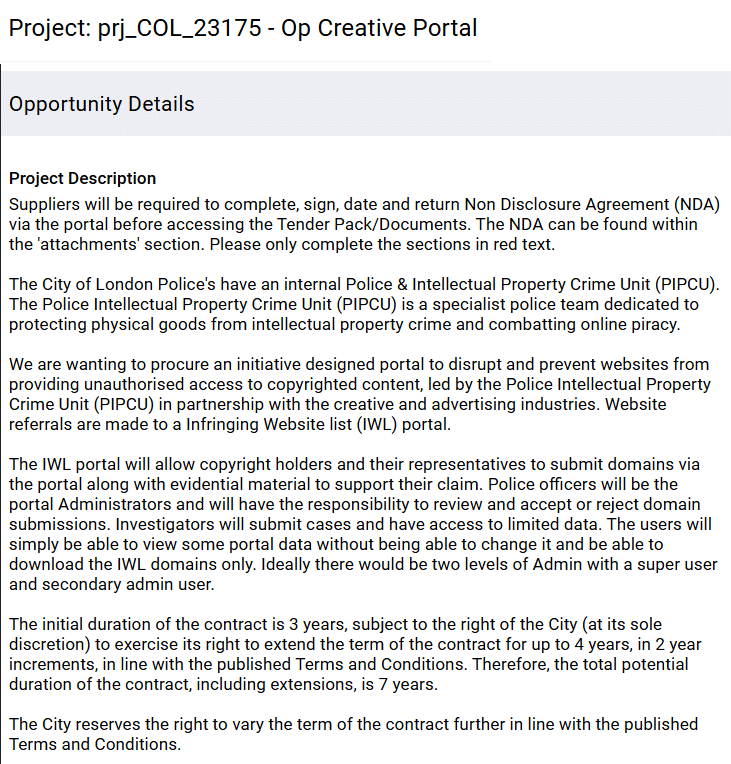
    The 10th anniversary of Operation Creative and the all-important IWL passed silently earlier this year. In the background, however, important work was underway; the procurement of an all new Operation Creative Portal.

    op_creative_portal_opp

    The process began late 2023 with a soft market testing exercise followed by the publication of the listing above mid-April 2024. The contract was eventually awarded to Bristol-based Calvium Limited, which according to its website already works with the NHS and the Department of Transport. Depending on whether extensions are granted after the initial three years, the contract is worth between £173,600 and £221,600.

    The good news for the mostly overseas rightsholders set to benefit from the new portal, is that the cost of tackling the mostly overseas pirate sites on the Infringing Website List, will be paid from the UK public purse. To what extent anyone benefits from the program hasn’t been reported regularly, or even at all.

    A report published last year indicated that the program prevented sites on the IWL receiving £6m in ad revenue from the UK. Averaged out, that could mean every platform lost £3000+ in revenue. For some lower end sites that could be devastating but without context, the overall effect could’ve been minimal too, there’s simply no way to tell.

    Effective Or Not, The List is Quite Big

    When data is withheld from the public as a matter of policy, attempting to assess that a site’s presence on the IWL is detrimental to its health amounts to a fool’s errand. Nevertheless, even without a single shred of evidence it’s safe to assume that no site placed on the list in the last decade will have drawn any benefit from that.

    Subject to the caveats mentioned previously , we estimate that from the list’s launch in early 2014 to early October 2024, more than 8,130 domains have appeared on the IWL.

    In some cases several domains, each with their own individual entry, relate to the same underlying platform, so 8,130 domains does not mean 8,130 sites have appeared on the list. Without access to every list ever produced, the total number of sites cannot be deduced, period.

    Identifying the types of sites that have appeared on the list since the beginning faces the same issues. We can say with some certainty that at the start of October this year, the list contained ~1,800 domains. We can also confirm that new additions in 2024 are dominated by IPTV-related domains, endless web-based live sports streaming portals, the usual movie and TV show platforms, and the bane of the music industry, YouTube-ripping services.

    Some Platforms Seem Immune

    While the top of the IWL is subject to almost constant change, at the very bottom of the list very little seems to happen.

    Without reference to domain extensions, the numbering system indicates that soccer365 was the 16th domain to be added to the IWL back in February 2014. While the 15 domains added earlier have disappeared, between July and September this year, soccer365 pulled in 45.8 million visits.

    Others at the bottom include a well known file-hosting site added to the list in June 2014. Due to a UK court order, it’s been blocked by local ISPs for a decade and never appears in local search results after being deindexed by Google. Others include a handful of world-famous torrent sites (also blocked and deindexed), two music sites that simply refuse to die (blocked and deindexed), and at least one sports streaming site.

    Something Everyone Could Benefit From

    The IWL contains the domains of some very large sites that don’t rely on advertising revenue from the UK, or indeed anywhere else. Money is made by diverting some users of those sites to phishing portals where they’re encouraged to enter their social media and other credentials into look-a-like platforms.

    That inevitably generates profit for the sites, at the expense of people in the UK. The remarkable element here is that servers connected to that activity have UK IP addresses. Just an observation really.

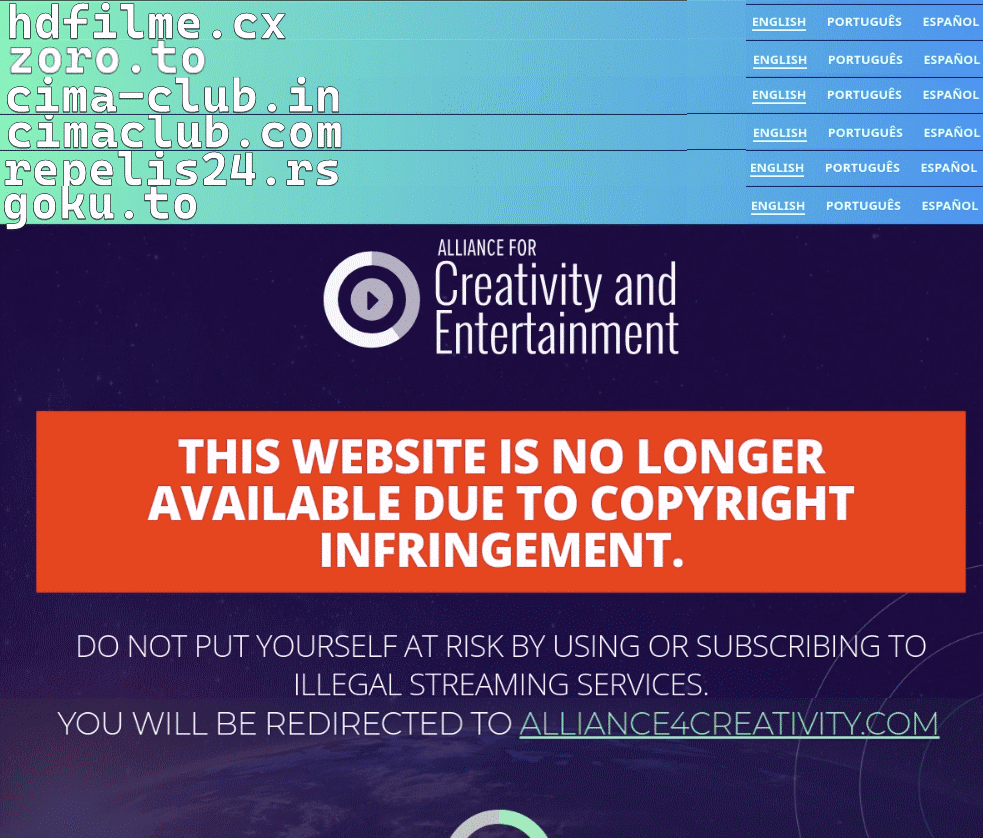
    Finally, domains on the IWL that suspiciously divert to exactly the same website.

    iwl-ace-1

    From: TF , for the latest news on copyright battles, piracy and more.

    • To chevron_right

      Police ‘Infringing Website List’ Portal Set For a £220K Makeover

      news.movim.eu / TorrentFreak • 8 November 2024 • 5 minutes

    iwl-2024-s The “Infringing Website List” (IWL) was launched in March 2014 as part of the Police Intellectual Property Crime Unit’s (PIPCU) efforts to combat intellectual property crime.

    The IWL is a component of Operation Creative, a multi-agency initiative led by PIPCU at City of London Police, with support from partners across the creative and advertising industries.

    Based on input from industry groups including the MPA, BPI/IFPI, FACT, and the Publishers Association, operators of pirate sites are engaged directly by officers from PIPCU. In most cases we’re aware of, site operators receive an email outlining their activities alongside allegations of crimes under various pieces of legislation. They are then advised to shut down before the situation gets worse.

    Pirates Can Be Very Persistent

    While Operation Creative has been financed from the public purse for over a decade, almost no information is made available to the public. As a result, it’s impossible to say how many sites shut down after the initial contact, or if any do at all. The only thing that can be said with certainty is that many ignore the ultimatum and carry on regardless.

    Non-compliance isn’t unexpected; in many cases those behind the targeted sites don’t live in the UK, or even in Europe. Operation Creative says it responds with a multi-stage disruption process that begins with action against domains, hosting providers, and payment providers, and ends in enforcement. The details of that process and the factors used to measure success are not for public consumption.

    Operation Creative Portal Set For a Makeover

    Stubborn sites are placed on the Infringing Website List, primarily as a reminder for advertisers not to business. The IWL also offers a narrow window of transparency into an otherwise opaque operation. Transparency isn’t intentional but when a list containing thousands of domains is distributed to more than 700 advertisers, gambling businesses, and other interested parties, information can be hard to contain.

    The 10th anniversary of Operation Creative and the all-important IWL passed silently earlier this year. In the background, however, important work was underway; the procurement of an all new Operation Creative Portal.

    op_creative_portal_opp

    The process began late 2023 with a soft market testing exercise followed by the publication of the listing above mid-April 2024. The contract was eventually awarded to Bristol-based Calvium Limited, which according to its website already works with the NHS and the Department of Transport. Depending on whether extensions are granted after the initial three years, the contract is worth between £173,600 and £221,600.

    The good news for the mostly overseas rightsholders set to benefit from the new portal, is that the cost of tackling the mostly overseas pirate sites on the Infringing Website List, will be paid from the UK public purse. To what extent anyone benefits from the program hasn’t been reported regularly, or even at all.

    A report published last year indicated that the program prevented sites on the IWL receiving £6m in ad revenue from the UK. Averaged out, that could mean every platform lost £3000+ in revenue. For some lower end sites that could be devastating but without context, the overall effect could’ve been minimal too, there’s simply no way to tell.

    Effective Or Not, The List is Quite Big

    When data is withheld from the public as a matter of policy, attempting to assess that a site’s presence on the IWL is detrimental to its health amounts to a fool’s errand. Nevertheless, even without a single shred of evidence it’s safe to assume that no site placed on the list in the last decade will have drawn any benefit from that.

    Subject to the caveats mentioned previously , we estimate that from the list’s launch in early 2014 to early October 2024, more than 8,130 domains have appeared on the IWL.

    In some cases several domains, each with their own individual entry, relate to the same underlying platform, so 8,130 domains does not mean 8,130 sites have appeared on the list. Without access to every list ever produced, the total number of sites cannot be deduced, period.

    Identifying the types of sites that have appeared on the list since the beginning faces the same issues. We can say with some certainty that at the start of October this year, the list contained ~1,800 domains. We can also confirm that new additions in 2024 are dominated by IPTV-related domains, endless web-based live sports streaming portals, the usual movie and TV show platforms, and the bane of the music industry, YouTube-ripping services.

    Some Platforms Seem Immune

    While the top of the IWL is subject to almost constant change, at the very bottom of the list very little seems to happen.

    Without reference to domain extensions, the numbering system indicates that soccer365 was the 16th domain to be added to the IWL back in February 2014. While the 15 domains added earlier have disappeared, between July and September this year, soccer365 pulled in 45.8 million visits.

    Others at the bottom include a well known file-hosting site added to the list in June 2014. Due to a UK court order, it’s been blocked by local ISPs for a decade and never appears in local search results after being deindexed by Google. Others include a handful of world-famous torrent sites (also blocked and deindexed), two music sites that simply refuse to die (blocked and deindexed), and at least one sports streaming site.

    Something Everyone Could Benefit From

    The IWL contains the domains of some very large sites that don’t rely on advertising revenue from the UK, or indeed anywhere else. Money is made by diverting some users of those sites to phishing portals where they’re encouraged to enter their social media and other credentials into look-a-like platforms.

    That inevitably generates profit for the sites, at the expense of people in the UK. The remarkable element here is that servers connected to that activity have UK IP addresses. Just an observation really.

    Finally, domains on the IWL that suspiciously divert to exactly the same website.

    iwl-ace-1

    From: TF , for the latest news on copyright battles, piracy and more.

    • To chevron_right

      Police ‘Infringing Website List’ Portal Set For a £220K Makeover

      news.movim.eu / TorrentFreak • 8 November 2024 • 5 minutes

    iwl-2024-s The “Infringing Website List” (IWL) was launched in March 2014 as part of the Police Intellectual Property Crime Unit’s (PIPCU) efforts to combat intellectual property crime.

    The IWL is a component of Operation Creative, a multi-agency initiative led by PIPCU at City of London Police, with support from partners across the creative and advertising industries.

    Based on input from industry groups including the MPA, BPI/IFPI, FACT, and the Publishers Association, operators of pirate sites are engaged directly by officers from PIPCU. In most cases we’re aware of, site operators receive an email outlining their activities alongside allegations of crimes under various pieces of legislation. They are then advised to shut down before the situation gets worse.

    Pirates Can Be Very Persistent

    While Operation Creative has been financed from the public purse for over a decade, almost no information is made available to the public. As a result, it’s impossible to say how many sites shut down after the initial contact, or if any do at all. The only thing that can be said with certainty is that many ignore the ultimatum and carry on regardless.

    Non-compliance isn’t unexpected; in many cases those behind the targeted sites don’t live in the UK, or even in Europe. Operation Creative says it responds with a multi-stage disruption process that begins with action against domains, hosting providers, and payment providers, and ends in enforcement. The details of that process and the factors used to measure success are not for public consumption.

    Operation Creative Portal Set For a Makeover

    Stubborn sites are placed on the Infringing Website List, primarily as a reminder for advertisers not to business. The IWL also offers a narrow window of transparency into an otherwise opaque operation. Transparency isn’t intentional but when a list containing thousands of domains is distributed to more than 700 advertisers, gambling businesses, and other interested parties, information can be hard to contain.

    The 10th anniversary of Operation Creative and the all-important IWL passed silently earlier this year. In the background, however, important work was underway; the procurement of an all new Operation Creative Portal.

    op_creative_portal_opp

    The process began late 2023 with a soft market testing exercise followed by the publication of the listing above mid-April 2024. The contract was eventually awarded to Bristol-based Calvium Limited, which according to its website already works with the NHS and the Department of Transport. Depending on whether extensions are granted after the initial three years, the contract is worth between £173,600 and £221,600.

    The good news for the mostly overseas rightsholders set to benefit from the new portal, is that the cost of tackling the mostly overseas pirate sites on the Infringing Website List, will be paid from the UK public purse. To what extent anyone benefits from the program hasn’t been reported regularly, or even at all.

    A report published last year indicated that the program prevented sites on the IWL receiving £6m in ad revenue from the UK. Averaged out, that could mean every platform lost £3000+ in revenue. For some lower end sites that could be devastating but without context, the overall effect could’ve been minimal too, there’s simply no way to tell.

    Effective Or Not, The List is Quite Big

    When data is withheld from the public as a matter of policy, attempting to assess that a site’s presence on the IWL is detrimental to its health amounts to a fool’s errand. Nevertheless, even without a single shred of evidence it’s safe to assume that no site placed on the list in the last decade will have drawn any benefit from that.

    Subject to the caveats mentioned previously , we estimate that from the list’s launch in early 2014 to early October 2024, more than 8,130 domains have appeared on the IWL.

    In some cases several domains, each with their own individual entry, relate to the same underlying platform, so 8,130 domains does not mean 8,130 sites have appeared on the list. Without access to every list ever produced, the total number of sites cannot be deduced, period.

    Identifying the types of sites that have appeared on the list since the beginning faces the same issues. We can say with some certainty that at the start of October this year, the list contained ~1,800 domains. We can also confirm that new additions in 2024 are dominated by IPTV-related domains, endless web-based live sports streaming portals, the usual movie and TV show platforms, and the bane of the music industry, YouTube-ripping services.

    Some Platforms Seem Immune

    While the top of the IWL is subject to almost constant change, at the very bottom of the list very little seems to happen.

    Without reference to domain extensions, the numbering system indicates that soccer365 was the 16th domain to be added to the IWL back in February 2014. While the 15 domains added earlier have disappeared, between July and September this year, soccer365 pulled in 45.8 million visits.

    Others at the bottom include a well known file-hosting site added to the list in June 2014. Due to a UK court order, it’s been blocked by local ISPs for a decade and never appears in local search results after being deindexed by Google. Others include a handful of world-famous torrent sites (also blocked and deindexed), two music sites that simply refuse to die (blocked and deindexed), and at least one sports streaming site.

    Something Everyone Could Benefit From

    The IWL contains the domains of some very large sites that don’t rely on advertising revenue from the UK, or indeed anywhere else. Money is made by diverting some users of those sites to phishing portals where they’re encouraged to enter their social media and other credentials into look-a-like platforms.

    That inevitably generates profit for the sites, at the expense of people in the UK. The remarkable element here is that servers connected to that activity have UK IP addresses. Just an observation really.

    Finally, domains on the IWL that suspiciously divert to exactly the same website.

    iwl-ace-1

    From: TF , for the latest news on copyright battles, piracy and more.