• To chevron_right

      Feds Shut Down Pirate Sports Streaming Service 247TVStream, Indict Operators

      news.movim.eu / TorrentFreak • 21 November 2024 • 3 minutes

    247TVStream In recent years, rightsholders of major sports events have repeatedly complained that piracy of live sports is getting out of hand.

    Increasingly, lawmakers and law enforcement were asked to help out. This week, these calls were heard.

    247TVStream Shutdown and Indictment

    The Department of Justice for the Eastern District of New York announced that it had effectively shut down a major pirate IPTV streaming operation, 247TVStream. The service was allegedly owned and operated by two brothers, Noor Nabi Chowdhury and Mohammad Mahmudur Rahman.

    Chowdhury, who’s a New York resident, was arrested on Tuesday and arraigned in the New York court on the same day. His brother Rahman allegedly resides in Bangladesh and remains at large.

    The men were charged with four counts; conspiracy to provide to the public an illicit digital transmission service, providing an illicit digital transmission service; conspiracy to commit wire fraud; and aggravated identity theft.

    1000+ Channels

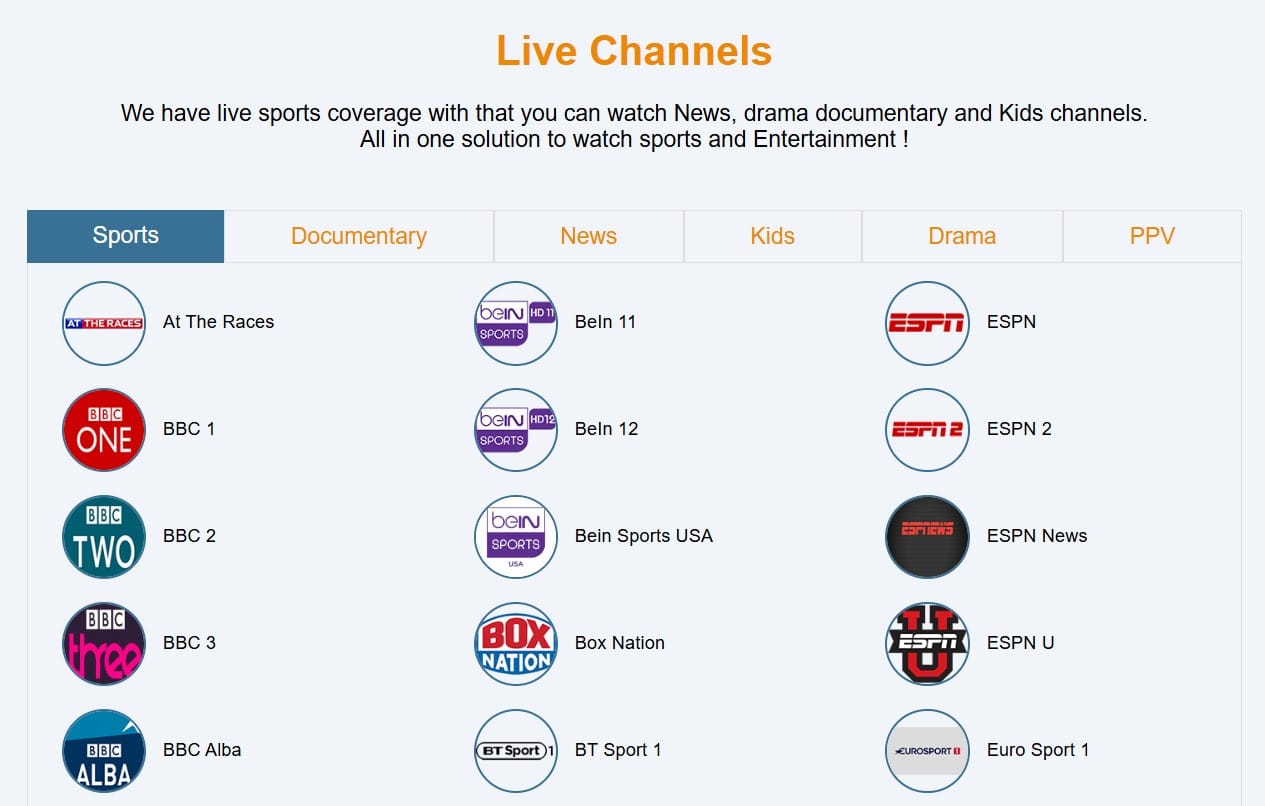
    247TVStream was a subscription streaming service that offered illegal access to live television and sports programming. The service had over 1,000 television channels and was specifically targeted at sports fans.

    These pirated channels could be viewed via dedicated devices or Android and iOS apps such as the ‘247 IPTV Player’, for streaming on the go.

    “247tvstream.com is a place where sports fans can watch live sports online around the world with an alternative way from the comfort of their PC/Laptop/Smartphone/Tablets or SmartTV,” the service explained in its FAQ.
    247TVStream

    channels

    $7 Million in Subscription Fees

    The authorities say that the service had been in operation since May 2017 and caused more than $100 million in damages to copyright holders. The pirate service itself also generated substantial revenues during this time; over $7 million in subscriber fees according to the indictment.

    These revenues, typically $10 per month, partially went through payment processors which were presumably unaware of the nature of the business. The operators also made efforts to conceal their true identities through shell companies and false documents.

    “To conceal the true nature of 247TVStream, Chowdhury and Rahman falsely described, and caused to be falsely described, the nature of 247TVStream and the identity of its owners on applications to the Merchant Processors,” the indictment reads.

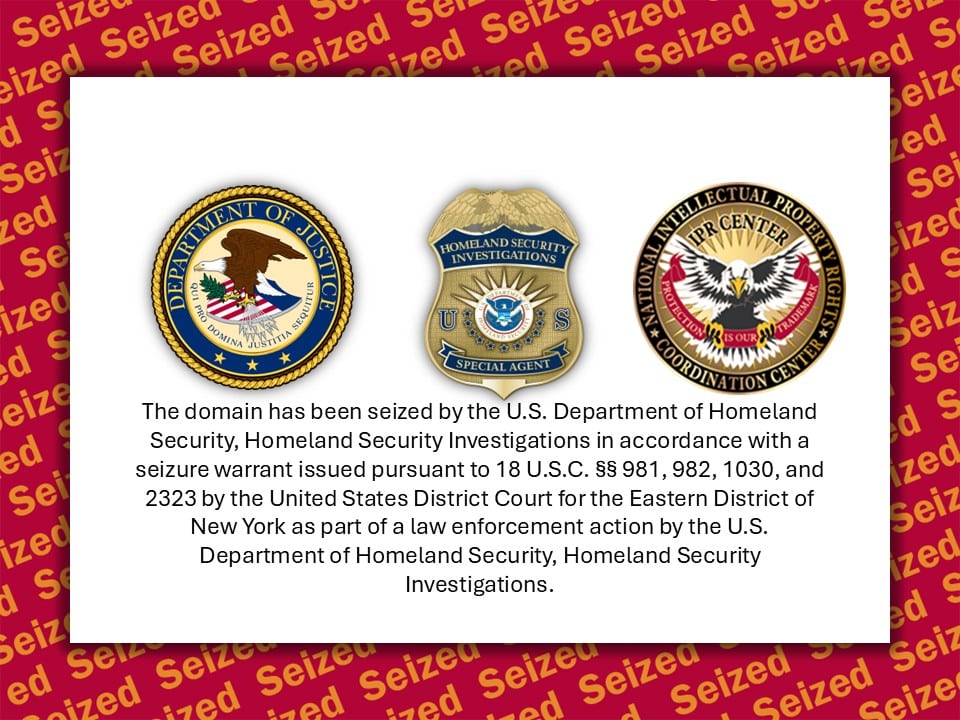
    Working with Dutch and UK law enforcement agencies, authorities seized the servers that hosted 247TVStream’s illegal content. They also seized the domain names tvschedule24.com and 247tvstream.com, which now display a banner announcing the seizure.
    Seizure Banner

    feds seized

    “The domain has been seized by the U.S. Department of Homeland Security, Homeland Security Investigations in accordance with a seizure warrant issued pursuant to 18 U.S.C. §§ 981, 982, 1030, and 2323 by the United States District Court for the Eastern District of New York,” it reads.

    Multi-Year Prison Sentences

    Commenting on the news, United States Attorney for the Eastern District of New York, Breon Peace, thanked Canadian, Dutch, and UK partners for their cooperation. He is pleased with the outcome thus far.

    “My Office and the Department of Justice are committed to protecting the rights of intellectual property holders from digital pirates like these defendants,” Peace notes.

    After his arraignment on Tuesday, Chowdhury was released from custody with the bond set at $25,000. Rahman has yet to be apprehended.

    The brothers could face decades behind bars if convicted on all charges. The penalties for their alleged crimes include a maximum of 20 years for wire fraud, five years for conspiracy related to the illegal streaming service, and a mandatory two-year sentence for identity theft, all of which could be served consecutively.

    —-

    A copy of the indictment, released by the Department of Justice for the Eastern District of New York, is available here (pdf)

    From: TF , for the latest news on copyright battles, piracy and more.

    • To chevron_right

      Feds Shut Down Pirate Sports Streaming Service 247TVStream, Indict Operators

      news.movim.eu / TorrentFreak • 21 November 2024 • 3 minutes

    247TVStream In recent years, rightsholders of major sports events have repeatedly complained that piracy of live sports is getting out of hand.

    Increasingly, lawmakers and law enforcement were asked to help out. This week, these calls were heard.

    247TVStream Shutdown and Indictment

    The Department of Justice for the Eastern District of New York announced that it had effectively shut down a major pirate IPTV streaming operation, 247TVStream. The service was allegedly owned and operated by two brothers, Noor Nabi Chowdhury and Mohammad Mahmudur Rahman.

    Chowdhury, who’s a New York resident, was arrested on Tuesday and arraigned in the New York court on the same day. His brother Rahman allegedly resides in Bangladesh and remains at large.

    The men were charged with four counts; conspiracy to provide to the public an illicit digital transmission service, providing an illicit digital transmission service; conspiracy to commit wire fraud; and aggravated identity theft.

    1000+ Channels

    247TVStream was a subscription streaming service that offered illegal access to live television and sports programming. The service had over 1,000 television channels and was specifically targeted at sports fans.

    These pirated channels could be viewed via dedicated devices or Android and iOS apps such as the ‘247 IPTV Player’, for streaming on the go.

    “247tvstream.com is a place where sports fans can watch live sports online around the world with an alternative way from the comfort of their PC/Laptop/Smartphone/Tablets or SmartTV,” the service explained in its FAQ.

    247TVStream

    channels

    $7 Million in Subscription Fees

    The authorities say that the service had been in operation since May 2017 and caused more than $100 million in damages to copyright holders. The pirate service itself also generated substantial revenues during this time; over $7 million in subscriber fees according to the indictment.

    These revenues, typically $10 per month, partially went through payment processors which were presumably unaware of the nature of the business. The operators also made efforts to conceal their true identities through shell companies and false documents.

    “To conceal the true nature of 247TVStream, Chowdhury and Rahman falsely described, and caused to be falsely described, the nature of 247TVStream and the identity of its owners on applications to the Merchant Processors,” the indictment reads.

    Working with Dutch and UK law enforcement agencies, authorities seized the servers that hosted 247TVStream’s illegal content. They also seized the domain names tvschedule24.com and 247tvstream.com, which now display a banner announcing the seizure.

    Seizure Banner

    feds seized

    “The domain has been seized by the U.S. Department of Homeland Security, Homeland Security Investigations in accordance with a seizure warrant issued pursuant to 18 U.S.C. §§ 981, 982, 1030, and 2323 by the United States District Court for the Eastern District of New York,” it reads.

    Multi-Year Prison Sentences

    Commenting on the news, United States Attorney for the Eastern District of New York, Breon Peace, thanked Canadian, Dutch, and UK partners for their cooperation. He is pleased with the outcome thus far.

    “My Office and the Department of Justice are committed to protecting the rights of intellectual property holders from digital pirates like these defendants,” Peace notes.

    After his arraignment on Tuesday, Chowdhury was released from custody with the bond set at $25,000. Rahman has yet to be apprehended.

    The brothers could face decades behind bars if convicted on all charges. The penalties for their alleged crimes include a maximum of 20 years for wire fraud, five years for conspiracy related to the illegal streaming service, and a mandatory two-year sentence for identity theft, all of which could be served consecutively.

    —-

    A copy of the indictment, released by the Department of Justice for the Eastern District of New York, is available here (pdf)

    From: TF , for the latest news on copyright battles, piracy and more.

    • To chevron_right

      Feds Shut Down Pirate Sports Streaming Service 247TVStream, Indict Operators

      news.movim.eu / TorrentFreak • 21 November 2024 • 3 minutes

    247TVStream In recent years, rightsholders of major sports events have repeatedly complained that piracy of live sports is getting out of hand.

    Increasingly, lawmakers and law enforcement were asked to help out. This week, these calls were heard.

    247TVStream Shutdown and Indictment

    The Department of Justice for the Eastern District of New York announced that it had effectively shut down a major pirate IPTV streaming operation, 247TVStream. The service was allegedly owned and operated by two brothers, Noor Nabi Chowdhury and Mohammad Mahmudur Rahman.

    Chowdhury, who’s a New York resident, was arrested on Tuesday and arraigned in the New York court on the same day. His brother Rahman allegedly resides in Bangladesh and remains at large.

    The men were charged with four counts; conspiracy to provide to the public an illicit digital transmission service, providing an illicit digital transmission service; conspiracy to commit wire fraud; and aggravated identity theft.

    1000+ Channels

    247TVStream was a subscription streaming service that offered illegal access to live television and sports programming. The service had over 1,000 television channels and was specifically targeted at sports fans.

    These pirated channels could be viewed via dedicated devices or Android and iOS apps such as the ‘247 IPTV Player’, for streaming on the go.

    “247tvstream.com is a place where sports fans can watch live sports online around the world with an alternative way from the comfort of their PC/Laptop/Smartphone/Tablets or SmartTV,” the service explained in its FAQ.

    247TVStream

    channels

    $7 Million in Subscription Fees

    The authorities say that the service had been in operation since May 2017 and caused more than $100 million in damages to copyright holders. The pirate service itself also generated substantial revenues during this time; over $7 million in subscriber fees according to the indictment.

    These revenues, typically $10 per month, partially went through payment processors which were presumably unaware of the nature of the business. The operators also made efforts to conceal their true identities through shell companies and false documents.

    “To conceal the true nature of 247TVStream, Chowdhury and Rahman falsely described, and caused to be falsely described, the nature of 247TVStream and the identity of its owners on applications to the Merchant Processors,” the indictment reads.

    Working with Dutch and UK law enforcement agencies, authorities seized the servers that hosted 247TVStream’s illegal content. They also seized the domain names tvschedule24.com and 247tvstream.com, which now display a banner announcing the seizure.

    Seizure Banner

    feds seized

    “The domain has been seized by the U.S. Department of Homeland Security, Homeland Security Investigations in accordance with a seizure warrant issued pursuant to 18 U.S.C. §§ 981, 982, 1030, and 2323 by the United States District Court for the Eastern District of New York,” it reads.

    Multi-Year Prison Sentences

    Commenting on the news, United States Attorney for the Eastern District of New York, Breon Peace, thanked Canadian, Dutch, and UK partners for their cooperation. He is pleased with the outcome thus far.

    “My Office and the Department of Justice are committed to protecting the rights of intellectual property holders from digital pirates like these defendants,” Peace notes.

    After his arraignment on Tuesday, Chowdhury was released from custody with the bond set at $25,000. Rahman has yet to be apprehended.

    The brothers could face decades behind bars if convicted on all charges. The penalties for their alleged crimes include a maximum of 20 years for wire fraud, five years for conspiracy related to the illegal streaming service, and a mandatory two-year sentence for identity theft, all of which could be served consecutively.

    —-

    A copy of the indictment, released by the Department of Justice for the Eastern District of New York, is available here (pdf)

    From: TF , for the latest news on copyright battles, piracy and more.

    • To chevron_right

      Z-Library Helps Students to Overcome Academic Poverty, Study Finds

      news.movim.eu / TorrentFreak • 20 November 2024 • 4 minutes

    zlibrary Z-Library is one of the largest shadow libraries on the Internet, hosting millions of books and academic articles that can be downloaded for free.

    The site defied all odds over the past two years. It continued to operate despite a full-fledged criminal prosecution by the United States, which resulted in the arrest of two alleged operators in Argentina.

    These two Russian defendants are wanted by the United States and earlier this year a judge approved their extradition. However, according to the most recent information we have, the defendants escaped house arrest and vanished into thin air .

    The roles of the two Russians remain unclear, but they were not vital to the site’s survival. Z-Library continued to expand its reach despite their legal troubles.

    Z-Library Motivations Research

    Z-Library users don’t seem to be hindered by the criminal prosecution either, as they continue to support and use the site. For many, Z-Library is simply a convenient portal to download free books. For others, however, it’s a vital resource to further an academic career.

    A recent study published in the Journal of University Teaching & Learning Practice sheds light on the latter. It looks at the ‘piracy’ motivations of Redditors and students in higher education, specifically when it comes to Z-Library.

    The paper

    zlib

    The paper, published by Dr. Michael Day of the University of Greenwich, labels the use of Z-Library as ‘Academic Cybercrime’. The findings, however, suggest that students are more likely to draw comparisons with “Robin Hood”.

    The research looks at the motivations of two groups; Reddit users and Chinese postgraduate students. Despite the vast differences between these groups, their views on Z-Library are quite similar.

    Redditors’ Responses

    The 134 Reddit responses were sampled from the Zlibrary subreddit, which is obviously biased in favor of the site. However, the reasoning goes well beyond a simple “I want free stuff” arguments.

    Many commenters highlighted that they were drawn to the site out of poverty, for example, or they highlighted that Z-Library was an essential tool to fulfill their academic goals.

    “Living in a 3rd world country, 1 book would cost like 50%- 80% already of my daily wage,” one Redditor wrote.

    The idea that Z-Library is a ‘necessary evil’ was also highlighted by other commenters. This includes a student who can barely make ends meet, and a homeless person, who has neither the money nor the space for physical books.

    Some responses

    reddit comments

    The lack of free access to all study materials, including academic journal subscriptions at university libraries, was also a key motivator. Paired with the notion that journal publishers make billions of dollars, without compensating authors, justification is found for ‘pirate’ alternatives.

    “They make massive profits. So stealing from them doesn’t hurt the authors nor reviewers, just the rich greedy publishers who make millions just to design a cover and click ‘publish’,” one Redditor wrote.

    Chinese Students

    The second part of the study is conducted in a more structured format among 103 postgraduate students in China. This group joined a seminar where Z-Library and the crackdown were discussed. In addition, the students participated in follow-up focus group discussions, while also completing a survey.

    Despite not all being users of the shadow library, 41% of the students agreed that the site’s (temporary) shutdown affected their ability to study and find resources for degree learning.

    In general, the students have a favorable view toward Z-Library and similar sites, and 71% admit that they have used a shadow library in the past. In line with China’s socialist values, the overwhelming majority of the students agreed that access to knowledge should be free for everyone.

    While the students are aware of copyright law, they believe that the need to access knowledge outweighs rightsholders’ concerns. This is also reflected in the following responses, among others.

    – Z-Library, or a similar website, is helpful to students living in poverty (82% agree).
    – Academic textbooks are too expensive, so I can’t afford to buy them as a student (67% agree).
    – I have limited access to English medium academic books in my country (63% agree)
    – I prefer to download books without restrictions, like [paywalls etc.], as it is difficult (77% agree).

    All in all, Z-Library and other shadow libraries are seen as a viable option for expensive or inaccessible books, despite potential copyright concerns.

    Robin Hood Mentality

    This research sheds an intriguing light on key motivations to use shadow libraries. However, the small sample sizes, selection bias, and specific characteristics of the groups, means that these findings should be interpreted with caution.

    Dr. Michael Day, nonetheless, notes that the responses show clear signs of a Robin Hood mentality. Z-Library users evade the publishers’ ‘tax’ on knowledge by downloading works for free.

    Overall, the paper suggests that universities and publishers may want to reconsider the status quo and consider making more content freely accessible, taking a page from Z-Library.

    “There is need for universities to re-consider the digital divides faced by socioeconomically and digitally disadvantaged students, alongside publishers, who must rethink their approach by making open access research more commonplace and thus pro-human,” the author concludes.

    The paper provides a good example, as it is published under a Creative Commons license and is freely accessible to all .

    Day, M.J. (2024). Digital Piracy in Higher Education: Exploring Social Media Users and Chinese Postgraduate Students Motivations for Supporting ‘Academic Cybercrime’ by Shelving ebooks from Z-Library. Journal of University Teaching and Learning Practice.

    From: TF , for the latest news on copyright battles, piracy and more.

    • To chevron_right

      Z-Library Helps Students to Overcome Academic Poverty, Study Finds

      news.movim.eu / TorrentFreak • 20 November 2024 • 4 minutes

    zlibrary Z-Library is one of the largest shadow libraries on the Internet, hosting millions of books and academic articles that can be downloaded for free.

    The site defied all odds over the past two years. It continued to operate despite a full-fledged criminal prosecution by the United States, which resulted in the arrest of two alleged operators in Argentina.

    These two Russian defendants are wanted by the United States and earlier this year a judge approved their extradition. However, according to the most recent information we have, the defendants escaped house arrest and vanished into thin air .

    The roles of the two Russians remain unclear, but they were not vital to the site’s survival. Z-Library continued to expand its reach despite their legal troubles.

    Z-Library Motivations Research

    Z-Library users don’t seem to be hindered by the criminal prosecution either, as they continue to support and use the site. For many, Z-Library is simply a convenient portal to download free books. For others, however, it’s a vital resource to further an academic career.

    A recent study published in the Journal of University Teaching & Learning Practice sheds light on the latter. It looks at the ‘piracy’ motivations of Redditors and students in higher education, specifically when it comes to Z-Library.

    The paper

    zlib

    The paper, published by Dr. Michael Day of the University of Greenwich, labels the use of Z-Library as ‘Academic Cybercrime’. The findings, however, suggest that students are more likely to draw comparisons with “Robin Hood”.

    The research looks at the motivations of two groups; Reddit users and Chinese postgraduate students. Despite the vast differences between these groups, their views on Z-Library are quite similar.

    Redditors’ Responses

    The 134 Reddit responses were sampled from the Zlibrary subreddit, which is obviously biased in favor of the site. However, the reasoning goes well beyond a simple “I want free stuff” arguments.

    Many commenters highlighted that they were drawn to the site out of poverty, for example, or they highlighted that Z-Library was an essential tool to fulfill their academic goals.

    “Living in a 3rd world country, 1 book would cost like 50%- 80% already of my daily wage,” one Redditor wrote.

    The idea that Z-Library is a ‘necessary evil’ was also highlighted by other commenters. This includes a student who can barely make ends meet, and a homeless person, who has neither the money nor the space for physical books.

    Some responses

    reddit comments

    The lack of free access to all study materials, including academic journal subscriptions at university libraries, was also a key motivator. Paired with the notion that journal publishers make billions of dollars, without compensating authors, justification is found for ‘pirate’ alternatives.

    “They make massive profits. So stealing from them doesn’t hurt the authors nor reviewers, just the rich greedy publishers who make millions just to design a cover and click ‘publish’,” one Redditor wrote.

    Chinese Students

    The second part of the study is conducted in a more structured format among 103 postgraduate students in China. This group joined a seminar where Z-Library and the crackdown were discussed. In addition, the students participated in follow-up focus group discussions, while also completing a survey.

    Despite not all being users of the shadow library, 41% of the students agreed that the site’s (temporary) shutdown affected their ability to study and find resources for degree learning.

    In general, the students have a favorable view toward Z-Library and similar sites, and 71% admit that they have used a shadow library in the past. In line with China’s socialist values, the overwhelming majority of the students agreed that access to knowledge should be free for everyone.

    While the students are aware of copyright law, they believe that the need to access knowledge outweighs rightsholders’ concerns. This is also reflected in the following responses, among others.

    – Z-Library, or a similar website, is helpful to students living in poverty (82% agree).
    – Academic textbooks are too expensive, so I can’t afford to buy them as a student (67% agree).
    – I have limited access to English medium academic books in my country (63% agree)
    – I prefer to download books without restrictions, like [paywalls etc.], as it is difficult (77% agree).

    All in all, Z-Library and other shadow libraries are seen as a viable option for expensive or inaccessible books, despite potential copyright concerns.

    Robin Hood Mentality

    This research sheds an intriguing light on key motivations to use shadow libraries. However, the small sample sizes, selection bias, and specific characteristics of the groups, means that these findings should be interpreted with caution.

    Dr. Michael Day, nonetheless, notes that the responses show clear signs of a Robin Hood mentality. Z-Library users evade the publishers’ ‘tax’ on knowledge by downloading works for free.

    Overall, the paper suggests that universities and publishers may want to reconsider the status quo and consider making more content freely accessible, taking a page from Z-Library.

    “There is need for universities to re-consider the digital divides faced by socioeconomically and digitally disadvantaged students, alongside publishers, who must rethink their approach by making open access research more commonplace and thus pro-human,” the author concludes.

    The paper provides a good example, as it is published under a Creative Commons license and is freely accessible to all .

    Day, M.J. (2024). Digital Piracy in Higher Education: Exploring Social Media Users and Chinese Postgraduate Students Motivations for Supporting ‘Academic Cybercrime’ by Shelving ebooks from Z-Library. Journal of University Teaching and Learning Practice.

    From: TF , for the latest news on copyright battles, piracy and more.

    • To chevron_right

      Z-Library Helps Students to Overcome Academic Poverty, Study Finds

      news.movim.eu / TorrentFreak • 20 November 2024 • 4 minutes

    zlibrary Z-Library is one of the largest shadow libraries on the Internet, hosting millions of books and academic articles that can be downloaded for free.

    The site defied all odds over the past two years. It continued to operate despite a full-fledged criminal prosecution by the United States, which resulted in the arrest of two alleged operators in Argentina.

    These two Russian defendants are wanted by the United States and earlier this year a judge approved their extradition. However, according to the most recent information we have, the defendants escaped house arrest and vanished into thin air .

    The roles of the two Russians remain unclear, but they were not vital to the site’s survival. Z-Library continued to expand its reach despite their legal troubles.

    Z-Library Motivations Research

    Z-Library users don’t seem to be hindered by the criminal prosecution either, as they continue to support and use the site. For many, Z-Library is simply a convenient portal to download free books. For others, however, it’s a vital resource to further an academic career.

    A recent study published in the Journal of University Teaching & Learning Practice sheds light on the latter. It looks at the ‘piracy’ motivations of Redditors and students in higher education, specifically when it comes to Z-Library.

    The paper

    zlib

    The paper, published by Dr. Michael Day of the University of Greenwich, labels the use of Z-Library as ‘Academic Cybercrime’. The findings, however, suggest that students are more likely to draw comparisons with “Robin Hood”.

    The research looks at the motivations of two groups; Reddit users and Chinese postgraduate students. Despite the vast differences between these groups, their views on Z-Library are quite similar.

    Redditors’ Responses

    The 134 Reddit responses were sampled from the Zlibrary subreddit, which is obviously biased in favor of the site. However, the reasoning goes well beyond a simple “I want free stuff” arguments.

    Many commenters highlighted that they were drawn to the site out of poverty, for example, or they highlighted that Z-Library was an essential tool to fulfill their academic goals.

    “Living in a 3rd world country, 1 book would cost like 50%- 80% already of my daily wage,” one Redditor wrote.

    The idea that Z-Library is a ‘necessary evil’ was also highlighted by other commenters. This includes a student who can barely make ends meet, and a homeless person, who has neither the money nor the space for physical books.

    Some responses

    reddit comments

    The lack of free access to all study materials, including academic journal subscriptions at university libraries, was also a key motivator. Paired with the notion that journal publishers make billions of dollars, without compensating authors, justification is found for ‘pirate’ alternatives.

    “They make massive profits. So stealing from them doesn’t hurt the authors nor reviewers, just the rich greedy publishers who make millions just to design a cover and click ‘publish’,” one Redditor wrote.

    Chinese Students

    The second part of the study is conducted in a more structured format among 103 postgraduate students in China. This group joined a seminar where Z-Library and the crackdown were discussed. In addition, the students participated in follow-up focus group discussions, while also completing a survey.

    Despite not all being users of the shadow library, 41% of the students agreed that the site’s (temporary) shutdown affected their ability to study and find resources for degree learning.

    In general, the students have a favorable view toward Z-Library and similar sites, and 71% admit that they have used a shadow library in the past. In line with China’s socialist values, the overwhelming majority of the students agreed that access to knowledge should be free for everyone.

    While the students are aware of copyright law, they believe that the need to access knowledge outweighs rightsholders’ concerns. This is also reflected in the following responses, among others.

    – Z-Library, or a similar website, is helpful to students living in poverty (82% agree).
    – Academic textbooks are too expensive, so I can’t afford to buy them as a student (67% agree).
    – I have limited access to English medium academic books in my country (63% agree)
    – I prefer to download books without restrictions, like [paywalls etc.], as it is difficult (77% agree).

    All in all, Z-Library and other shadow libraries are seen as a viable option for expensive or inaccessible books, despite potential copyright concerns.

    Robin Hood Mentality

    This research sheds an intriguing light on key motivations to use shadow libraries. However, the small sample sizes, selection bias, and specific characteristics of the groups, means that these findings should be interpreted with caution.

    Dr. Michael Day, nonetheless, notes that the responses show clear signs of a Robin Hood mentality. Z-Library users evade the publishers’ ‘tax’ on knowledge by downloading works for free.

    Overall, the paper suggests that universities and publishers may want to reconsider the status quo and consider making more content freely accessible, taking a page from Z-Library.

    “There is need for universities to re-consider the digital divides faced by socioeconomically and digitally disadvantaged students, alongside publishers, who must rethink their approach by making open access research more commonplace and thus pro-human,” the author concludes.

    The paper provides a good example, as it is published under a Creative Commons license and is freely accessible to all .

    Day, M.J. (2024). Digital Piracy in Higher Education: Exploring Social Media Users and Chinese Postgraduate Students Motivations for Supporting ‘Academic Cybercrime’ by Shelving ebooks from Z-Library. Journal of University Teaching and Learning Practice.

    From: TF , for the latest news on copyright battles, piracy and more.

    • To chevron_right

      Hackathon Winners ‘Remote Brick’ Pirate IPTV Box Using Scalable Technique

      news.movim.eu / TorrentFreak • 20 November 2024 • 5 minutes

    bricked Early September, Brazil’s telecom regulator Anatel announced that it would team up with the Hackathon Brazil Community to stage the first ever ‘TV Box Hackathon’.

    The two-day event, tabled for September 28 and 29, would see teams of hackers develop “innovative solutions” to block or disable non-certified set-top boxes, typically piracy-configured Android devices installed in people’s homes.

    So the challenge is this: by understanding how these non-approved devices work, you must develop an approach that is capable of interrupting the exchange of data that occurs between the devices and their users.

    The task ahead was no walk in the park, but if anyone did manage to pull it off, the anti-piracy implications for the entertainment industries would be absolutely enormous.

    We Have a Winner

    “Hackathon Brasil and Anatel have successfully concluded the Hackathon TV Box 2024, awarding innovative solutions to end the use of illegal TV Box devices in Brazil,” an announcement on the official site now reads.

    “The event brought together experts in technology, network security and hardware, focusing on creative and effective alternatives to protect consumers from digital threats, such as malware and spying.”

    The winning team, revealed as Juarez J., Aline A., Henrique A., Eduarda L., Daniel S. and Theo W., picked up first prize after their solution demonstrated an “ability to directly impact the fight against TV Boxes not approved by Anatel, ensuring greater security and privacy for users.”

    Image credit: Hackathon Brasil hackathon

    The competitors were judged on how closely they adhered to the details of the challenge, innovation, and ultimately the potential impact of their solution.

    Anatel has repeatedly warned that many set-top devices currently in use have poor security, some at the operating system level. The winning team isn’t giving much away, but exploiting these weaknesses may have formed part of the successful strategy.

    No Proof Yet, But The Attack Sounds Plausible

    Exactly how much team leader/spokesman Daniel Lima is allowed to say in public is unclear, but the details revealed so far seem generally plausible.

    In comments to Globo, Lima said the team’s solution is to render set-top devices useless through a software update controlled by them, rather than the manufacturer or whichever entity typically handles that. Ordinarily the first steps would’ve been much more difficult but in Brazil, systems are already in place to provide a helping hand.

    In common with many counterparts elsewhere in the world, ISPs in Brazil already hijack DNS requests for the purpose of blocking access to pirate sites. Typically that involves an internet user attempting to access ‘Blocked Site A’ in their browser, and ISPs’ DNS servers directing the user to a blocking page instead. Assuming that a set-top box tries to access a particular domain name to receive an update, those requests can also be diverted to a different server.

    “We were able to add code that completely disables [a device]. Our solution uses advanced networking capabilities to allow the software on the box to be altered, and the user would be unable to access protected content,” Daniel says.

    “Since Anatel controls the ISPs, it can force them to implement advanced network features that make it possible for the box to receive a modified package.”

    Caveats Always Apply

    These hacks are often more easily said than done, but having the ability to meddle with ISP DNS records to divert a device to a rogue server is a great start. If the devices had stronger security by default, even this would face challenges. If a technique regularly seen in ‘pirate’ Android apps was in place, that could’ve really upset the party.

    Known as certificate pinning , this networking practice provides much greater certainty that the destination server requested by the host is that to which it connects; certainly not a rogue server carrying a potentially ruinous software update.

    Claims in earlier reports have portrayed device security as extremely weak, so updates may not always be delivered via https; if they arrive via unsecured http, that would amount to another big plus. That doesn’t necessarily mean the rest of the process would be easy, or that any number of countermeasures couldn’t be deployed to stop the scheme in its tracks. Details on the security of these devices could make all the difference, or not much at all, it’s hard to say.

    Strong Confidence Meets Cooler Consideration

    Whatever the details, Daniel seems very confident that something big is on the horizon.

    “When Anatel implements the solution, there will be a general failure in most of the irregular boxes that are in use,” he insists .

    Anatel seems reluctant to say much and its official statement doesn’t say anything about possible use. However, a comment that does catch the eye relates to something we mentioned in our earlier article .

    A genuine and workable solution to the pirate set-top box problem could make those behind it impossibly rich, but only if supported by a robust attitude towards their all-important IP rights.

    Courtesy of Globo, Anatel’s comments seem to imply that while useful, any solutions should be seen as an extension of Anatel’s existing work, including methods it’s familiar with already.

    Anatel is holding meetings with the Hackathon participants in addition to the winners, as all the teams presented solutions that were seen as opportunities for improvement in the process carried out by the Agency. The objective of the discussions has been to adapt the solutions presented to the methodologies already used by the Agency.

    Many of the proposals are in line with what Anatel already does. In this way, the Agency has considered all the concepts and ideas that were presented as improvements to the Agency’s internal and external processes, which will allow for the optimization of the security of the telecommunications infrastructure and users.

    The process is already underway, as it is continuous, with Anatel working together with the participants.

    Meanwhile, the victorious six-person team picked up a cash prize of R$7,000 for taking first place; that’s around US$1,200 or US$200 each after the split.

    From: TF , for the latest news on copyright battles, piracy and more.

    • To chevron_right

      Hackathon Winners ‘Remote Brick’ Pirate IPTV Box Using Scalable Technique

      news.movim.eu / TorrentFreak • 20 November 2024 • 5 minutes

    bricked Early September, Brazil’s telecom regulator Anatel announced that it would team up with the Hackathon Brazil Community to stage the first ever ‘TV Box Hackathon’.

    The two-day event, tabled for September 28 and 29, would see teams of hackers develop “innovative solutions” to block or disable non-certified set-top boxes, typically piracy-configured Android devices installed in people’s homes.

    So the challenge is this: by understanding how these non-approved devices work, you must develop an approach that is capable of interrupting the exchange of data that occurs between the devices and their users.

    The task ahead was no walk in the park, but if anyone did manage to pull it off, the anti-piracy implications for the entertainment industries would be absolutely enormous.

    We Have a Winner

    “Hackathon Brasil and Anatel have successfully concluded the Hackathon TV Box 2024, awarding innovative solutions to end the use of illegal TV Box devices in Brazil,” an announcement on the official site now reads.

    “The event brought together experts in technology, network security and hardware, focusing on creative and effective alternatives to protect consumers from digital threats, such as malware and spying.”

    The winning team, revealed as Juarez J., Aline A., Henrique A., Eduarda L., Daniel S. and Theo W., picked up first prize after their solution demonstrated an “ability to directly impact the fight against TV Boxes not approved by Anatel, ensuring greater security and privacy for users.”

    Image credit: Hackathon Brasil hackathon

    The competitors were judged on how closely they adhered to the details of the challenge, innovation, and ultimately the potential impact of their solution.

    Anatel has repeatedly warned that many set-top devices currently in use have poor security, some at the operating system level. The winning team isn’t giving much away, but exploiting these weaknesses may have formed part of the successful strategy.

    No Proof Yet, But The Attack Sounds Plausible

    Exactly how much team leader/spokesman Daniel Lima is allowed to say in public is unclear, but the details revealed so far seem generally plausible.

    In comments to Globo, Lima said the team’s solution is to render set-top devices useless through a software update controlled by them, rather than the manufacturer or whichever entity typically handles that. Ordinarily the first steps would’ve been much more difficult but in Brazil, systems are already in place to provide a helping hand.

    In common with many counterparts elsewhere in the world, ISPs in Brazil already hijack DNS requests for the purpose of blocking access to pirate sites. Typically that involves an internet user attempting to access ‘Blocked Site A’ in their browser, and ISPs’ DNS servers directing the user to a blocking page instead. Assuming that a set-top box tries to access a particular domain name to receive an update, those requests can also be diverted to a different server.

    “We were able to add code that completely disables [a device]. Our solution uses advanced networking capabilities to allow the software on the box to be altered, and the user would be unable to access protected content,” Daniel says.

    “Since Anatel controls the ISPs, it can force them to implement advanced network features that make it possible for the box to receive a modified package.”

    Caveats Always Apply

    These hacks are often more easily said than done, but having the ability to meddle with ISP DNS records to divert a device to a rogue server is a great start. If the devices had stronger security by default, even this would face challenges. If a technique regularly seen in ‘pirate’ Android apps was in place, that could’ve really upset the party.

    Known as certificate pinning , this networking practice provides much greater certainty that the destination server requested by the host is that to which it connects; certainly not a rogue server carrying a potentially ruinous software update.

    Claims in earlier reports have portrayed device security as extremely weak, so updates may not always be delivered via https; if they arrive via unsecured http, that would amount to another big plus. That doesn’t necessarily mean the rest of the process would be easy, or that any number of countermeasures couldn’t be deployed to stop the scheme in its tracks. Details on the security of these devices could make all the difference, or not much at all, it’s hard to say.

    Strong Confidence Meets Cooler Consideration

    Whatever the details, Daniel seems very confident that something big is on the horizon.

    “When Anatel implements the solution, there will be a general failure in most of the irregular boxes that are in use,” he insists .

    Anatel seems reluctant to say much and its official statement doesn’t say anything about possible use. However, a comment that does catch the eye relates to something we mentioned in our earlier article .

    A genuine and workable solution to the pirate set-top box problem could make those behind it impossibly rich, but only if supported by a robust attitude towards their all-important IP rights.

    Courtesy of Globo, Anatel’s comments seem to imply that while useful, any solutions should be seen as an extension of Anatel’s existing work, including methods it’s familiar with already.

    Anatel is holding meetings with the Hackathon participants in addition to the winners, as all the teams presented solutions that were seen as opportunities for improvement in the process carried out by the Agency. The objective of the discussions has been to adapt the solutions presented to the methodologies already used by the Agency.

    Many of the proposals are in line with what Anatel already does. In this way, the Agency has considered all the concepts and ideas that were presented as improvements to the Agency’s internal and external processes, which will allow for the optimization of the security of the telecommunications infrastructure and users.

    The process is already underway, as it is continuous, with Anatel working together with the participants.

    Meanwhile, the victorious six-person team picked up a cash prize of R$7,000 for taking first place; that’s around US$1,200 or US$200 each after the split.

    From: TF , for the latest news on copyright battles, piracy and more.

    • To chevron_right

      Hackathon Winners ‘Remote Brick’ Pirate IPTV Box Using Scalable Technique

      news.movim.eu / TorrentFreak • 20 November 2024 • 5 minutes

    bricked Early September, Brazil’s telecom regulator Anatel announced that it would team up with the Hackathon Brazil Community to stage the first ever ‘TV Box Hackathon’.

    The two-day event, tabled for September 28 and 29, would see teams of hackers develop “innovative solutions” to block or disable non-certified set-top boxes, typically piracy-configured Android devices installed in people’s homes.

    So the challenge is this: by understanding how these non-approved devices work, you must develop an approach that is capable of interrupting the exchange of data that occurs between the devices and their users.

    The task ahead was no walk in the park, but if anyone did manage to pull it off, the anti-piracy implications for the entertainment industries would be absolutely enormous.

    We Have a Winner

    “Hackathon Brasil and Anatel have successfully concluded the Hackathon TV Box 2024, awarding innovative solutions to end the use of illegal TV Box devices in Brazil,” an announcement on the official site now reads.

    “The event brought together experts in technology, network security and hardware, focusing on creative and effective alternatives to protect consumers from digital threats, such as malware and spying.”

    The winning team, revealed as Juarez J., Aline A., Henrique A., Eduarda L., Daniel S. and Theo W., picked up first prize after their solution demonstrated an “ability to directly impact the fight against TV Boxes not approved by Anatel, ensuring greater security and privacy for users.”

    Image credit: Hackathon Brasil hackathon

    The competitors were judged on how closely they adhered to the details of the challenge, innovation, and ultimately the potential impact of their solution.

    Anatel has repeatedly warned that many set-top devices currently in use have poor security, some at the operating system level. The winning team isn’t giving much away, but exploiting these weaknesses may have formed part of the successful strategy.

    No Proof Yet, But The Attack Sounds Plausible

    Exactly how much team leader/spokesman Daniel Lima is allowed to say in public is unclear, but the details revealed so far seem generally plausible.

    In comments to Globo, Lima said the team’s solution is to render set-top devices useless through a software update controlled by them, rather than the manufacturer or whichever entity typically handles that. Ordinarily the first steps would’ve been much more difficult but in Brazil, systems are already in place to provide a helping hand.

    In common with many counterparts elsewhere in the world, ISPs in Brazil already hijack DNS requests for the purpose of blocking access to pirate sites. Typically that involves an internet user attempting to access ‘Blocked Site A’ in their browser, and ISPs’ DNS servers directing the user to a blocking page instead. Assuming that a set-top box tries to access a particular domain name to receive an update, those requests can also be diverted to a different server.

    “We were able to add code that completely disables [a device]. Our solution uses advanced networking capabilities to allow the software on the box to be altered, and the user would be unable to access protected content,” Daniel says.

    “Since Anatel controls the ISPs, it can force them to implement advanced network features that make it possible for the box to receive a modified package.”

    Caveats Always Apply

    These hacks are often more easily said than done, but having the ability to meddle with ISP DNS records to divert a device to a rogue server is a great start. If the devices had stronger security by default, even this would face challenges. If a technique regularly seen in ‘pirate’ Android apps was in place, that could’ve really upset the party.

    Known as certificate pinning , this networking practice provides much greater certainty that the destination server requested by the host is that to which it connects; certainly not a rogue server carrying a potentially ruinous software update.

    Claims in earlier reports have portrayed device security as extremely weak, so updates may not always be delivered via https; if they arrive via unsecured http, that would amount to another big plus. That doesn’t necessarily mean the rest of the process would be easy, or that any number of countermeasures couldn’t be deployed to stop the scheme in its tracks. Details on the security of these devices could make all the difference, or not much at all, it’s hard to say.

    Strong Confidence Meets Cooler Consideration

    Whatever the details, Daniel seems very confident that something big is on the horizon.

    “When Anatel implements the solution, there will be a general failure in most of the irregular boxes that are in use,” he insists .

    Anatel seems reluctant to say much and its official statement doesn’t say anything about possible use. However, a comment that does catch the eye relates to something we mentioned in our earlier article .

    A genuine and workable solution to the pirate set-top box problem could make those behind it impossibly rich, but only if supported by a robust attitude towards their all-important IP rights.

    Courtesy of Globo, Anatel’s comments seem to imply that while useful, any solutions should be seen as an extension of Anatel’s existing work, including methods it’s familiar with already.

    Anatel is holding meetings with the Hackathon participants in addition to the winners, as all the teams presented solutions that were seen as opportunities for improvement in the process carried out by the Agency. The objective of the discussions has been to adapt the solutions presented to the methodologies already used by the Agency.

    Many of the proposals are in line with what Anatel already does. In this way, the Agency has considered all the concepts and ideas that were presented as improvements to the Agency’s internal and external processes, which will allow for the optimization of the security of the telecommunications infrastructure and users.

    The process is already underway, as it is continuous, with Anatel working together with the participants.

    Meanwhile, the victorious six-person team picked up a cash prize of R$7,000 for taking first place; that’s around US$1,200 or US$200 each after the split.

    From: TF , for the latest news on copyright battles, piracy and more.