• To chevron_right

      Link-Busters Reports its Three Billionth ‘Pirate’ URL to Google Search

      news.movim.eu / TorrentFreak • 3 May 2025 • 2 minutes
    link-busters Online piracy is a constant headache for copyright holders; one that’s particularly difficult to beat.

    Due to those who run pirate sites often ignoring takedown requests, copyright holders also target search engines and other online platforms that inadvertently help users to find pirated content.

    Search engine removals are not new and Google has documented this process for more than a decade. Initially, the company only received a few thousand removal requests per day, but this number has grown spectacularly over the years.

    Link-Busters: Breaking Takedown Records

    Copyright holders typically outsource this work to third-party companies that scan the web for links to pirated material. Link-Busters is one of these companies, one that has swiftly dominated the market in terms of output.

    Domiciled in Amsterdam, Netherlands, Link-Busters has been in business for more than a decade. When sending a few million takedowns per year just a few years ago, it barely stood out. Today it can reach those numbers in a matter of hours.

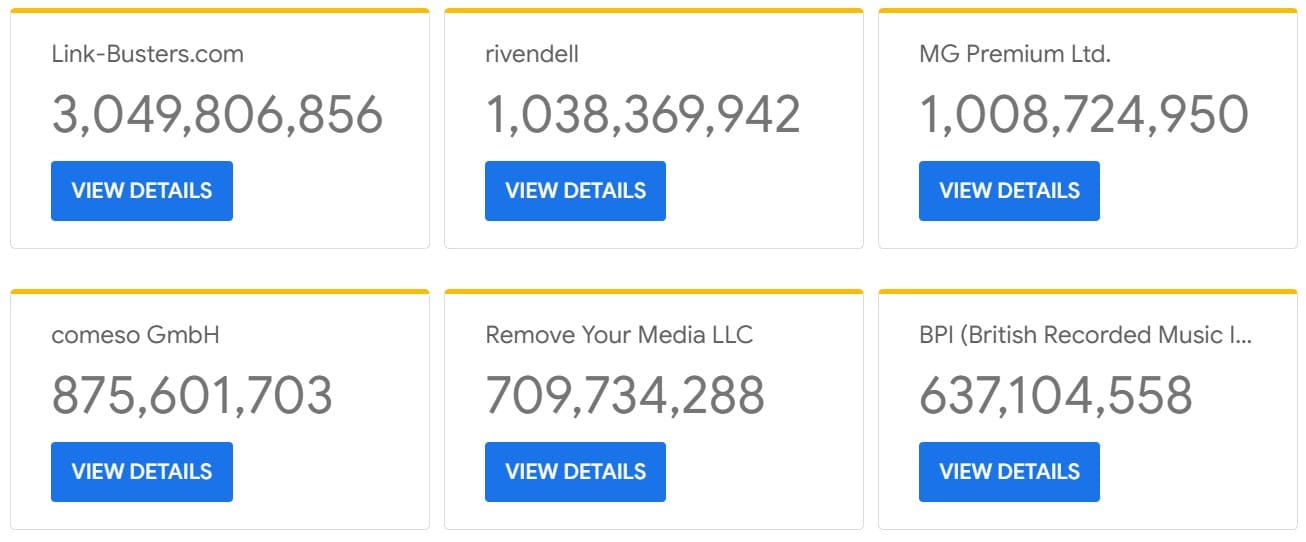
    Google’s transparency report reveals that the takedown company has just reached a new milestone after reporting its three billionth pirate URL to Google. This is up from ‘just’ one billion last July , which was already a record number for a reporting agency.
    Top reporting outfits (Google search)

    top reporters

    Today, Link-Busters is responsible for sending more than half of all takedown requests received by Google. Since the search engine started counting takedown notices in 2012, it has processed a little over 12 billion reported URLs, of which roughly a quarter appeared in the Dutch company’s requests.

    Protecting Publishers in a Proxy Battle

    These impressive figures stand out even more when considering that Link-Busters’ notices are largely sent on behalf of publishers. These include Penguin Random House, HarperCollins, Taylor & Francis, Hachette, all of which have been clients for many years.

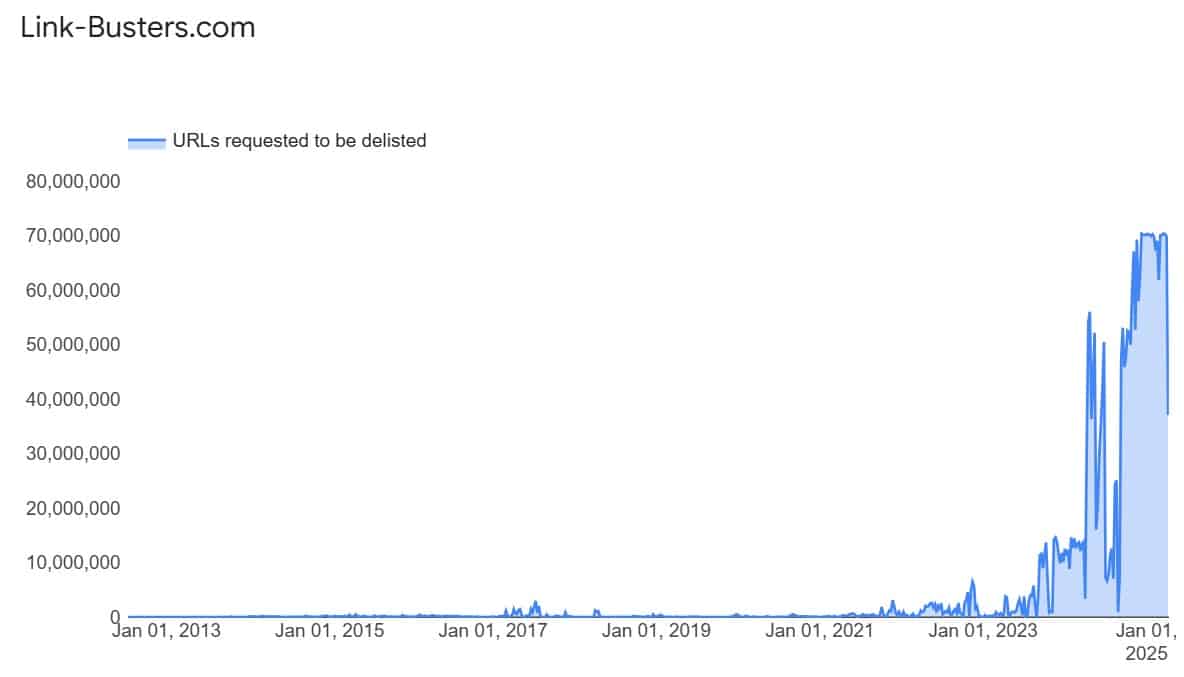
    The recent increase in takedown notices started to take shape in the fall of 2023, right around the time when the U.S. Government announced its criminal prosecution of Z-Library. This doesn’t appear to be a coincidence.
    Takedown Surge

    linkbusters graph

    The Z-Library crackdown took down many of the site’s domain names, but it also spurred the launch of alternative platforms, including Anna’s Archive. And when Z-Library returned with hundreds of new domain names, each with millions of URLs, the need for enforcement action increased.

    Paired with ongoing site blocking efforts, this resulted in an ongoing battle against proxies and alternative domains that continues to this day. A few weeks ago, Link-Busters was averaging more than 70 million reported URLs per week, which translates to 10 million per day.

    Responses

    Given this remarkable track record, we have reached out to Link-Busters on several occasions, hoping to get additional background and context on its achievements. Thus far, we’ve never received a response.

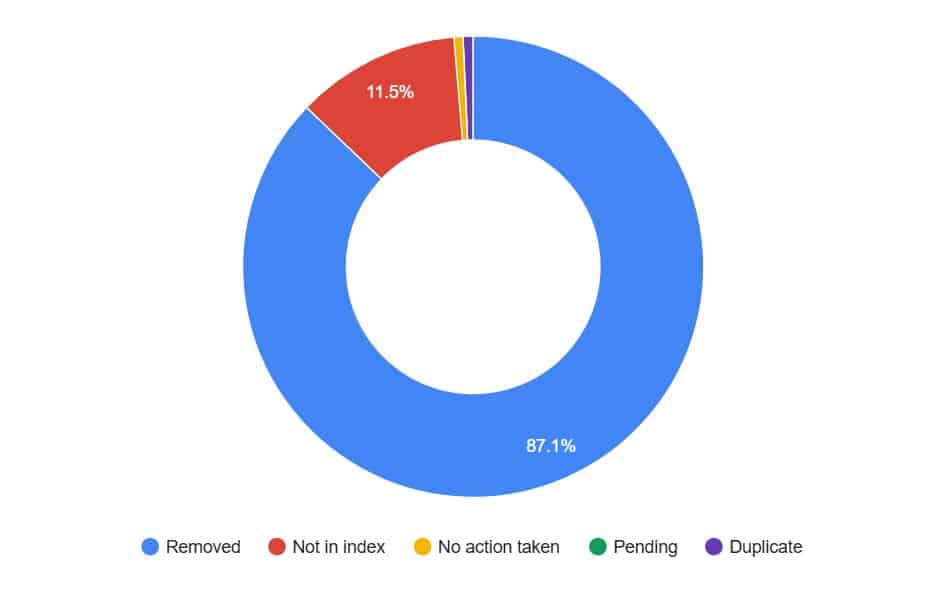
    Luckily for Link-Busters, Google does respond to its takedown requests. Of all URLs reported, more than 2.6 billion were removed from Google search. Another 351 million have yet to appear in Google search, but were preemptively blacklisted.

    Google refused to take down 19 million URLs (0.6%) and 21 million reported links (0.7%) were duplicates. This is a pretty decent track record in terms of accuracy.
    Google’s Responses

    google responses

    Whether Link-Busters will continue to report a staggering number of pirate URLs will, ironically enough, largely depend on the survival rate of the pirate book libraries it targets. If these sites stop responding to the takedown efforts by launching new domains, potential targets will eventually disappear.

    Thus far, however, there is no sign that Link-Busters will be out of business anytime soon.

    From: TF , for the latest news on copyright battles, piracy and more.

    • To chevron_right

      Link-Busters Reports its Three Billionth ‘Pirate’ URL to Google Search

      news.movim.eu / TorrentFreak • 3 May 2025 • 2 minutes

    link-busters Online piracy is a constant headache for copyright holders; one that’s particularly difficult to beat.

    Due to those who run pirate sites often ignoring takedown requests, copyright holders also target search engines and other online platforms that inadvertently help users to find pirated content.

    Search engine removals are not new and Google has documented this process for more than a decade. Initially, the company only received a few thousand removal requests per day, but this number has grown spectacularly over the years.

    Link-Busters: Breaking Takedown Records

    Copyright holders typically outsource this work to third-party companies that scan the web for links to pirated material. Link-Busters is one of these companies, one that has swiftly dominated the market in terms of output.

    Domiciled in Amsterdam, Netherlands, Link-Busters has been in business for more than a decade. When sending a few million takedowns per year just a few years ago, it barely stood out. Today it can reach those numbers in a matter of hours.

    Google’s transparency report reveals that the takedown company has just reached a new milestone after reporting its three billionth pirate URL to Google. This is up from ‘just’ one billion last July , which was already a record number for a reporting agency.

    Top reporting outfits (Google search)

    top reporters

    Today, Link-Busters is responsible for sending more than half of all takedown requests received by Google. Since the search engine started counting takedown notices in 2012, it has processed a little over 12 billion reported URLs, of which roughly a quarter appeared in the Dutch company’s requests.

    Protecting Publishers in a Proxy Battle

    These impressive figures stand out even more when considering that Link-Busters’ notices are largely sent on behalf of publishers. These include Penguin Random House, HarperCollins, Taylor & Francis, Hachette, all of which have been clients for many years.

    The recent increase in takedown notices started to take shape in the fall of 2023, right around the time when the U.S. Government announced its criminal prosecution of Z-Library. This doesn’t appear to be a coincidence.

    Takedown Surge

    linkbusters graph

    The Z-Library crackdown took down many of the site’s domain names, but it also spurred the launch of alternative platforms, including Anna’s Archive. And when Z-Library returned with hundreds of new domain names, each with millions of URLs, the need for enforcement action increased.

    Paired with ongoing site blocking efforts, this resulted in an ongoing battle against proxies and alternative domains that continues to this day. A few weeks ago, Link-Busters was averaging more than 70 million reported URLs per week, which translates to 10 million per day.

    Responses

    Given this remarkable track record, we have reached out to Link-Busters on several occasions, hoping to get additional background and context on its achievements. Thus far, we’ve never received a response.

    Luckily for Link-Busters, Google does respond to its takedown requests. Of all URLs reported, more than 2.6 billion were removed from Google search. Another 351 million have yet to appear in Google search, but were preemptively blacklisted.

    Google refused to take down 19 million URLs (0.6%) and 21 million reported links (0.7%) were duplicates. This is a pretty decent track record in terms of accuracy.

    Google’s Responses

    google responses

    Whether Link-Busters will continue to report a staggering number of pirate URLs will, ironically enough, largely depend on the survival rate of the pirate book libraries it targets. If these sites stop responding to the takedown efforts by launching new domains, potential targets will eventually disappear.

    Thus far, however, there is no sign that Link-Busters will be out of business anytime soon.

    From: TF , for the latest news on copyright battles, piracy and more.

    • To chevron_right

      Link-Busters Reports its Three Billionth ‘Pirate’ URL to Google Search

      news.movim.eu / TorrentFreak • 3 May 2025 • 2 minutes

    link-busters Online piracy is a constant headache for copyright holders; one that’s particularly difficult to beat.

    Due to those who run pirate sites often ignoring takedown requests, copyright holders also target search engines and other online platforms that inadvertently help users to find pirated content.

    Search engine removals are not new and Google has documented this process for more than a decade. Initially, the company only received a few thousand removal requests per day, but this number has grown spectacularly over the years.

    Link-Busters: Breaking Takedown Records

    Copyright holders typically outsource this work to third-party companies that scan the web for links to pirated material. Link-Busters is one of these companies, one that has swiftly dominated the market in terms of output.

    Domiciled in Amsterdam, Netherlands, Link-Busters has been in business for more than a decade. When sending a few million takedowns per year just a few years ago, it barely stood out. Today it can reach those numbers in a matter of hours.

    Google’s transparency report reveals that the takedown company has just reached a new milestone after reporting its three billionth pirate URL to Google. This is up from ‘just’ one billion last July , which was already a record number for a reporting agency.

    Top reporting outfits (Google search)

    top reporters

    Today, Link-Busters is responsible for sending more than half of all takedown requests received by Google. Since the search engine started counting takedown notices in 2012, it has processed a little over 12 billion reported URLs, of which roughly a quarter appeared in the Dutch company’s requests.

    Protecting Publishers in a Proxy Battle

    These impressive figures stand out even more when considering that Link-Busters’ notices are largely sent on behalf of publishers. These include Penguin Random House, HarperCollins, Taylor & Francis, Hachette, all of which have been clients for many years.

    The recent increase in takedown notices started to take shape in the fall of 2023, right around the time when the U.S. Government announced its criminal prosecution of Z-Library. This doesn’t appear to be a coincidence.

    Takedown Surge

    linkbusters graph

    The Z-Library crackdown took down many of the site’s domain names, but it also spurred the launch of alternative platforms, including Anna’s Archive. And when Z-Library returned with hundreds of new domain names, each with millions of URLs, the need for enforcement action increased.

    Paired with ongoing site blocking efforts, this resulted in an ongoing battle against proxies and alternative domains that continues to this day. A few weeks ago, Link-Busters was averaging more than 70 million reported URLs per week, which translates to 10 million per day.

    Responses

    Given this remarkable track record, we have reached out to Link-Busters on several occasions, hoping to get additional background and context on its achievements. Thus far, we’ve never received a response.

    Luckily for Link-Busters, Google does respond to its takedown requests. Of all URLs reported, more than 2.6 billion were removed from Google search. Another 351 million have yet to appear in Google search, but were preemptively blacklisted.

    Google refused to take down 19 million URLs (0.6%) and 21 million reported links (0.7%) were duplicates. This is a pretty decent track record in terms of accuracy.

    Google’s Responses

    google responses

    Whether Link-Busters will continue to report a staggering number of pirate URLs will, ironically enough, largely depend on the survival rate of the pirate book libraries it targets. If these sites stop responding to the takedown efforts by launching new domains, potential targets will eventually disappear.

    Thus far, however, there is no sign that Link-Busters will be out of business anytime soon.

    From: TF , for the latest news on copyright battles, piracy and more.

    • To chevron_right

      DAZN’s New Pirate IPTV Blocking Order & ‘Confidential’ Secret Sauce

      news.movim.eu / TorrentFreak • 2 May 2025 • 5 minutes

    dns-block-soccer-ball1 When site-blocking is publicized by those who acquire an injunction, attention tends to be carefully drawn towards key messaging.

    Being seen to take action against piracy is a public reminder to pirate sites and suppliers that rightsholders are always watching. At the top of the supply chain that’s unlikely to act as a deterrent but lower down, where resellers and the public are much more exposed, even a pause for thought could prove useful.

    In broad terms, anti-piracy announcements in this context are more easily framed as regular advertising. New and improved, whatever couldn’t be wiped away last time will now meet our toughest formula yet. So capitulate now, because we are going nowhere.

    Blocking in Belgium

    News of yet another blocking order in Belgium early April, obtained by DAZN and 12th Player, arrived via local media. No misdirection, just facts that combined to form an interesting, credible account of progress via a new type of injunction.

    Notable was a not-so-veiled warning for DNS providers. Among the few details of the order made public was confirmation that it included penalties of €100,000 per day for any DNS provider that failed to prevent access to around 100+ streaming sites. Having responded to similar orders to block DNS in France and Portugal by leaving those countries, OpenDNS left Belgium too .

    The new order was described as “the first of its kind,” and a “real step forward” in the fight against piracy. But was that the work of the marketing department or a measured fact-based assessment?

    Court Order RR/25/00020: Game Changer or the Same Game?

    Filed on March 25, 2025, by S.R.L. The 12th Player and DAZN Limited at the Chamber of Presidential Competence in Brussels, the petition for ISP and third-party DNS blocking establishes the fundamentals on well-trodden ground.

    The applicants hold the necessary rights to the content in question and to a background of rising infringement in Belgium and an alleged piracy rate nearing 50%, they requested an order to disrupt the supply of infringing content.

    The subsequent order dated March 28, 2025, spends almost no time on the first group of respondents; local ISPs VOO, Orange Belgium, Proximus, Telenet, and DIGI Communications Belgium. With their cooperation already established, the Court describes how users turn to alternative DNS providers to circumvent the ISPs’ blocking measures.

    [T]he Complainants rightly argue that in order for domain name blocking measures to be effective, it is essential to target not only Internet access providers, but also providers of alternative domain name resolution systems providing their services in Belgium. Legal doctrine and case law confirm that the notion of intermediary is broadly defined.

    The intermediaries in question – Cloudflare, Google LLC and Google Ireland Ltd, Cisco Systems and Cisco OpenDNS – form the second category of respondents. It’s understood that Cloudflare, Google, and Cisco opposed their involvement in the petition on various grounds. The specifics are absent from the order but suffice to say, all objections against blocking were rejected.

    The Proposed Measures

    DAZN’s claim that the order is a “real step forward” is supported by permission from the Court to compel blocking by third party DNS services. This type of blocking has been ordered previously, notably against Cloudflare in Italy and more recently at the request of Canal+ in France , but as a mainstream tool it’s still in its infancy.

    History has shown that having gained momentum in one or two key member states, measures like these spread more quickly to others in the bloc. Approval in Belgium makes that much more likely.

    Belgium already has experience of so-called ‘static blocking’ against stationary targets but is a relative newcomer to the ‘dynamic blocking’ requested here. Injunctions like these bake in flexibility from the start in preparation for various pirate countermeasures.

    dynamic belgium

    As clarified in the order: “The aim is to target not only the domain names identified in the request, but also any domain names circumventing the blocking measures, via redirects and/or mirror sites and/or ‘copycats’. The blocking measures will therefore be regularly updated.”

    Confidential Pirate Trademarks

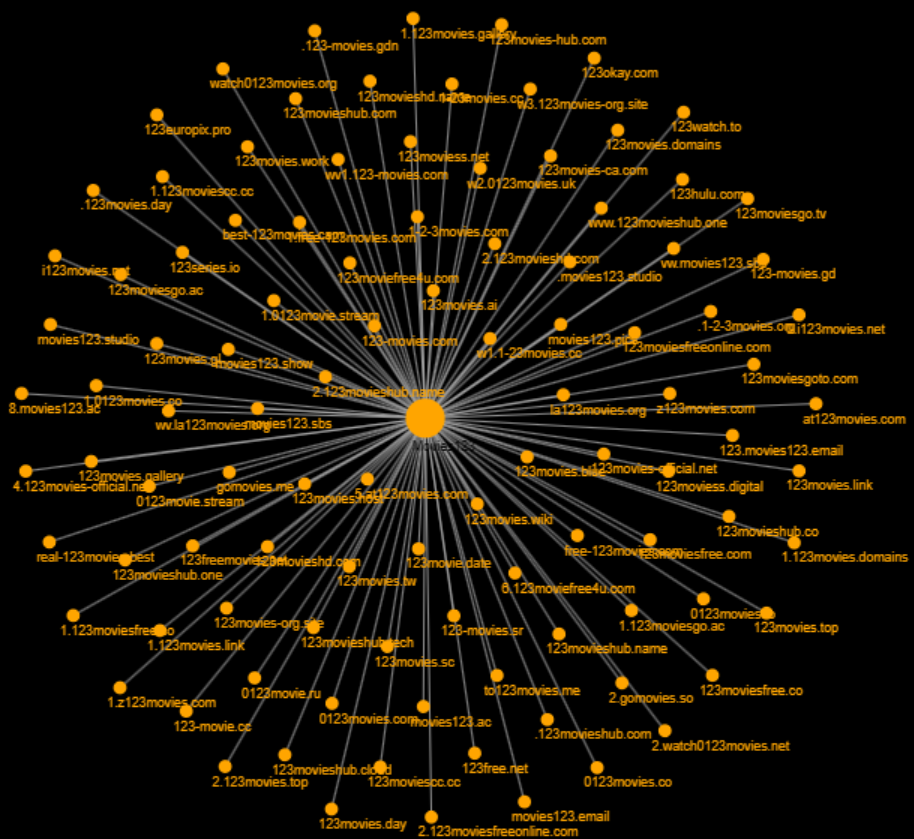
    123movies-blocked-in-1-day.png Attention then turns to a ‘confidential’ aspect of the order dealing with the issue of blocking sites based on their appearance.
    More specifically, sites that lack an individual identity of their own but gain popularity through the use of ‘pirate trademarks’, usually familiar logos and/or domains containing recognizable site names.

    Already part of injunctions in countries including the UK and Australia , targeting new sites based on their use of already familiar ‘pirate’ brands, usually offering the same content, took surprisingly long to arrive.

    An inevitable response to some piracy groups turning to mass production of sites to frustrate blocking, mitigate search engine downranking, and in some cases to usurp trust in another brand for malicious purposes , brand-based blocking can suppress a range of time-consuming irritants.

    Brand-blocking wasn’t advertised as a plus by DAZN but as part of a package, it does indeed amount to another step forward.

    The Balance of Interests

    With events currently playing out in Spain suggesting that basic rights and freedoms exist only with caveats , faith may need to be restored in balance of interests tests.

    That being said, the Court indicates “that after weighing up the interests, rights and freedoms at stake, including the general interest, the facts and, where applicable, the documents on which the applicant relies are such as to reasonably justify the provisional measures requested.”

    The Court arrived at the following conclusions:

    • Users are in no way deprived of access to the content concerned on legal offers;
    • Blocking targets are structurally infringing and do not host any legal content;
    • The blocking measures requested constitute a proportionate and effective response
    • Impact of measures limited to the violations observed

    Blocking Notices

    Anyone visiting one of the blocked sites within the court’s jurisdiction should be diverted to a blocking page. The page should provide information to explain why a visit to a pirate site didn’t produce the expected result.

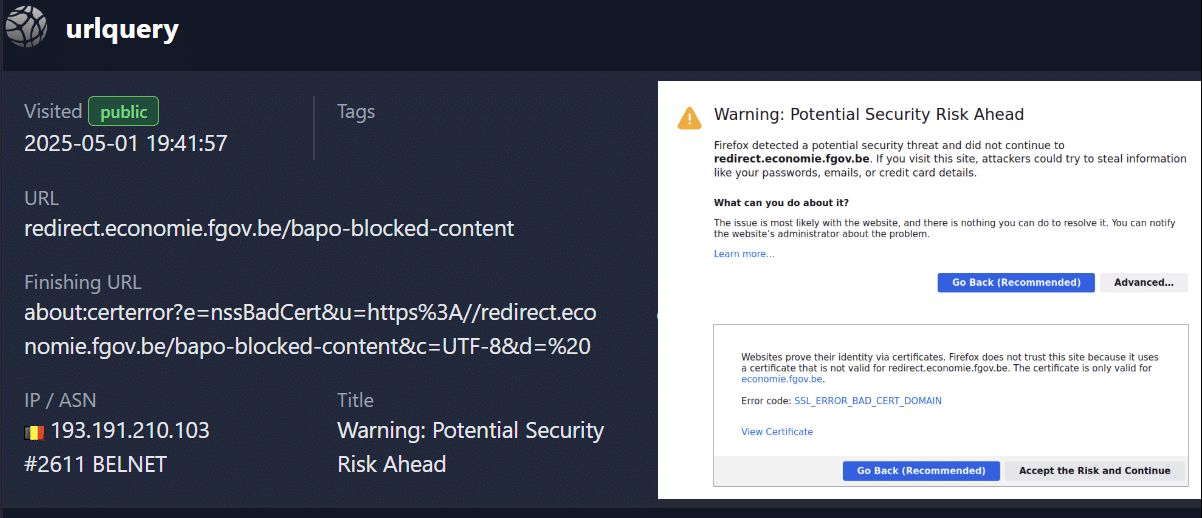
    Pirate site redirects should lead to a government website, but in some cases users may find themselves worrying about attackers instead.

    dazn-block-cert-error

    How many visitors see the official piracy warning rather than a broken website is unknown; the same certificate issue has persisted for several weeks, leading to a warning that the government’s website could steal citizens’ personal information.

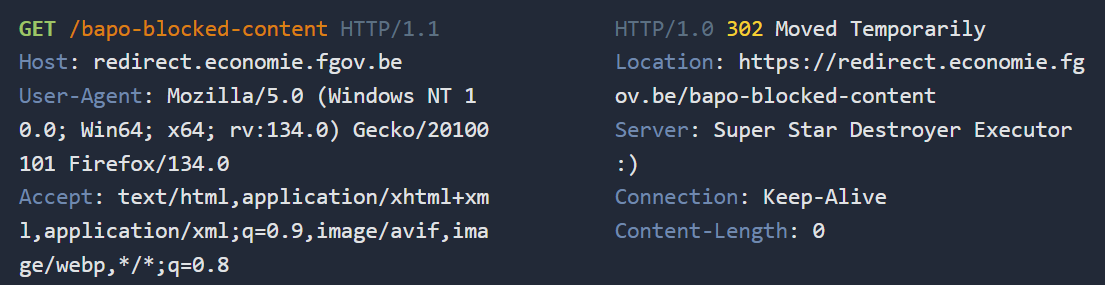
    super-star-destroyer-belgium-block

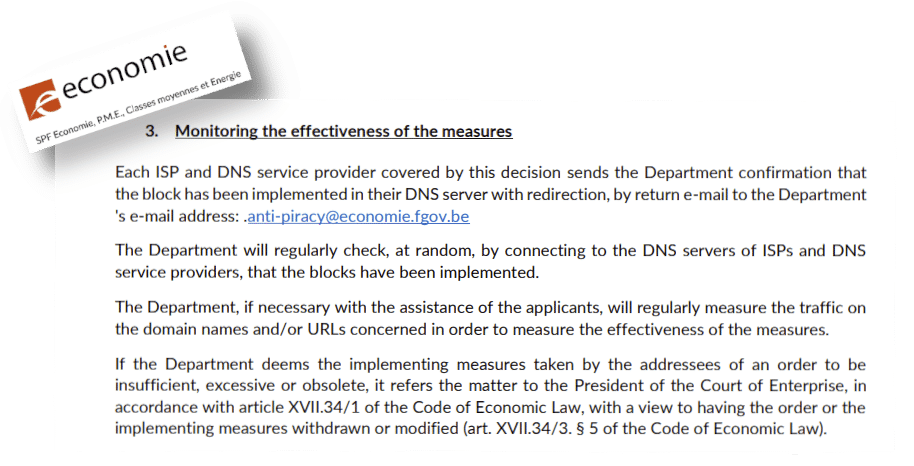
    Those who look a little closer might notice that the server has been given a fun name to brighten visitors’ day. Or maybe it’s a cunning way to boost trademark awareness; we may never know. In any event, duties to address these issues are clearly allocated, so along with being monitored, there’s much to draw comfort from.

    redirect-check

    From: TF , for the latest news on copyright battles, piracy and more.

    • To chevron_right

      DAZN’s New Pirate IPTV Blocking Order & ‘Confidential’ Secret Sauce

      news.movim.eu / TorrentFreak • 2 May 2025 • 5 minutes

    dns-block-soccer-ball1 When site-blocking is publicized by those who acquire an injunction, attention tends to be carefully drawn towards key messaging.

    Being seen to take action against piracy is a public reminder to pirate sites and suppliers that rightsholders are always watching. At the top of the supply chain that’s unlikely to act as a deterrent but lower down, where resellers and the public are much more exposed, even a pause for thought could prove useful.

    In broad terms, anti-piracy announcements in this context are more easily framed as regular advertising. New and improved, whatever couldn’t be wiped away last time will now meet our toughest formula yet. So capitulate now, because we are going nowhere.

    Blocking in Belgium

    News of yet another blocking order in Belgium early April, obtained by DAZN and 12th Player, arrived via local media. No misdirection, just facts that combined to form an interesting, credible account of progress via a new type of injunction.

    Notable was a not-so-veiled warning for DNS providers. Among the few details of the order made public was confirmation that it included penalties of €100,000 per day for any DNS provider that failed to prevent access to around 100+ streaming sites. Having responded to similar orders to block DNS in France and Portugal by leaving those countries, OpenDNS left Belgium too .

    The new order was described as “the first of its kind,” and a “real step forward” in the fight against piracy. But was that the work of the marketing department or a measured fact-based assessment?

    Court Order RR/25/00020: Game Changer or the Same Game?

    Filed on March 25, 2025, by S.R.L. The 12th Player and DAZN Limited at the Chamber of Presidential Competence in Brussels, the petition for ISP and third-party DNS blocking establishes the fundamentals on well-trodden ground.

    The applicants hold the necessary rights to the content in question and to a background of rising infringement in Belgium and an alleged piracy rate nearing 50%, they requested an order to disrupt the supply of infringing content.

    The subsequent order dated March 28, 2025, spends almost no time on the first group of respondents; local ISPs VOO, Orange Belgium, Proximus, Telenet, and DIGI Communications Belgium. With their cooperation already established, the Court describes how users turn to alternative DNS providers to circumvent the ISPs’ blocking measures.

    [T]he Complainants rightly argue that in order for domain name blocking measures to be effective, it is essential to target not only Internet access providers, but also providers of alternative domain name resolution systems providing their services in Belgium. Legal doctrine and case law confirm that the notion of intermediary is broadly defined.

    The intermediaries in question – Cloudflare, Google LLC and Google Ireland Ltd, Cisco Systems and Cisco OpenDNS – form the second category of respondents. It’s understood that Cloudflare, Google, and Cisco opposed their involvement in the petition on various grounds. The specifics are absent from the order but suffice to say, all objections against blocking were rejected.

    The Proposed Measures

    DAZN’s claim that the order is a “real step forward” is supported by permission from the Court to compel blocking by third party DNS services. This type of blocking has been ordered previously, notably against Cloudflare in Italy and more recently at the request of Canal+ in France , but as a mainstream tool it’s still in its infancy.

    History has shown that having gained momentum in one or two key member states, measures like these spread more quickly to others in the bloc. Approval in Belgium makes that much more likely.

    Belgium already has experience of so-called ‘static blocking’ against stationary targets but is a relative newcomer to the ‘dynamic blocking’ requested here. Injunctions like these bake in flexibility from the start in preparation for various pirate countermeasures.

    dynamic belgium

    As clarified in the order: “The aim is to target not only the domain names identified in the request, but also any domain names circumventing the blocking measures, via redirects and/or mirror sites and/or ‘copycats’. The blocking measures will therefore be regularly updated.”

    Confidential Pirate Trademarks

    123movies-blocked-in-1-day.png Attention then turns to a ‘confidential’ aspect of the order dealing with the issue of blocking sites based on their appearance.
    More specifically, sites that lack an individual identity of their own but gain popularity through the use of ‘pirate trademarks’, usually familiar logos and/or domains containing recognizable site names.

    Already part of injunctions in countries including the UK and Australia , targeting new sites based on their use of already familiar ‘pirate’ brands, usually offering the same content, took surprisingly long to arrive.

    An inevitable response to some piracy groups turning to mass production of sites to frustrate blocking, mitigate search engine downranking, and in some cases to usurp trust in another brand for malicious purposes , brand-based blocking can suppress a range of time-consuming irritants.

    Brand-blocking wasn’t advertised as a plus by DAZN but as part of a package, it does indeed amount to another step forward.

    The Balance of Interests

    With events currently playing out in Spain suggesting that basic rights and freedoms exist only with caveats , faith may need to be restored in balance of interests tests.

    That being said, the Court indicates “that after weighing up the interests, rights and freedoms at stake, including the general interest, the facts and, where applicable, the documents on which the applicant relies are such as to reasonably justify the provisional measures requested.”

    The Court arrived at the following conclusions:

    • Users are in no way deprived of access to the content concerned on legal offers;
    • Blocking targets are structurally infringing and do not host any legal content;
    • The blocking measures requested constitute a proportionate and effective response
    • Impact of measures limited to the violations observed

    Blocking Notices

    Anyone visiting one of the blocked sites within the court’s jurisdiction should be diverted to a blocking page. The page should provide information to explain why a visit to a pirate site didn’t produce the expected result.

    Pirate site redirects should lead to a government website, but in some cases users may find themselves worrying about attackers instead.

    dazn-block-cert-error

    How many visitors see the official piracy warning rather than a broken website is unknown; the same certificate issue has persisted for several weeks, leading to a warning that the government’s website could steal citizens’ personal information.

    super-star-destroyer-belgium-block

    Those who look a little closer might notice that the server has been given a fun name to brighten visitors’ day. Or maybe it’s a cunning way to boost trademark awareness; we may never know. In any event, duties to address these issues are clearly allocated, so along with being monitored, there’s much to draw comfort from.

    redirect-check

    From: TF , for the latest news on copyright battles, piracy and more.

    • To chevron_right

      DAZN’s New Pirate IPTV Blocking Order & ‘Confidential’ Secret Sauce

      news.movim.eu / TorrentFreak • 2 May 2025 • 5 minutes

    dns-block-soccer-ball1 When site-blocking is publicized by those who acquire an injunction, attention tends to be carefully drawn towards key messaging.

    Being seen to take action against piracy is a public reminder to pirate sites and suppliers that rightsholders are always watching. At the top of the supply chain that’s unlikely to act as a deterrent but lower down, where resellers and the public are much more exposed, even a pause for thought could prove useful.

    In broad terms, anti-piracy announcements in this context are more easily framed as regular advertising. New and improved, whatever couldn’t be wiped away last time will now meet our toughest formula yet. So capitulate now, because we are going nowhere.

    Blocking in Belgium

    News of yet another blocking order in Belgium early April, obtained by DAZN and 12th Player, arrived via local media. No misdirection, just facts that combined to form an interesting, credible account of progress via a new type of injunction.

    Notable was a not-so-veiled warning for DNS providers. Among the few details of the order made public was confirmation that it included penalties of €100,000 per day for any DNS provider that failed to prevent access to around 100+ streaming sites. Having responded to similar orders to block DNS in France and Portugal by leaving those countries, OpenDNS left Belgium too .

    The new order was described as “the first of its kind,” and a “real step forward” in the fight against piracy. But was that the work of the marketing department or a measured fact-based assessment?

    Court Order RR/25/00020: Game Changer or the Same Game?

    Filed on March 25, 2025, by S.R.L. The 12th Player and DAZN Limited at the Chamber of Presidential Competence in Brussels, the petition for ISP and third-party DNS blocking establishes the fundamentals on well-trodden ground.

    The applicants hold the necessary rights to the content in question and to a background of rising infringement in Belgium and an alleged piracy rate nearing 50%, they requested an order to disrupt the supply of infringing content.

    The subsequent order dated March 28, 2025, spends almost no time on the first group of respondents; local ISPs VOO, Orange Belgium, Proximus, Telenet, and DIGI Communications Belgium. With their cooperation already established, the Court describes how users turn to alternative DNS providers to circumvent the ISPs’ blocking measures.

    [T]he Complainants rightly argue that in order for domain name blocking measures to be effective, it is essential to target not only Internet access providers, but also providers of alternative domain name resolution systems providing their services in Belgium. Legal doctrine and case law confirm that the notion of intermediary is broadly defined.

    The intermediaries in question – Cloudflare, Google LLC and Google Ireland Ltd, Cisco Systems and Cisco OpenDNS – form the second category of respondents. It’s understood that Cloudflare, Google, and Cisco opposed their involvement in the petition on various grounds. The specifics are absent from the order but suffice to say, all objections against blocking were rejected.

    The Proposed Measures

    DAZN’s claim that the order is a “real step forward” is supported by permission from the Court to compel blocking by third party DNS services. This type of blocking has been ordered previously, notably against Cloudflare in Italy and more recently at the request of Canal+ in France , but as a mainstream tool it’s still in its infancy.

    History has shown that having gained momentum in one or two key member states, measures like these spread more quickly to others in the bloc. Approval in Belgium makes that much more likely.

    Belgium already has experience of so-called ‘static blocking’ against stationary targets but is a relative newcomer to the ‘dynamic blocking’ requested here. Injunctions like these bake in flexibility from the start in preparation for various pirate countermeasures.

    dynamic belgium

    As clarified in the order: “The aim is to target not only the domain names identified in the request, but also any domain names circumventing the blocking measures, via redirects and/or mirror sites and/or ‘copycats’. The blocking measures will therefore be regularly updated.”

    Confidential Pirate Trademarks

    123movies-blocked-in-1-day.png Attention then turns to a ‘confidential’ aspect of the order dealing with the issue of blocking sites based on their appearance.

    More specifically, sites that lack an individual identity of their own but gain popularity through the use of ‘pirate trademarks’, usually familiar logos and/or domains containing recognizable site names.

    Already part of injunctions in countries including the UK and Australia , targeting new sites based on their use of already familiar ‘pirate’ brands, usually offering the same content, took surprisingly long to arrive.

    An inevitable response to some piracy groups turning to mass production of sites to frustrate blocking, mitigate search engine downranking, and in some cases to usurp trust in another brand for malicious purposes , brand-based blocking can suppress a range of time-consuming irritants.

    Brand-blocking wasn’t advertised as a plus by DAZN but as part of a package, it does indeed amount to another step forward.

    The Balance of Interests

    With events currently playing out in Spain suggesting that basic rights and freedoms exist only with caveats , faith may need to be restored in balance of interests tests.

    That being said, the Court indicates “that after weighing up the interests, rights and freedoms at stake, including the general interest, the facts and, where applicable, the documents on which the applicant relies are such as to reasonably justify the provisional measures requested.”

    The Court arrived at the following conclusions:

    • Users are in no way deprived of access to the content concerned on legal offers;
    • Blocking targets are structurally infringing and do not host any legal content;
    • The blocking measures requested constitute a proportionate and effective response
    • Impact of measures limited to the violations observed

    Blocking Notices

    Anyone visiting one of the blocked sites within the court’s jurisdiction should be diverted to a blocking page. The page should provide information to explain why a visit to a pirate site didn’t produce the expected result.

    Pirate site redirects should lead to a government website, but in some cases users may find themselves worrying about attackers instead.

    dazn-block-cert-error

    How many visitors see the official piracy warning rather than a broken website is unknown; the same certificate issue has persisted for several weeks, leading to a warning that the government’s website could steal citizens’ personal information.

    super-star-destroyer-belgium-block

    Those who look a little closer might notice that the server has been given a fun name to brighten visitors’ day. Or maybe it’s a cunning way to boost trademark awareness; we may never know. In any event, duties to address these issues are clearly allocated, so along with being monitored, there’s much to draw comfort from.

    redirect-check

    From: TF , for the latest news on copyright battles, piracy and more.

    • To chevron_right

      US: Vietnam Remains a “Piracy Haven” Despite Fmovies Crackdown

      news.movim.eu / TorrentFreak • 1 May 2025 • 3 minutes

    vietnam wall flag Following its launch in 2016, Fmovies presented a major threat to Hollywood and after years online, it was one that seemed near impossible to defeat.
    The site’s operators were linked to dozens of popular pirate sites, together generating billions of visits annually.

    While the MPA’s anti-piracy flagship ACE tied the operation to Vietnam early on, an effective shutdown proved to be unusually complicated. In addition to gathering intelligence, Hollywood’s diplomatic powers were required to force a breakthrough.

    Last summer, these efforts paid off handsomely; or so it appeared. After the main Fmovies site fell apart in July , related streaming portals including Bflix, Aniwave, and Zorox fell like dominoes in the weeks after, with ACE taking partial credit for the closures.

    The enforcement action didn’t stop there. Vietnamese authorities eventually arrested two suspects in the case; Phan Thành Công, who allegedly ran Fmovies between 2016 and 2024, and Nguyen Tuan Anh, an accomplice who allegedly uploaded 50,000 videos.

    The arrests, paired with follow-up confessions by both men, appeared to be great news for Hollywood and other rightsholders. However, the question remained whether others would be deterred from operating similar piracy rings in Vietnam.

    USTR: Vietnam Perceived as a Piracy Haven

    Earlier this week, the Office of the United States Trade Representative ( USTR ) published its latest Special 301 Report, highlighting countries that fail to live up to U.S. copyright protection standards. Despite the Fmovies crackdown, Vietnam remains a prime concern.

    The USTR writes that Vietnam remains on its “Watch List” since there has been little or no progress on many other intellectual property concerns. At the same time, doubts remain over the effectiveness of local anti-piracy prosecutions.

    The USTR highlights two successful criminal convictions last year; one against the operator of BestBuyIPTV , and another targeting the admins of Bilutv.net, Tvhayh.org, and Hiss.pro. While these convictions were rare for Vietnam, they resulted in relatively mild suspended sentences.

    These prosecutions don’t appear to have sent shockwaves to other pirate site operators in the country, USTR notes, adding that Vietnam is seen as a piracy haven.

    “[E]ven with recent law enforcement actions, Vietnam remains a leading source of online piracy and continues to host some of the most popular English-language copyright infringement sites and services in the world, targeting a global audience,” USTR writes.

    “The operators of these sites and services are believed to operate from Vietnam in part because of the perception that the country is a haven for online piracy.”

    Stunning Victory or Token Gesture?

    The MPA and ACE previously characterized the Fmovies shutdown as a “stunning victory” but they too must be frustrated with the lack of change in the local piracy landscape. Just a few months ago, the MPA listed Hianime and 2embed as notorious pirate operations; both sites are believed to operate from Vietnam.

    At the same time, there are serious doubts that prosecutions will lead to convictions that are sufficient to deter other pirate site operators. This includes the prospect of financial penalties that may seem low relative to the scale of the operation.

    ustr

    The USTR sees the challenges ahead, and it urges Vietnam to step up its enforcement game. This includes more prosecutions of pirate site operators as well as tougher punishments, including prison sentences and steep fines.

    “In order to have a deterrent effect, Vietnam enforcement authorities should bring more criminal cases against significant piracy sites and consider seeking prison sentences, monetary fines, and other criminal penalties at the higher levels that are available under Vietnamese law,” USTR writes.

    This recommendation must be music to the ears of the MPA and the Hollywood group did indeed welcome the USTR report.

    “The MPA commends the team at USTR and its interagency partners for identifying harmful practices, combating copyright infringement in foreign markets, and renewing its commitment to countering digital piracy worldwide,” MPA CEO Charles Rivkin says.

    MPA’s comments don’t mention Vietnam or the Fmovies case, however. This is understandable, as there are likely diplomatic talks in progress behind the scenes. While the U.S. has recently shown that playing offense can be one strategy to get things done, sometimes a more subtle approach can still be preferred.

    A copy of the USTR’s full 2025 Special 301 Report is available here (pdf) .

    From: TF , for the latest news on copyright battles, piracy and more.

    • To chevron_right

      US: Vietnam Remains a “Piracy Haven” Despite Fmovies Crackdown

      news.movim.eu / TorrentFreak • 1 May 2025 • 3 minutes

    vietnam wall flag Following its launch in 2016, Fmovies presented a major threat to Hollywood and after years online, it was one that seemed near impossible to defeat.

    The site’s operators were linked to dozens of popular pirate sites, together generating billions of visits annually.

    While the MPA’s anti-piracy flagship ACE tied the operation to Vietnam early on, an effective shutdown proved to be unusually complicated. In addition to gathering intelligence, Hollywood’s diplomatic powers were required to force a breakthrough.

    Last summer, these efforts paid off handsomely; or so it appeared. After the main Fmovies site fell apart in July , related streaming portals including Bflix, Aniwave, and Zorox fell like dominoes in the weeks after, with ACE taking partial credit for the closures.

    The enforcement action didn’t stop there. Vietnamese authorities eventually arrested two suspects in the case; Phan Thành Công, who allegedly ran Fmovies between 2016 and 2024, and Nguyen Tuan Anh, an accomplice who allegedly uploaded 50,000 videos.

    The arrests, paired with follow-up confessions by both men, appeared to be great news for Hollywood and other rightsholders. However, the question remained whether others would be deterred from operating similar piracy rings in Vietnam.

    USTR: Vietnam Perceived as a Piracy Haven

    Earlier this week, the Office of the United States Trade Representative ( USTR ) published its latest Special 301 Report, highlighting countries that fail to live up to U.S. copyright protection standards. Despite the Fmovies crackdown, Vietnam remains a prime concern.

    The USTR writes that Vietnam remains on its “Watch List” since there has been little or no progress on many other intellectual property concerns. At the same time, doubts remain over the effectiveness of local anti-piracy prosecutions.

    The USTR highlights two successful criminal convictions last year; one against the operator of BestBuyIPTV , and another targeting the admins of Bilutv.net, Tvhayh.org, and Hiss.pro. While these convictions were rare for Vietnam, they resulted in relatively mild suspended sentences.

    These prosecutions don’t appear to have sent shockwaves to other pirate site operators in the country, USTR notes, adding that Vietnam is seen as a piracy haven.

    “[E]ven with recent law enforcement actions, Vietnam remains a leading source of online piracy and continues to host some of the most popular English-language copyright infringement sites and services in the world, targeting a global audience,” USTR writes.

    “The operators of these sites and services are believed to operate from Vietnam in part because of the perception that the country is a haven for online piracy.”

    Stunning Victory or Token Gesture?

    The MPA and ACE previously characterized the Fmovies shutdown as a “stunning victory” but they too must be frustrated with the lack of change in the local piracy landscape. Just a few months ago, the MPA listed Hianime and 2embed as notorious pirate operations; both sites are believed to operate from Vietnam.

    At the same time, there are serious doubts that prosecutions will lead to convictions that are sufficient to deter other pirate site operators. This includes the prospect of financial penalties that may seem low relative to the scale of the operation.

    ustr

    The USTR sees the challenges ahead, and it urges Vietnam to step up its enforcement game. This includes more prosecutions of pirate site operators as well as tougher punishments, including prison sentences and steep fines.

    “In order to have a deterrent effect, Vietnam enforcement authorities should bring more criminal cases against significant piracy sites and consider seeking prison sentences, monetary fines, and other criminal penalties at the higher levels that are available under Vietnamese law,” USTR writes.

    This recommendation must be music to the ears of the MPA and the Hollywood group did indeed welcome the USTR report.

    “The MPA commends the team at USTR and its interagency partners for identifying harmful practices, combating copyright infringement in foreign markets, and renewing its commitment to countering digital piracy worldwide,” MPA CEO Charles Rivkin says.

    MPA’s comments don’t mention Vietnam or the Fmovies case, however. This is understandable, as there are likely diplomatic talks in progress behind the scenes. While the U.S. has recently shown that playing offense can be one strategy to get things done, sometimes a more subtle approach can still be preferred.

    A copy of the USTR’s full 2025 Special 301 Report is available here (pdf) .

    From: TF , for the latest news on copyright battles, piracy and more.

    • To chevron_right

      US: Vietnam Remains a “Piracy Haven” Despite Fmovies Crackdown

      news.movim.eu / TorrentFreak • 1 May 2025 • 3 minutes

    vietnam wall flag Following its launch in 2016, Fmovies presented a major threat to Hollywood and after years online, it was one that seemed near impossible to defeat.

    The site’s operators were linked to dozens of popular pirate sites, together generating billions of visits annually.

    While the MPA’s anti-piracy flagship ACE tied the operation to Vietnam early on, an effective shutdown proved to be unusually complicated. In addition to gathering intelligence, Hollywood’s diplomatic powers were required to force a breakthrough.

    Last summer, these efforts paid off handsomely; or so it appeared. After the main Fmovies site fell apart in July , related streaming portals including Bflix, Aniwave, and Zorox fell like dominoes in the weeks after, with ACE taking partial credit for the closures.

    The enforcement action didn’t stop there. Vietnamese authorities eventually arrested two suspects in the case; Phan Thành Công, who allegedly ran Fmovies between 2016 and 2024, and Nguyen Tuan Anh, an accomplice who allegedly uploaded 50,000 videos.

    The arrests, paired with follow-up confessions by both men, appeared to be great news for Hollywood and other rightsholders. However, the question remained whether others would be deterred from operating similar piracy rings in Vietnam.

    USTR: Vietnam Perceived as a Piracy Haven

    Earlier this week, the Office of the United States Trade Representative ( USTR ) published its latest Special 301 Report, highlighting countries that fail to live up to U.S. copyright protection standards. Despite the Fmovies crackdown, Vietnam remains a prime concern.

    The USTR writes that Vietnam remains on its “Watch List” since there has been little or no progress on many other intellectual property concerns. At the same time, doubts remain over the effectiveness of local anti-piracy prosecutions.

    The USTR highlights two successful criminal convictions last year; one against the operator of BestBuyIPTV , and another targeting the admins of Bilutv.net, Tvhayh.org, and Hiss.pro. While these convictions were rare for Vietnam, they resulted in relatively mild suspended sentences.

    These prosecutions don’t appear to have sent shockwaves to other pirate site operators in the country, USTR notes, adding that Vietnam is seen as a piracy haven.

    “[E]ven with recent law enforcement actions, Vietnam remains a leading source of online piracy and continues to host some of the most popular English-language copyright infringement sites and services in the world, targeting a global audience,” USTR writes.

    “The operators of these sites and services are believed to operate from Vietnam in part because of the perception that the country is a haven for online piracy.”

    Stunning Victory or Token Gesture?

    The MPA and ACE previously characterized the Fmovies shutdown as a “stunning victory” but they too must be frustrated with the lack of change in the local piracy landscape. Just a few months ago, the MPA listed Hianime and 2embed as notorious pirate operations; both sites are believed to operate from Vietnam.

    At the same time, there are serious doubts that prosecutions will lead to convictions that are sufficient to deter other pirate site operators. This includes the prospect of financial penalties that may seem low relative to the scale of the operation.

    ustr

    The USTR sees the challenges ahead, and it urges Vietnam to step up its enforcement game. This includes more prosecutions of pirate site operators as well as tougher punishments, including prison sentences and steep fines.

    “In order to have a deterrent effect, Vietnam enforcement authorities should bring more criminal cases against significant piracy sites and consider seeking prison sentences, monetary fines, and other criminal penalties at the higher levels that are available under Vietnamese law,” USTR writes.

    This recommendation must be music to the ears of the MPA and the Hollywood group did indeed welcome the USTR report.

    “The MPA commends the team at USTR and its interagency partners for identifying harmful practices, combating copyright infringement in foreign markets, and renewing its commitment to countering digital piracy worldwide,” MPA CEO Charles Rivkin says.

    MPA’s comments don’t mention Vietnam or the Fmovies case, however. This is understandable, as there are likely diplomatic talks in progress behind the scenes. While the U.S. has recently shown that playing offense can be one strategy to get things done, sometimes a more subtle approach can still be preferred.

    A copy of the USTR’s full 2025 Special 301 Report is available here (pdf) .

    From: TF , for the latest news on copyright battles, piracy and more.