• To chevron_right

      DNS Piracy Blocking Orders: Google, Cloudflare, and OpenDNS Respond Differently

      news.movim.eu / TorrentFreak • 11 May 2025 • 3 minutes

    stop danger The frontline of online piracy liability keeps moving, and core internet infrastructure providers are increasingly finding themselves in the crosshairs.

    For rightsholders, site blocking remains the go-to response in many cases. Until recently, the majority of blockades were implemented by consumer ISPs, but expanded legal efforts are now targeting standalone DNS resolvers.

    Over the past year, courts in France , Italy , and Belgium have ordered OpenDNS, Cloudflare, and Google to alter their responses to certain DNS queries. Instead of leading visitors to the domains of pirate sites, the companies are required to intercept queries and redirect them elsewhere.

    The main rationale for targeting public DNS resolvers is their growing use for bypassing blocking measures rolled out by Internet providers. However, the American tech companies now being targeted are not happy with the role of ‘Internet police’ and appeals of these orders are still pending.

    OpenDNS Says Farewell

    While these legal battles play out in court, the DNS resolvers still have to comply one way or another. This has resulted in different responses, with Cisco’s OpenDNS taking by far the most drastic action.

    When OpenDNS was first ordered to block pirate sites in France, the company made a simple but drastic decision to leave the country entirely, effectively affecting all French users. Last week, it repeated this response in Belgium following a similar court order.

    Instead of blocking access to more than 100 sports piracy sites, as the Belgian order requires, OpenDNS announced its departure; at least temporarily.

    “Due to a court order in Belgium requiring the implementation of blocking measures to prevent access within Belgium to certain domains, the OpenDNS service is not currently available to users in Belgium,” the company said .

    Cloudflare Complies Using ‘Alternate Mechanisms’

    Not all DNS resolvers take such drastic measures. Cloudflare chooses to comply with court orders in its own way. Cloudflare DNS (1.1.1.1) users who try to access the targeted domains in countries where blocking orders are issued, see the following notice instead.
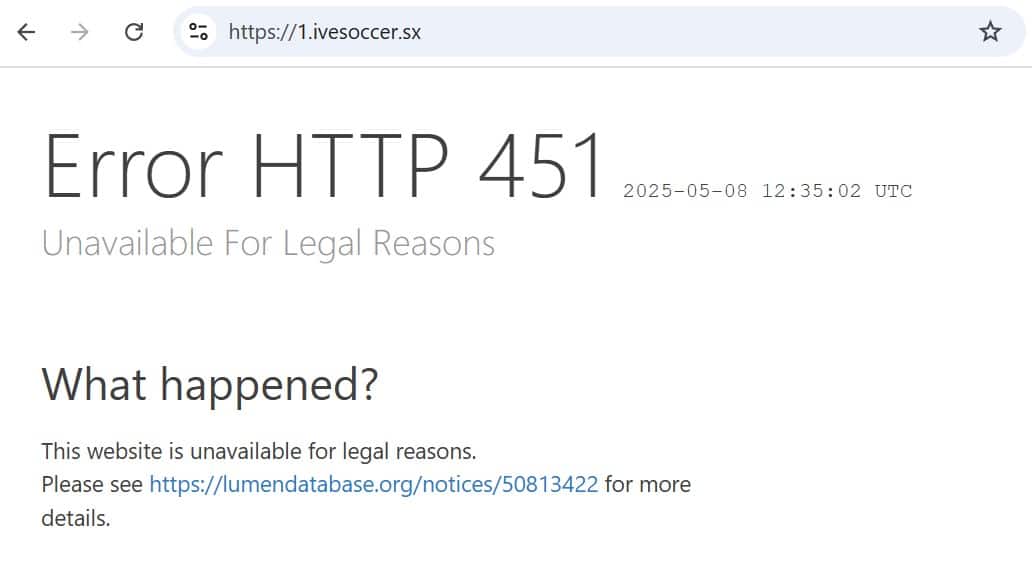
    Error HTTP 451

    cloudflare blocked

    Interestingly, Cloudflare maintains in its transparency report that it is not blocking content through its public DNS resolver. Instead, it points out that it uses “alternate mechanisms”.

    “Given the extraterritorial effect as well as the different global approaches to DNS-based blocking, Cloudflare […] identified alternate mechanisms to comply with relevant court orders. To date, Cloudflare has not blocked content through the 1.1.1.1 Public DNS Resolver,” the company writes.

    Not Blocked

    not blocked

    The result for Cloudflare DNS users appears to be the same, however. Those who try to access the blocked domains in the applicable countries will be redirected to the HTTP 451 error.

    The good news is that affected users are informed about the reason for this technical blockade via the Lumen Database . That doesn’t appear to be the case with Google.

    Google’s DNS Blackout

    After running tests in both Belgium and France, using various blocked domains, it’s clear that the targeted websites are no longer accessible through Google’s public DNS resolver (8.8.8.8). However, unlike Cloudflare, there is no notification whatsoever.

    Instead, Google appears to simply refuse the DNS query, which means that the domain lookup is not linked to any IP address.

    Query refused

    refused

    While this is effective in the sense that the pirate sites are no longer available, it’s not very transparent. Users who try to access the domains will simply see a browser error, which could be caused by various DNS issues.
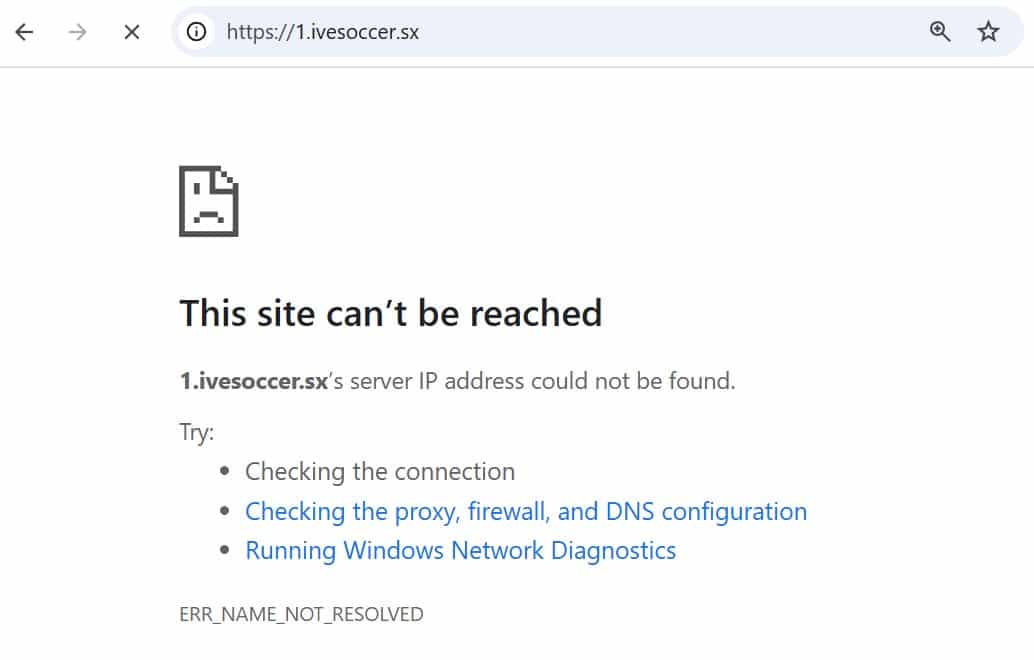
    Not resolved

    google blocked

    Google’s basic response is not limited to the recent Belgian court order. We observed the same query refusal for domain names that were included in French blocking orders over the past several months.

    Transparency is Paramount

    While the different responses from DNS resolvers are interesting, Google’s approach doesn’t make blocking efforts more transparent. These orders are still relatively new, so it’s possible that the company is working on offering more transparency in the future, but currently it only adds to the confusion.

    Google’s response also appears to go against the advice of the Belgian court, which required the DNS providers to redirect users to a dedicated page, presumably to provide further detail.

    Redirect

    redirect

    If these blocking orders are upheld by various courts, a more streamlined approach will be welcome. Interfering with DNS is a big step that can’t be taken lightly, so transparency is paramount. That’s relevant for the United States too, where a new site-blocking bill also proposes public DNS resolver blockades.

    For context, a copy of the recent Belgian court order shared by Cloudflare is availableb here (pdf)

    From: TF , for the latest news on copyright battles, piracy and more.
    • To chevron_right

      DNS Piracy Blocking Orders: Google, Cloudflare, and OpenDNS Respond Differently

      news.movim.eu / TorrentFreak • 11 May 2025 • 3 minutes

    stop danger The frontline of online piracy liability keeps moving, and core internet infrastructure providers are increasingly finding themselves in the crosshairs.

    For rightsholders, site blocking remains the go-to response in many cases. Until recently, the majority of blockades were implemented by consumer ISPs, but expanded legal efforts are now targeting standalone DNS resolvers.

    Over the past year, courts in France , Italy , and Belgium have ordered OpenDNS, Cloudflare, and Google to alter their responses to certain DNS queries. Instead of leading visitors to the domains of pirate sites, the companies are required to intercept queries and redirect them elsewhere.

    The main rationale for targeting public DNS resolvers is their growing use for bypassing blocking measures rolled out by Internet providers. However, the American tech companies now being targeted are not happy with the role of ‘Internet police’ and appeals of these orders are still pending.

    OpenDNS Says Farewell

    While these legal battles play out in court, the DNS resolvers still have to comply one way or another. This has resulted in different responses, with Cisco’s OpenDNS taking by far the most drastic action.

    When OpenDNS was first ordered to block pirate sites in France, the company made a simple but drastic decision to leave the country entirely, effectively affecting all French users. Last week, it repeated this response in Belgium following a similar court order.

    Instead of blocking access to more than 100 sports piracy sites, as the Belgian order requires, OpenDNS announced its departure; at least temporarily.

    “Due to a court order in Belgium requiring the implementation of blocking measures to prevent access within Belgium to certain domains, the OpenDNS service is not currently available to users in Belgium,” the company said .

    Cloudflare Complies Using ‘Alternate Mechanisms’

    Not all DNS resolvers take such drastic measures. Cloudflare chooses to comply with court orders in its own way. Cloudflare DNS (1.1.1.1) users who try to access the targeted domains in countries where blocking orders are issued, see the following notice instead.

    Error HTTP 451

    cloudflare blocked

    Interestingly, Cloudflare maintains in its transparency report that it is not blocking content through its public DNS resolver. Instead, it points out that it uses “alternate mechanisms”.

    “Given the extraterritorial effect as well as the different global approaches to DNS-based blocking, Cloudflare […] identified alternate mechanisms to comply with relevant court orders. To date, Cloudflare has not blocked content through the 1.1.1.1 Public DNS Resolver,” the company writes.

    Not Blocked

    not blocked

    The result for Cloudflare DNS users appears to be the same, however. Those who try to access the blocked domains in the applicable countries will be redirected to the HTTP 451 error.

    The good news is that affected users are informed about the reason for this technical blockade via the Lumen Database . That doesn’t appear to be the case with Google.

    Google’s DNS Blackout

    After running tests in both Belgium and France, using various blocked domains, it’s clear that the targeted websites are no longer accessible through Google’s public DNS resolver (8.8.8.8). However, unlike Cloudflare, there is no notification whatsoever.

    Instead, Google appears to simply refuse the DNS query, which means that the domain lookup is not linked to any IP address.

    Query refused

    refused

    While this is effective in the sense that the pirate sites are no longer available, it’s not very transparent. Users who try to access the domains will simply see a browser error, which could be caused by various DNS issues.

    Not resolved

    google blocked

    Google’s basic response is not limited to the recent Belgian court order. We observed the same query refusal for domain names that were included in French blocking orders over the past several months.

    Transparency is Paramount

    While the different responses from DNS resolvers are interesting, Google’s approach doesn’t make blocking efforts more transparent. These orders are still relatively new, so it’s possible that the company is working on offering more transparency in the future, but currently it only adds to the confusion.

    Google’s response also appears to go against the advice of the Belgian court, which required the DNS providers to redirect users to a dedicated page, presumably to provide further detail.

    Redirect

    redirect

    If these blocking orders are upheld by various courts, a more streamlined approach will be welcome. Interfering with DNS is a big step that can’t be taken lightly, so transparency is paramount. That’s relevant for the United States too, where a new site-blocking bill also proposes public DNS resolver blockades.

    For context, a copy of the recent Belgian court order shared by Cloudflare is availableb here (pdf)

    From: TF , for the latest news on copyright battles, piracy and more.

    • To chevron_right

      DNS Piracy Blocking Orders: Google, Cloudflare, and OpenDNS Respond Differently

      news.movim.eu / TorrentFreak • 11 May 2025 • 3 minutes

    stop danger The frontline of online piracy liability keeps moving, and core internet infrastructure providers are increasingly finding themselves in the crosshairs.

    For rightsholders, site blocking remains the go-to response in many cases. Until recently, the majority of blockades were implemented by consumer ISPs, but expanded legal efforts are now targeting standalone DNS resolvers.

    Over the past year, courts in France , Italy , and Belgium have ordered OpenDNS, Cloudflare, and Google to alter their responses to certain DNS queries. Instead of leading visitors to the domains of pirate sites, the companies are required to intercept queries and redirect them elsewhere.

    The main rationale for targeting public DNS resolvers is their growing use for bypassing blocking measures rolled out by Internet providers. However, the American tech companies now being targeted are not happy with the role of ‘Internet police’ and appeals of these orders are still pending.

    OpenDNS Says Farewell

    While these legal battles play out in court, the DNS resolvers still have to comply one way or another. This has resulted in different responses, with Cisco’s OpenDNS taking by far the most drastic action.

    When OpenDNS was first ordered to block pirate sites in France, the company made a simple but drastic decision to leave the country entirely, effectively affecting all French users. Last week, it repeated this response in Belgium following a similar court order.

    Instead of blocking access to more than 100 sports piracy sites, as the Belgian order requires, OpenDNS announced its departure; at least temporarily.

    “Due to a court order in Belgium requiring the implementation of blocking measures to prevent access within Belgium to certain domains, the OpenDNS service is not currently available to users in Belgium,” the company said .

    Cloudflare Complies Using ‘Alternate Mechanisms’

    Not all DNS resolvers take such drastic measures. Cloudflare chooses to comply with court orders in its own way. Cloudflare DNS (1.1.1.1) users who try to access the targeted domains in countries where blocking orders are issued, see the following notice instead.

    Error HTTP 451

    cloudflare blocked

    Interestingly, Cloudflare maintains in its transparency report that it is not blocking content through its public DNS resolver. Instead, it points out that it uses “alternate mechanisms”.

    “Given the extraterritorial effect as well as the different global approaches to DNS-based blocking, Cloudflare […] identified alternate mechanisms to comply with relevant court orders. To date, Cloudflare has not blocked content through the 1.1.1.1 Public DNS Resolver,” the company writes.

    Not Blocked

    not blocked

    The result for Cloudflare DNS users appears to be the same, however. Those who try to access the blocked domains in the applicable countries will be redirected to the HTTP 451 error.

    The good news is that affected users are informed about the reason for this technical blockade via the Lumen Database . That doesn’t appear to be the case with Google.

    Google’s DNS Blackout

    After running tests in both Belgium and France, using various blocked domains, it’s clear that the targeted websites are no longer accessible through Google’s public DNS resolver (8.8.8.8). However, unlike Cloudflare, there is no notification whatsoever.

    Instead, Google appears to simply refuse the DNS query, which means that the domain lookup is not linked to any IP address.

    Query refused

    refused

    While this is effective in the sense that the pirate sites are no longer available, it’s not very transparent. Users who try to access the domains will simply see a browser error, which could be caused by various DNS issues.

    Not resolved

    google blocked

    Google’s basic response is not limited to the recent Belgian court order. We observed the same query refusal for domain names that were included in French blocking orders over the past several months.

    Transparency is Paramount

    While the different responses from DNS resolvers are interesting, Google’s approach doesn’t make blocking efforts more transparent. These orders are still relatively new, so it’s possible that the company is working on offering more transparency in the future, but currently it only adds to the confusion.

    Google’s response also appears to go against the advice of the Belgian court, which required the DNS providers to redirect users to a dedicated page, presumably to provide further detail.

    Redirect

    redirect

    If these blocking orders are upheld by various courts, a more streamlined approach will be welcome. Interfering with DNS is a big step that can’t be taken lightly, so transparency is paramount. That’s relevant for the United States too, where a new site-blocking bill also proposes public DNS resolver blockades.

    For context, a copy of the recent Belgian court order shared by Cloudflare is availableb here (pdf)

    From: TF , for the latest news on copyright battles, piracy and more.

    • To chevron_right

      The Substance: Pre-Release Piracy Made People MORE Eager to Visit the Cinema

      news.movim.eu / TorrentFreak • 10 May 2025 • 3 minutes

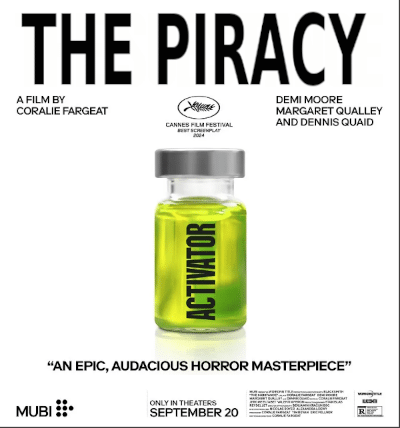
    substance-piracy If making content available to the public to consume legally is the most effective anti-piracy measure, pre-release piracy should be the most damaging form of piracy, or at least the theory goes.

    The logic seems solid. When movies leak online before their intended release date, pirate copies meet consumer demand in a market that officially shouldn’t exist. A unique product unavailable to buy being distributed illegally changes everything.

    From the day of the leak until theatrical windows close and streaming services open their doors, pirates offer a product that technically does not exist, in an environment where legal competition doesn’t exist either. Whether a theatrical release or straight to streaming, pre-release piracy does not discriminate.

    21,000 Liters of Blood Leak Online

    Arguments that legal content should be made available sooner are par for the course, but when an official release is just around the corner, disrupting a launch with last-minute upheaval would make very little sense.

    This was the nightmare scenario faced by horror movie The Substance in 2024 when the movie leaked just days after its US release and ahead of its debut in several European markets. Making matters worse, the quality of the copy leaked online was excellent , providing the type of ‘direct replacement’ the industry fears most.

    This new setback arrived in the wake of concerns over the movie itself, which had already affected distribution plans.

    According to a Kinotico interview with director Coralie Fargeat ( paywall ) , industry giant Universal had been expected to distribute The Substance , but that ran into trouble when the company developed a sudden bout of hemophobia. Reportedly triggered by the movie’s grand finale, which is unlikely to meet its match anytime soon, Universal’s sudden aversion to astonishing quantities of blood led to requests for Fargeat to come up with an alternative ending.

    Fargeat’s refusal to compromise led to Universal walking away from distribution. Fortunately, the distribution of 21,000 liters of fake blood would still go ahead thanks to a deal with new distributor Mubi.

    Then The Substance leaked online, in all its gory glory.

    Coralie Fargeat: I didn’t expect it at all

    “What’s happened on social media has been crazy. I didn’t expect it at all,” Fargeat admitted to Kinotico.

    Word that The Substance had leaked online spread quickly, and in an explosion of memes the movie soon became a viral sensation.

    “Of course, a director doesn’t like seeing her film on the internet while it’s in theaters. You want people to see it in theaters. It’s very difficult to escape that these days, no matter how hard someone tries to prevent it,” the director explained.

    Yet in this case, the usual predictions of piracy leading to financial ruin were not only incorrect, they were turned comprehensively upside down. From a production budget of $18m, The Substance soon became Mubi’s highest-grossing film, generating an estimated $82 million at the box office.

    “Those images they saw on social media made people even more eager to go to the theater and discover the film. They didn’t want to miss the experience of seeing it with people,” Fargeat revealed.

    “Once you’ve finished your film and it’s released, the reality is that it belongs to the audience. They’re going to choose what they want to do with it. It has touched people’s hearts. There are things you can’t control, but the response online was incredible.”

    The Substance undoubtedly has that je ne sais quoi in abundance, but which of its many qualities combined to transform a potentially catastrophic leak into a shot in the arm for cinema remains elusive. The director didn’t expect it, Universal obviously failed to spot it, and the millions who watched the movie may still have difficulty describing it.

    But they certainly felt it, there’s little doubt about that.

    From: TF , for the latest news on copyright battles, piracy and more.

    • To chevron_right

      The Substance: Pre-Release Piracy Made People MORE Eager to Visit the Cinema

      news.movim.eu / TorrentFreak • 10 May 2025 • 3 minutes

    substance-piracy If making content available to the public to consume legally is the most effective anti-piracy measure, pre-release piracy should be the most damaging form of piracy, or at least the theory goes.
    The logic seems solid. When movies leak online before their intended release date, pirate copies meet consumer demand in a market that officially shouldn’t exist. A unique product unavailable to buy being distributed illegally changes everything.

    From the day of the leak until theatrical windows close and streaming services open their doors, pirates offer a product that technically does not exist, in an environment where legal competition doesn’t exist either. Whether a theatrical release or straight to streaming, pre-release piracy does not discriminate.

    21,000 Liters of Blood Leak Online

    Arguments that legal content should be made available sooner are par for the course, but when an official release is just around the corner, disrupting a launch with last-minute upheaval would make very little sense.

    This was the nightmare scenario faced by horror movie The Substance in 2024 when the movie leaked just days after its US release and ahead of its debut in several European markets. Making matters worse, the quality of the copy leaked online was excellent , providing the type of ‘direct replacement’ the industry fears most.

    This new setback arrived in the wake of concerns over the movie itself, which had already affected distribution plans.

    According to a Kinotico interview with director Coralie Fargeat ( paywall ) , industry giant Universal had been expected to distribute The Substance , but that ran into trouble when the company developed a sudden bout of hemophobia. Reportedly triggered by the movie’s grand finale, which is unlikely to meet its match anytime soon, Universal’s sudden aversion to astonishing quantities of blood led to requests for Fargeat to come up with an alternative ending.

    Fargeat’s refusal to compromise led to Universal walking away from distribution. Fortunately, the distribution of 21,000 liters of fake blood would still go ahead thanks to a deal with new distributor Mubi.

    Then The Substance leaked online, in all its gory glory.

    Coralie Fargeat: I didn’t expect it at all

    “What’s happened on social media has been crazy. I didn’t expect it at all,” Fargeat admitted to Kinotico.

    Word that The Substance had leaked online spread quickly, and in an explosion of memes the movie soon became a viral sensation.

    “Of course, a director doesn’t like seeing her film on the internet while it’s in theaters. You want people to see it in theaters. It’s very difficult to escape that these days, no matter how hard someone tries to prevent it,” the director explained.

    Yet in this case, the usual predictions of piracy leading to financial ruin were not only incorrect, they were turned comprehensively upside down. From a production budget of $18m, The Substance soon became Mubi’s highest-grossing film, generating an estimated $82 million at the box office.

    “Those images they saw on social media made people even more eager to go to the theater and discover the film. They didn’t want to miss the experience of seeing it with people,” Fargeat revealed.

    “Once you’ve finished your film and it’s released, the reality is that it belongs to the audience. They’re going to choose what they want to do with it. It has touched people’s hearts. There are things you can’t control, but the response online was incredible.”

    The Substance undoubtedly has that je ne sais quoi in abundance, but which of its many qualities combined to transform a potentially catastrophic leak into a shot in the arm for cinema remains elusive. The director didn’t expect it, Universal obviously failed to spot it, and the millions who watched the movie may still have difficulty describing it.

    But they certainly felt it, there’s little doubt about that.

    From: TF , for the latest news on copyright battles, piracy and more.

    • To chevron_right

      The Substance: Pre-Release Piracy Made People MORE Eager to Visit the Cinema

      news.movim.eu / TorrentFreak • 10 May 2025 • 3 minutes

    substance-piracy If making content available to the public to consume legally is the most effective anti-piracy measure, pre-release piracy should be the most damaging form of piracy, or at least the theory goes.

    The logic seems solid. When movies leak online before their intended release date, pirate copies meet consumer demand in a market that officially shouldn’t exist. A unique product unavailable to buy being distributed illegally changes everything.

    From the day of the leak until theatrical windows close and streaming services open their doors, pirates offer a product that technically does not exist, in an environment where legal competition doesn’t exist either. Whether a theatrical release or straight to streaming, pre-release piracy does not discriminate.

    21,000 Liters of Blood Leak Online

    Arguments that legal content should be made available sooner are par for the course, but when an official release is just around the corner, disrupting a launch with last-minute upheaval would make very little sense.

    This was the nightmare scenario faced by horror movie The Substance in 2024 when the movie leaked just days after its US release and ahead of its debut in several European markets. Making matters worse, the quality of the copy leaked online was excellent , providing the type of ‘direct replacement’ the industry fears most.

    This new setback arrived in the wake of concerns over the movie itself, which had already affected distribution plans.

    According to a Kinotico interview with director Coralie Fargeat ( paywall ) , industry giant Universal had been expected to distribute The Substance , but that ran into trouble when the company developed a sudden bout of hemophobia. Reportedly triggered by the movie’s grand finale, which is unlikely to meet its match anytime soon, Universal’s sudden aversion to astonishing quantities of blood led to requests for Fargeat to come up with an alternative ending.

    Fargeat’s refusal to compromise led to Universal walking away from distribution. Fortunately, the distribution of 21,000 liters of fake blood would still go ahead thanks to a deal with new distributor Mubi.

    Then The Substance leaked online, in all its gory glory.

    Coralie Fargeat: I didn’t expect it at all

    “What’s happened on social media has been crazy. I didn’t expect it at all,” Fargeat admitted to Kinotico.

    Word that The Substance had leaked online spread quickly, and in an explosion of memes the movie soon became a viral sensation.

    “Of course, a director doesn’t like seeing her film on the internet while it’s in theaters. You want people to see it in theaters. It’s very difficult to escape that these days, no matter how hard someone tries to prevent it,” the director explained.

    Yet in this case, the usual predictions of piracy leading to financial ruin were not only incorrect, they were turned comprehensively upside down. From a production budget of $18m, The Substance soon became Mubi’s highest-grossing film, generating an estimated $82 million at the box office.

    “Those images they saw on social media made people even more eager to go to the theater and discover the film. They didn’t want to miss the experience of seeing it with people,” Fargeat revealed.

    “Once you’ve finished your film and it’s released, the reality is that it belongs to the audience. They’re going to choose what they want to do with it. It has touched people’s hearts. There are things you can’t control, but the response online was incredible.”

    The Substance undoubtedly has that je ne sais quoi in abundance, but which of its many qualities combined to transform a potentially catastrophic leak into a shot in the arm for cinema remains elusive. The director didn’t expect it, Universal obviously failed to spot it, and the millions who watched the movie may still have difficulty describing it.

    But they certainly felt it, there’s little doubt about that.

    From: TF , for the latest news on copyright battles, piracy and more.

    • To chevron_right

      Pirate IPTV Owner and 7 Associates “Stole TV Signals” From Bell & Rogers

      news.movim.eu / TorrentFreak • 9 May 2025 • 3 minutes

    arubox tv On Tuesday, 52-year-old Grenier traveled from Aruba, an island off the coast of Venezuela, to Canada’s Montreal airport.

    Law enforcement officers of the Sûreté du Québec (SQ – Quebec Provincial Police) escorted Grenier to the SQ police station in Shawinigan. Police had carried out an operation in February 2024 which targeted Grenier and several individuals linked to the current prosecution. Grenier, who was outside Canada at the time, avoided arrest and remained at large for more than a year.

    Court Hears Allegations Concerning Signal Theft and Pirate IPTV

    The warrant for Grenier’s arrest was issued as part of an investigation into the illegal acquisition and sale of TV channels distributed by Canada’s leading telecoms companies. Bell, Rogers, and Quebecor claimed their losses ran to several million Canadian dollars.

    Grenier appeared at the Trois-Rivières courthouse on Wednesday. The prosecution alleges that devices supplied by Grenier provided customers with access to thousands of television channels, most if not all pirated, for a low subscription price of ~CAD$25.00 per month (US$18.00).

    The authorities accuse Grenier of operating a company which in turn owned pirate IPTV service Arubox TV. As per our 2023 report , Grenier made no secret of his involvement in the IPTV market.

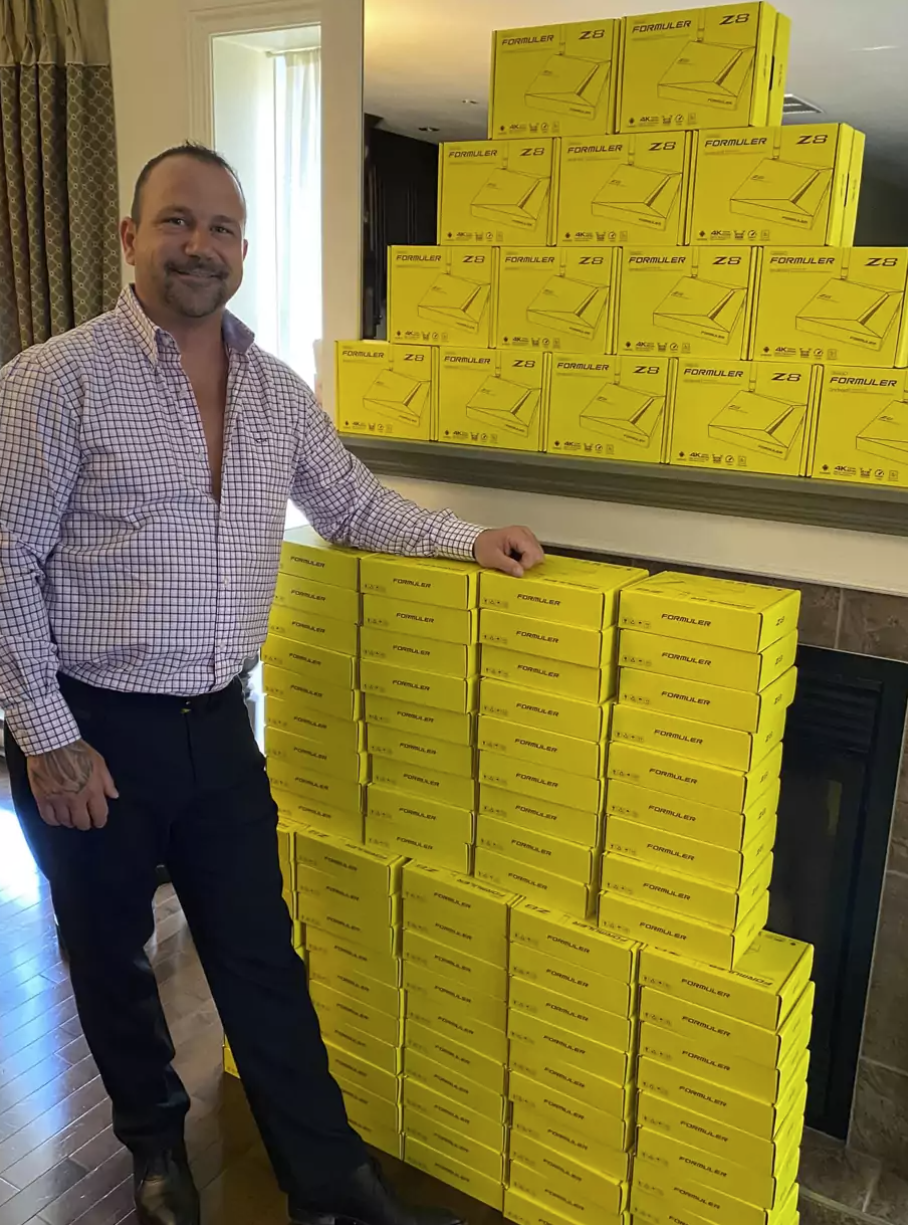
    Grenier Advertising IPTV Boxes formuler z8-grenier

    Police say that Arubox TV and a linked service called Stocker IPTV provided thousands of customers, 7,000 in Quebec alone, with illegal access to more than 3,500 pirated TV channels.

    Grenier faces ten charges linked to the theft of telecommunications services, including conspiracy, fraud, theft, and money laundering. The alleged offenses took place between June 2020 and February 2024, generating annual profits of at least CAD$2 million (US$14m) according to Sûreté du Québec estimates.

    • Conspiracy to defraud Bell, Rogers and Quebecor
    • Theft of telecommunications services
    • Production of devices linked to illegal signal access
    • Trafficking in devices linked to illegal signal access
    • Sale of devices linked to illegal signal access
    • Trafficking in property obtained by crime
    • Theft of more than CAD$5,000
    • Laundering proceeds of crime
    • Transfer of money linked to crime in Canada with intent to conceal/convert
    • Computer data ‘mischief’

    Other charges concern alleged trafficking in the prescription drugs Sildenfil and Tadalafil.

    Seven Co-Defendants

    Grenier will remain in custody until his next court appearance. The prosecution argued against Grenier’s release and insisted that he should face trial by jury, rather than by judge alone. Grenier’s co-defendants, several of whom previously appeared in court following their arrests in 2024, have already opted for a trial by jury.

    A total of seven people stand accused of various crimes in the same case.

    Le Nouvelliste identifies the co-defendants as follows:

    • Danick Rouleau, 39, of Saint-Eustache (alleged Stocker IPTV operator)
    • Sarah-Maude Grenier, 25, of Brownsburg-Chatham
    • Marie-Ève ​​Poliquin Karaguioules, 26, of Saint-Eustache
    • Éric Laforge, 44, of Gatineau
    • Daniel Perreault-Marcotte, 38, of Saint-Henri
    • Patrick Cyr, 49, of Longueuil
    • Christian Sabourin, 60, of Princeville

    Are Customers at Risk of Prosecution?

    While police have offered assurances that customers are not targets in the current criminal investigation, possession of a pirate device could be a criminal offense in its own right. Police are therefore advising affected customers to dispose of their pirate devices at recycling centers.

    Pirate subscriptions make legal devices illegal arubox-tv-spec

    The IPTV services in question are known to have been installed on relative expensive Formuler set-top boxes. When fresh out of their packaging, these Android-based devices are perfectly legal; only the subsequent configuration for piracy purposes changes that.

    A full and properly executed factory reset will remove the offending configuration, help the environment, and via legal apps installed from Google Play, provide access to legal streaming services.

    From: TF , for the latest news on copyright battles, piracy and more.

    • To chevron_right

      Pirate IPTV Owner and 7 Associates “Stole TV Signals” From Bell & Rogers

      news.movim.eu / TorrentFreak • 9 May 2025 • 3 minutes

    arubox tv On Tuesday, 52-year-old Grenier traveled from Aruba, an island off the coast of Venezuela, to Canada’s Montreal airport.

    Law enforcement officers of the Sûreté du Québec (SQ – Quebec Provincial Police) escorted Grenier to the SQ police station in Shawinigan. Police had carried out an operation in February 2024 which targeted Grenier and several individuals linked to the current prosecution. Grenier, who was outside Canada at the time, avoided arrest and remained at large for more than a year.

    Court Hears Allegations Concerning Signal Theft and Pirate IPTV

    The warrant for Grenier’s arrest was issued as part of an investigation into the illegal acquisition and sale of TV channels distributed by Canada’s leading telecoms companies. Bell, Rogers, and Quebecor claimed their losses ran to several million Canadian dollars.

    Grenier appeared at the Trois-Rivières courthouse on Wednesday. The prosecution alleges that devices supplied by Grenier provided customers with access to thousands of television channels, most if not all pirated, for a low subscription price of ~CAD$25.00 per month (US$18.00).

    The authorities accuse Grenier of operating a company which in turn owned pirate IPTV service Arubox TV. As per our 2023 report , Grenier made no secret of his involvement in the IPTV market.

    Grenier Advertising IPTV Boxes formuler z8-grenier

    Police say that Arubox TV and a linked service called Stocker IPTV provided thousands of customers, 7,000 in Quebec alone, with illegal access to more than 3,500 pirated TV channels.

    Grenier faces ten charges linked to the theft of telecommunications services, including conspiracy, fraud, theft, and money laundering. The alleged offenses took place between June 2020 and February 2024, generating annual profits of at least CAD$2 million (US$14m) according to Sûreté du Québec estimates.

    • Conspiracy to defraud Bell, Rogers and Quebecor
    • Theft of telecommunications services
    • Production of devices linked to illegal signal access
    • Trafficking in devices linked to illegal signal access
    • Sale of devices linked to illegal signal access
    • Trafficking in property obtained by crime
    • Theft of more than CAD$5,000
    • Laundering proceeds of crime
    • Transfer of money linked to crime in Canada with intent to conceal/convert
    • Computer data ‘mischief’

    Other charges concern alleged trafficking in the prescription drugs Sildenfil and Tadalafil.

    Seven Co-Defendants

    Grenier will remain in custody until his next court appearance. The prosecution argued against Grenier’s release and insisted that he should face trial by jury, rather than by judge alone. Grenier’s co-defendants, several of whom previously appeared in court following their arrests in 2024, have already opted for a trial by jury.

    A total of seven people stand accused of various crimes in the same case.

    Le Nouvelliste identifies the co-defendants as follows:

    • Danick Rouleau, 39, of Saint-Eustache (alleged Stocker IPTV operator)
    • Sarah-Maude Grenier, 25, of Brownsburg-Chatham
    • Marie-Ève ​​Poliquin Karaguioules, 26, of Saint-Eustache
    • Éric Laforge, 44, of Gatineau
    • Daniel Perreault-Marcotte, 38, of Saint-Henri
    • Patrick Cyr, 49, of Longueuil
    • Christian Sabourin, 60, of Princeville

    Are Customers at Risk of Prosecution?

    While police have offered assurances that customers are not targets in the current criminal investigation, possession of a pirate device could be a criminal offense in its own right. Police are therefore advising affected customers to dispose of their pirate devices at recycling centers.

    Pirate subscriptions make legal devices illegal arubox-tv-spec

    The IPTV services in question are known to have been installed on relative expensive Formuler set-top boxes. When fresh out of their packaging, these Android-based devices are perfectly legal; only the subsequent configuration for piracy purposes changes that.

    A full and properly executed factory reset will remove the offending configuration, help the environment, and via legal apps installed from Google Play, provide access to legal streaming services.

    From: TF , for the latest news on copyright battles, piracy and more.

    • To chevron_right

      Pirate IPTV Owner and 7 Associates “Stole TV Signals” From Bell & Rogers

      news.movim.eu / TorrentFreak • 9 May 2025 • 3 minutes

    arubox tv On Tuesday, 52-year-old Grenier traveled from Aruba, an island off the coast of Venezuela, to Canada’s Montreal airport.

    Law enforcement officers of the Sûreté du Québec (SQ – Quebec Provincial Police) escorted Grenier to the SQ police station in Shawinigan. Police had carried out an operation in February 2024 which targeted Grenier and several individuals linked to the current prosecution. Grenier, who was outside Canada at the time, avoided arrest and remained at large for more than a year.

    Court Hears Allegations Concerning Signal Theft and Pirate IPTV

    The warrant for Grenier’s arrest was issued as part of an investigation into the illegal acquisition and sale of TV channels distributed by Canada’s leading telecoms companies. Bell, Rogers, and Quebecor claimed their losses ran to several million Canadian dollars.

    Grenier appeared at the Trois-Rivières courthouse on Wednesday. The prosecution alleges that devices supplied by Grenier provided customers with access to thousands of television channels, most if not all pirated, for a low subscription price of ~CAD$25.00 per month (US$18.00).

    The authorities accuse Grenier of operating a company which in turn owned pirate IPTV service Arubox TV. As per our 2023 report , Grenier made no secret of his involvement in the IPTV market.

    Grenier Advertising IPTV Boxes formuler z8-grenier

    Police say that Arubox TV and a linked service called Stocker IPTV provided thousands of customers, 7,000 in Quebec alone, with illegal access to more than 3,500 pirated TV channels.

    Grenier faces ten charges linked to the theft of telecommunications services, including conspiracy, fraud, theft, and money laundering. The alleged offenses took place between June 2020 and February 2024, generating annual profits of at least CAD$2 million (US$14m) according to Sûreté du Québec estimates.

    • Conspiracy to defraud Bell, Rogers and Quebecor
    • Theft of telecommunications services
    • Production of devices linked to illegal signal access
    • Trafficking in devices linked to illegal signal access
    • Sale of devices linked to illegal signal access
    • Trafficking in property obtained by crime
    • Theft of more than CAD$5,000
    • Laundering proceeds of crime
    • Transfer of money linked to crime in Canada with intent to conceal/convert
    • Computer data ‘mischief’

    Other charges concern alleged trafficking in the prescription drugs Sildenfil and Tadalafil.

    Seven Co-Defendants

    Grenier will remain in custody until his next court appearance. The prosecution argued against Grenier’s release and insisted that he should face trial by jury, rather than by judge alone. Grenier’s co-defendants, several of whom previously appeared in court following their arrests in 2024, have already opted for a trial by jury.

    A total of seven people stand accused of various crimes in the same case.

    Le Nouvelliste identifies the co-defendants as follows:

    • Danick Rouleau, 39, of Saint-Eustache (alleged Stocker IPTV operator)
    • Sarah-Maude Grenier, 25, of Brownsburg-Chatham
    • Marie-Ève ​​Poliquin Karaguioules, 26, of Saint-Eustache
    • Éric Laforge, 44, of Gatineau
    • Daniel Perreault-Marcotte, 38, of Saint-Henri
    • Patrick Cyr, 49, of Longueuil
    • Christian Sabourin, 60, of Princeville

    Are Customers at Risk of Prosecution?

    While police have offered assurances that customers are not targets in the current criminal investigation, possession of a pirate device could be a criminal offense in its own right. Police are therefore advising affected customers to dispose of their pirate devices at recycling centers.

    Pirate subscriptions make legal devices illegal arubox-tv-spec

    The IPTV services in question are known to have been installed on relative expensive Formuler set-top boxes. When fresh out of their packaging, these Android-based devices are perfectly legal; only the subsequent configuration for piracy purposes changes that.

    A full and properly executed factory reset will remove the offending configuration, help the environment, and via legal apps installed from Google Play, provide access to legal streaming services.

    From: TF , for the latest news on copyright battles, piracy and more.