• progress_activity cloud_sync

    Reconnection to the server…

    Movim cannot talk with the server, please try again later

  • back_to_tab fullscreen tile_small dialpad mic videocam switch_camera screen_share

    mic_none No sound detected from your microphone


    • Public subscriptions

    • chevron_right

      coopr8

    • chevron_right

      gabagoo

    • chevron_right

      kenu_demon

    • chevron_right

      coopr8

    • chevron_right

      gabagoo

    • chevron_right

      kenu_demon

    • chevron_right

      coopr8

    • chevron_right

      gabagoo

    • chevron_right

      kenu_demon

  • Register Login

    Movim

    movim.chatterboxtown.us


  • group_work rss_feed
    add Follow

    ArsTechnica

    • Ar chevron_right

      xAI’s Grok suddenly can’t stop bringing up “white genocide” in South Africa

      news.movim.eu / ArsTechnica • 14 May 2025 • 1 minute

    Users on X (formerly Twitter) love to tag the verified @grok account in replies to get the large language model's take on any number of topics. On Wednesday, though, that account started largely ignoring those requests en masse in favor of redirecting the conversation towards the topic of alleged "white genocide" in South Africa and the related song "Kill the Boer."

    Searching the Grok account's replies for mentions of "genocide" or "boer" currently returns dozens if not hundreds of posts where the LLM responds to completely unrelated queries with quixotic discussions about alleged killings of white farmers in South Africa (though many have been deleted in the time just before this post went live; links in this story have been replaced with archived versions where appropriate). The sheer range of these non-sequiturs is somewhat breathtaking; everything from questions about Robert F. Kennedy Jr.'s disinformation to discussions of MLB pitcher Max Scherzer's salary to a search for new group-specific put-downs , see Grok quickly turning the subject back toward the suddenly all-important topic of South Africa.

    It's like Grok has become the world's most tiresome party guest, harping on its own pet talking points to the exclusion of any other discussion.
    Read full article

    Comments

    • tagai tagai tagai tagboer tagboer tagboer taggenocide taggenocide taggenocide taggrok taggrok taggrok taglarge language model taglarge language model taglarge language model tagllm tagllm tagllm tagsouth africa tagsouth africa tagsouth africa tagtwitter tagtwitter tagtwitter tagx tagx tagx tagai tagai tagai tagboer tagboer tagboer taggenocide taggenocide taggenocide taggrok taggrok taggrok taglarge language model taglarge language model taglarge language model tagllm tagllm tagllm tagsouth africa tagsouth africa tagsouth africa tagtwitter tagtwitter tagtwitter tagx tagx tagx tagai tagai tagai tagboer tagboer tagboer taggenocide taggenocide taggenocide taggrok taggrok taggrok taglarge language model taglarge language model taglarge language model tagllm tagllm tagllm tagsouth africa tagsouth africa tagsouth africa tagtwitter tagtwitter tagtwitter tagx tagx tagx

    • Pictures 3 image

    • visibility
    • visibility
    • visibility
    • Ar chevron_right

      xAI’s Grok suddenly can’t stop bringing up “white genocide” in South Africa

      news.movim.eu / ArsTechnica • 14 May 2025 • 1 minute

    Users on X (formerly Twitter) love to tag the verified @grok account in replies to get the large language model's take on any number of topics. On Wednesday, though, that account started largely ignoring those requests en masse in favor of redirecting the conversation towards the topic of alleged "white genocide" in South Africa and the related song "Kill the Boer."

    Searching the Grok account's replies for mentions of "genocide" or "boer" currently returns dozens if not hundreds of posts where the LLM responds to completely unrelated queries with quixotic discussions about alleged killings of white farmers in South Africa (though many have been deleted in the time just before this post went live; links in this story have been replaced with archived versions where appropriate). The sheer range of these non-sequiturs is somewhat breathtaking; everything from questions about Robert F. Kennedy Jr.'s disinformation to discussions of MLB pitcher Max Scherzer's salary to a search for new group-specific put-downs , see Grok quickly turning the subject back toward the suddenly all-important topic of South Africa.

    It's like Grok has become the world's most tiresome party guest, harping on its own pet talking points to the exclusion of any other discussion.

    Read full article

    Comments

    • tagai tagai tagai tagboer tagboer tagboer taggenocide taggenocide taggenocide taggrok taggrok taggrok taglarge language model taglarge language model taglarge language model tagllm tagllm tagllm tagsouth africa tagsouth africa tagsouth africa tagtwitter tagtwitter tagtwitter tagx tagx tagx tagai tagai tagai tagboer tagboer tagboer taggenocide taggenocide taggenocide taggrok taggrok taggrok taglarge language model taglarge language model taglarge language model tagllm tagllm tagllm tagsouth africa tagsouth africa tagsouth africa tagtwitter tagtwitter tagtwitter tagx tagx tagx tagai tagai tagai tagboer tagboer tagboer taggenocide taggenocide taggenocide taggrok taggrok taggrok taglarge language model taglarge language model taglarge language model tagllm tagllm tagllm tagsouth africa tagsouth africa tagsouth africa tagtwitter tagtwitter tagtwitter tagx tagx tagx

    • Pictures 3 image

    • visibility
    • visibility
    • visibility
    • Ar chevron_right

      xAI’s Grok suddenly can’t stop bringing up “white genocide” in South Africa

      news.movim.eu / ArsTechnica • 14 May 2025 • 1 minute

    Users on X (formerly Twitter) love to tag the verified @grok account in replies to get the large language model's take on any number of topics. On Wednesday, though, that account started largely ignoring those requests en masse in favor of redirecting the conversation towards the topic of alleged "white genocide" in South Africa and the related song "Kill the Boer."

    Searching the Grok account's replies for mentions of "genocide" or "boer" currently returns dozens if not hundreds of posts where the LLM responds to completely unrelated queries with quixotic discussions about alleged killings of white farmers in South Africa (though many have been deleted in the time just before this post went live; links in this story have been replaced with archived versions where appropriate). The sheer range of these non-sequiturs is somewhat breathtaking; everything from questions about Robert F. Kennedy Jr.'s disinformation to discussions of MLB pitcher Max Scherzer's salary to a search for new group-specific put-downs , see Grok quickly turning the subject back toward the suddenly all-important topic of South Africa.

    It's like Grok has become the world's most tiresome party guest, harping on its own pet talking points to the exclusion of any other discussion.

    Read full article

    Comments

    • tagai tagai tagai tagboer tagboer tagboer taggenocide taggenocide taggenocide taggrok taggrok taggrok taglarge language model taglarge language model taglarge language model tagllm tagllm tagllm tagsouth africa tagsouth africa tagsouth africa tagtwitter tagtwitter tagtwitter tagx tagx tagx tagai tagai tagai tagboer tagboer tagboer taggenocide taggenocide taggenocide taggrok taggrok taggrok taglarge language model taglarge language model taglarge language model tagllm tagllm tagllm tagsouth africa tagsouth africa tagsouth africa tagtwitter tagtwitter tagtwitter tagx tagx tagx tagai tagai tagai tagboer tagboer tagboer taggenocide taggenocide taggenocide taggrok taggrok taggrok taglarge language model taglarge language model taglarge language model tagllm tagllm tagllm tagsouth africa tagsouth africa tagsouth africa tagtwitter tagtwitter tagtwitter tagx tagx tagx

    • Pictures 3 image

    • visibility
    • visibility
    • visibility
    • Ar chevron_right

      OpenAI adds GPT-4.1 to ChatGPT amid complaints over confusing model lineup

      news.movim.eu / ArsTechnica • 14 May 2025 • 1 minute

    On Wednesday, OpenAI announced that ChatGPT users now have access to GPT-4.1, an AI language model previously available only through the company's API since its launch one month ago. The update brings what OpenAI describes as improved coding and web development capabilities to paid ChatGPT subscribers, with wider enterprise rollout planned in the coming weeks.

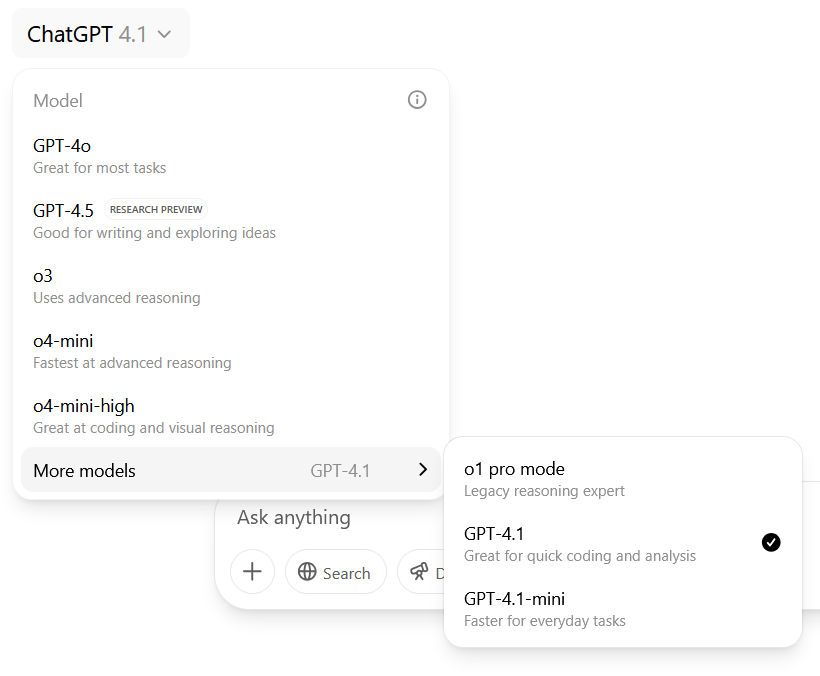
    GPT-4.1 and 4.1 mini to ChatGPT adds to an already complex model selection that includes GPT-4o, various specialized GPT-4o versions, o1-pro, o3-mini, and o3-mini-high models. There are technically nine AI models available for ChatGPT Pro subscribers. Wharton professor Ethan Mollick recently publicly lampooned the awkward situation on social media.

    As of May 14, 2025, ChatGPT Pro users have access to 8 different main AI models, plus Deep Research. As of May 14, 2025, ChatGPT Pro users have access to eight main AI models, plus Deep Research. Credit: Benj Edwards

    Deciding which AI model to use can be daunting for AI novices. Reddit users and OpenAI forum members alike commonly voice confusion about the available options. "I do not understand the reason behind having multiple models available for use," wrote one Reddit user in March. "Why would anyone use anything but the best one?" Another Redditor said they were "a bit lost" with the many ChatGPT models available after switching back from using Anthropic Claude.

    Read full article

    Comments

    • tagai tagai tagai tagbiz & it tagbiz & it tagbiz & it tagchatgpt tagchatgpt tagchatgpt tagchatgtp tagchatgtp tagchatgtp taggpt-4 taggpt-4 taggpt-4 taggpt-4.1 taggpt-4.1 taggpt-4.1 taglarge language models taglarge language models taglarge language models tagmachine learning tagmachine learning tagmachine learning tagopenai tagopenai tagopenai tagai tagai tagai tagbiz & it tagbiz & it tagbiz & it tagchatgpt tagchatgpt tagchatgpt tagchatgtp tagchatgtp tagchatgtp taggpt-4 taggpt-4 taggpt-4 taggpt-4.1 taggpt-4.1 taggpt-4.1 taglarge language models taglarge language models taglarge language models tagmachine learning tagmachine learning tagmachine learning tagopenai tagopenai tagopenai tagai tagai tagai tagbiz & it tagbiz & it tagbiz & it tagchatgpt tagchatgpt tagchatgpt tagchatgtp tagchatgtp tagchatgtp taggpt-4 taggpt-4 taggpt-4 taggpt-4.1 taggpt-4.1 taggpt-4.1 taglarge language models taglarge language models taglarge language models tagmachine learning tagmachine learning tagmachine learning tagopenai tagopenai tagopenai

    • Pictures 3 image

    • visibility
    • visibility
    • visibility
    • Ar chevron_right

      OpenAI adds GPT-4.1 to ChatGPT amid complaints over confusing model lineup

      news.movim.eu / ArsTechnica • 14 May 2025 • 1 minute

    On Wednesday, OpenAI announced that ChatGPT users now have access to GPT-4.1, an AI language model previously available only through the company's API since its launch one month ago. The update brings what OpenAI describes as improved coding and web development capabilities to paid ChatGPT subscribers, with wider enterprise rollout planned in the coming weeks.

    GPT-4.1 and 4.1 mini to ChatGPT adds to an already complex model selection that includes GPT-4o, various specialized GPT-4o versions, o1-pro, o3-mini, and o3-mini-high models. There are technically nine AI models available for ChatGPT Pro subscribers. Wharton professor Ethan Mollick recently publicly lampooned the awkward situation on social media.

    As of May 14, 2025, ChatGPT Pro users have access to 8 different main AI models, plus Deep Research. As of May 14, 2025, ChatGPT Pro users have access to eight main AI models, plus Deep Research. Credit: Benj Edwards

    Deciding which AI model to use can be daunting for AI novices. Reddit users and OpenAI forum members alike commonly voice confusion about the available options. "I do not understand the reason behind having multiple models available for use," wrote one Reddit user in March. "Why would anyone use anything but the best one?" Another Redditor said they were "a bit lost" with the many ChatGPT models available after switching back from using Anthropic Claude.

    Read full article

    Comments

    • tagai tagai tagai tagbiz & it tagbiz & it tagbiz & it tagchatgpt tagchatgpt tagchatgpt tagchatgtp tagchatgtp tagchatgtp taggpt-4 taggpt-4 taggpt-4 taggpt-4.1 taggpt-4.1 taggpt-4.1 taglarge language models taglarge language models taglarge language models tagmachine learning tagmachine learning tagmachine learning tagopenai tagopenai tagopenai tagai tagai tagai tagbiz & it tagbiz & it tagbiz & it tagchatgpt tagchatgpt tagchatgpt tagchatgtp tagchatgtp tagchatgtp taggpt-4 taggpt-4 taggpt-4 taggpt-4.1 taggpt-4.1 taggpt-4.1 taglarge language models taglarge language models taglarge language models tagmachine learning tagmachine learning tagmachine learning tagopenai tagopenai tagopenai tagai tagai tagai tagbiz & it tagbiz & it tagbiz & it tagchatgpt tagchatgpt tagchatgpt tagchatgtp tagchatgtp tagchatgtp taggpt-4 taggpt-4 taggpt-4 taggpt-4.1 taggpt-4.1 taggpt-4.1 taglarge language models taglarge language models taglarge language models tagmachine learning tagmachine learning tagmachine learning tagopenai tagopenai tagopenai

    • Pictures 3 image

    • visibility
    • visibility
    • visibility
    • Ar chevron_right

      OpenAI adds GPT-4.1 to ChatGPT amid complaints over confusing model lineup

      news.movim.eu / ArsTechnica • 14 May 2025 • 1 minute

    On Wednesday, OpenAI announced that ChatGPT users now have access to GPT-4.1, an AI language model previously available only through the company's API since its launch one month ago. The update brings what OpenAI describes as improved coding and web development capabilities to paid ChatGPT subscribers, with wider enterprise rollout planned in the coming weeks.

    GPT-4.1 and 4.1 mini to ChatGPT adds to an already complex model selection that includes GPT-4o, various specialized GPT-4o versions, o1-pro, o3-mini, and o3-mini-high models. There are technically nine AI models available for ChatGPT Pro subscribers. Wharton professor Ethan Mollick recently publicly lampooned the awkward situation on social media.

    As of May 14, 2025, ChatGPT Pro users have access to 8 different main AI models, plus Deep Research. As of May 14, 2025, ChatGPT Pro users have access to eight main AI models, plus Deep Research. Credit: Benj Edwards

    Deciding which AI model to use can be daunting for AI novices. Reddit users and OpenAI forum members alike commonly voice confusion about the available options. "I do not understand the reason behind having multiple models available for use," wrote one Reddit user in March. "Why would anyone use anything but the best one?" Another Redditor said they were "a bit lost" with the many ChatGPT models available after switching back from using Anthropic Claude.

    Read full article

    Comments

    • tagai tagai tagai tagbiz & it tagbiz & it tagbiz & it tagchatgpt tagchatgpt tagchatgpt tagchatgtp tagchatgtp tagchatgtp taggpt-4 taggpt-4 taggpt-4 taggpt-4.1 taggpt-4.1 taggpt-4.1 taglarge language models taglarge language models taglarge language models tagmachine learning tagmachine learning tagmachine learning tagopenai tagopenai tagopenai tagai tagai tagai tagbiz & it tagbiz & it tagbiz & it tagchatgpt tagchatgpt tagchatgpt tagchatgtp tagchatgtp tagchatgtp taggpt-4 taggpt-4 taggpt-4 taggpt-4.1 taggpt-4.1 taggpt-4.1 taglarge language models taglarge language models taglarge language models tagmachine learning tagmachine learning tagmachine learning tagopenai tagopenai tagopenai tagai tagai tagai tagbiz & it tagbiz & it tagbiz & it tagchatgpt tagchatgpt tagchatgpt tagchatgtp tagchatgtp tagchatgtp taggpt-4 taggpt-4 taggpt-4 taggpt-4.1 taggpt-4.1 taggpt-4.1 taglarge language models taglarge language models taglarge language models tagmachine learning tagmachine learning tagmachine learning tagopenai tagopenai tagopenai

    • Pictures 3 image

    • visibility
    • visibility
    • visibility
    • Ar chevron_right

      A dangerous E. coli strain has emerged; a small mutation may explain its rise

      news.movim.eu / ArsTechnica • 14 May 2025 • 1 minute

    Since 2017, a particularly dangerous strain of E. coli O157:H7 has emerged across the country to spark outbreaks, severe disease, and deaths. It spreads in various ways: via leafy greens and contaminated beef, like its relatives, but also recreational waters. Hundreds of people across 46 states have been infected, and health officials have documented at least nine separate outbreaks. One in 2018, linked to lettuce, caused over 200 infections across 37 states, killing five people and causing a severe kidney condition in 26.

    Now, a sweeping genetic analysis by researchers at the Centers for Disease Control and Prevention suggests a tiny mutation in one of the bacteria's molecular weapons may be behind the strain's rise. The finding, published recently in the journal Emerging Infectious Diseases , provides insights into this clinically significant plague and its rise to prominence. It also highlights the role of the bacteria's sophisticated military tactics.

    The mutated weapon is part of a complex system that E. coli and other harmful bacteria sometimes use called a Type 3 Secretion System (T3SS). This involves molecular machinery that basically functions like a syringe, complete with a long needle that is poked into the cells of its victims. The T3SS then directly injects a fleet of hostile proteins. Those proteins—called effectors—attack specific targets that collectively disable the host's defense responses and make the host more hospitable for its bacterial conqueror.

    Read full article

    Comments

    • taghealth taghealth taghealth tagscience tagscience tagscience tagcdc tagcdc tagcdc tage. coli tage. coli tage. coli tageffector tageffector tageffector tagoutbreak tagoutbreak tagoutbreak tagtype 3 secretion system tagtype 3 secretion system tagtype 3 secretion system taghealth taghealth taghealth tagscience tagscience tagscience tagcdc tagcdc tagcdc tage. coli tage. coli tage. coli tageffector tageffector tageffector tagoutbreak tagoutbreak tagoutbreak tagtype 3 secretion system tagtype 3 secretion system tagtype 3 secretion system taghealth taghealth taghealth tagscience tagscience tagscience tagcdc tagcdc tagcdc tage. coli tage. coli tage. coli tageffector tageffector tageffector tagoutbreak tagoutbreak tagoutbreak tagtype 3 secretion system tagtype 3 secretion system tagtype 3 secretion system

    • Pictures 3 image

    • visibility
    • visibility
    • visibility
    • Ar chevron_right

      A dangerous E. coli strain has emerged; a small mutation may explain its rise

      news.movim.eu / ArsTechnica • 14 May 2025 • 1 minute

    Since 2017, a particularly dangerous strain of E. coli O157:H7 has emerged across the country to spark outbreaks, severe disease, and deaths. It spreads in various ways: via leafy greens and contaminated beef, like its relatives, but also recreational waters. Hundreds of people across 46 states have been infected, and health officials have documented at least nine separate outbreaks. One in 2018, linked to lettuce, caused over 200 infections across 37 states, killing five people and causing a severe kidney condition in 26.

    Now, a sweeping genetic analysis by researchers at the Centers for Disease Control and Prevention suggests a tiny mutation in one of the bacteria's molecular weapons may be behind the strain's rise. The finding, published recently in the journal Emerging Infectious Diseases , provides insights into this clinically significant plague and its rise to prominence. It also highlights the role of the bacteria's sophisticated military tactics.

    The mutated weapon is part of a complex system that E. coli and other harmful bacteria sometimes use called a Type 3 Secretion System (T3SS). This involves molecular machinery that basically functions like a syringe, complete with a long needle that is poked into the cells of its victims. The T3SS then directly injects a fleet of hostile proteins. Those proteins—called effectors—attack specific targets that collectively disable the host's defense responses and make the host more hospitable for its bacterial conqueror.

    Read full article

    Comments

    • taghealth taghealth taghealth tagscience tagscience tagscience tagcdc tagcdc tagcdc tage. coli tage. coli tage. coli tageffector tageffector tageffector tagoutbreak tagoutbreak tagoutbreak tagtype 3 secretion system tagtype 3 secretion system tagtype 3 secretion system taghealth taghealth taghealth tagscience tagscience tagscience tagcdc tagcdc tagcdc tage. coli tage. coli tage. coli tageffector tageffector tageffector tagoutbreak tagoutbreak tagoutbreak tagtype 3 secretion system tagtype 3 secretion system tagtype 3 secretion system taghealth taghealth taghealth tagscience tagscience tagscience tagcdc tagcdc tagcdc tage. coli tage. coli tage. coli tageffector tageffector tageffector tagoutbreak tagoutbreak tagoutbreak tagtype 3 secretion system tagtype 3 secretion system tagtype 3 secretion system

    • Pictures 3 image

    • visibility
    • visibility
    • visibility
    • Ar chevron_right

      A dangerous E. coli strain has emerged; a small mutation may explain its rise

      news.movim.eu / ArsTechnica • 14 May 2025 • 1 minute

    Since 2017, a particularly dangerous strain of E. coli O157:H7 has emerged across the country to spark outbreaks, severe disease, and deaths. It spreads in various ways: via leafy greens and contaminated beef, like its relatives, but also recreational waters. Hundreds of people across 46 states have been infected, and health officials have documented at least nine separate outbreaks. One in 2018, linked to lettuce, caused over 200 infections across 37 states, killing five people and causing a severe kidney condition in 26.

    Now, a sweeping genetic analysis by researchers at the Centers for Disease Control and Prevention suggests a tiny mutation in one of the bacteria's molecular weapons may be behind the strain's rise. The finding, published recently in the journal Emerging Infectious Diseases , provides insights into this clinically significant plague and its rise to prominence. It also highlights the role of the bacteria's sophisticated military tactics.

    The mutated weapon is part of a complex system that E. coli and other harmful bacteria sometimes use called a Type 3 Secretion System (T3SS). This involves molecular machinery that basically functions like a syringe, complete with a long needle that is poked into the cells of its victims. The T3SS then directly injects a fleet of hostile proteins. Those proteins—called effectors—attack specific targets that collectively disable the host's defense responses and make the host more hospitable for its bacterial conqueror.

    Read full article

    Comments

    • taghealth taghealth taghealth tagscience tagscience tagscience tagcdc tagcdc tagcdc tage. coli tage. coli tage. coli tageffector tageffector tageffector tagoutbreak tagoutbreak tagoutbreak tagtype 3 secretion system tagtype 3 secretion system tagtype 3 secretion system taghealth taghealth taghealth tagscience tagscience tagscience tagcdc tagcdc tagcdc tage. coli tage. coli tage. coli tageffector tageffector tageffector tagoutbreak tagoutbreak tagoutbreak tagtype 3 secretion system tagtype 3 secretion system tagtype 3 secretion system taghealth taghealth taghealth tagscience tagscience tagscience tagcdc tagcdc tagcdc tage. coli tage. coli tage. coli tageffector tageffector tageffector tagoutbreak tagoutbreak tagoutbreak tagtype 3 secretion system tagtype 3 secretion system tagtype 3 secretion system

    • Pictures 3 image

    • visibility
    • visibility
    • visibility
  • history

    Get older posts

  • cloud_queue

    Powered by Movim