• progress_activity cloud_sync

    Reconnection to the server…

    Movim cannot talk with the server, please try again later


    • Public subscriptions

    • chevron_right

      coopr8

    • chevron_right

      gabagoo

    • chevron_right

      kenu_demon

    • chevron_right

      coopr8

    • chevron_right

      gabagoo

    • chevron_right

      kenu_demon

    • chevron_right

      coopr8

    • chevron_right

      gabagoo

    • chevron_right

      kenu_demon

  • Register Login

    Movim

    movim.chatterboxtown.us


  • group_work rss_feed
    add Follow

    ArsTechnica

    • Ar chevron_right

      This LiDAR-equipped, 30-pound robot dog can be yours for $1,600

      news.movim.eu / ArsTechnica • 21 July 2023 • 1 minute

    • The Unitree Go 2. [credit: Unitree ]

    If Boston Dynamic's $75,000 robot dog, Spot, is too rich for you, how about a stripped-down consumer version? The Chinese robotics company Unitree's latest robot dog is the Unitree Go 2 , which starts at an incredible $1,600. After shipping and duty fees and all that, it'll cost more like $2,400, but that's still a bargain compared to an industrial robot.

    Sometimes it's hard to tell if these upstart robotics companies are serious and have real products to sell, but we want to stress this is not Unitree's first robot dog. This is the company's third-generation consumer product, along with two models of beefier "industrial" bots that compete with Boston Dynamics.

    Unitree Go 2 stands at just under 16 inches tall, is 27 inches from head to tail, and weighs 33 pounds. It has a camera, flashlight, and a constantly spinning 360-degree LiDAR sensor on the face. The robot has 12 motors—we're guessing that means three for each leg—making this a pretty agile robot able to deal with all sorts of uneven outdoor terrain and, like any good dog, do a ton of tricks. The Go2 has an 8000 mAh battery good for about "1–2" hours of runtime, along with Wi-Fi 6 and Bluetooth for communication with the app. The base model has a top speed of 2.5 meters per second.

    Read 6 remaining paragraphs | Comments

    • tagtech tagtech tagtech tagtech tagtech tagtech tagtech tagtech tagtech

    • Ar chevron_right

      This LiDAR-equipped, 30-pound robot dog can be yours for $1,600

      news.movim.eu / ArsTechnica • 21 July 2023 • 1 minute

    • The Unitree Go 2. [credit: Unitree ]

    If Boston Dynamic's $75,000 robot dog, Spot, is too rich for you, how about a stripped-down consumer version? The Chinese robotics company Unitree's latest robot dog is the Unitree Go 2 , which starts at an incredible $1,600. After shipping and duty fees and all that, it'll cost more like $2,400, but that's still a bargain compared to an industrial robot.

    Sometimes it's hard to tell if these upstart robotics companies are serious and have real products to sell, but we want to stress this is not Unitree's first robot dog. This is the company's third-generation consumer product, along with two models of beefier "industrial" bots that compete with Boston Dynamics.

    Unitree Go 2 stands at just under 16 inches tall, is 27 inches from head to tail, and weighs 33 pounds. It has a camera, flashlight, and a constantly spinning 360-degree LiDAR sensor on the face. The robot has 12 motors—we're guessing that means three for each leg—making this a pretty agile robot able to deal with all sorts of uneven outdoor terrain and, like any good dog, do a ton of tricks. The Go2 has an 8000 mAh battery good for about "1–2" hours of runtime, along with Wi-Fi 6 and Bluetooth for communication with the app. The base model has a top speed of 2.5 meters per second.

    Read 6 remaining paragraphs | Comments

    • tagtech tagtech tagtech tagtech tagtech tagtech tagtech tagtech tagtech

    • Ar chevron_right

      This LiDAR-equipped, 30-pound robot dog can be yours for $1,600

      news.movim.eu / ArsTechnica • 21 July 2023 • 1 minute

    • The Unitree Go 2. [credit: Unitree ]

    If Boston Dynamic's $75,000 robot dog, Spot, is too rich for you, how about a stripped-down consumer version? The Chinese robotics company Unitree's latest robot dog is the Unitree Go 2 , which starts at an incredible $1,600. After shipping and duty fees and all that, it'll cost more like $2,400, but that's still a bargain compared to an industrial robot.

    Sometimes it's hard to tell if these upstart robotics companies are serious and have real products to sell, but we want to stress this is not Unitree's first robot dog. This is the company's third-generation consumer product, along with two models of beefier "industrial" bots that compete with Boston Dynamics.

    Unitree Go 2 stands at just under 16 inches tall, is 27 inches from head to tail, and weighs 33 pounds. It has a camera, flashlight, and a constantly spinning 360-degree LiDAR sensor on the face. The robot has 12 motors—we're guessing that means three for each leg—making this a pretty agile robot able to deal with all sorts of uneven outdoor terrain and, like any good dog, do a ton of tricks. The Go2 has an 8000 mAh battery good for about "1–2" hours of runtime, along with Wi-Fi 6 and Bluetooth for communication with the app. The base model has a top speed of 2.5 meters per second.
    Read 6 remaining paragraphs | Comments

    • tagtech tagtech tagtech tagtech tagtech tagtech tagtech tagtech tagtech

    • Ar chevron_right

      IMAX emulates PalmPilot software to power Oppenheimer’s 70 mm release

      news.movim.eu / ArsTechnica • 21 July 2023

    Cillian Murphy in

    Enlarge / Cillian Murphy in Oppenheimer . (credit: IMAx/Universal Picture/YouTube )

    It's a big week for IMAX, which has been promoting today's release of Oppenheimer . It's a particularly big deal for IMAX because the film is the first to get a 70 mm IMAX release since 2020's Tenet . So, you could understand why the company took to social media to boast of the size and magnitude of running the film, which is said to be 11 miles long and 600 pounds. But in addition to the blockbuster IMAX release is something that hasn't been a showstopper in ages: a PDA.

    And you can't discuss personal digital assistants (PDAs) without mentioning PalmPilots. The Palm computing devices were once the epitome of handheld technological organization. But Palm Computing, which endured a series of acquisitions before HP sunset the brand in 2011, made other devices besides PalmPilots. One of those is the Palm m130, which is apparently IMAX projectionists' ideal controller for running 70 mm film.

    As shown in IMAX's TikTok video below, the 70 mm print for Oppenheimer is so large that they had to extend their film platter. That's fascinating and all, but so is the emulated 2002 PDA apparently running things:

    Read 11 remaining paragraphs | Comments

    • tagculture tagculture tagculture tagtech tagtech tagtech tagimax tagimax tagimax tagmovies tagmovies tagmovies tagculture tagculture tagculture tagtech tagtech tagtech tagimax tagimax tagimax tagmovies tagmovies tagmovies tagculture tagculture tagculture tagtech tagtech tagtech tagimax tagimax tagimax tagmovies tagmovies tagmovies

    • Ar chevron_right

      IMAX emulates PalmPilot software to power Oppenheimer’s 70 mm release

      news.movim.eu / ArsTechnica • 21 July 2023

    Cillian Murphy in

    Enlarge / Cillian Murphy in Oppenheimer . (credit: IMAx/Universal Picture/YouTube )

    It's a big week for IMAX, which has been promoting today's release of Oppenheimer . It's a particularly big deal for IMAX because the film is the first to get a 70 mm IMAX release since 2020's Tenet . So, you could understand why the company took to social media to boast of the size and magnitude of running the film, which is said to be 11 miles long and 600 pounds. But in addition to the blockbuster IMAX release is something that hasn't been a showstopper in ages: a PDA.

    And you can't discuss personal digital assistants (PDAs) without mentioning PalmPilots. The Palm computing devices were once the epitome of handheld technological organization. But Palm Computing, which endured a series of acquisitions before HP sunset the brand in 2011, made other devices besides PalmPilots. One of those is the Palm m130, which is apparently IMAX projectionists' ideal controller for running 70 mm film.

    As shown in IMAX's TikTok video below, the 70 mm print for Oppenheimer is so large that they had to extend their film platter. That's fascinating and all, but so is the emulated 2002 PDA apparently running things:

    Read 11 remaining paragraphs | Comments

    • tagculture tagculture tagculture tagtech tagtech tagtech tagimax tagimax tagimax tagmovies tagmovies tagmovies tagculture tagculture tagculture tagtech tagtech tagtech tagimax tagimax tagimax tagmovies tagmovies tagmovies tagculture tagculture tagculture tagtech tagtech tagtech tagimax tagimax tagimax tagmovies tagmovies tagmovies

    • Ar chevron_right

      IMAX emulates PalmPilot software to power Oppenheimer’s 70 mm release

      news.movim.eu / ArsTechnica • 21 July 2023

    Cillian Murphy in

    Enlarge / Cillian Murphy in Oppenheimer . (credit: IMAx/Universal Picture/YouTube )

    It's a big week for IMAX, which has been promoting today's release of Oppenheimer . It's a particularly big deal for IMAX because the film is the first to get a 70 mm IMAX release since 2020's Tenet . So, you could understand why the company took to social media to boast of the size and magnitude of running the film, which is said to be 11 miles long and 600 pounds. But in addition to the blockbuster IMAX release is something that hasn't been a showstopper in ages: a PDA.

    And you can't discuss personal digital assistants (PDAs) without mentioning PalmPilots. The Palm computing devices were once the epitome of handheld technological organization. But Palm Computing, which endured a series of acquisitions before HP sunset the brand in 2011, made other devices besides PalmPilots. One of those is the Palm m130, which is apparently IMAX projectionists' ideal controller for running 70 mm film.

    As shown in IMAX's TikTok video below, the 70 mm print for Oppenheimer is so large that they had to extend their film platter. That's fascinating and all, but so is the emulated 2002 PDA apparently running things:

    Read 11 remaining paragraphs | Comments

    • tagculture tagculture tagculture tagtech tagtech tagtech tagimax tagimax tagimax tagmovies tagmovies tagmovies tagculture tagculture tagculture tagtech tagtech tagtech tagimax tagimax tagimax tagmovies tagmovies tagmovies tagculture tagculture tagculture tagtech tagtech tagtech tagimax tagimax tagimax tagmovies tagmovies tagmovies

    • Ar chevron_right

      New legged robots designed to explore planets as a team

      news.movim.eu / ArsTechnica • 21 July 2023 • 1 minute

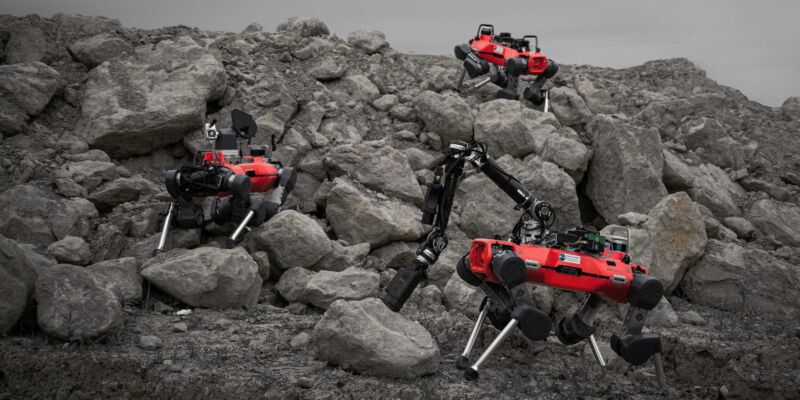
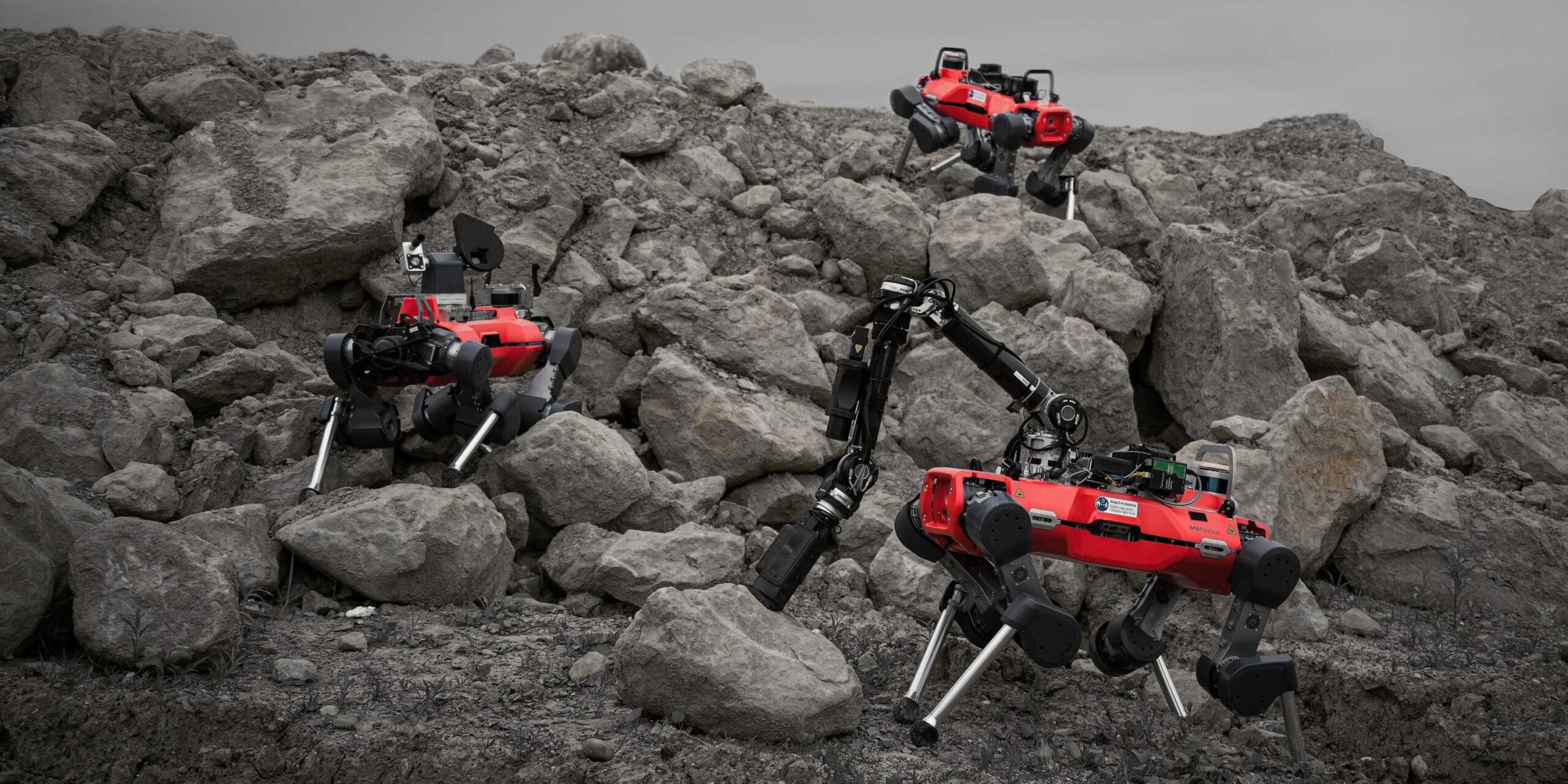
    Image of three red, legged robots exploring rocky terrain.

    Enlarge / The robots exploring a simulated alien environment. (credit: ETH Zurich / Takahiro Miki )

    While rovers have made incredible discoveries, their wheels can hold them back, and erratic terrain can mean damage. There is no replacing something like Perseverance , but sometimes rovers could use a leg up, and they could get that from a small swarm of four-legged robots.

    They look like giant metal insects, but the trio of ANYmal robots customized by researchers at ETH Zurich was tested in environments as close to the harsh lunar and Martian terrain as possible. Robots capable of walking could assist future rovers and mitigate the risk of damage from sharp edges or loss of traction in loose regolith. Not only do the ANYmals’ legs help them literally step over obstacles, but these bots work most efficiently as a team. They are each specialized for particular functions but still flexible enough to cover for each other—if one glitches, the others can take over its tasks.

    “Our technology can enable robots to investigate scientifically transformative targets on the Moon and Mars that are unreachable at present using wheeled rover systems,” the research team said in a study recently published in Science Robotics.

    Read 11 remaining paragraphs | Comments

    • tagscience tagscience tagscience tagspace tagspace tagspace tagcomputer science tagcomputer science tagcomputer science tagplanetary science tagplanetary science tagplanetary science tagrobotics tagrobotics tagrobotics tagrovers tagrovers tagrovers tagscience tagscience tagscience tagspace tagspace tagspace tagcomputer science tagcomputer science tagcomputer science tagplanetary science tagplanetary science tagplanetary science tagrobotics tagrobotics tagrobotics tagrovers tagrovers tagrovers tagscience tagscience tagscience tagspace tagspace tagspace tagcomputer science tagcomputer science tagcomputer science tagplanetary science tagplanetary science tagplanetary science tagrobotics tagrobotics tagrobotics tagrovers tagrovers tagrovers

    • Ar chevron_right

      New legged robots designed to explore planets as a team

      news.movim.eu / ArsTechnica • 21 July 2023 • 1 minute

    Image of three red, legged robots exploring rocky terrain.

    Enlarge / The robots exploring a simulated alien environment. (credit: ETH Zurich / Takahiro Miki )

    While rovers have made incredible discoveries, their wheels can hold them back, and erratic terrain can mean damage. There is no replacing something like Perseverance , but sometimes rovers could use a leg up, and they could get that from a small swarm of four-legged robots.

    They look like giant metal insects, but the trio of ANYmal robots customized by researchers at ETH Zurich was tested in environments as close to the harsh lunar and Martian terrain as possible. Robots capable of walking could assist future rovers and mitigate the risk of damage from sharp edges or loss of traction in loose regolith. Not only do the ANYmals’ legs help them literally step over obstacles, but these bots work most efficiently as a team. They are each specialized for particular functions but still flexible enough to cover for each other—if one glitches, the others can take over its tasks.

    “Our technology can enable robots to investigate scientifically transformative targets on the Moon and Mars that are unreachable at present using wheeled rover systems,” the research team said in a study recently published in Science Robotics.

    Read 11 remaining paragraphs | Comments

    • tagscience tagscience tagscience tagspace tagspace tagspace tagcomputer science tagcomputer science tagcomputer science tagplanetary science tagplanetary science tagplanetary science tagrobotics tagrobotics tagrobotics tagrovers tagrovers tagrovers tagscience tagscience tagscience tagspace tagspace tagspace tagcomputer science tagcomputer science tagcomputer science tagplanetary science tagplanetary science tagplanetary science tagrobotics tagrobotics tagrobotics tagrovers tagrovers tagrovers tagscience tagscience tagscience tagspace tagspace tagspace tagcomputer science tagcomputer science tagcomputer science tagplanetary science tagplanetary science tagplanetary science tagrobotics tagrobotics tagrobotics tagrovers tagrovers tagrovers

    • Ar chevron_right

      New legged robots designed to explore planets as a team

      news.movim.eu / ArsTechnica • 21 July 2023 • 1 minute

    Image of three red, legged robots exploring rocky terrain.

    Enlarge / The robots exploring a simulated alien environment. (credit: ETH Zurich / Takahiro Miki )

    While rovers have made incredible discoveries, their wheels can hold them back, and erratic terrain can mean damage. There is no replacing something like Perseverance , but sometimes rovers could use a leg up, and they could get that from a small swarm of four-legged robots.

    They look like giant metal insects, but the trio of ANYmal robots customized by researchers at ETH Zurich was tested in environments as close to the harsh lunar and Martian terrain as possible. Robots capable of walking could assist future rovers and mitigate the risk of damage from sharp edges or loss of traction in loose regolith. Not only do the ANYmals’ legs help them literally step over obstacles, but these bots work most efficiently as a team. They are each specialized for particular functions but still flexible enough to cover for each other—if one glitches, the others can take over its tasks.

    “Our technology can enable robots to investigate scientifically transformative targets on the Moon and Mars that are unreachable at present using wheeled rover systems,” the research team said in a study recently published in Science Robotics.

    Read 11 remaining paragraphs | Comments

    • tagscience tagscience tagscience tagspace tagspace tagspace tagcomputer science tagcomputer science tagcomputer science tagplanetary science tagplanetary science tagplanetary science tagrobotics tagrobotics tagrobotics tagrovers tagrovers tagrovers tagscience tagscience tagscience tagspace tagspace tagspace tagcomputer science tagcomputer science tagcomputer science tagplanetary science tagplanetary science tagplanetary science tagrobotics tagrobotics tagrobotics tagrovers tagrovers tagrovers tagscience tagscience tagscience tagspace tagspace tagspace tagcomputer science tagcomputer science tagcomputer science tagplanetary science tagplanetary science tagplanetary science tagrobotics tagrobotics tagrobotics tagrovers tagrovers tagrovers

  • history

    Get older posts

  • cloud_queue

    Powered by Movim