• progress_activity cloud_sync

    Reconnection to the server…

    Movim cannot talk with the server, please try again later


    • Public subscriptions

    • chevron_right

      coopr8

    • chevron_right

      gabagoo

    • chevron_right

      kenu_demon

    • chevron_right

      coopr8

    • chevron_right

      gabagoo

    • chevron_right

      kenu_demon

    • chevron_right

      coopr8

    • chevron_right

      gabagoo

    • chevron_right

      kenu_demon

  • Register Login

    Movim

    movim.chatterboxtown.us


  • group_work rss_feed
    add Follow

    ArsTechnica

    • Ar chevron_right

      Winners and losers as the EV tax credit rules change for 2025

      news.movim.eu / ArsTechnica • 9 January 2025 • 1 minute

    The list of electric vehicles that qualify for the IRS clean vehicle tax credit has changed with the arrival of the new year. No longer linked to battery capacity, the credit of up to $7,500 is now tied to the sourcing of battery components— each year, an increasing amount must be extracted or refined in the US (or a free trade partner) to be eligible. The total number of eligible EVs has actually increased in 2025, from 24 last year to 27 this year, but a number of automakers' products have also dropped off the list in the process.

    The $7,500 tax credit is split into two components. $3,750 is available if the battery components are made or assembled in the US. The other half now requires that 60 percent of the critical minerals in the battery—things like lithium, nickel, and so on—be extracted or refined in the US (or by a free trade partner). Last year, this threshold was 50 percent; next year, it will increase to 70 percent.

    Additionally, national security concerns mean that no EV is eligible if any of its battery components are manufactured by a "foreign entity of concern," which means any company with direct links to the governments of China, Iran, North Korea, or Russia. While the latter three have no domestic EV production they're trying to sell in the US, that obviously does not apply to China, which heavily subsidizes its domestic car makers to allow them to export their vehicles at rock bottom prices to undermine local industry in other regions.
    Read full article

    Comments

    • tagcars tagcars tagcars tagirs clean vehicle tax credit tagirs clean vehicle tax credit tagirs clean vehicle tax credit tagcars tagcars tagcars tagirs clean vehicle tax credit tagirs clean vehicle tax credit tagirs clean vehicle tax credit tagcars tagcars tagcars tagirs clean vehicle tax credit tagirs clean vehicle tax credit tagirs clean vehicle tax credit

    • Pictures 3 image

    • visibility
    • visibility
    • visibility
    • Ar chevron_right

      Winners and losers as the EV tax credit rules change for 2025

      news.movim.eu / ArsTechnica • 9 January 2025 • 1 minute

    The list of electric vehicles that qualify for the IRS clean vehicle tax credit has changed with the arrival of the new year. No longer linked to battery capacity, the credit of up to $7,500 is now tied to the sourcing of battery components— each year, an increasing amount must be extracted or refined in the US (or a free trade partner) to be eligible. The total number of eligible EVs has actually increased in 2025, from 24 last year to 27 this year, but a number of automakers' products have also dropped off the list in the process.

    The $7,500 tax credit is split into two components. $3,750 is available if the battery components are made or assembled in the US. The other half now requires that 60 percent of the critical minerals in the battery—things like lithium, nickel, and so on—be extracted or refined in the US (or by a free trade partner). Last year, this threshold was 50 percent; next year, it will increase to 70 percent.

    Additionally, national security concerns mean that no EV is eligible if any of its battery components are manufactured by a "foreign entity of concern," which means any company with direct links to the governments of China, Iran, North Korea, or Russia. While the latter three have no domestic EV production they're trying to sell in the US, that obviously does not apply to China, which heavily subsidizes its domestic car makers to allow them to export their vehicles at rock bottom prices to undermine local industry in other regions.

    Read full article

    Comments

    • tagcars tagcars tagcars tagirs clean vehicle tax credit tagirs clean vehicle tax credit tagirs clean vehicle tax credit tagcars tagcars tagcars tagirs clean vehicle tax credit tagirs clean vehicle tax credit tagirs clean vehicle tax credit tagcars tagcars tagcars tagirs clean vehicle tax credit tagirs clean vehicle tax credit tagirs clean vehicle tax credit

    • Pictures 3 image

    • visibility
    • visibility
    • visibility
    • Ar chevron_right

      Winners and losers as the EV tax credit rules change for 2025

      news.movim.eu / ArsTechnica • 9 January 2025 • 1 minute

    The list of electric vehicles that qualify for the IRS clean vehicle tax credit has changed with the arrival of the new year. No longer linked to battery capacity, the credit of up to $7,500 is now tied to the sourcing of battery components— each year, an increasing amount must be extracted or refined in the US (or a free trade partner) to be eligible. The total number of eligible EVs has actually increased in 2025, from 24 last year to 27 this year, but a number of automakers' products have also dropped off the list in the process.

    The $7,500 tax credit is split into two components. $3,750 is available if the battery components are made or assembled in the US. The other half now requires that 60 percent of the critical minerals in the battery—things like lithium, nickel, and so on—be extracted or refined in the US (or by a free trade partner). Last year, this threshold was 50 percent; next year, it will increase to 70 percent.

    Additionally, national security concerns mean that no EV is eligible if any of its battery components are manufactured by a "foreign entity of concern," which means any company with direct links to the governments of China, Iran, North Korea, or Russia. While the latter three have no domestic EV production they're trying to sell in the US, that obviously does not apply to China, which heavily subsidizes its domestic car makers to allow them to export their vehicles at rock bottom prices to undermine local industry in other regions.

    Read full article

    Comments

    • tagcars tagcars tagcars tagirs clean vehicle tax credit tagirs clean vehicle tax credit tagirs clean vehicle tax credit tagcars tagcars tagcars tagirs clean vehicle tax credit tagirs clean vehicle tax credit tagirs clean vehicle tax credit tagcars tagcars tagcars tagirs clean vehicle tax credit tagirs clean vehicle tax credit tagirs clean vehicle tax credit

    • Pictures 3 image

    • visibility
    • visibility
    • visibility
    • Ar chevron_right

      Archaeologists just mapped a Bronze Age megafortress in Georgia

      news.movim.eu / ArsTechnica • 9 January 2025 • 1 minute

    A sprawling 3,500-year-old fortress offers tantalizing clues about a culture that once dotted the southern Caucasus mountains with similar walled communities.

    Archaeologists recently used a drone to map a sprawling 3,500-year-old fortress in the Caucasus Mountains of southern Georgia. The detailed aerial map offers some tantalizing clues about the ancient culture whose people built hundreds of similar fortresses in a mountainous region that spans the modern countries of Armenia, Azerbaijan, Georgia, and Turkey. Based on their survey and excavations within the fortress walls, Cranfield University archaeologist Nathaniel Erb-Satullo and his colleagues suggest the fortified community may have been a place where nomadic herders converged during their yearly migration, but the evidence still leaves more questions than answers.

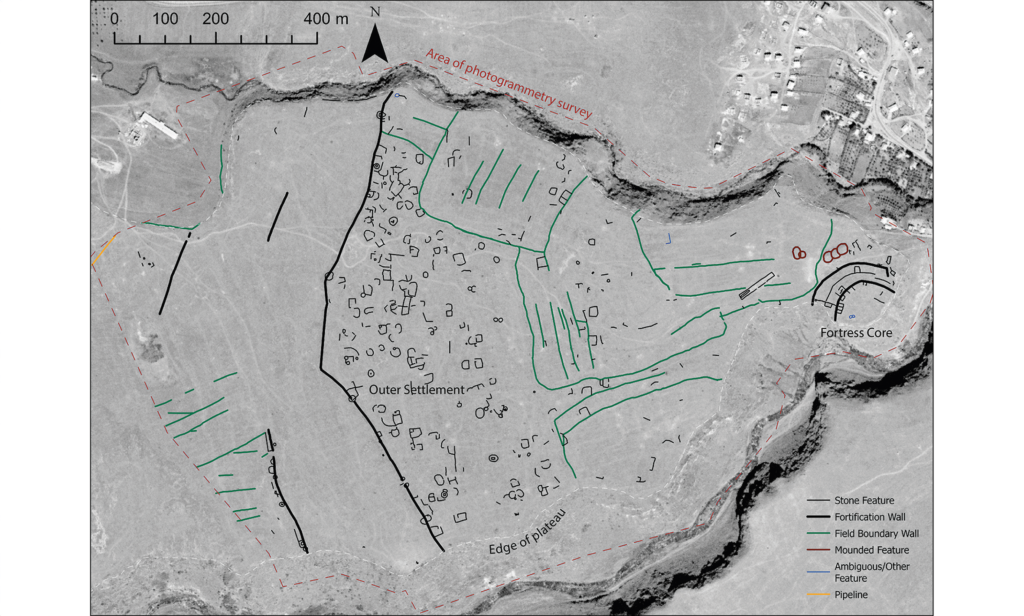
    gray map of a promontory between two gorges, with walls and buildings marked and labelled. This map shows an aerial map of the ancient megafortress at Dmanisis Gora. Credit: Erb-Satullo et al. 2025

    An abandoned ancient megafortress

    The half-buried Bronze Age ruins of Dmanisis Gora perch on a windswept promontory a few kilometers away from a cave where Homo erectus (or a close relative) lived 1.8 million years ago. Deep, steep-sided gorges run along two sides of the promontory, and sometime between 1500 and 1000 BCE, people stacked boulders into a double layer of high, thick walls to block off the end of the plateau from the plains to the west. Sheltered between the 4-meter high, 2.5-meter wide walls and the 60-meter-deep gorges, people built dugout houses, then later aboveground stone ones, along with stone animal pens and other buildings.

    Read full article

    Comments

    • tagscience tagscience tagscience tagaerial archaeology tagaerial archaeology tagaerial archaeology tagancient asia tagancient asia tagancient asia tagancient europe tagancient europe tagancient europe tagarchaeology tagarchaeology tagarchaeology tagbronze age collapse tagbronze age collapse tagbronze age collapse tagdrones tagdrones tagdrones tagiron age tagiron age tagiron age tagscience tagscience tagscience tagaerial archaeology tagaerial archaeology tagaerial archaeology tagancient asia tagancient asia tagancient asia tagancient europe tagancient europe tagancient europe tagarchaeology tagarchaeology tagarchaeology tagbronze age collapse tagbronze age collapse tagbronze age collapse tagdrones tagdrones tagdrones tagiron age tagiron age tagiron age tagscience tagscience tagscience tagaerial archaeology tagaerial archaeology tagaerial archaeology tagancient asia tagancient asia tagancient asia tagancient europe tagancient europe tagancient europe tagarchaeology tagarchaeology tagarchaeology tagbronze age collapse tagbronze age collapse tagbronze age collapse tagdrones tagdrones tagdrones tagiron age tagiron age tagiron age

    • Pictures 3 image

    • visibility
    • visibility
    • visibility
    • Ar chevron_right

      Archaeologists just mapped a Bronze Age megafortress in Georgia

      news.movim.eu / ArsTechnica • 9 January 2025 • 1 minute

    A sprawling 3,500-year-old fortress offers tantalizing clues about a culture that once dotted the southern Caucasus mountains with similar walled communities.

    Archaeologists recently used a drone to map a sprawling 3,500-year-old fortress in the Caucasus Mountains of southern Georgia. The detailed aerial map offers some tantalizing clues about the ancient culture whose people built hundreds of similar fortresses in a mountainous region that spans the modern countries of Armenia, Azerbaijan, Georgia, and Turkey. Based on their survey and excavations within the fortress walls, Cranfield University archaeologist Nathaniel Erb-Satullo and his colleagues suggest the fortified community may have been a place where nomadic herders converged during their yearly migration, but the evidence still leaves more questions than answers.

    gray map of a promontory between two gorges, with walls and buildings marked and labelled. This map shows an aerial map of the ancient megafortress at Dmanisis Gora. Credit: Erb-Satullo et al. 2025

    An abandoned ancient megafortress

    The half-buried Bronze Age ruins of Dmanisis Gora perch on a windswept promontory a few kilometers away from a cave where Homo erectus (or a close relative) lived 1.8 million years ago. Deep, steep-sided gorges run along two sides of the promontory, and sometime between 1500 and 1000 BCE, people stacked boulders into a double layer of high, thick walls to block off the end of the plateau from the plains to the west. Sheltered between the 4-meter high, 2.5-meter wide walls and the 60-meter-deep gorges, people built dugout houses, then later aboveground stone ones, along with stone animal pens and other buildings.

    Read full article

    Comments

    • tagscience tagscience tagscience tagaerial archaeology tagaerial archaeology tagaerial archaeology tagancient asia tagancient asia tagancient asia tagancient europe tagancient europe tagancient europe tagarchaeology tagarchaeology tagarchaeology tagbronze age collapse tagbronze age collapse tagbronze age collapse tagdrones tagdrones tagdrones tagiron age tagiron age tagiron age tagscience tagscience tagscience tagaerial archaeology tagaerial archaeology tagaerial archaeology tagancient asia tagancient asia tagancient asia tagancient europe tagancient europe tagancient europe tagarchaeology tagarchaeology tagarchaeology tagbronze age collapse tagbronze age collapse tagbronze age collapse tagdrones tagdrones tagdrones tagiron age tagiron age tagiron age tagscience tagscience tagscience tagaerial archaeology tagaerial archaeology tagaerial archaeology tagancient asia tagancient asia tagancient asia tagancient europe tagancient europe tagancient europe tagarchaeology tagarchaeology tagarchaeology tagbronze age collapse tagbronze age collapse tagbronze age collapse tagdrones tagdrones tagdrones tagiron age tagiron age tagiron age

    • Pictures 3 image

    • visibility
    • visibility
    • visibility
    • Ar chevron_right

      Archaeologists just mapped a Bronze Age megafortress in Georgia

      news.movim.eu / ArsTechnica • 9 January 2025 • 1 minute

    A sprawling 3,500-year-old fortress offers tantalizing clues about a culture that once dotted the southern Caucasus mountains with similar walled communities.

    Archaeologists recently used a drone to map a sprawling 3,500-year-old fortress in the Caucasus Mountains of southern Georgia. The detailed aerial map offers some tantalizing clues about the ancient culture whose people built hundreds of similar fortresses in a mountainous region that spans the modern countries of Armenia, Azerbaijan, Georgia, and Turkey. Based on their survey and excavations within the fortress walls, Cranfield University archaeologist Nathaniel Erb-Satullo and his colleagues suggest the fortified community may have been a place where nomadic herders converged during their yearly migration, but the evidence still leaves more questions than answers.

    gray map of a promontory between two gorges, with walls and buildings marked and labelled. This map shows an aerial map of the ancient megafortress at Dmanisis Gora. Credit: Erb-Satullo et al. 2025

    An abandoned ancient megafortress

    The half-buried Bronze Age ruins of Dmanisis Gora perch on a windswept promontory a few kilometers away from a cave where Homo erectus (or a close relative) lived 1.8 million years ago. Deep, steep-sided gorges run along two sides of the promontory, and sometime between 1500 and 1000 BCE, people stacked boulders into a double layer of high, thick walls to block off the end of the plateau from the plains to the west. Sheltered between the 4-meter high, 2.5-meter wide walls and the 60-meter-deep gorges, people built dugout houses, then later aboveground stone ones, along with stone animal pens and other buildings.

    Read full article

    Comments

    • tagscience tagscience tagscience tagaerial archaeology tagaerial archaeology tagaerial archaeology tagancient asia tagancient asia tagancient asia tagancient europe tagancient europe tagancient europe tagarchaeology tagarchaeology tagarchaeology tagbronze age collapse tagbronze age collapse tagbronze age collapse tagdrones tagdrones tagdrones tagiron age tagiron age tagiron age tagscience tagscience tagscience tagaerial archaeology tagaerial archaeology tagaerial archaeology tagancient asia tagancient asia tagancient asia tagancient europe tagancient europe tagancient europe tagarchaeology tagarchaeology tagarchaeology tagbronze age collapse tagbronze age collapse tagbronze age collapse tagdrones tagdrones tagdrones tagiron age tagiron age tagiron age tagscience tagscience tagscience tagaerial archaeology tagaerial archaeology tagaerial archaeology tagancient asia tagancient asia tagancient asia tagancient europe tagancient europe tagancient europe tagarchaeology tagarchaeology tagarchaeology tagbronze age collapse tagbronze age collapse tagbronze age collapse tagdrones tagdrones tagdrones tagiron age tagiron age tagiron age

    • Pictures 3 image

    • visibility
    • visibility
    • visibility
    • Ar chevron_right

      Here’s how hucksters are manipulating Google to promote shady Chrome extensions

      news.movim.eu / ArsTechnica • 8 January 2025

    The people overseeing the security of Google’s Chrome browser explicitly forbid third-party extension developers from trying to manipulate how the browser extensions they submit are presented in the Chrome Web Store . The policy specifically calls out search-manipulating techniques such as listing multiple extensions that provide the same experience or plastering extension descriptions with loosely related or unrelated keywords.

    On Wednesday, security and privacy researcher Wladimir Palant revealed that developers are flagrantly violating those terms in hundreds of extensions currently available for download from Google. As a result, searches for a particular term or terms can return extensions that are unrelated, inferior knockoffs, or carry out abusive tasks such as surreptitiously monetizing web searches, something Google expressly forbids.

    Not looking? Don’t care? Both?

    A search Wednesday morning in California for Norton Password Manager, for example, returned not only the official extension but three others, all of which are unrelated at best and potentially abusive at worst. The results may look different for searches at other times or from different locations.

    Read full article

    Comments

    • tagbiz & it tagbiz & it tagbiz & it tagbiz & it tagbiz & it tagbiz & it tagsecurity tagsecurity tagsecurity tagabuse tagabuse tagabuse tagchrome web store tagchrome web store tagchrome web store tagextensions tagextensions tagextensions taggoogle taggoogle taggoogle tagspam tagspam tagspam tagsecurity tagsecurity tagsecurity tagabuse tagabuse tagabuse tagchrome web store tagchrome web store tagchrome web store tagextensions tagextensions tagextensions taggoogle taggoogle taggoogle tagspam tagspam tagspam tagbiz & it tagbiz & it tagbiz & it tagsecurity tagsecurity tagsecurity tagabuse tagabuse tagabuse tagchrome web store tagchrome web store tagchrome web store tagextensions tagextensions tagextensions taggoogle taggoogle taggoogle tagspam tagspam tagspam

    • Pictures 3 image

    • visibility
    • visibility
    • visibility
    • Ar chevron_right

      Here’s how hucksters are manipulating Google to promote shady Chrome extensions

      news.movim.eu / ArsTechnica • 8 January 2025

    The people overseeing the security of Google’s Chrome browser explicitly forbid third-party extension developers from trying to manipulate how the browser extensions they submit are presented in the Chrome Web Store . The policy specifically calls out search-manipulating techniques such as listing multiple extensions that provide the same experience or plastering extension descriptions with loosely related or unrelated keywords.

    On Wednesday, security and privacy researcher Wladimir Palant revealed that developers are flagrantly violating those terms in hundreds of extensions currently available for download from Google. As a result, searches for a particular term or terms can return extensions that are unrelated, inferior knockoffs, or carry out abusive tasks such as surreptitiously monetizing web searches, something Google expressly forbids.

    Not looking? Don’t care? Both?

    A search Wednesday morning in California for Norton Password Manager, for example, returned not only the official extension but three others, all of which are unrelated at best and potentially abusive at worst. The results may look different for searches at other times or from different locations.

    Read full article

    Comments

    • tagbiz & it tagbiz & it tagbiz & it tagsecurity tagsecurity tagsecurity tagabuse tagabuse tagabuse tagchrome web store tagchrome web store tagchrome web store tagextensions tagextensions tagextensions taggoogle taggoogle taggoogle tagspam tagspam tagspam tagbiz & it tagbiz & it tagbiz & it tagsecurity tagsecurity tagsecurity tagabuse tagabuse tagabuse tagchrome web store tagchrome web store tagchrome web store tagextensions tagextensions tagextensions taggoogle taggoogle taggoogle tagspam tagspam tagspam tagbiz & it tagbiz & it tagbiz & it tagsecurity tagsecurity tagsecurity tagabuse tagabuse tagabuse tagchrome web store tagchrome web store tagchrome web store tagextensions tagextensions tagextensions taggoogle taggoogle taggoogle tagspam tagspam tagspam

    • Pictures 3 image

    • visibility
    • visibility
    • visibility
    • Ar chevron_right

      Here’s how hucksters are manipulating Google to promote shady Chrome extensions

      news.movim.eu / ArsTechnica • 8 January 2025

    The people overseeing the security of Google’s Chrome browser explicitly forbid third-party extension developers from trying to manipulate how the browser extensions they submit are presented in the Chrome Web Store . The policy specifically calls out search-manipulating techniques such as listing multiple extensions that provide the same experience or plastering extension descriptions with loosely related or unrelated keywords.

    On Wednesday, security and privacy researcher Wladimir Palant revealed that developers are flagrantly violating those terms in hundreds of extensions currently available for download from Google. As a result, searches for a particular term or terms can return extensions that are unrelated, inferior knockoffs, or carry out abusive tasks such as surreptitiously monetizing web searches, something Google expressly forbids.

    Not looking? Don’t care? Both?

    A search Wednesday morning in California for Norton Password Manager, for example, returned not only the official extension but three others, all of which are unrelated at best and potentially abusive at worst. The results may look different for searches at other times or from different locations.

    Read full article

    Comments

    • tagbiz & it tagbiz & it tagbiz & it tagsecurity tagsecurity tagsecurity tagabuse tagabuse tagabuse tagchrome web store tagchrome web store tagchrome web store tagextensions tagextensions tagextensions taggoogle taggoogle taggoogle tagspam tagspam tagspam tagbiz & it tagbiz & it tagbiz & it tagsecurity tagsecurity tagsecurity tagabuse tagabuse tagabuse tagchrome web store tagchrome web store tagchrome web store tagextensions tagextensions tagextensions taggoogle taggoogle taggoogle tagspam tagspam tagspam tagbiz & it tagbiz & it tagbiz & it tagsecurity tagsecurity tagsecurity tagabuse tagabuse tagabuse tagchrome web store tagchrome web store tagchrome web store tagextensions tagextensions tagextensions taggoogle taggoogle taggoogle tagspam tagspam tagspam

    • Pictures 3 image

    • visibility
    • visibility
    • visibility
  • history

    Get older posts

  • cloud_queue

    Powered by Movim