• progress_activity cloud_sync

    Reconnection to the server…

    Movim cannot talk with the server, please try again later


    • Public subscriptions

    • chevron_right

      coopr8

    • chevron_right

      gabagoo

    • chevron_right

      kenu_demon

    • chevron_right

      coopr8

    • chevron_right

      gabagoo

    • chevron_right

      kenu_demon

    • chevron_right

      coopr8

    • chevron_right

      gabagoo

    • chevron_right

      kenu_demon

  • Register Login

    Movim

    movim.chatterboxtown.us


  • group_work rss_feed
    add Follow

    ArsTechnica

    • Ar chevron_right

      Backdoor infecting VPNs used “magic packets” for stealth and security

      news.movim.eu / ArsTechnica • 23 January 2025 • 1 minute

    When threat actors use backdoor malware to gain access to a network, they want to make sure all their hard work can’t be leveraged by competing groups or detected by defenders. One countermeasure is to equip the backdoor with a passive agent that remains dormant until it receives what’s known in the business as a “magic packet.” On Thursday, researchers revealed that a never-before-seen backdoor that quietly took hold of dozens of enterprise VPNs running Juniper Network’s Junos OS has been doing just that.

    J-Magic, the tracking name for the backdoor, goes one step further to prevent unauthorized access. After receiving a magic packet hidden in the normal flow of TCP traffic, it relays a challenge to the device that sent it. The challenge comes in the form of a string of text that’s encrypted using the public portion of an RSA key. The initiating party must then respond with the corresponding plaintext, proving it has access to the secret key.

    Open sesame

    The lightweight backdoor is also notable because it resided only in memory, a trait that makes detection harder for defenders. The combination prompted researchers at Lumin Technology’s Black Lotus Lab to sit up and take notice.
    Read full article

    Comments

    • tagbiz & it tagbiz & it tagbiz & it tagsecurity tagsecurity tagsecurity tagbackdoors tagbackdoors tagbackdoors tagjuniper tagjuniper tagjuniper tagmagic packets tagmagic packets tagmagic packets tagvpns tagvpns tagvpns tagbiz & it tagbiz & it tagbiz & it tagsecurity tagsecurity tagsecurity tagbackdoors tagbackdoors tagbackdoors tagjuniper tagjuniper tagjuniper tagmagic packets tagmagic packets tagmagic packets tagvpns tagvpns tagvpns tagbiz & it tagbiz & it tagbiz & it tagsecurity tagsecurity tagsecurity tagbackdoors tagbackdoors tagbackdoors tagjuniper tagjuniper tagjuniper tagmagic packets tagmagic packets tagmagic packets tagvpns tagvpns tagvpns

    • Pictures 3 image

    • visibility
    • visibility
    • visibility
    • Ar chevron_right

      Backdoor infecting VPNs used “magic packets” for stealth and security

      news.movim.eu / ArsTechnica • 23 January 2025 • 1 minute

    When threat actors use backdoor malware to gain access to a network, they want to make sure all their hard work can’t be leveraged by competing groups or detected by defenders. One countermeasure is to equip the backdoor with a passive agent that remains dormant until it receives what’s known in the business as a “magic packet.” On Thursday, researchers revealed that a never-before-seen backdoor that quietly took hold of dozens of enterprise VPNs running Juniper Network’s Junos OS has been doing just that.

    J-Magic, the tracking name for the backdoor, goes one step further to prevent unauthorized access. After receiving a magic packet hidden in the normal flow of TCP traffic, it relays a challenge to the device that sent it. The challenge comes in the form of a string of text that’s encrypted using the public portion of an RSA key. The initiating party must then respond with the corresponding plaintext, proving it has access to the secret key.

    Open sesame

    The lightweight backdoor is also notable because it resided only in memory, a trait that makes detection harder for defenders. The combination prompted researchers at Lumin Technology’s Black Lotus Lab to sit up and take notice.

    Read full article

    Comments

    • tagbiz & it tagbiz & it tagbiz & it tagsecurity tagsecurity tagsecurity tagbackdoors tagbackdoors tagbackdoors tagjuniper tagjuniper tagjuniper tagmagic packets tagmagic packets tagmagic packets tagvpns tagvpns tagvpns tagbiz & it tagbiz & it tagbiz & it tagsecurity tagsecurity tagsecurity tagbackdoors tagbackdoors tagbackdoors tagjuniper tagjuniper tagjuniper tagmagic packets tagmagic packets tagmagic packets tagvpns tagvpns tagvpns tagbiz & it tagbiz & it tagbiz & it tagsecurity tagsecurity tagsecurity tagbackdoors tagbackdoors tagbackdoors tagjuniper tagjuniper tagjuniper tagmagic packets tagmagic packets tagmagic packets tagvpns tagvpns tagvpns

    • Pictures 3 image

    • visibility
    • visibility
    • visibility
    • Ar chevron_right

      Backdoor infecting VPNs used “magic packets” for stealth and security

      news.movim.eu / ArsTechnica • 23 January 2025 • 1 minute

    When threat actors use backdoor malware to gain access to a network, they want to make sure all their hard work can’t be leveraged by competing groups or detected by defenders. One countermeasure is to equip the backdoor with a passive agent that remains dormant until it receives what’s known in the business as a “magic packet.” On Thursday, researchers revealed that a never-before-seen backdoor that quietly took hold of dozens of enterprise VPNs running Juniper Network’s Junos OS has been doing just that.

    J-Magic, the tracking name for the backdoor, goes one step further to prevent unauthorized access. After receiving a magic packet hidden in the normal flow of TCP traffic, it relays a challenge to the device that sent it. The challenge comes in the form of a string of text that’s encrypted using the public portion of an RSA key. The initiating party must then respond with the corresponding plaintext, proving it has access to the secret key.

    Open sesame

    The lightweight backdoor is also notable because it resided only in memory, a trait that makes detection harder for defenders. The combination prompted researchers at Lumin Technology’s Black Lotus Lab to sit up and take notice.

    Read full article

    Comments

    • tagbiz & it tagbiz & it tagbiz & it tagsecurity tagsecurity tagsecurity tagbackdoors tagbackdoors tagbackdoors tagjuniper tagjuniper tagjuniper tagmagic packets tagmagic packets tagmagic packets tagvpns tagvpns tagvpns tagbiz & it tagbiz & it tagbiz & it tagsecurity tagsecurity tagsecurity tagbackdoors tagbackdoors tagbackdoors tagjuniper tagjuniper tagjuniper tagmagic packets tagmagic packets tagmagic packets tagvpns tagvpns tagvpns tagbiz & it tagbiz & it tagbiz & it tagsecurity tagsecurity tagsecurity tagbackdoors tagbackdoors tagbackdoors tagjuniper tagjuniper tagjuniper tagmagic packets tagmagic packets tagmagic packets tagvpns tagvpns tagvpns

    • Pictures 3 image

    • visibility
    • visibility
    • visibility
    • Ar chevron_right

      Way more game makers are working on PC titles than ever, survey says

      news.movim.eu / ArsTechnica • 23 January 2025 • 1 minute

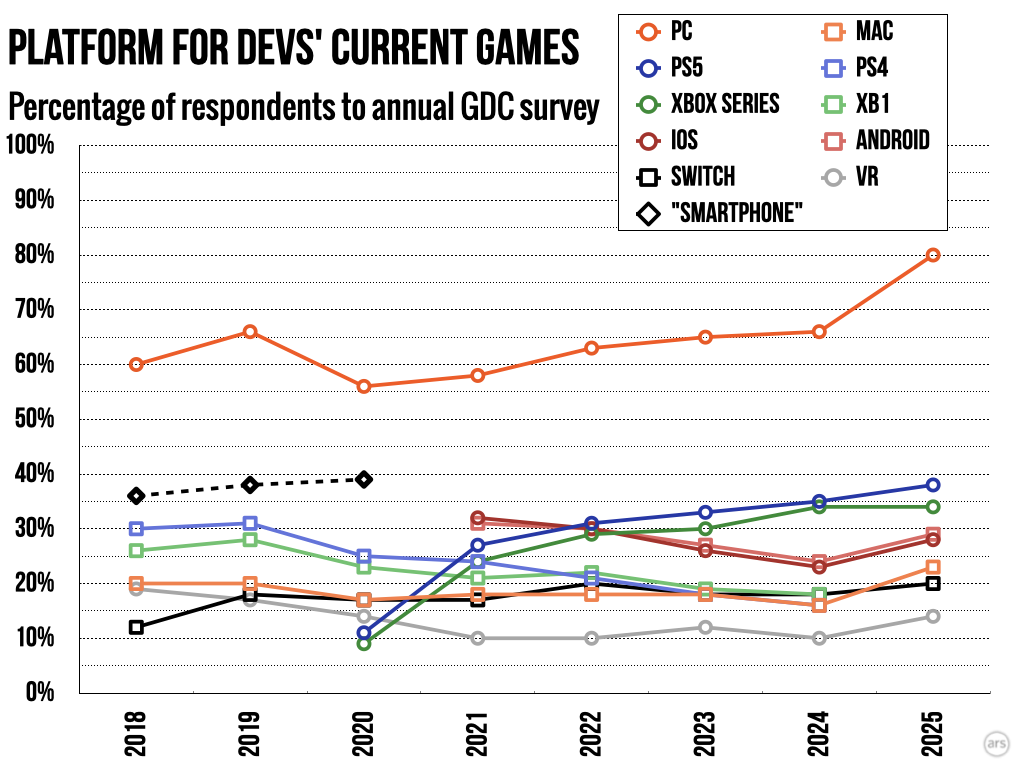
    Four out of five game developers are currently working on a project for the PC, a sizable increase from 66 percent of developers a year ago. That's according to Informa's latest State of the Game Industry survey , which partnered with Omdia to ask over 3,000 game industry professionals about their work in advance of March's Game Developers Conference.

    The 80 percent of developers working on PC projects in this year's survey is by far the highest mark for any platform dating back to at least 2018, when 60 percent of surveyed developers were working on a PC game. In the years since, the ratio of game developers working on the PC has hovered between 56 and 66 percent before this year's unexpected jump. The number of game developers saying they were interested in the PC as a platform also increased substantially, from 62 percent last year to 74 percent this year.

    While the PC has long been the most popular platform in this survey, the sudden jump in the last year was rather large. Credit: Kyle Orland / Informa

    The PC has long been the most popular platform for developers to work on in the annual State of the Game Industry survey, easily outpacing consoles and mobile platforms that generally see active work from anywhere between 12 to 36 percent of developer respondents, depending on the year. In its report, Informa notes this surge as a "passion for PC development explod[ing]" among developers, and mentions that while "PC has consistently been the platform of choice... this year saw its dominance increase even more."

    Read full article

    Comments

    • taggaming taggaming taggaming taggame development taggame development taggame development tagpc gaming tagpc gaming tagpc gaming tagvalve tagvalve tagvalve taggaming taggaming taggaming taggame development taggame development taggame development tagpc gaming tagpc gaming tagpc gaming tagvalve tagvalve tagvalve taggaming taggaming taggaming taggame development taggame development taggame development tagpc gaming tagpc gaming tagpc gaming tagvalve tagvalve tagvalve

    • Pictures 3 image

    • visibility
    • visibility
    • visibility
    • Ar chevron_right

      Way more game makers are working on PC titles than ever, survey says

      news.movim.eu / ArsTechnica • 23 January 2025 • 1 minute

    Four out of five game developers are currently working on a project for the PC, a sizable increase from 66 percent of developers a year ago. That's according to Informa's latest State of the Game Industry survey , which partnered with Omdia to ask over 3,000 game industry professionals about their work in advance of March's Game Developers Conference.

    The 80 percent of developers working on PC projects in this year's survey is by far the highest mark for any platform dating back to at least 2018, when 60 percent of surveyed developers were working on a PC game. In the years since, the ratio of game developers working on the PC has hovered between 56 and 66 percent before this year's unexpected jump. The number of game developers saying they were interested in the PC as a platform also increased substantially, from 62 percent last year to 74 percent this year.

    While the PC has long been the most popular platform in this survey, the sudden jump in the last year was rather large. Credit: Kyle Orland / Informa

    The PC has long been the most popular platform for developers to work on in the annual State of the Game Industry survey, easily outpacing consoles and mobile platforms that generally see active work from anywhere between 12 to 36 percent of developer respondents, depending on the year. In its report, Informa notes this surge as a "passion for PC development explod[ing]" among developers, and mentions that while "PC has consistently been the platform of choice... this year saw its dominance increase even more."

    Read full article

    Comments

    • taggaming taggaming taggaming taggame development taggame development taggame development tagpc gaming tagpc gaming tagpc gaming tagvalve tagvalve tagvalve taggaming taggaming taggaming taggame development taggame development taggame development tagpc gaming tagpc gaming tagpc gaming tagvalve tagvalve tagvalve taggaming taggaming taggaming taggame development taggame development taggame development tagpc gaming tagpc gaming tagpc gaming tagvalve tagvalve tagvalve

    • Pictures 3 image

    • visibility
    • visibility
    • visibility
    • Ar chevron_right

      Way more game makers are working on PC titles than ever, survey says

      news.movim.eu / ArsTechnica • 23 January 2025 • 1 minute

    Four out of five game developers are currently working on a project for the PC, a sizable increase from 66 percent of developers a year ago. That's according to Informa's latest State of the Game Industry survey , which partnered with Omdia to ask over 3,000 game industry professionals about their work in advance of March's Game Developers Conference.

    The 80 percent of developers working on PC projects in this year's survey is by far the highest mark for any platform dating back to at least 2018, when 60 percent of surveyed developers were working on a PC game. In the years since, the ratio of game developers working on the PC has hovered between 56 and 66 percent before this year's unexpected jump. The number of game developers saying they were interested in the PC as a platform also increased substantially, from 62 percent last year to 74 percent this year.

    While the PC has long been the most popular platform in this survey, the sudden jump in the last year was rather large. Credit: Kyle Orland / Informa

    The PC has long been the most popular platform for developers to work on in the annual State of the Game Industry survey, easily outpacing consoles and mobile platforms that generally see active work from anywhere between 12 to 36 percent of developer respondents, depending on the year. In its report, Informa notes this surge as a "passion for PC development explod[ing]" among developers, and mentions that while "PC has consistently been the platform of choice... this year saw its dominance increase even more."

    Read full article

    Comments

    • taggaming taggaming taggaming taggame development taggame development taggame development tagpc gaming tagpc gaming tagpc gaming tagvalve tagvalve tagvalve taggaming taggaming taggaming taggame development taggame development taggame development tagpc gaming tagpc gaming tagpc gaming tagvalve tagvalve tagvalve taggaming taggaming taggaming taggame development taggame development taggame development tagpc gaming tagpc gaming tagpc gaming tagvalve tagvalve tagvalve

    • Pictures 3 image

    • visibility
    • visibility
    • visibility
    • Ar chevron_right

      OpenAI launches Operator, an AI agent that can operate your computer

      news.movim.eu / ArsTechnica • 23 January 2025

    On Thursday, OpenAI released a research preview of " Operator ," a web automation tool that uses a new AI model called Computer-Using Agent (CUA) to control computers through a visual interface. The system performs tasks by viewing and interacting with on-screen elements like buttons and text fields similar to how a human would.

    Operator is available today for subscribers of the $200 per month ChatGPT Pro plan at operator.chatgpt.com . The company plans to expand to Plus, Team, and Enterprise users later. OpenAI intends to integrate these capabilities directly into ChatGPT and later release CUA through its API for developers.

    Operator watches on-screen content while you use your computer and executes tasks through simulated keyboard and mouse inputs. The Computer-Using Agent processes screenshots to understand the computer's state and then makes decisions about clicking, typing, and scrolling based on its observations.

    Read full article

    Comments

    • tagai tagai tagai tagai computer use tagai computer use tagai computer use tagchatgpt tagchatgpt tagchatgpt tagchatgpt pro tagchatgpt pro tagchatgpt pro tagcomputer use model tagcomputer use model tagcomputer use model tagcomputer-using agent tagcomputer-using agent tagcomputer-using agent tagcua tagcua tagcua tagmachine learning tagmachine learning tagmachine learning tagopenai tagopenai tagopenai tagopenai operator tagopenai operator tagopenai operator tagai tagai tagai tagai computer use tagai computer use tagai computer use tagchatgpt tagchatgpt tagchatgpt tagchatgpt pro tagchatgpt pro tagchatgpt pro tagcomputer use model tagcomputer use model tagcomputer use model tagcomputer-using agent tagcomputer-using agent tagcomputer-using agent tagcua tagcua tagcua tagmachine learning tagmachine learning tagmachine learning tagopenai tagopenai tagopenai tagopenai operator tagopenai operator tagopenai operator tagai tagai tagai tagai computer use tagai computer use tagai computer use tagchatgpt tagchatgpt tagchatgpt tagchatgpt pro tagchatgpt pro tagchatgpt pro tagcomputer use model tagcomputer use model tagcomputer use model tagcomputer-using agent tagcomputer-using agent tagcomputer-using agent tagcua tagcua tagcua tagmachine learning tagmachine learning tagmachine learning tagopenai tagopenai tagopenai tagopenai operator tagopenai operator tagopenai operator

    • Pictures 3 image

    • visibility
    • visibility
    • visibility
    • Ar chevron_right

      OpenAI launches Operator, an AI agent that can operate your computer

      news.movim.eu / ArsTechnica • 23 January 2025

    On Thursday, OpenAI released a research preview of " Operator ," a web automation tool that uses a new AI model called Computer-Using Agent (CUA) to control computers through a visual interface. The system performs tasks by viewing and interacting with on-screen elements like buttons and text fields similar to how a human would.

    Operator is available today for subscribers of the $200 per month ChatGPT Pro plan at operator.chatgpt.com . The company plans to expand to Plus, Team, and Enterprise users later. OpenAI intends to integrate these capabilities directly into ChatGPT and later release CUA through its API for developers.

    Operator watches on-screen content while you use your computer and executes tasks through simulated keyboard and mouse inputs. The Computer-Using Agent processes screenshots to understand the computer's state and then makes decisions about clicking, typing, and scrolling based on its observations.

    Read full article

    Comments

    • tagai tagai tagai tagai computer use tagai computer use tagai computer use tagchatgpt tagchatgpt tagchatgpt tagchatgpt pro tagchatgpt pro tagchatgpt pro tagcomputer use model tagcomputer use model tagcomputer use model tagcomputer-using agent tagcomputer-using agent tagcomputer-using agent tagcua tagcua tagcua tagmachine learning tagmachine learning tagmachine learning tagopenai tagopenai tagopenai tagopenai operator tagopenai operator tagopenai operator tagai tagai tagai tagai computer use tagai computer use tagai computer use tagchatgpt tagchatgpt tagchatgpt tagchatgpt pro tagchatgpt pro tagchatgpt pro tagcomputer use model tagcomputer use model tagcomputer use model tagcomputer-using agent tagcomputer-using agent tagcomputer-using agent tagcua tagcua tagcua tagmachine learning tagmachine learning tagmachine learning tagopenai tagopenai tagopenai tagopenai operator tagopenai operator tagopenai operator tagai tagai tagai tagai computer use tagai computer use tagai computer use tagchatgpt tagchatgpt tagchatgpt tagchatgpt pro tagchatgpt pro tagchatgpt pro tagcomputer use model tagcomputer use model tagcomputer use model tagcomputer-using agent tagcomputer-using agent tagcomputer-using agent tagcua tagcua tagcua tagmachine learning tagmachine learning tagmachine learning tagopenai tagopenai tagopenai tagopenai operator tagopenai operator tagopenai operator

    • Pictures 3 image

    • visibility
    • visibility
    • visibility
    • Ar chevron_right

      OpenAI launches Operator, an AI agent that can operate your computer

      news.movim.eu / ArsTechnica • 23 January 2025

    On Thursday, OpenAI released a research preview of " Operator ," a web automation tool that uses a new AI model called Computer-Using Agent (CUA) to control computers through a visual interface. The system performs tasks by viewing and interacting with on-screen elements like buttons and text fields similar to how a human would.

    Operator is available today for subscribers of the $200 per month ChatGPT Pro plan at operator.chatgpt.com . The company plans to expand to Plus, Team, and Enterprise users later. OpenAI intends to integrate these capabilities directly into ChatGPT and later release CUA through its API for developers.

    Operator watches on-screen content while you use your computer and executes tasks through simulated keyboard and mouse inputs. The Computer-Using Agent processes screenshots to understand the computer's state and then makes decisions about clicking, typing, and scrolling based on its observations.

    Read full article

    Comments

    • tagai tagai tagai tagai computer use tagai computer use tagai computer use tagchatgpt tagchatgpt tagchatgpt tagchatgpt pro tagchatgpt pro tagchatgpt pro tagcomputer use model tagcomputer use model tagcomputer use model tagcomputer-using agent tagcomputer-using agent tagcomputer-using agent tagcua tagcua tagcua tagmachine learning tagmachine learning tagmachine learning tagopenai tagopenai tagopenai tagopenai operator tagopenai operator tagopenai operator tagai tagai tagai tagai computer use tagai computer use tagai computer use tagchatgpt tagchatgpt tagchatgpt tagchatgpt pro tagchatgpt pro tagchatgpt pro tagcomputer use model tagcomputer use model tagcomputer use model tagcomputer-using agent tagcomputer-using agent tagcomputer-using agent tagcua tagcua tagcua tagmachine learning tagmachine learning tagmachine learning tagopenai tagopenai tagopenai tagopenai operator tagopenai operator tagopenai operator tagai tagai tagai tagai computer use tagai computer use tagai computer use tagchatgpt tagchatgpt tagchatgpt tagchatgpt pro tagchatgpt pro tagchatgpt pro tagcomputer use model tagcomputer use model tagcomputer use model tagcomputer-using agent tagcomputer-using agent tagcomputer-using agent tagcua tagcua tagcua tagmachine learning tagmachine learning tagmachine learning tagopenai tagopenai tagopenai tagopenai operator tagopenai operator tagopenai operator

    • Pictures 3 image

    • visibility
    • visibility
    • visibility
  • history

    Get older posts

  • cloud_queue

    Powered by Movim